.Net for app development in 2023? 8 solid reasons to choose?

/*! elementor – v3.18.0 – 20-12-2023 */ .elementor-widget-text-editor.elementor-drop-cap-view-stacked .elementor-drop-cap{background-color:#69727d;color:#fff}.elementor-widget-text-editor.elementor-drop-cap-view-framed .elementor-drop-cap{color:#69727d;border:3px solid;background-color:transparent}.elementor-widget-text-editor:not(.elementor-drop-cap-view-default) .elementor-drop-cap{margin-top:8px}.elementor-widget-text-editor:not(.elementor-drop-cap-view-default) .elementor-drop-cap-letter{width:1em;height:1em}.elementor-widget-text-editor .elementor-drop-cap{float:left;text-align:center;line-height:1;font-size:50px}.elementor-widget-text-editor .elementor-drop-cap-letter{display:inline-block}

In today’s digital age, software development has become an essential aspect of every enterprise. Companies across various sectors are looking for faster and more efficient ways to develop their applications, reduce costs, and increase their ROI. One of the best ways to achieve this is by choosing the right platform for your application development. And one such platform that has been gaining immense popularity among businesses is. NET.

.NET is a cross-platform, open-source framework developed by Microsoft. It is a powerful and versatile platform that is used to develop a wide range of applications, from web and desktop to mobile and gaming applications. In this blog, we will discuss why enterprises should choose .NET for their app development needs.

  1. Cross-platform compatibility

One of the most significant advantages of .NET is its cross-platform compatibility. This means that .NET applications can run on multiple platforms, including Windows, Linux, and macOS. This cross-platform compatibility makes it easier for enterprises to develop applications that can run on a variety of devices, making it more accessible to their customers.

  1. High performance

.NET is known for its high performance and speed. It uses a just-in-time (JIT) compiler that compiles code at runtime, making it faster than traditional compiled languages. Additionally, .NET uses a garbage collector that automatically manages memory, making it easier for .NET developers to write code without worrying about memory management.

  1. Security

Security is a top concern for every enterprise, and .NET has proven to be a highly secure platform. It has built-in security features such as Code Access Security (CAS) and Role-Based Security (RBS), which make it easier for .NET developers to secure their applications. Additionally, .NET uses a Common Language Runtime (CLR) that provides an extra layer of security by verifying the code before it is executed.

  1. Large developer community

.NET has a large and active developer community that contributes to its growth and development. This community provides resources, tools, and support to .NET developers, making it easier for them to develop high-quality applications. Additionally, this community ensures that .NET is constantly evolving, with new features and updates being added regularly.

  1. Versatility

.NET is a versatile platform that can be used to develop a wide range of applications. It can be used to develop web applications, desktop applications, mobile applications, and gaming applications. Additionally, it supports a variety of programming languages, including C#, F#, and Visual Basic, making it easier for developers to choose the language they are most comfortable with.

  1. Integration with other Microsoft products

Enterprises that use other Microsoft products such as SharePoint and Office can benefit from it. NET’s seamless integration with these products. .NET can be used to develop custom applications that can integrate with these products, making it easier for enterprises to automate their workflows and increase productivity.

  1. Easy maintenance and scalability

.NET applications are easy to maintain and scale, making them a cost-effective solution for enterprises. Its modular architecture allows .NET developers to build applications using reusable components, making it easier to maintain and update the application. Additionally, .NET applications can be easily scaled by adding more servers or upgrading the existing hardware.

  1. Faster time-to-market

Finally, .NET can help enterprises achieve faster time-to-market for their applications. Its cross-platform compatibility, versatility, and ease of maintenance make it easier for .NET developers to develop high-quality applications quickly. Additionally, its large developer community and vast array of resources and tools make it easier for developers to overcome any challenges they may encounter during the development process.

In conclusion, enterprises should choose .NET for their app development needs because of its cross-platform compatibility, high performance, security, large developer community, versatility, integration with other Microsoft products, easy maintenance and scalability, and faster time-to-market. By leveraging these advantages, enterprises can develop high-quality applications that meet their business.

How Enterprise Applications with .NET Integration can improve your business?

Enterprise applications with .NET integration can improve your business in several ways:

  1. Streamlined business processes: .NET provides tools and frameworks that help hire .NET developers to build custom enterprise applications tailored to your business needs. These applications can streamline your business processes, automate workflows, and eliminate manual data entry and other time-consuming tasks.
  2. Better collaboration: With .NET integration, you can create enterprise applications that facilitate collaboration and communication between different teams and departments. This can lead to better decision-making, improved efficiency, and increased productivity.
  3. Improved data management: .NET provides a wide range of tools and frameworks for data management, including data analytics, data warehousing, and business intelligence. These tools can help you to organize, store, and analyze your business data, providing you with valuable insights into your business performance.
  4. Enhanced security: .NET provides robust security features to protect your enterprise applications from cyber threats and unauthorized access. This can give you peace of mind and ensure that your business data is safe and secure.
  5. Scalability: .NET enterprise applications can scale up or down depending on your business needs. Whether you are a small business or a large enterprise, .NET applications can grow with your business and accommodate changes in demand or user volume.

Overall, enterprise applications with .NET integration can help you to improve your business efficiency, productivity, and profitability, while also providing you with the flexibility and scalability you need to adapt to changing business environments.

Hire .Net developers With Communication Crafts

With more than 17 years of hands-on experience, we have been developing scalable apps that meet our client’s vision and requirements. We are a team of expert developers who develop ground-breaking mobile apps with a time-tested process.

 Choose from our pool of rigorously vetted mobile app developers for hire and get your app built remotely through seamless collaboration.
.Net developers that help you build phenomenal apps

Hire them now


Convert Website into App and Watch your Sales Explode!

Having a website was enough for businesses at the inception of the digital era, but that’s not the case anymore. The demands of online consumerism are skyrocketing with more inclination towards mobile-friendly user experiences.

Mobile Apps are the future of digital marketing and online retail. Businesses need to understand the significance of mobile apps, the sooner the better.

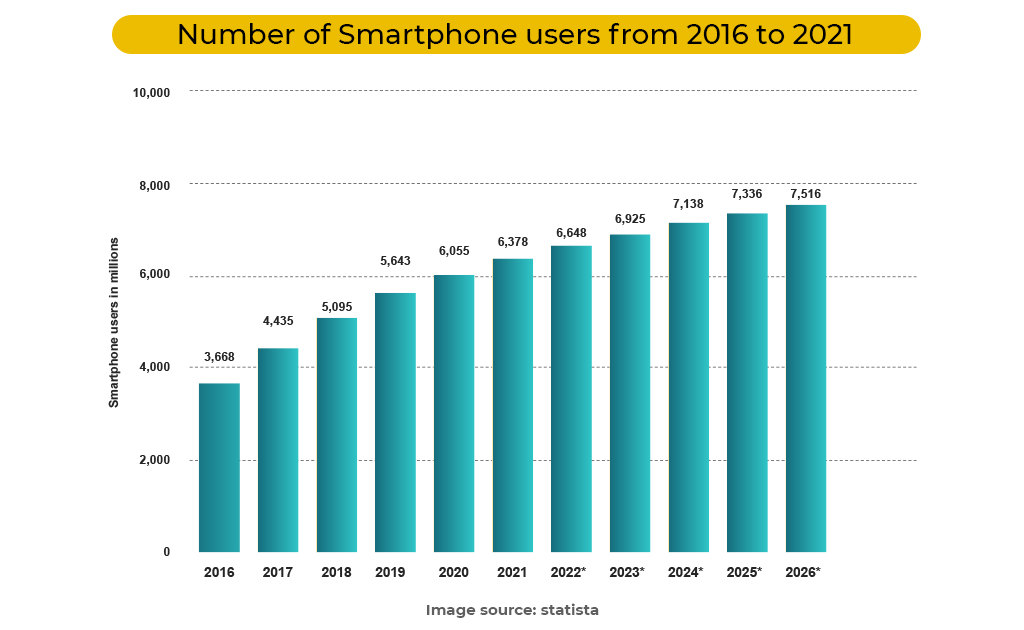
The number of smartphone users has surpassed 6 billion already.

smartphone users

Source: Statista

As a leading mobile app development agency, our experts have highlighted the significance of converting your website into a mobile app and explained the 7 steps to build a mobile app.

So without further ado, let’s begin…

Why you should turn your website into an app?

In this ever-increasing digital competition, a website can only get you so far. The influence and benefits of a website are limited as the audience is actively gravitating towards mobile-friendly experiences.

Top 4 successful examples of websites converted into mobile apps:

  1. The New Yorker
  2. H&M
  3. Blue Apron
  4. Canva

Here are some of the benefits a mobile app unlocks for your business:

1. A mobile app puts your business in front of potential consumers

A mobile app expands your audience and multiplies your online visibility by two folds. After installing the mobile app, it’s simpler for mobile users to use and engage with the applications than opening a website in a browser.

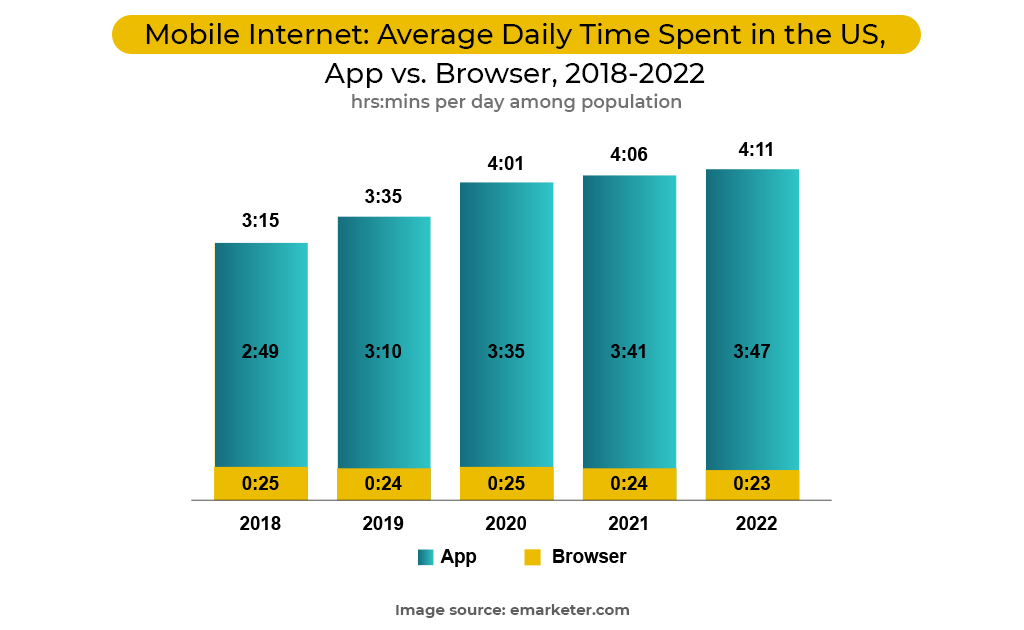
83% of mobile users tend to spend more time using apps than websites, and this is, more or less, because applications are easier to access and use on mobile phones.

audience

Source: Emarketer

Moreover, if you convert a website into an app, then it makes the platform more reliable across multiple screen dimensions. It can be optimized to function perfectly for app types of mobile phones and tablets.

Another aspect that improves your brand’s online visibility is Search Engine Optimization.

2. A mobile app is SEO- friendly

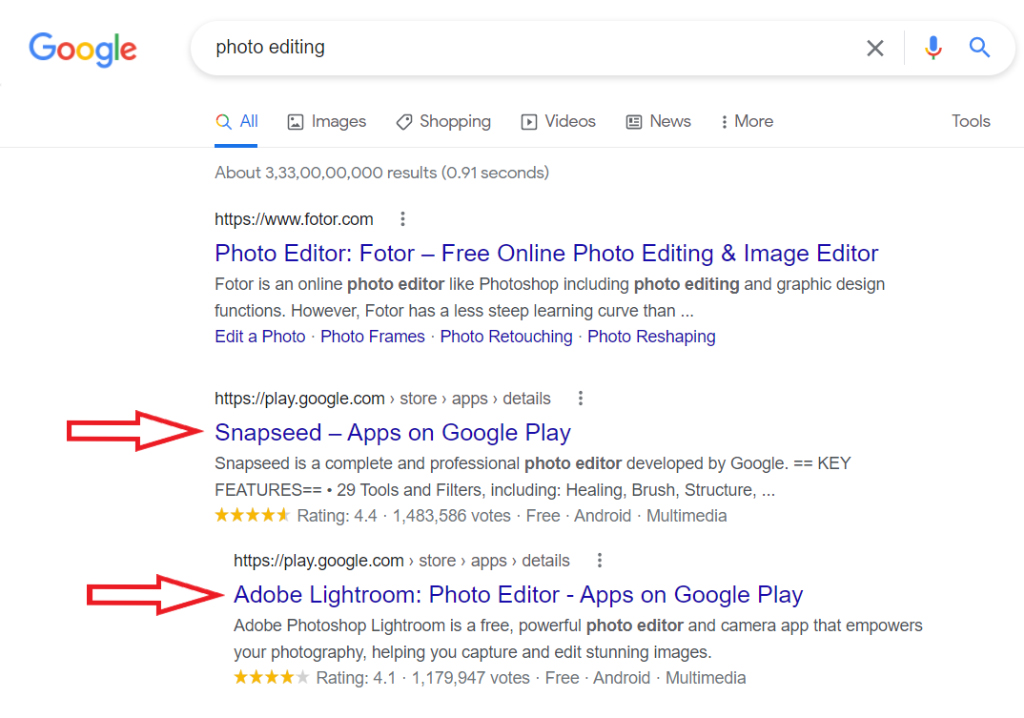
As we’ve already established, the number of mobile users is growing rapidly. As Google provides the most relevant search results, your mobile app can heavily influence your SERP ranking for mobile searches.

Google recognizes if the user is searching via mobile phone, and it displays search results that pertain specifically to the mobile interface.

For instance, if mobile users are searching for a certain product, it is more likely that they’ll find your business among the top search results if you have a mobile application.

That’s why turning your website into an app makes your business more SEO-friendly and enhances your overall online presence.

mobile app is SEO- friendly

3. Additional Integrations

Any experienced app development company would know that integrations are a significant perk of turning a website into app. An application enables many features on mobile phones that a web browser just can’t facilitate.

Turning a website into app lets you integrate phone contacts, camera, GPS and many more features to optimize and enhance user experience.

For instance, you can deliver a completely immersive online retail experience by integrating Augmented Reality through camera functions.

4. Push Notifications

Mobile push notification is one of the easiest and most effective latest digital marketing trends with increased outreach and maximum customer engagement.

It can also be useful for getting insight to optimize content strategies by monitoring clickthrough rates.

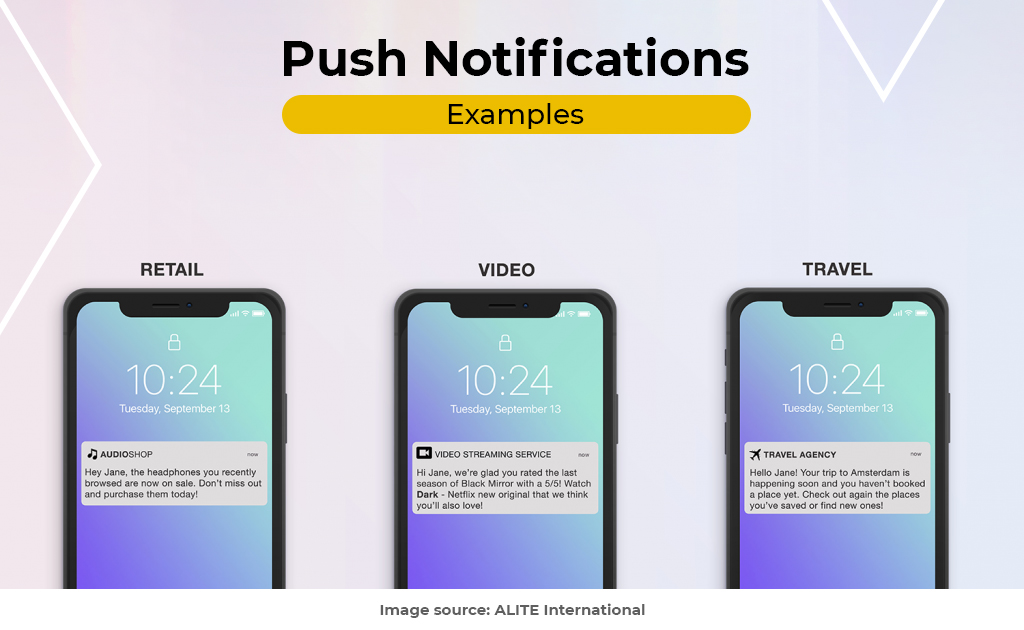
Mobile Push Notifications are pop-up messages sent to users for notifying them about sales, discounts, news, events, product releases, and more, providing a cost-effective way of engaging with the audience.

Also, you can use geofencing technology to deliver personalized push notifications, enhancing online retail experiences for your users.

Push Notifications

Source: ALITE International

5. Multi-Touch Functionalities

It is advised to turn website into app also because of the multi-touch feature, which is only facilitated by iOS and Android apps. There are a collection of gestures that mobile users can use with their fingers to enable different functions.

Different finger gestures like pinching, long-pressing, swiping, etc. not only creates an interactive and personalized user experience, but also provides seamless navigation for the users.

6. Offline Functionalities

Even though the digital era is rapidly taking over all industries, some remote locations like rural areas still have a weak internet connection. This is where mobile apps provide even more reliability with the integration of offline features.

For example, Google Docs, Amazon Kindle, Uber, etc. have offline features that allow the users to access certain necessary features even without an internet connection.

Now that we’ve discussed the benefits of mobile apps over websites, let’s examine how to turn a site into an app…

How to turn your website into an app?

You can convert a website into an app in 7 simple steps, let’s elaborate…

1. Determine your mobile app development needs

This step is fairly simple, you need to carefully identify the needs of your business to determine if you need a mobile app. Start your app development journey with heavy research. Carefully plan out your goals for the mobile application. Ask yourself the following questions:

  • What type of app does my business need?
  • Does my app have a paid subscription model?
  • Is it completely free?
  • Does it include in-app purchases?
  • Does it have an initial purchasing cost?
  • What are the main features of my mobile app?
  • How does my app solve my consumers’ pain points?

Answering these questions will help you reach a conclusion about your mobile application. This is an important step before starting the hunt for how to hire an app developer.

Also, determine if your existing website is enough for your users. If your website is completely mobile-friendly and does everything a mobile app can do, then you may end up wasting time, money, and energy on building an app that your brand doesn’t need.

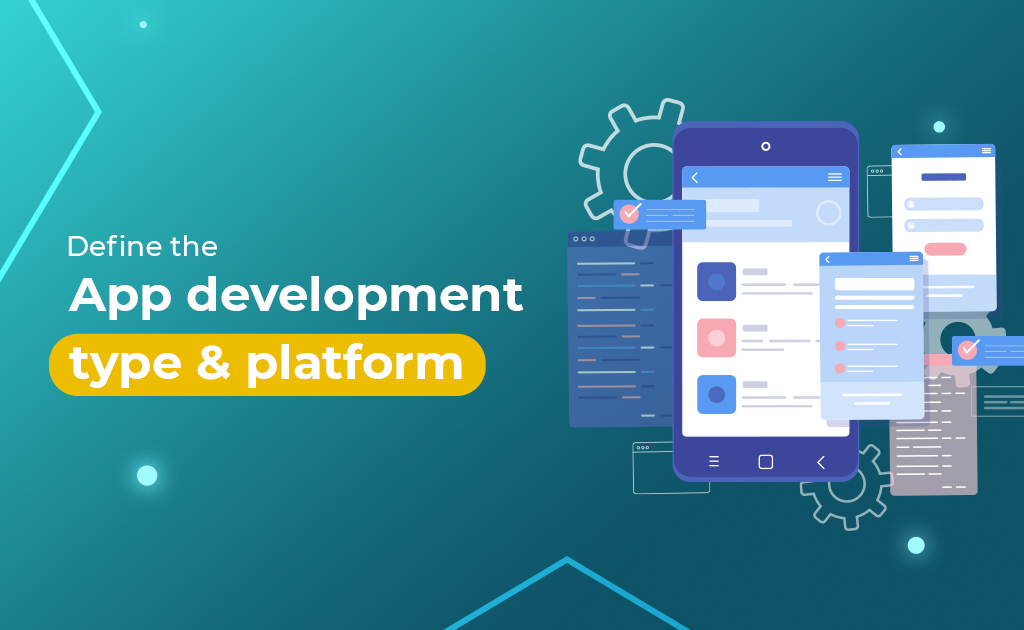
2. Define the app development type & platform

app development type

After researching the app development goals, define the type of app you need for your brand.

Examples of types of apps that you may need:

  • An in-house app for internal business functions
  • A retail app to sell products directly
  • A logistics app
  • A social app to connect with the audience

And so on…

Understand what type of app will ameliorate the challenges of your business and your consumers. Also, consider the platform to launch your app, iOS or Android or both, and then decide the app development platform you’d prefer for your project.

3. Define app development costs

Budget is one of the most significant things to consider when converting a website into an app. After you’ve considered the requirements and platforms for your mobile app, then determine what type of hiring fits your pre-determined budget.

The number of features you integrate into your mobile app also influences your budget estimation. Choose a hiring option and the number of app features that fit your budget and give you the flexibility to develop an app that fulfills your goals and satisfies your audience. Without careful budget planning, you may cross your budget limits or end up with a low-quality mobile app.

4. Hire app development professionals

You need an experienced team of developers to build a high-functioning mobile app.

Here’s a list of platforms you may need to search for app developers:

In-house hiring Freelancers Outsourcing
Glassdoor Youteam Clutch
Indeed Upwork GoodFirms
LinkedIn Toptal 99Firms
Dice Fiverr ITFirms

Look for job applications on Glassdoor or LinkedIn for inhouse-hiring, research freelancers on Upwork or Toptal and use Clutch to shortlist the best software development agencies around the world.

The clutch is a platform that provides comprehensive details about different agencies along with a rating system. It showcases their service focus, client focus, portfolio, client reviews, size of the workforce, minimum project size, average hourly rate and so on.

Hiring in-house developers can be beneficial as the new employees become a part of your existing team, but it requires a time-consuming screening, interviewing, and selection process.

Hiring freelancers work best for short-term projects with budget constraints, but it is not ideal for long-term projects that include app maintenance and support.

Outsourcing to a full-service app development company may be the best option for building and sustaining a high-quality mobile app. Along with rich experience and heavy expertise, an app development agency is best suited for time-sensitive projects and long-term partnerships.


5. UI/UX design process

UI/UX design process

Apart from the features and basic functionalities, the user experience is defined by the UI design of your mobile app. Users always gravitate towards attractive interfaces and seamless navigation.

The main function of the mobile app’s user interface is to deliver impeccable user experiences to the audience.

Even with top-class functionalities, your app may fail to achieve the desired results if your audience finds it difficult to use. Delivering user-friendly, engaging, and intuitive user experiences is what makes a mobile app effective and efficient.

This step includes:

  • App architecture planning
  • Style sheet
  • Wireframes
  • Mockups
  • Prototype

6. App development process

After completing thorough research, careful planning, and meticulous designing of your mobile app, it is time for the actual mobile app development phase.

There are many frameworks, technology stacks, APIs, and programming languages that you need to consider for yielding the desired results from the app development process.

Backend/Server-side Operations: Maximise the efficiency of your mobile app by building a robust backend with high-quality security, storage, and interlinking of data.

Technologies used for backend development:

  • PHP
  • Ruby on Rails
  • NodeJS
  • AngularJS
  • ReactJS
  • .NET
  • GOLang

Application Programming Interface: API determines the interactivity of the software components in the mobile app. Along with effortless accessibility and sharing of the app’s data, API lets the app access the data of other apps as well, making it a significant mobile app tool.

Frontend/Client-side Operations: Frontend or client-side of the mobile app is the interface that your end-users use and interact with. You can effortlessly captivate your audience and retain customers by delivering a seamless user experience through your mobile app front end.

Technologies used for frontend development:

  • iOS app development technologies: Swift, Objective-C, and Xcode.
  • Android app development technologies: Kotlin, Java, and Android Studio.
  • Cross-Platform app development technologies: React Native, Flutter, Cordova, Ionic, Xamarin, etc.
  •  

7. Post-development process

The post-development process comprises 3 phases.

The first part of the post-development process includes rigorous testing. This phase ensures that the app performs perfectly after deployment.

The main types of app testing include:

  • User experience testing
  • Functional testing
  • Performance testing
  • Security testing
  • Certification testing

The second part is the deployment. You have to create a developer account with app platforms like Google Play Store for Android apps and Apple App Store for iOS apps to release or launch a native mobile app.

The following information/data is required for submitting the mobile app:

  • App title
  • App description
  • Keywords
  • Type/category
  • Icon/thumbnail
  • App Screenshots

Last but not least, the third part involves continuous support and maintenance. After deployment, you need to observe the crucial metrics for monitoring your mobile app’s overall performance, engagement, and success.

Pay attention to feedback and solve problems along with continuous improvements.

Stay up-to-date with the latest technological trends and advancements to provide new patches and updates according to the market’s needs and requirements.

These were the 7 steps to convert a website into an app, and we hope it’ll help you make smart decisions for your digital presence.

Final Thoughts
It is natural for businesses to consider a switch from websites to mobile apps in the ever-growing digital competition.

In this blog, we highlighted the benefits and the 7 steps required to convert a website into an app. From high accessibility to offline functionalities, every perk unlocked by the presence of a mobile app is noteworthy.

Make sure that you consider every step of how to convert a website into an app meticulously to achieve the desired results with a successful mobile app launch.

If you require further assistance or need answers to any queries, feel free to contact us.

With 16+ years of hands-on experience, Communication Crafts is a top-tier web development company and mobile application development company dedicated to helping businesses grow and flourish.

Our expert dedicated developers let you get involved in the project with a completely transparent development process to deliver cost-effective and customer-centric web applications.

Looking for app developers to build impactful and intuitive mobile applications?

You demand, we deliver!

Top 10 things to consider before choosing a technology solution provider

The digital era has made a huge impact on businesses from every industry. A website or a mobile app is now a necessity, not a choice. Apart from social media marketing and promotional content, your brand’s online presence depends on the quality of your website and mobile app.

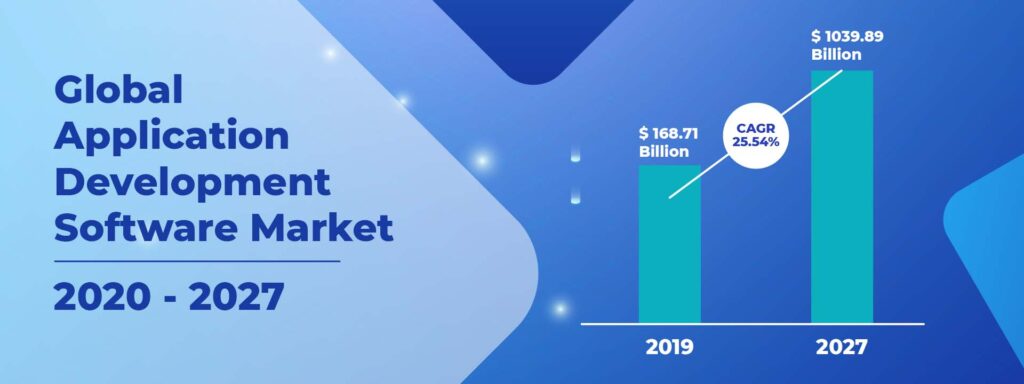
According to studies, the global software development industry is expected to surpass a colossal figure of $1000 billion by 2027.

global software development industry

Image Source: Verified Market Research

As the need for software development soars through the sky, the demand for technology partners is also at an all-time high.

We understand that choosing a long-term technology solution provider is a daunting task, and that’s why our experts have created this article to help you through the journey.

Let’s begin by understanding what is a technology partnership.

What is Technology Partnership?

Technology partnership is the process where an organization or company decides to hire an external IT development agency to plan and execute software development projects, instead of an in-house development team.

A third-party software development agency handles entire software development projects with seamless communication to successfully meet your technology partnership goals.

It is a simple long-term “give and take” relationship between you and an IT development company.

Technology partnerships exist to aid brands and businesses in optimizing their software systems. These partnerships occur between software development agencies that deliver digital products and the clients who use these pieces of software in their daily business operations.

What are the Top 10 Considerations for Choosing a Business Technology Partner?

There are many things to analyse and examine before finalising your technology partner. To save you the trouble, here’s a list of things to consider before choosing your technology solution provider:

1. Skills & Expertise

The first things to consider when choosing a business technology partner are the capabilities of the technology solution provider. Carefully analyse the case studies and portfolio on the company’s website for a deeper insight into their past clients and projects.

Look for expertise in technologies like UI designapp developmentwebsite development, automation, machine learning, etc. to align with your software development requirements for reaching optimum results. Also, pay close attention to different facets like team integration, timely deliveries, seamless communication and so on.

If the features and skills match your technology needs and preferences, then you can form a secure technology alliance with the company.

2. Diverse Portfolio

The business technology partner that you choose should have a diverse portfolio, proving hands-on experience with multiple industries.
First of all, a diverse portfolio proves the technology partner’s expertise in handling a varied collection of projects.

Secondly, your software development needs are bound to change from time to time as a growing business. A software development agency with diverse skills and experience can easily align with your ever-changing needs for a successful long-term technology partnership.

3. Long-Term Partnership

software development

Although SaaS-based business arrangements may be viable in some cases, a long-term deal is the best way to go when searching for a business technology partner.

With regular updates, maintenance, bug fixings and ongoing support, software development is not a one-time solution, but a continuous project. That’s why make sure that the responsive technology partner that you choose aligns with your long-term software development goals.

Scalability and flexibility are two important factors that you must consider while looking for a business technology partner. If you overlook this vital factor, your technology development requirements may outweigh the services of the technology partner. Align your long-term goals with the company’s capabilities for a healthy and long-lasting technology partnership.

4. UX-Design

When it comes to web development and app development, the user interface plays a significant role in increasing your brand’s outreach and retaining your existing audience.

An ideal business technology partner will provide highly skilled UX design experts for all your software development needs. They should be able to build seamless, easy-to-use and intuitive user interfaces that not only resonate well with your audience but elevate your brand’s online presence to a whole new level.

User-friendly experiences are pivotal for successful software development.

5. Security & Privacy

Security is one of the most important factors to consider in order to form a secure technology alliance. Cyber vulnerabilities like data leakage, broken authentication, cross-site scripting and so on are some of the biggest threats to the digital world.

Every industry’s online presence is vulnerable to cyberattacks, risking sensitive consumer data and jeopardizing businesses altogether.
The ideal technology partner should have the latest technology and expertise to prevent such vulnerabilities with powerful and robust backend development, delivering secure online experiences for your consumers and an impenetrable digital infrastructure for your business.

Furthermore, make sure that the company’s safety features are compliant with the latest digital security standards.

The technology partner that you choose should also respect your business’s privacy. Non-disclosure agreements are encouraged to prevent piracy and intellectual theft.

6. Seamless Communication

Seamless Communication

Communication is key for a successful technology partnership.

24×7 access and rapid response are ideal for building a healthy and secure technology alliance. An ideal technology solution provider must value your time and communicate whenever you need it. Every software development project begins with communication where you convey your ideas and needs, this step must be treated with the utmost importance.

Additionally, a transparent software development process is extremely beneficial. As a client, you should always be in the loop. An ideal technology partner notifies of every change and keeps the client updated at all times.

Seamless communication and 24×7 access provide a way for you to stay involved with the ongoing project.

7. Budget-Friendly

A business technology partner is the best fit when its cost of IT solutions fits your software development budget.

In a long-term technology partnership, budget plays a significant role. If you can cover the initial costs of the software development and it becomes unaffordable eventually, your app or website may have to run on outdated versions and bugs. Furthermore, you will have to restart the search for a more affordable technology partner.

That’s why it is important to align your budget for the long run.

Along with budget-friendliness, an ideal technology must provide you with optimum value for your money. It should be able to scale your business digitally and provide maximum Return On Investment (ROI).

8. Innovation & Ideation

Ideation is another significant factor to consider while choosing a business technology partner.

Along with technical proficiency, an ideal technology solution provider must have the creativity to craft solutions. It should be able to able to identify specific problems and present creative and authentic software services, like alternatives for legacy systems and solutions for maximizing ROI.

Access to the latest technologies is a big part of innovation. State-of-the-art technologies like Artificial Intelligence, Machine Learning, Augmented Reality, Virtual Reality, etc. are among the emerging trends in software development.

9. Company Values

technology solution provider

This factor is often ignored by businesses, forming a weak foundation for a long-term business technology partnership.

Technical proficiency and soft skills are just the “tip of the iceberg” when considering the qualities of a prospective IT development company. For a healthy technology partnership, you must align your company’s values and long-term goals.

Your long-term technology solution provider becomes an integral part of your business family, and this kind of partnership is bound to fail if the values, ethics, and goals don’t match.

10. Global Benchmarks

Another way to know if an IT service provider is worth your time and money is by checking global benchmarks.

Global benchmarks let you know that the company is trusted by its clients and has delivered top-notch services over the years, in other words, a badge of trust and expertise.

For example, ISO certification is a prestigious benchmark for IT development companies.

Now that you know the top 10 things to consider before choosing a technology solution provider, let’s discuss how to find the ideal technology partner.

Where to find the ideal technology partner?

The best platform to search for technology solution providers is clutch.co

Clutch is the go-to platform for searching software development companies. It provides a detailed profile of the top technology partners along with specific factors like:

  • Rating (out of 5)
  • Service focus
  • Client focus
  • Industry focus
  • Minimum project size
  • Average hourly rate
  • Company size

Analyze these profiles and visit the websites of your preferred companies to shortlist the ones best suited for your software development needs.

As an ISO-certified technology solution provider with extremely high standards, we have a habit of going beyond expectations and delivering consistent and scalable products.

We’re not just any ordinary web development agency, but your technology partner in success.

This means that we’re always with you in every step of the visionary process; planning, design, development, and delivery of digital products and services. Achieve all your business goals satisfactorily and unearth new business opportunities that give you undisputed recognition in an overcrowded market. From start-ups to enterprises, we help you overcome your modern business challenges and grow your business optimally.

We have also been entrusted with the Google Partner and Facebook Partner badge, providing you with time-tested branding and marketing services along with software development.

Core Software Development Services:

  • Customer-Centric eCommerce Development
    • Magento eCommerce
    • Shopify eCommerce
  • Intuitive Web Development
    • WordPress Development
    • Website UI/UX Design
    • Odoo Development
    • PHP Development
    • .NET Development
  • Cutting Edge Mobile App Development
    • Android App Development
    • iOS App Development
    • Cross-Platform App Development
  • Bespoke eLearning Solutions
    • Full-Fledged Learning Management Systems
    • Feature-Rich Educational Apps

If you’re interested in a technology partnership or have further questions, feel free to contact us.

Get revolutionary and result-driven digital products that crumple your competition and take your online presence to new heights. Our team of experts doesn’t stop till they create the perfect visionary scalable products that help your business grow successfully and exponentially.

We welcome you to exploit our expertise!

Looking for a long-term technology partnership?
Look no further!