MEAN Vs MERN, Here’s How We Made It Super Easy For You To Choose

Before starting any software development project, the first thing that comes to a developer’s mind is which technology stack to choose. Choosing between the MEAN stack and the MERN stack is like choosing between fluffy cat videos or cute dog videos. Hard choices are difficult to make. And, we may plump for retrievers but anyways we were talking about the best technology stack, MEAN or MERN?
MEAN STACK VS MERN STACK, UGH
Let us make it easy for you.
But before that, we need to understand what a technology stack is.

What Is Stack?

When a developer creates a web or mobile application, they use a collection of programming languages called a “tech stack.” A tech stack is a collection of languages used to manage client-side and server-side (also known as front-end and back-end) infrastructure, and it is possible to gauge an applicant’s strengths and shortcomings by simply looking at its tech stack.

The technology stack has become essential for building maintainable and scalable applications.

How Do We Pick the Best Stack?

Before making a choice on the MERN vs MEAN stack, think about the following:

  • What are the requirements for your project?
  • Do you want speed?
  • Do you want to go above and beyond the requirements of the project to attract more viewers?
  • Is your group/business qualified and experienced in this area?
  • Do you have a flexible and scalable development team?
  • What is the final cost of development?

What Is Mean Stack?

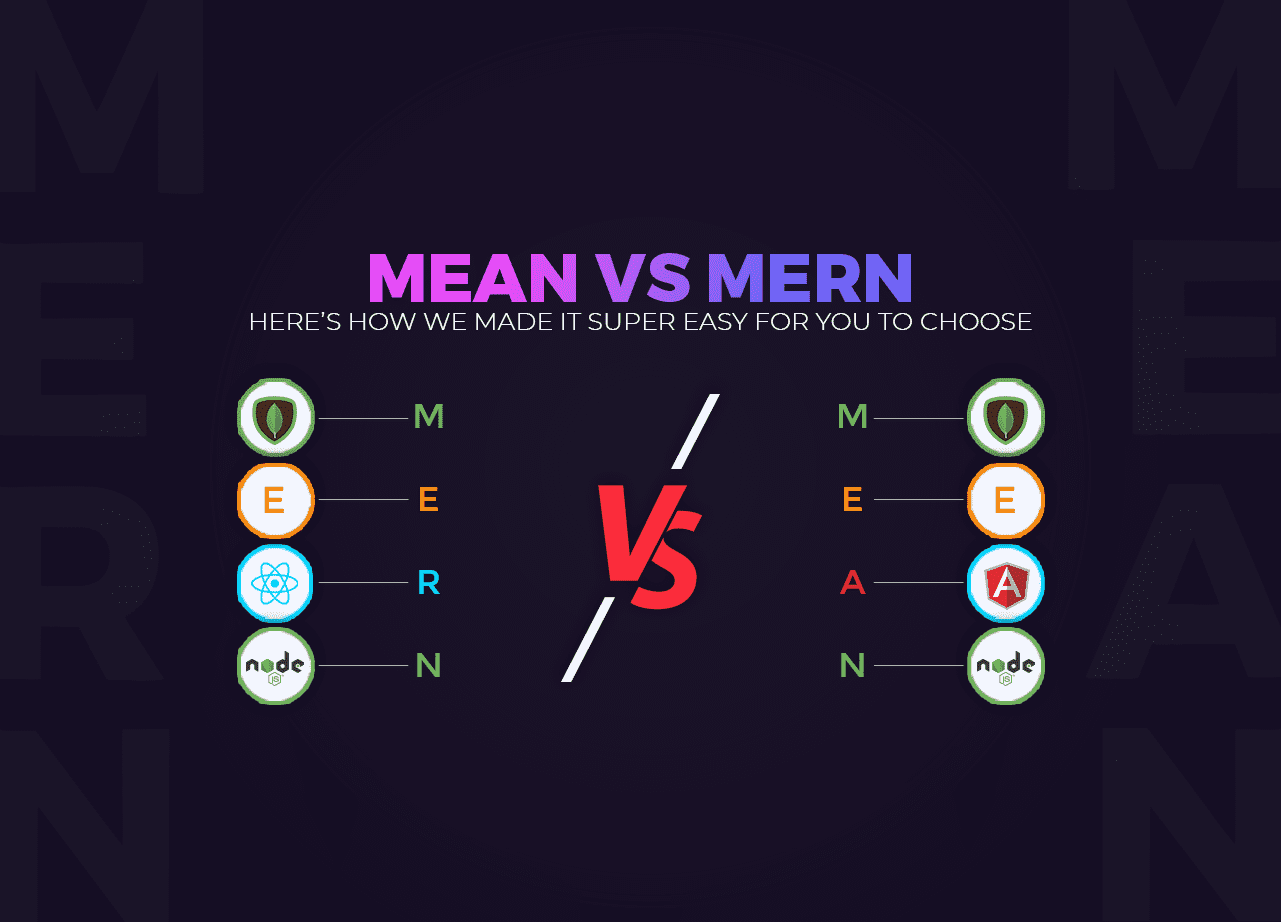
MEAN stack is used to develop full-stack web applications. It is based on a Javascript framework and named after MongoDB, ExpressJS, AngularJS, and Node.js. Mean stack is used for faster development and deployment of web applications.
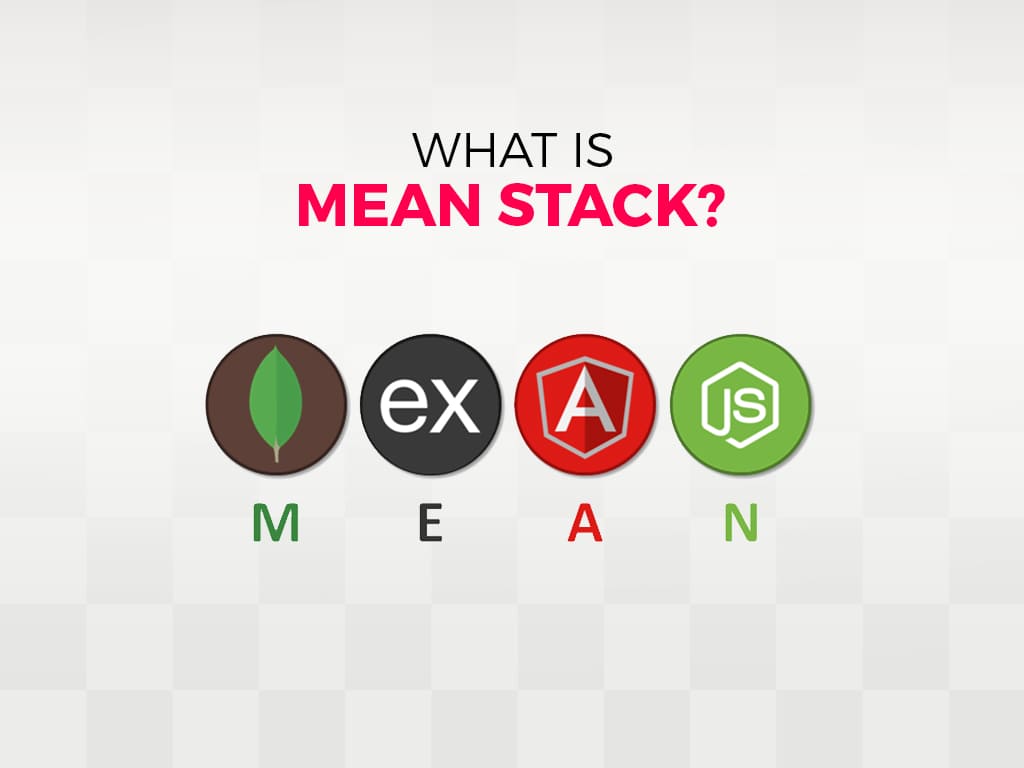
MongoDB
Helps create powerful and responsive databases.

ExpressJS
Helps maintain code accuracy.

ExpressJS
Helps maintain code accuracy.

AngularJS
Helps in the smooth data flow among all the application parts.

Node.Js
Helps in providing a better run-time environment.

Why Mean Stack?

The usage of a single language for both the client side and server side makes the MEAN stack superior to other options. Since JavaScript is used for all of these technologies, your web development process is organized. Node.js has made it possible to implement JavaScript on the server side. It is simpler to reuse code from the back end to the front end when using Angular.js and JavaScript on the front end.

The MEAN stack provides a modern method for web development. It also makes use of the flexibility of current SPAs (single-page apps), which unlike the majority of conventional web applications do not require a complete page refresh for each server request.

Famous companies using MEAN stack:
Linkedin, Netflix, Uber, Trello, Paypal, eBay, NASA, Walmart, and many more.

What Is Mern Stack?

The acronym MERN stands for MongoDB, Express, React, and Node. MERN is an additional open-source framework that streamlines and accelerates development. MERN is the top platform for creating hybrid web and mobile apps.

With the MERN design, creating a three-tier architecture (front end, back end, database) is simple and can be done completely in JavaScript and JSON.
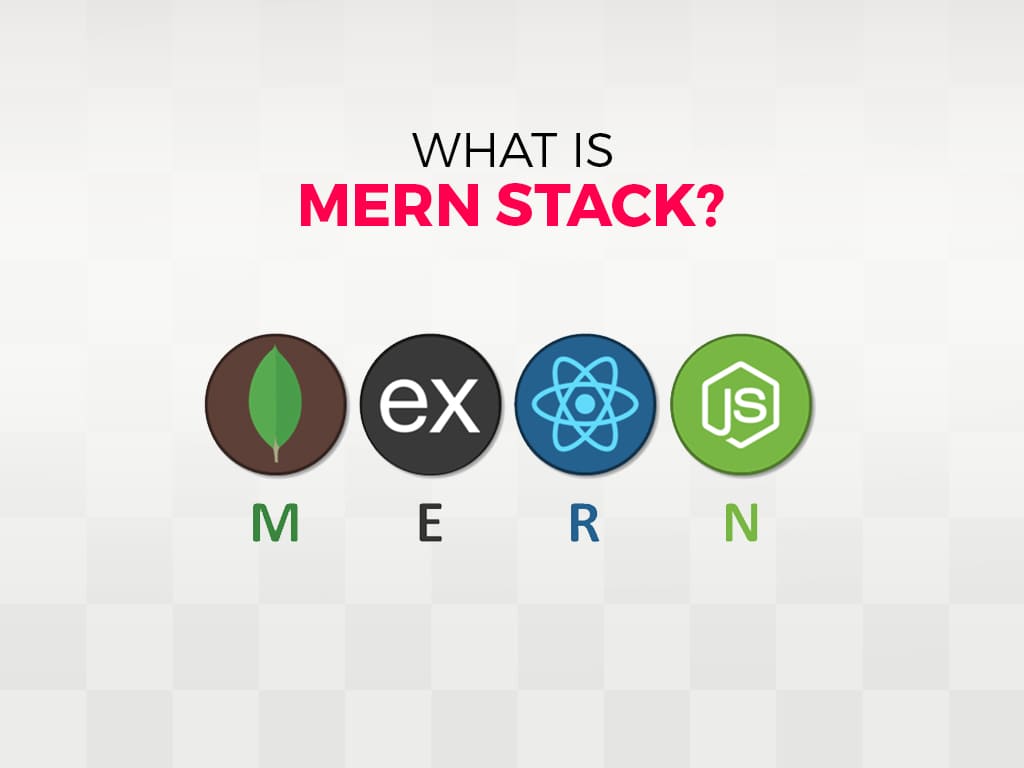
MongoDB
Stores back-end applications.

ExpressJS
Looks after website functionality and structure

ReactJS
Facilitates creative the UI of single-page web applications

NodeJS
Lets a machine run javascript

Why Mern Stack?

The MERN stack’s goal is to develop apps using only JavaScript, allowing for faster application development.
But, Is the MERN stack still popular?

The MERN stack’s primary benefit is that it is a platform that offers organizations and enterprises the agility, performance, and intelligence they require to advance their operations. Since all web users now require high-performance levels and interactivity, JavaScript is at the core of many technologies that enable developers to create and deploy websites that offer rich user experiences similar to desktop and mobile apps.

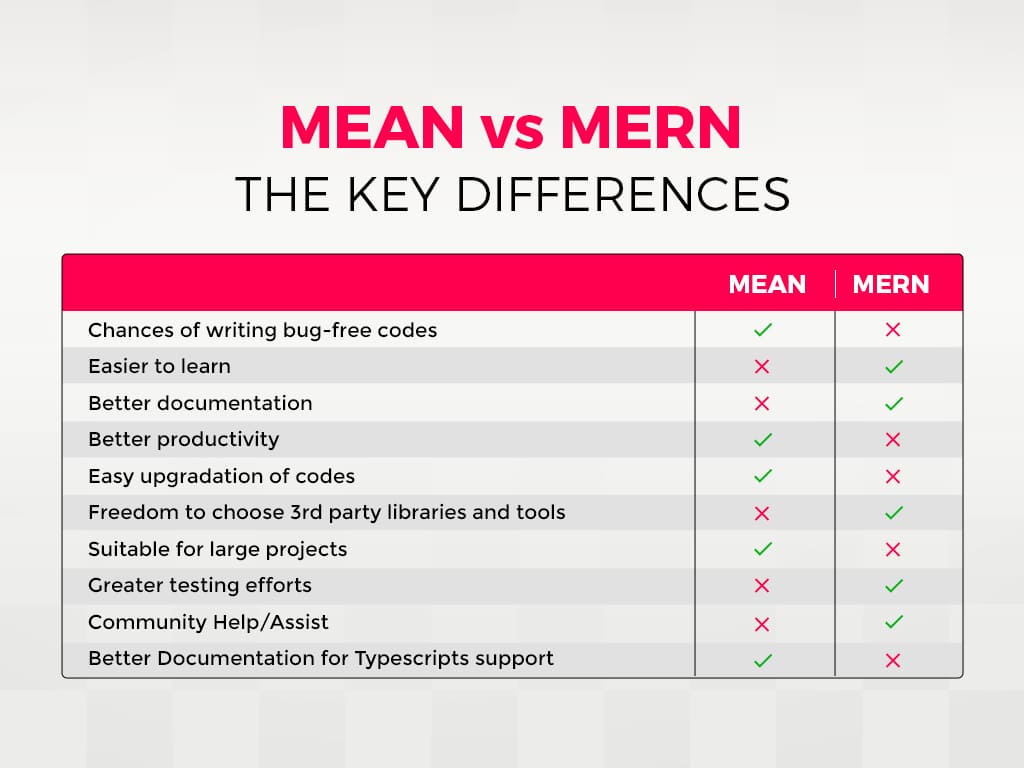
Mean Vs Mern Stack: The Key Differences
Mean Stack Vs Mern Stack, How To Choose?

These technology stacks, MEAN and MERN, are open source. Express.js, MongoDB, and Node.js are the three technologies they share.

Both Angular JS and React JS are focused on structuring the UI layer components and rendering them with the best possible code. Both of them have access to a wide range of documentation, model codes, and tutorials.

MERN vs MEAN Stack has gained popularity due to the popularity of Angular vs. React. The AngularJS framework is well-known and has grown in popularity for creating responsive web applications. React, on the other hand, has recently shown to be a game-changer for front-end programming.

The use of the Angular and React JS libraries, respectively, is the main difference between the MEAN and MERN stacks. The decision between MEAN and MERN might be rather difficult because both frameworks focus on UI-level abstraction. On the one hand, Google Inc. supports Angular JS, whereas Facebook Inc. created React JS. Each of them has the support of influential business people as a result.

Before making your choice on the MERN stack vs Mean Stack, you must concentrate on a variety of factors.

What factors influence your choice when you are juggling in the MEAN stack vs the MERN stack?

  • Enterprise-Level Project
  • UI Essentials
  • Three-Thirds Party Support
  • Large-Scale Apps
  • Niche Projects

Additionally, given the variety of technological stacks on the market, you can find it challenging to invest in a focused project. Your decision to select the technological stack will be influenced by the overall project requirements, which need to be carefully analyzed.

MEAN is the approach to use if you want to create a bigger project. Depending on your needs and budget, MERN will assist you in developing web apps of different sizes.

In short, there isn’t an ideal stack in the development industry. You must be mindful of the project’s requirements as well as your best-suited budget limit to select the appropriate stack.

Choosing can be a daunting task, but we have you covered.

With a never-say-die attitude and 17+ years of experience, Communication crafts offer highly skilled MERN and MEAN stack developers to help your business flourish and prosper with ease. Our web development services can provide websites and web applications that can captivate your exciting audience and entire potential ones.

We welcome you to exploit our expertise.

8 Steps To Build A Robust Software Release Plan

Resist The Software Release Fears

Half-baked releases are unaffordable. And if downtime and bugs are becoming nightmares for you, then it’s time to take a closer look at your software release plan.

Investing in a robust release management strategy is crucial if you want to keep your firm functioning smoothly and avoid pricey failures.

A survey claims that the lack of a thorough software release plan is the sole cause of 75% of software problems. These problems, later on, might simply result in extra expenses and a bad impression in the target audience’s eyes.

So, Software release planning is fundamental for a successful software release, but how do you build one?

In this blog, let’s turn all the stones of the software release plan and find answers to significant questions like, What is a software release plan? How is a release plan created? What are software release management tools?

Let’s go!

What Is A Software Release Plan?

In simple words, a software plan is developed to ensure the quality, efficiency, and speed of software delivery. It covers all aspects of a software development lifecycle, including the stages of developing, testing, deploying, and sustaining a software release.

The main goal of software release planning is to establish a desirable schedule for multiple software release dates and guarantee that the schedule is followed.

Additionally, by developing a thorough software release plan, you can guarantee that your team has all the information required to maximize the likelihood of a successful release.

How To Create A Concrete Software Release Plan For Your Business

1- Define the software type

The first step in building a software release plan is figuring out exactly what kind of software you are delivering. Is the software a PWA, a mobile app, a web application, or something else entirely?

2- Specify the features

The next step in planning a first-time software release is deciding what requirements must be met for your program to be released. This typically involves detailing the features you plan to include and the user flow for your product as a whole.

3-Set crystal clear expectations

It’s critical to define the software project’s objectives and deliverables in detail. Each team member’s understanding of their duties and responsibilities is assisted with thorough project outlines. As each stage is completed, the team will be able to monitor their progress. Additionally, making expectations explicit help customers grasp what the product release will provide.

4-Prioritize product backlog

The success rate is higher for developers with a simple product backlog. Software release management is well-planned and structured by prioritizing work lists and explicitly stating the order of items in the product log.

5- Work up your software proposal

Your proposal should project the course of events for the days preceding the actual software release. The software release proposal is most useful for establishing objectives, assigning tasks to team members, and establishing a deadline for project completion.

6-Look out for risk

All potential setbacks that might happen at various stages of development are included in the risk analysis. Developers can prepare for potential outages during the software release by incorporating risk analysis into the process.

7- Test.Test. Test.

In the production stage, routine testing should be conducted on every element of the software release. Beta testing allows programmers to identify potential problems and fix them right away.

8- Get.Set. Launch

The final step consists of just releasing your product to end users while closely monitoring performance to make sure everything is operating as it should.

What Is The Software Release Management Process?

Stage 1: Planning

Starting software planning with the stakeholders is the first step. This stage can be completed in a number of ways, but typical actions include conducting a start meeting, creating a business case, and developing a work breakdown structure that is in line with the project dependencies.

The release manager will be able to finish the system development life cycle with the help of all of these tasks. In order to gain permission to develop the software and prepare it for development, it’s crucial to get in touch with operations teams and management during the planning phase.

Stage 2: Building

The second stage of the release process, when team members begin developing the software, takes the longest. At this point, stakeholders should be given clear information about the project and its goals.

Once the information is clear, the team may begin developing the software while testing and optimizing the necessary features. It is advised that you begin keeping an eye out for other potential dangers or bugs in your production environment in order to be prepared for the testing phase.

Stage3: Testing

To make sure the product is ready to use and functions properly, testing is essential. While it’s crucial to start user testing explicitly at this point, it’s as necessary to have team members assist in finding and fixing any bugs that occur. Additionally, user testing gives potential clients the chance to try out your product in exchange for compensation.

Stage 4: Preparing

Your team should finish the needed modifications and feature improvements in the staging environment during the pre-release phase. This indicates that all of the software is in good working condition and is ready for use.

It is advised that you perform a final quality check, if not more than once, to ensure that all functionalities are effective. You and your team can accomplish this, but it’s crucial to enlist assistance from team members who are not directly involved since they will be able to view the software from fresh perspectives. Start deploying the program to a live setting as soon as it has been finished and authorized.

Stage 5: Deploying

The last stage of a software release is deployment. It involves extending functionality into the natural setting in order to attain the software’s original idea.

Additional testing is necessary before deploying a software release to guarantee that the functionality is maintained in operation. Once this is complete, it is strongly advised to regularly assess integrations and make the required modifications to enhance functionality.

Benefits of a software release plan

1- Enhanced Release activities
2- Higher organizational performance
3- Accelerated time to release
4- Eliminated Failures

Final Thoughts

Creating a software release plan is not a five-finger exercise. But definitely worth the effort.
Additionally, software release planning offers you a clear grasp of your company’s objectives and goals and puts you in a better position to meet them all.

Build a Robust Software Release Plan with Communication crafts

A software release plan is important for any company to make steady progress and continue delivering results for customers over an entire product lifecycle. And that’s where communication crafts play their role.

Onboard 10x tech talent and end-to-end development support from communication crafts to ensure a risk-free and smooth software release.

We’re not just any ordinary software development, but your technology partner in success.

This means that we’re always with you in every step of the visionary process; planning, design, development, and delivery of digital products and services. Reach all of your business objectives successfully, discover different business prospects, and gain unquestionable recognition in a crowded industry. We assist businesses of all sizes, from start-ups to large corporations, in overcoming current business obstacles and achieving maximum growth.

Looking for professional assistance to build
Software release plan?

Accelerate Your App’s Launch by Hiring Flutter Developers

The Tony Stark of the multiverse of frameworks
FLUTTER IS ON ROLL!

Making its debut in 2015, the Flutter framework was first released by Google under the name Sky. Flutter is based on Dart, a programming language with the fundamentals of C and C++. Since then, developers gained access to platform-specific SDKs for iOS and Android, giving the entire development cycle and the finished product a native feel.

So What made Flutter “The Best Mobile App Development Framework” and How to Hire Top Flutter Developers in 2023?

Let’s get into the details!

Hire Top Flutter Developers

At the 2015 Dart Developer Summit, Google announced the launch of Flutter and presented the hot reload functionality, which at the time was super cool and amazing because it allowed developers to make changes to their code without having to restart the entire app each time.

Before leaping the Perks of Flutter and the Guide to Hiring Flutter, let’s first understand what Flutter is in brief.

What is Flutter?

What if we told you that you could create a native mobile application and build high-quality, maintainable solutions with just one line of code? Would you be thrilled?

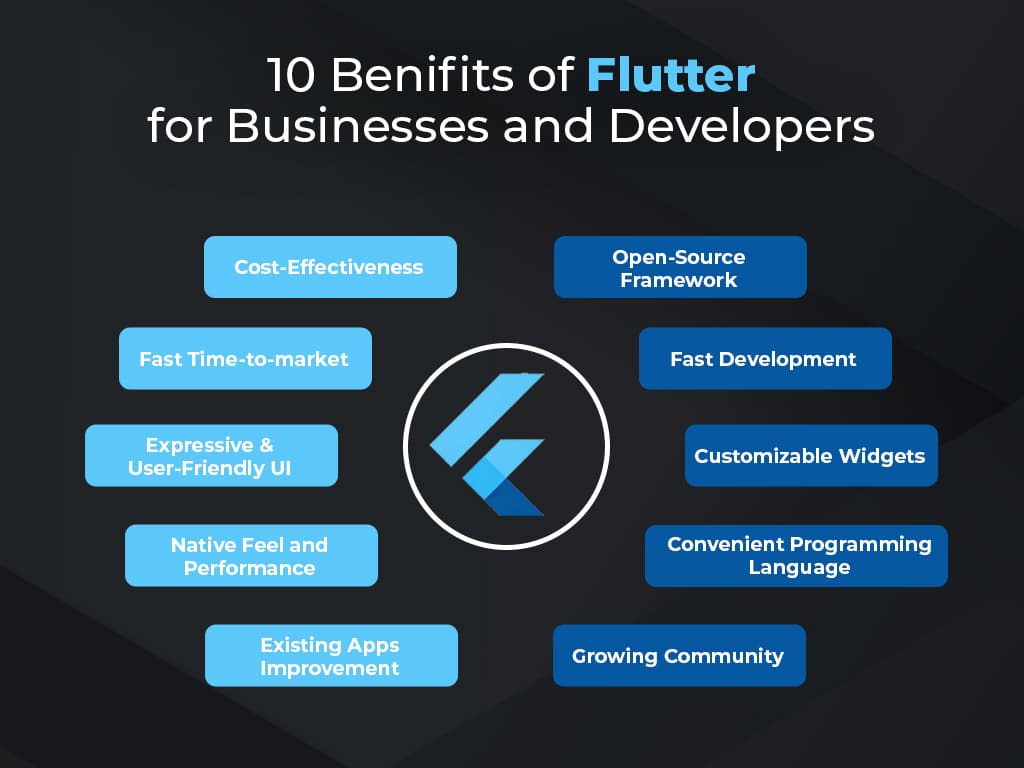
Yes, the Flutter framework indicates that two different apps can be created using a single codebase and programming language (iOS and Android). In comparison to its rival technologies, Flutter has shown extraordinary growth in popularity over time. Dart, an object-oriented programming language, is used to build Flutter applications. The core idea behind Flutter depends heavily on widgets.

PERKS OF THE FLUTTER FRAMEWORK

Divine Community

The tech behemoth Google is the creator of Flutter. Google continuously supports Flutter developers by providing frequent updates and bug fixes. The Flutter app development community has been expanding steadily. Experts and novices alike are willing to offer their expertise because of the welcoming developer community. Additionally, Google hosts several events that assist both new and experienced businesses in networking, discussing, and learning how the Flutter app may help their operations flourish.

One Code Army

With the help of the Flutter framework, programmers can create applications that are visually appealing, speedy, and cross-platform using only one codebase. conserving resources and time in the process.

Solves The Vital Issue

The Hot Reload feature, which is an exceptional time-saving tool for creating mobile apps with Flutter, is available to developers. With the feature, developers could examine the results immediately and improve the execution of their apps.

Because of the Flutter features, you only need one Flutter development team to create and maintain your apps. As a result, it considerably lowers the cost of human resources and cuts down on the amount of time needed to perform development tasks.

Quicker Time To Market

Developers don’t have to write platform-specific code because they are using the same code base to create both iOS and Android apps. Flutter enables the implementation of any 2D-based UI without requiring interaction with a counterpart in a native application.

Flutter is a platform with a single codebase. This implies that you can construct many apps using a single programming language and codebase (e.g. for iOS and Android). Due to the quicker time to market, entrepreneurs can save time.

Drops The Business Risks

Because of its improved performance and stability, Flutter has a large developer talent pool. Using Flutter will make it simple to find developers since there is a sizable following for the Android developer community. Alibaba, Google Ads, AppTree, Reflect, and My Leaf are just a few examples of the numerous global businesses that employ Flutter. Flutter lowers the risk to enterprises and encourages high output and speedy time to market.

FLUTTER FRAMEWORK

Okay, Flutter is incredibly awesome. Let’s just accept the fact and move further to:-

HOW TO HIRE FLUTTER DEVELOPERS

Here’s What Flutter Developers have on their Plate:-

Responsibilities of a Flutter Developer

  • Design and Develop scalable Applications
  • Write comprehensive clean code and update existing ones
  • Participate in the development cycle
  • Fix Bugs
  • Keep up with the Tech-Trends
  • Expand and Enhance Application Design

Skills to look for before hiring a flutter developer:-

HARD SKILLS

  • Flutter Framework
  • Git
  • Computer Science
  • Software Development Life Cycle
  • Architecture Approaches
  • GoF Patterns
  • SQL
  • Kotlin/Swift
  • Dart Language
  • Android Development
  • CI/CD Services

SOFT SKILLS

  • Communication Skills
  • Creativity
  • Conflict Management
  • Teamwork
  • Adaptability
  • Dedication

Step To Hire Flutter Developer

Specify your Requirements

Evaluate your software development needs before contacting Flutter developers for hire. Examine the position in the context of various factors, including the candidate’s experience, education, and skill set. The higher the profile, the more specific it needs to be.

Frame a Job Description

Compose a job description that includes the project’s specifics as well as the skills the developer must possess. Depending on your project, you can additionally describe the precise duties and responsibilities of the developer.

Screening

Before the interview, screening enables you to learn more about the developer. Examine their portfolio and resume. Look for credentials and occupations that best meet your needs.

Qualifications to look for in expert Flutter developers

  • Experience in developing two or more Flutter-based iOS or Android apps. released and available on GitHub or the App Store/Google Play.
  • 4+ years of experience developing mobile software.
  • Knowledge of external libraries and APIs
  • Knowing the Agile development lifecycle
  • SVN, Git, or other version control system knowledge
  • Proven expertise in reworking previously written code, creating detailed documentation for existing code and creating legible code.
  • Practical knowledge of utilizing and implementing Flutter 2.0

Interviews and tests

If you’re hiring a Flutter developer, you should look for a candidate who has experience developing for a variety of platforms and languages, most frequently native apps.

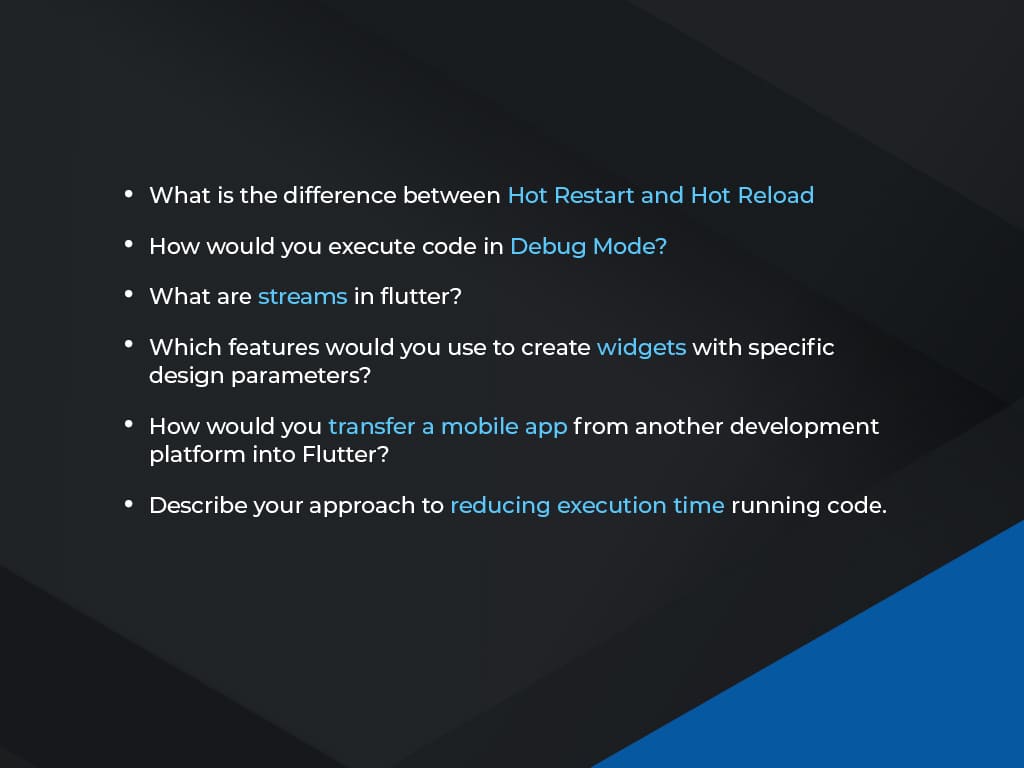
Below are the questions to ask while interviewing a Flutter Developer

expert Flutter developers

Onboard smoothly

How would you feel if no one offered assistance and you had no idea what you were doing?

A crucial part of any hiring procedure is onboarding. The following steps should be taken to onboard new candidates:

  • Organize all the basics
  • Explain company culture
  • Set up one-on-one meetings
  • Provide an overview of the processes involved in development.
  • Introduce software tools
  • Establish realistic expectations
  • Collect Feedback

Too frequently, poor employee onboarding procedures cause businesses to lose 25% of their employees within the first year. Making an onboarding route is therefore essential.

Final Thoughts

One of the best cross-platform app development tools available is the Flutter Framework. Because it is similar to native languages, performs well, and has a large number of pre-made solutions, it is simple for both native and cross-platform mobile app developers to master.

Anyway, we had a good time going through this blog with you. Hiring an ideal Flutter developer that matches your requirements can be a daunting task at times. So, allow us to make your hiring procedure a lot easier.

Hire Flutter developers from communication crafts

As a leading Flutter App Development Company in the UK, we served as a strategic talent and technology partner to market leaders such as Colgate, Infosys, Wipro, Mercedes Benz, Nano sonics, Versace, and Cathay Pacific, to name a few, holding supremacy in digital innovation technologies.

With 17+ years of hands-on experience, we understand your needs for creating a new-age application. We precisely cater to your app development requirements with the help of our dedicated team of iOS developers, Android developers, UX/UI designers, and QA engineers. Our app developers deploy the most up-to-date mobile app monitoring technologies to collect comprehensive analytics of the performance of your mobile app after it has been released and to assist in the timely release of updates that will improve the performance even more. Every line of code we develop for your mobile app is quality assured because the top mobile app developers are on our development team. We excel at developing the best mobile app features that deliver a fantastic user experience.

HIRE FLUTTER DEVELOPERS THAT MATCH YOUR REQUIREMENTS

KNOW-HOW

5 Ways to Upscale Your Tech Talent Hiring Strategy

Tech-Hiring strategy with a Touch Of Midas.

The days of waiting impatiently for incoming applications are long gone.

A shortage of tech talent is not an unknown phenomenon. With more and more industries relying heavily on technology for everyday operations, the work environment is constantly evolving around the world, and employees now have more options than ever regarding where they intend to work.

Businesses must now proactively convey to candidates that they are adaptable and willing to meet the needs of a new generation of employees, in addition to offering satisfying and rewarding career opportunities.

A survey by the IMF predicts that by 2030, there will be a shortage of more than 85 million tech professionals, which could result in a loss of over $8 trillion in yearly income.

Software developers, cloud engineers, and other tech-related experts will become more in demand in the coming years. So, in this cut-throat competition, how to ramp up your Tech Talent Hiring Strategy and attract top engineers to your dream team?

Let’s find out how:

Pen down your requirements and stick to it

A company’s success and reputation are largely dependent on its employees and their abilities. Because of this, the hiring manager or company must accurately and promptly determine their recruitment needs. Be careful to consider all the relevant information, priorities, goals, objectives, and potential issues before deciding to begin recruiting.

Here’s how to specify your hiring needs:
The qualifications an employer deems necessary for a candidate to be evaluated for a role are termed as hiring requirements.

  1. Come up with precise requirements
  2. Frame a Specific Job Description
  3. Evaluate your budget
  4. Evaluate your current needs
  5. Define your short-term and long-term goals

Researching top applicant platforms will surely come in handy

Identifying where the top applicants are coming from will help you source people more effectively. When you start looking for the right talent, you’ll run into different talent-hiring pipelines. You must choose the appropriate pipeline based on the required level of skill and experience.

Developers may promote their portfolios and sample work on a variety of platforms, including GitHub, online development communities, and other recruiting sites.

The best employment sites and communities are those where you can publish ads and shortlist candidates. In addition, you can look for references in the communities and get suggestions on the kinds of interview questions to pose.

A well-structured interview process is your best bet

An interview framework is a format where candidates are all asked the same questions regarding a job opening. These are pre-planned questions that typically concern a candidate’s abilities and work history. Interviewers frequently refrain from asking many follow-up questions or participating in off-topic conversations with candidates during structured interviews in order to give themselves enough time to address each topic on their list.

Why is having an interview structure so important?

  1. Gives a fair evaluation to each candidate
  2. Assess candidate’s abilities for the job role
  3. Helps employers make candidate decisions quickly
  4. Conducts faster job interviews

Bring your A-Game while hiring

A drawn-out and complicated hiring process will undoubtedly result in the loss of good talent. Due to a large number of resignations and a worldwide Tech-Talent shortage, many companies are having trouble finding top employees. Make sure that your hiring procedure does not last more than three weeks. You can do away with pointless hiring procedures to guarantee a quick hiring process.

Take Expert Advice for the rescue

We all know that a recruiting agency’s ultimate focus is to assist job seekers in locating new employment opportunities while assisting employers in identifying the ideal candidate for open positions.

top applicant platforms

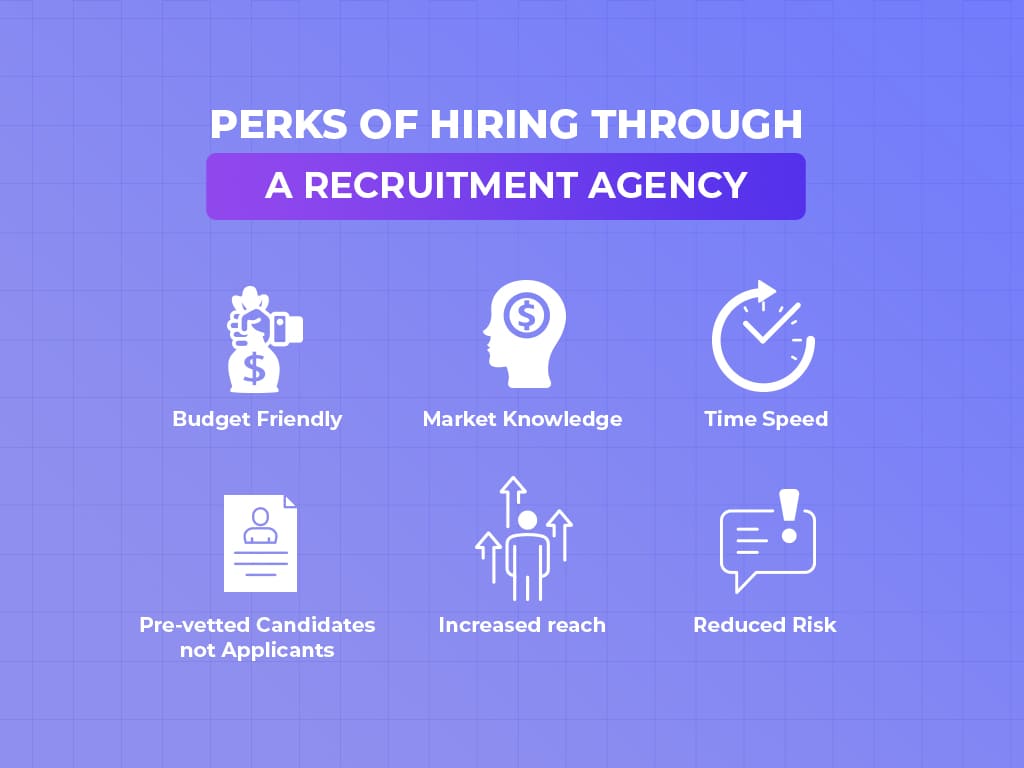
Taking the assistance of experts from a recruitment agency is a smart strategic move. It comes with a slew of benefits, including lower costs, 10X Talent onboarding, quick recruitment, a low backout rate, pre-vetted tech talent, and more. This saves you time and the efforts of internal resources that you would otherwise spend on searching for that ideal Tech Talent.

Benefits of Hiring with Communication Crafts

  • 24x7x365 communication
  • 10X Tech Talent in 48 hours
  • 17 YEARS Experience
  • 4000+ Pre-vetted Developers
  • 98% trial-to-hire success rate
  • 100+Skills, Zero Risk
  • Flexible Hiring Models
  • Cutting-Edge Technologies

This is how you can ramp up your Talent acquisition strategy framework and ensure you build your dream Tech Team. Don’t just limit your search within the boundaries. Hire beyond borders. Or else, you can explore the CC approach to hiring and put all your hiring worries to rest.

Hire with communication crafts
Match your project needs with the ideal remote developer. With dedicated project managers and a tried-and-true remote ecosystem, we offer a transparent development process, 24x7x365 communication, and an optimum performance account.

Our dedicated developers utilize a potent blend of technology and innovation to provide end-to-end software development solutions under one roof. We leverage cutting-edge technologies for high-quality software development solutions that span many industries like banking & finance, food & drink, eCommerce, health & fitness, entertainment, photography, logistics, eLearning, and more.

Our software experts are adept at building websites and mobile applications that help your business soar above the ever-growing digital competition. From concept creation to responsive design, avail top-tier software development from our pre-vetted talent pool.

Hassle-Free and Worry-Free Hiring

Get in Touch

R Vs Python: What to choose for Your Business?

A QUESTION AS OLD AS TIME

R or Python? Or both? This question may seem quite outdated for experienced developers but for beginners who are simply unsure, this blog is for you.

R and Python have become two of the most popular programming languages for data scientists and data analysts due to the enormous rise in the importance of Big Data in the software industry.

So what works best for Data Science? Keep reading to find out.

Before being tempted to just give a biased opinion straight away, let’s first understand both Python and R and their key differences.

What is Python?

Headphones, Zero Bugs, and Python are a few of the many favorite things of developers.

Python is a widely-used programming language for computers that are used to build websites and applications, automate procedures, and do data analysis.
It’s a multipurpose, object-oriented programming language that places a strong emphasis on the accessibility of its code.

Python enables object-oriented programming, functional programming, and structured programming (OOP). For creating complex applications, it can be transcribed into byte code or deployed as a scripting language. High-level dynamic data types are defined, and dynamic type verification is possible.

Pros

  • Easy to Learn
  • Flexible
  • Supportive Community
  • Extensive Library

Cons

  • Time Consuming
  • Runtime Errors
  • Inefficient Memory Consumption
  • Weak for Mobile Devices

What is R?

R has recently been setting a trend in Business World

R is a widely used open-source programming language for statistical computing and data analysis. R typically includes a command-line interface. It is accessible on popular operating systems like Windows, Linux, and macOS. It is the newest cutting-edge technology.

The simplicity with which well-designed plots of publishing quality can be created using R, along with mathematical symbols and formulas where necessary, is one of its major strengths. The user still has complete control despite extensive consideration given to the graphics’ minor design choices.

Pros

  • Open Source
  • Platform Independent
  • Array of Packages
  • Continuously Growing
Cons

  • Weak Origin
  • Basic Security
  • Complicated Language
  • Lesser Speed

Key Difference Between R and Python

Nos.RPython
1R’s primary objectives are data analysis and statistics.Python’s primary objectives are deployment and production.
2R users are more likely to be academics and R&D experts.Python users are typically programmers and developers.
3R enables flexibility in the application of existing libraries.Python gives the flexibility to create new models from scratch.
4R is difficult to LearnPython is easy to learn
5R is integrated to operate locally.Python is well-integrated with apps
6R visualization tools ggplot2, plotly, ggiraphPython visualization tools Matplotlib, bokeh, seaborn

R vs Python for Data Science

Data science is an interdisciplinary area that uses information from data to guide a variety of applications by employing scientific methods, procedures, algorithms, and systems to extrapolate knowledge and insights from noisy, structured, and unstructured data.

Data scientists are concept leaders who use their proficiency in machine learning and statistics to extract valuable knowledge from data. Large datasets, such as social media posts, medical information, transactional data, and more, can be evaluated by them using a variety of techniques.

Python, SQL, C++, Java, R, and Perl are some of the computer languages that data scientists use for data mining, analysis, cleaning, processing, visualizing, indexing, and organizing.

Python is currently the most widely used coding language for data science.

The official Python repository, PyPi, is home to all required Python packages. R uses the CRAN (Comprehensive R Archive Network) repository in contrast. The tens of thousands of libraries and packages that are part of it can be used and improved by users.

Summary

In many ways, these two open-source languages resemble one another significantly. Both languages are available for download without charge and can be used for data science tasks such as processing data, automating data analysis, and doing research. The most crucial distinction would be that R is a statistical analysis tool, whereas Python is a general-purpose programming language.

Multiple factors affect which programming language is best. Python is preferred by software developers, web developers, systems administrators, and software engineers due to its widespread use and wide selection of libraries.

The R programming language is preferred by academics, researchers, scientists, and data engineers because it provides stunning graphics for data visualization and the ability to process massive amounts of data.

R might be a good fit for developers who are enthusiastic about the statistical computation and data visualization parts of data analysis. Python would be a better choice if, on the other hand, they are looking to work as data scientists and use big data, AI, and deep learning methods.

Hire seasoned developers in R, Python and 100+ in-demand skills with Communication Crafts

Communication crafts is a trusted technology and talent partner that offers a wide pool of Remote Web Developers for hire. We leverage cutting-edge technologies like Angular, React, and Vue for high-quality software development solutions that span many industries like banking & finance, food & drink, eCommerce, health & fitness, entertainment, photography, logistics, eLearning, and more.

Our experts are adept at building websites and mobile applications that help your business soar above the ever-growing digital competition. From concept creation to responsive design, avail top-tier developers from our pre-vetted talent pool. Connect with us here.

Still confused?
Connect with us.
With 17+ years of hands-on experience, Communication Crafts is a top-tier mobile application development company dedicated to helping businesses grow and flourish. We utilize a potent blend of technology and innovation to provide end-to-end app development solutions under one roof

Our app development services help you captivate your current audience, reach out to potential consumers, maximize organic traffic and boost conversion rates.

Top Mobile App Developers are just a click away

Communication crafts is a trusted technology partner that offers a wide pool of Remote Web Developers for hire. We leverage cutting-edge technologies like Angular, React, and Vue for high-quality software development solutions that span many industries like banking & finance, food & drink, eCommerce, health & fitness, entertainment, photography, logistics, eLearning, and more.

Our experts are adept at building websites and mobile applications that help your business soar above the ever-growing digital competition. From concept creation to responsive design, avail top-tier developers from our pre-vetted talent pool.

Looking for top-tier web developers?

Get in Touch


REMOTE TEAM UTOPIA : How to Build & Scale Remote Engineering Team?

From Shopify to Coinbase to Upwork to Pinterest and many more, top companies have accepted and shifted to a remote-first culture. According to a recent survey from Upwork’s ​​Future Workforce Report 2021, 40.7 million employees in America are expected to be working fully remotely in the next five years.

“Work from home” is no longer a perk but a Hiring Standard, especially in Tech -Industry. Remote teams provide businesses access to a broader talent pool and let employees work where and how they are most effective.

Why do People opt for Remote work?

Let’s understand the reasons from the recent survey by Flex jobs
Fewer interruptions (68%),
More focused time (63%),
A quieter work environment (68%),
A more comfortable workspace (66%),
Avoiding office politics (55%)

With the increase in Remote Team acceptance, the ways to manage a Remote Engineering Team need to scale up too. Being in charge of a remote team requires smart efforts. It demands the manager to constantly look after strategies that can aid them to increase productivity and build Remote Team harmony as well.

So how to keep up with the productivity and mental health of the Remote Team?

 Remote Team

This blog will help you with the appropriate strategies to manage your Virtual Engineering Team

But. before discussing the ways to scale a remote team, let’s first consider the challenges a business faces, in managing a remote engineering team.

Remote Engineering Team Challenges

1- Measuring Performance
2- Building Trust
3- Regular Communication
4- Managing Task


7 Ways to Build and Scale Your Remote Engineering Team

Hiring, onboarding, performance reviews, weekly check-ins, and whatnot! It takes a lot to manage an engineering team and especially a remote one. But a blend of the right strategies and patience can help you feel- OH-SO-REWARDING

1. Set up an effective onboarding process

Having a structured onboarding process is beneficial for attracting top engineers across the globe. The first 90 days of a new hire are crucial to making them stick around for a longer time. From the pre-joining procedures to the internal process, to the first and rest of the days, everything needs to be smooth, specified, and effective.

2. Prepare a structured Business plan

Remote Team Structure

In many aspects, employees rely on the organizational structure of the company. All necessary duties are more likely to be accurately and efficiently performed when there is a well-established working structure. When a firm framework is in place, it gives employees and customers more assurance in the company’s ability to operate seamlessly.

3. Examine your Remote Team Structure

A well-defined screening process and being explicit with your requirements is essential when evaluating and hiring remote staff. Organizations and recruiting managers need to be aware of the primary responsibilities of each job position as well as the team’s capacity for taking on new work. To scale efficiently, you can divide your team into smaller groups that are each focused on a certain area of the product by analyzing the team structure. You can create a clear hierarchical reporting system by choosing leaders within the group to report to the head of the product.

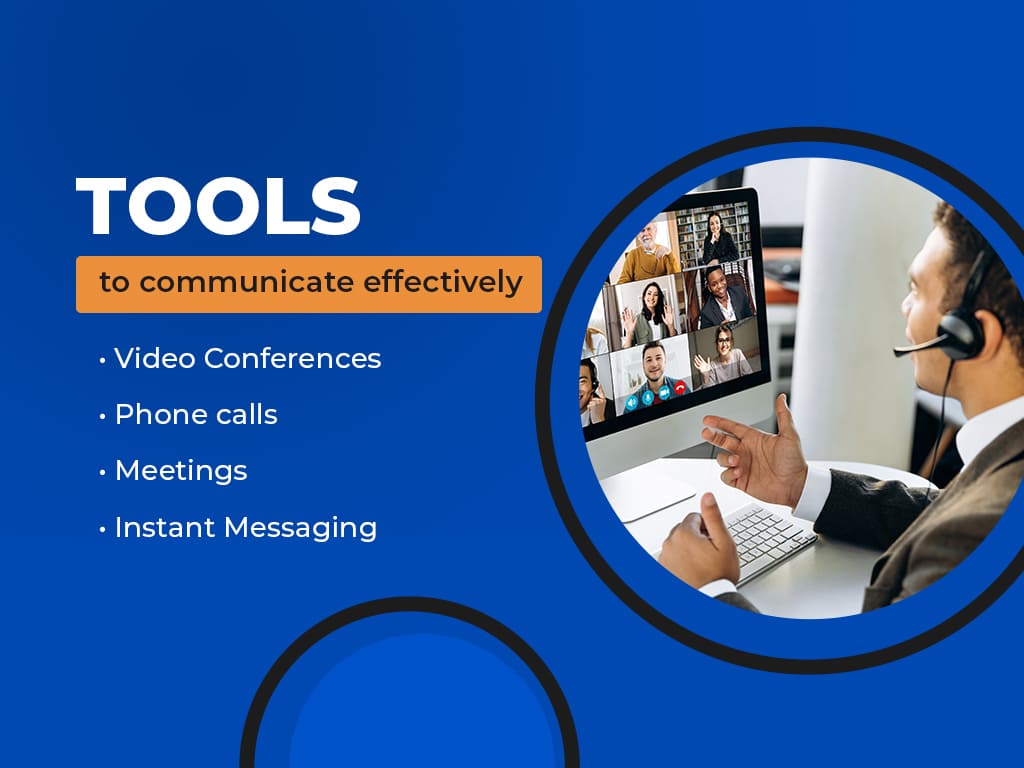
4. Establish clear communication methods

 communication methods

Communication is crucial for maintaining a connection when firms run 100% remotely and employees are located across various locations and time zones. Maintaining solid, long-lasting working relationships at all levels of a company requires effective and ongoing communication. Employers who make an investment in providing open channels of communication can quickly develop employee trust, which will boost profits, productivity, and morale in general.

5. Develop a strong team culture

A positive team culture creates a great sense of accountability in employees. Having a stable company culture and maintaining these values is also one of the best ways to retain remote talent.

Here’s how you can develop a strong culture

1-Communicate the company’s vision and mission.
2-Specify Workplace Policies
3-Have a Face-to-Face interactive session
4-Encourage informal conversations
5-Imbibe Team Building Activities
6- Develop a culture of open communication
7-Offer an opportunity for career development

6. Use project management tools

project management tools

The proper management tools can aid in productive leadership collaboration.
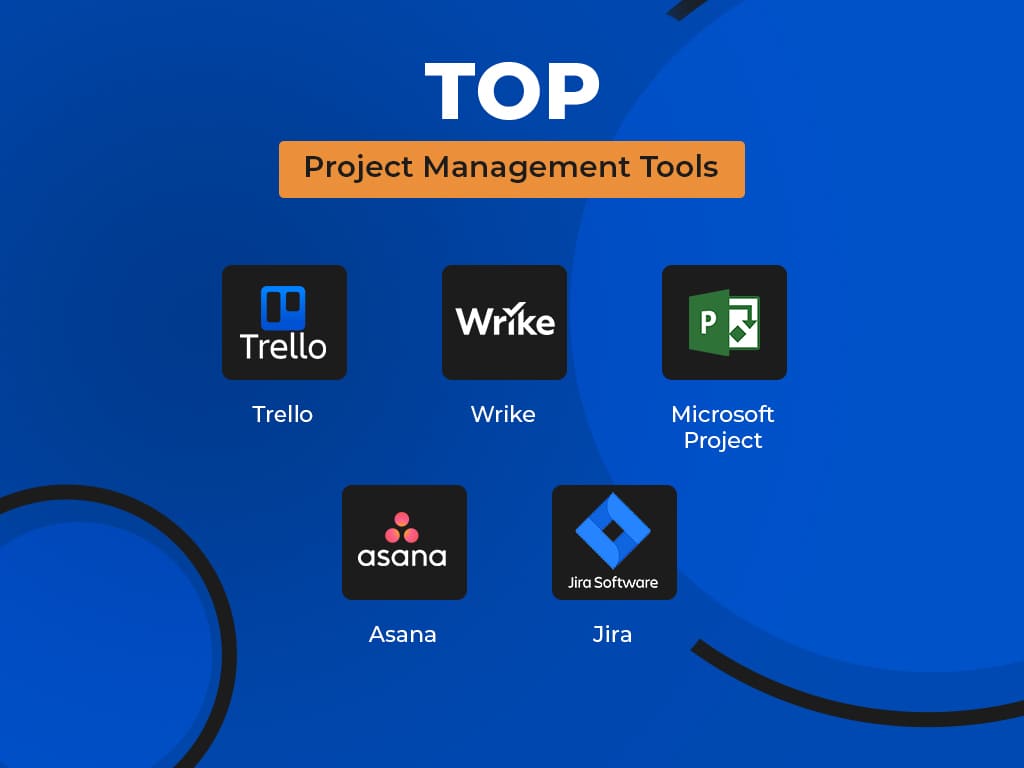
Project management tools are web-based, highly interactive resources you may use to manage your project’s schedule, connect with your virtual team, and plan your project from conception to completion. Tools for virtual project management collaboration encourage coordination and tracking of team members’ job progress while standardized processes among team members from various locations.

7. Develop a High trust culture

In today’s digital workplace, having transparency for remote teams is essential. Since more and more employees and freelancers are working remotely, making sure they complete the necessary responsibilities and feel a part of the team will help to boost productivity and improve the efficiency of your organization.

Here’s can build a crystal clear work culture
  • Encourage Straight Communication
  • Increase Accountability
  • Use Advanced Technology
  • Encourage Feedback

Final Thoughts

By 2028, 73% of all departments will have remote workers. The IT, financial services, and healthcare industries show the trend the most. Despite the difficulties that come with setting up and scaling a remote engineering team, these challenges can be easily overcome by implementing the appropriate strategies and being widely accessible.

Hire from Communication Crafts

Your biggest victory in remote work comes from hiring the ideal candidate. Match your project needs with the ideal remote employee. Hire someone with communication crafts. We offer a transparent development process, 24x7x365 communication, and optimum performance accountability.

With 17+ years of experience and serving as a key strategic technology partner to market leaders such as Colgate, Infosys, Wipro, Mercedes Benz, Versace, etc., we ensure that the process of remote talent acquisition stays simple, secure, and compliant.

Hassle-Free and Worry-Free Hiring

Get in Touch

How Small Businesses Can Thrive in the Coming Recession

Small Businesses are the Heart of America’s growth.

The importance of small enterprises to the US economy cannot be overstated. According to the U.S. Small Business Association (SBA), small firms with 500 or fewer employees make up 99.9% of all businesses in the nation and 99.7% of businesses with paid employees.

Since 1995, small businesses have created two-thirds of all net new jobs. Small business employment must be robust for the labor market as a whole to be in excellent shape.

small businesses worldwide

In the end, we all want our businesses to keep their spirits up during the Recession.

The world is still recovering from the pandemic and, regardless of size, location, or finance, the COVID-19 pandemic has undoubtedly increased the challenges faced by small businesses worldwide. The Internet has indeed played the role of a rescuer during those tough times for small business owners.

But before we talk about ways to prepare for a recession, let’s first answer a very important question:

Is a Recession coming for Real?

A recession is a significant downturn or decline of the economy. Generally, a huge fall in spending. Such a slump in economic activity may continue for several quarters, entirely limiting an economy’s progress. Economic metrics like the GDP, company profits, employment, etc. decline in such circumstances.

The U.S. GDP contracted at a seasonally-adjusted annual rate of 0.9% in the second quarter of 2022, after dropping by 1.6% in the first quarter of 2022.

Roach notes that American businesses are still recruiting and that Americans are still making purchases.
In August, the U.S. economy added 315,000 jobs, and the unemployment rate is now practically at its pre-pandemic level. A U.S. recession usually does not correlate with such a healthy job market.

Recession forecasts are ticking up day by day.

economist

As quoted by former Reagan economist and hyperinflation expert Recession odds just skyrocketed up to 80%.

The chances of a recession within a year were 45%, according to a Reuters Survey, while a Bloomberg survey put the probability of a downturn at 47.5%.

Survey

Predictions for recessions are clearly giving mixed signals, but it’s better to stay prepared in advance for the tough times.

Wait, WHAT? Recession with a Positive Adjective!?

An economic recession is difficult for anyone, but especially for small businesses. However, Some experts say that economic downturns can present the best opportunities for growing a business. Small enterprises can not only survive but also thrive in challenging economic times.

Let’s find out HOW to make lemonade out of lemons in this recession

  • Focus on Cash Flow
  • Strengthen your cash reserves
  • Check your insurance
  • Keep a track of your collections
  • Be Adaptable and Updated
  • Keep your Digital game strong

Focus on Cash Flow

Cash Flow timing can make or break your company. Cash flow management becomes even more crucial during a recession, and practicing prudence may help a company survive a difficult economic period. To gain control over your company’s cash flow, review your current cash flow statement daily and begin projecting with trailing 3, 6, and 12-month cash flow prediction charts. You can use these charts to predict when finances will be tight so that you can put precautionary measures in place to avoid crises.

Strengthen your cash reserves

Having a cash reserve is a priority. And savings will definitely help you pass tough times easier. There are several ways to maintain and strengthen your cash reserves, like setting up a

  • Realistic budget,
  • Monthly Targets,
  • Constant Monitoring,
  • A crisis plan
  • And most importantly, eliminating unnecessary expenses.

Check your insurance

Check your insurance and find out if it can cover the estimated loss or not. One specific thing to look out for is a business interruption policy. Business interruption insurance is made to protect companies from the revenue loss brought on by a catastrophe.

Keep a track of your collections

A recession makes everyone struggle financially. It is easy to let your receivables linger a little longer than required when things are going well. But during a downturn, customers might pay more slowly making it difficult to keep track of accounts receivable. Make prior efforts to assess your customers’ payment practices. Schedule contract renegotiations as soon as you can to close your pay cycles. Offering different modes of payment can help you collect your receivables.

Be Adaptable and Updated

Your business strategies may have worked in the past but not necessarily will work again in present types. Redefining and refining strategies, keeping in mind the present economic climate, is crucial.

Keep your Digital game strong

It’s critical for businesses to take every step possible to maintain their edge presence with customers during a recession. In the Age of Digitalization, having a strong online presence is important and beneficial. Keep enhancing your website, social media presence, emails, newsletter, and anything possible that helps you stay connected and updated with potential customers.

Final Thoughts

As a small business owner, recessions can be frightening. However, they frequently present opportunities for business optimization. After a recession, you can gain confidence in your abilities to manage your company and boost profits.
The right decisions will indeed position you for success in your business both now and in the upcoming years, so brace for impact and emphasize what you can manage.

Supporting a small business is supporting a dream. And supporting your small business with IT infrastructure and digital marketing are two main pillars that help fuel the growth of a small business. Outsourcing your IT & digital marketing needs can be the best way to tackle your software development requirements, and also connect with your target audience easily.

At Communication Crafts, you could discover all the top-tier software engineers, online & mobile app developers, and development expertise you need. With our state-of-the-art business services, we can help you rightly grow your business and take your business to new heights.

Got Development Problems?
We’ve got Development Solutions!


Who’s the champion? Flutter Vs Dart for app development.

Dart or Flutter? or something else? What works best for mobile app development?

If these questions are turning into nightmares for you, then buckle up and keep reading till you find out how to choose between two difficult choices.

Before directly jumping to conclusions, let’s first thoroughly understand Flutter and Dart, their key features, and a short comparison.

What is Flutter?

From Google Ads to Dream11 to the New York Times, we must have used at least one app that has a flutter framework without being aware of it. Google released Flutter in May 2017.

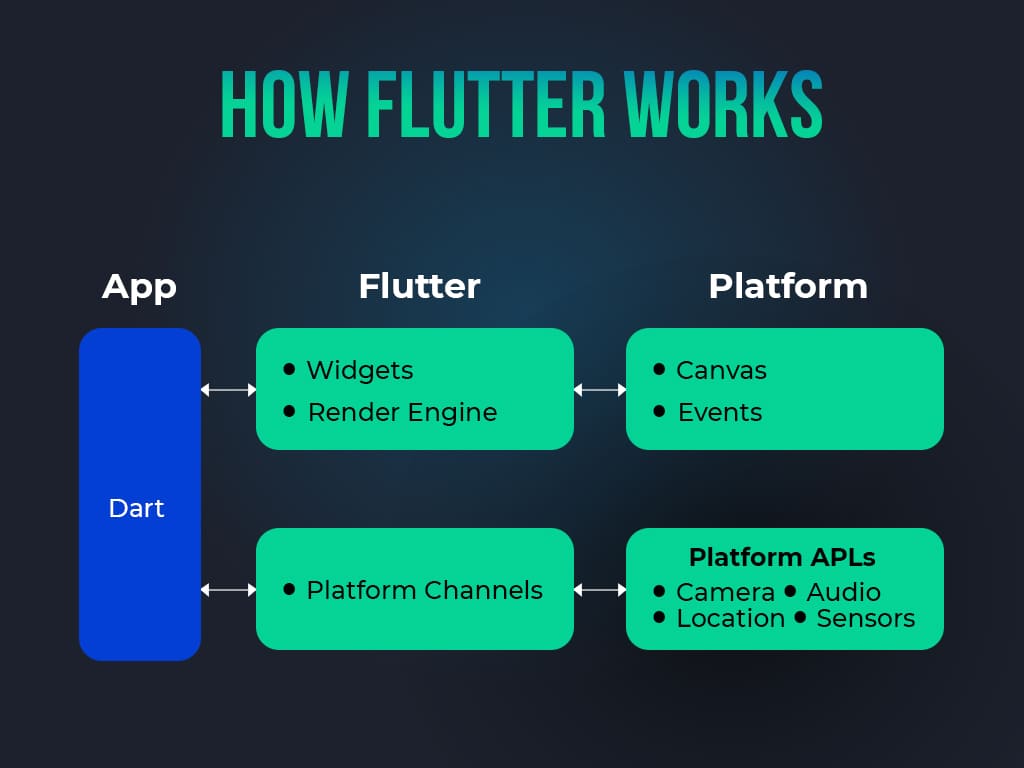
Flutter is a cross-platform framework that allows us to create high-quality, maintainable solutions. Flutter enables you to create native mobile applications with a single line of code. It implies that two distinct apps can be made using a single codebase and programming language (iOS and Android). Over the years, Flutter has gained incredible popularity in comparison to its rival technologies. Flutter apps are made in the object-oriented programming language Dart. Widgets play a crucial role in Flutter’s fundamental concept.

Flutter -Not just a Framework, but a complete Software development kit.

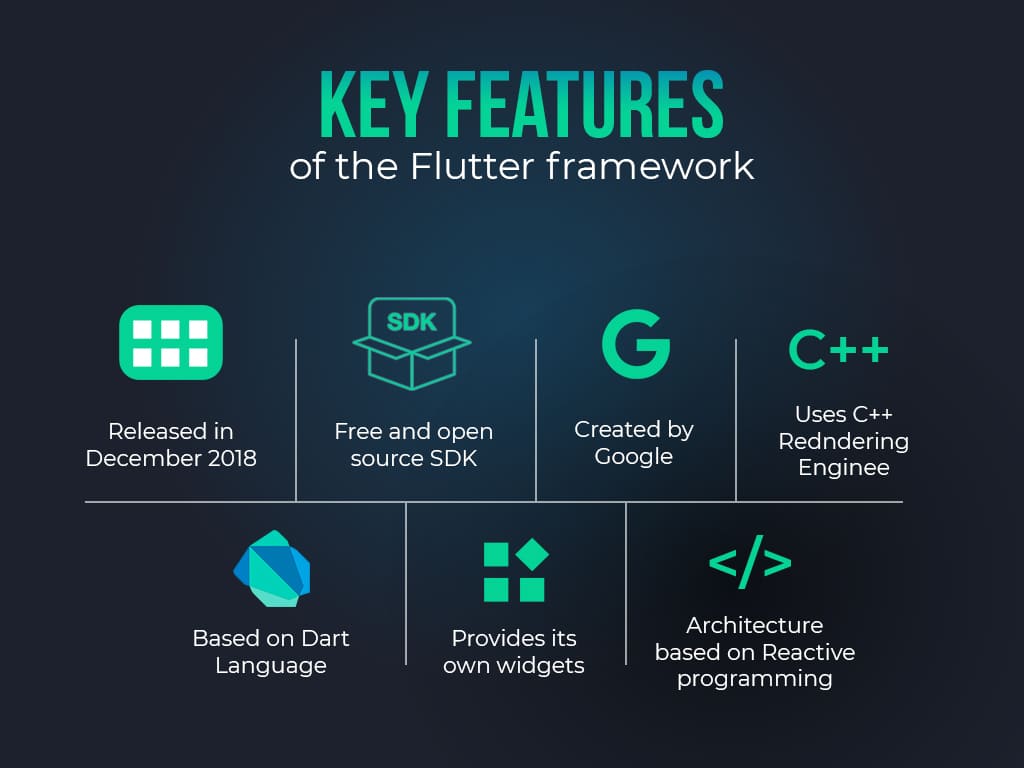
With the support of the Flutter mobile app SDK, programmers can produce high-quality, fast apps for both the iOS and Android platforms using a single codebase. The main language used to create the Flutter engine is C/C++. And the core of Flutter’s graphical fidelity is the Skia library.

Key features of the Flutter Framework

 Flutter Framework

Advantages of Flutter Framework

High productivity- One code Army

With the help of the Flutter framework, developers can create applications that are aesthetically pleasing, swift, and cross-platform by only using one codebase. Thus saving both time and resources.

Reduces time to market

Flutter’s hot reload is among its most notable features. As a result, developers can rapidly see changes to their codes. As a result, there is no need to recompile the code after every change, resulting in a quicker development and deployment process.

Lowers Business Risks

With its increased performance and stability, Flutter has a vast developer talent pool. Finding engineers won’t be difficult if you use Flutter because the Android developer community already has a large following. Many multinational corporations use Flutter, including Alibaba, Google Ads, AppTree, Reflect, and My Leaf. The risk to businesses is reduced due to Flutter, which also promotes high productivity and quick time to market.

Everything is Customizable

Flutter makes customizing easier and more diverse while also easing the workload. Its design-friendly functionality allows you to customize everything you see on the screen.

app development.

Okay, enough on Flutter, let’s get to know What is Dart and What are its key features?

What is Dart?

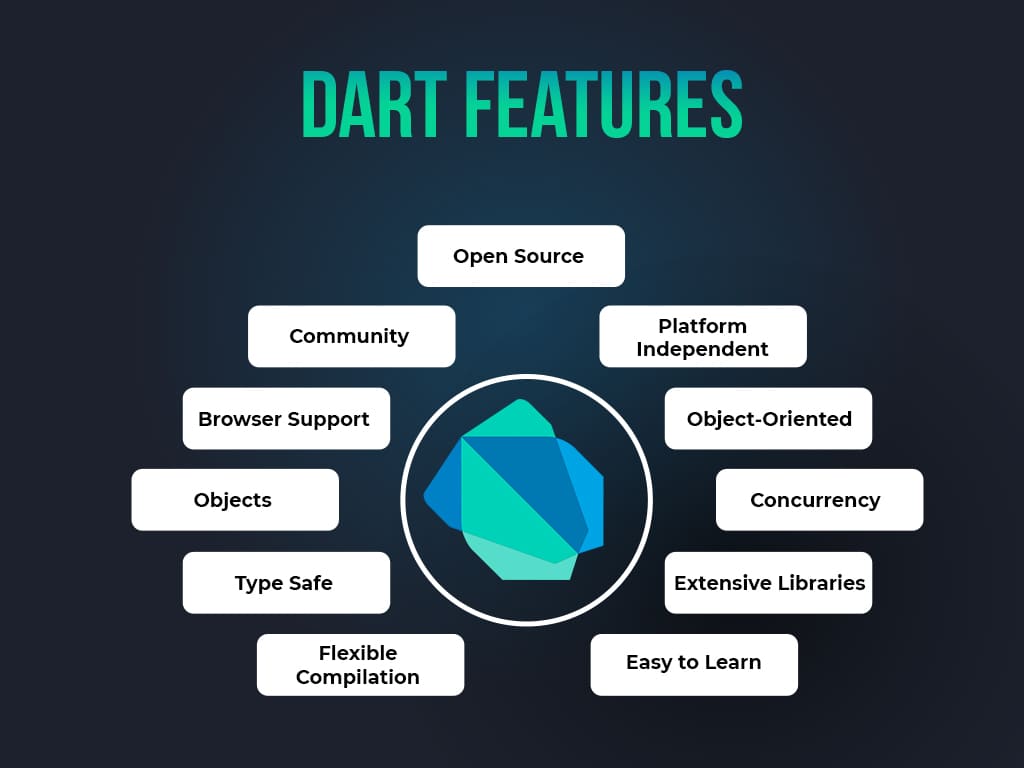
Google created the open-source language Dart to give programmers access to an object-oriented language with static type analysis. Dart has seen numerous changes over the years, and with version 2.0, its type system switched from optional to static. Dart is concise, quick, and trustworthy. Python, JavaScript, and many more languages are supported, in addition to many others. Dart also features a sizable package library that facilitates the creation of sophisticated apps.

Dart grew when Flutter brewed!

Dart’s acceptance increased after 2017 after Flutter was released, which became the popular option for cross-platform programming.

Advantages of Dart

Dart is a high-level, interpreted programming language that facilitates the development of desktop, web, mobile, and server applications. Many people think of Dart as a replacement for Javascript.

Easy to learn the language

Dart’s syntax is similar to plain English, making it easy to learn. Dart’s syntax shouldn’t be too tough to understand for programmers who are familiar with Java and .NET languages like C++ and C#. Additionally, Dart simplifies editing by allowing the testing of small sections of code even before the entire application is finished. It’s easy to navigate the ecosystem, understand the terminology, access frameworks, and libraries, and find the appropriate tools and SDKs for the language.

Has outstanding Tools

Numerous features in DART make it easier to start working on both research and “real-world” challenges. Available for immediate usage and testing include numerous inflation, localization, perturbation, and other auxiliary data assimilation algorithms that have undergone extensive testing.

Flexible Compilation

The Just-In-Time approach and the Ahead-of-Time method are the two main methods used by Dart for program compilation. Dart offers the sturdiness needed to compile code at breakneck speed. This functionality simplifies the use of the Dart programming language in web browsers for developers.

Key Features of DART

Features of DART

Dart asserts that its performance features allow programmers to create apps twice as quickly as those produced using other cross-platform development tools. The business claims that by optimizing code and lowering data usage, its resource consumption tools enable developers to preserve energy.

Summing up

  • Flutter is a framework and Dart is a programming language
  • Both Flutter and Dart were released by Google
  • Flutter was developed using the Dart language
  • Flutter and Dart both are Open source and free to use
  • Dart was designed specifically for web pages and Flutter for mobile apps

Final Thoughts

Now that you are aware of the benefits and distinctive features of both flutter and dart, it’s time to draw some conclusions.

First, while Flutter is primarily made for mobile devices, Dart has been designed specifically for the online platform. Dart is a superior option for applications that must be responsive and quick because it can execute on web pages faster than Flutter apps.

As the development community expands, Flutter, a pretty recent but already well-liked framework, will continue to evolve and improve. It would be a grave error to overlook it as a tool for app development because its advantages for cross-platform development are obvious.

Before the release of Flutter, Dart wasn’t as popular as React Native, but once Flutter gained popularity, Dart also gained momentum. Large companies like Google Ads, BMW, eBay, etc. use this combination of Dart and Flutter. So, if you plan to develop your applications using both Flutter and Dart, this would be a smart move. However, Before making a final decision, be sure to discuss it with your team and review the project specifications.

Still Confused? We are here to help.

Trusted with ISO 27001:2013 certification and 17+ years of experience, Communication Crafts is a leading App development Agency across the globe. We integrate technology and innovation in a compelling way to offer comprehensive app development services under one roof.

We also offer rigorously vetted web developers for hire who are passionate about coding. Hire Flutter app developers from a wide pool of top-tier talent. We welcome you to exploit our expertise.

Got Development Problems?
We’ve got Development Solutions!

Complete Guide To Outsourcing Software Development Services LIKE A PRO

Businesses are falling head over heels for their outsourcing partners

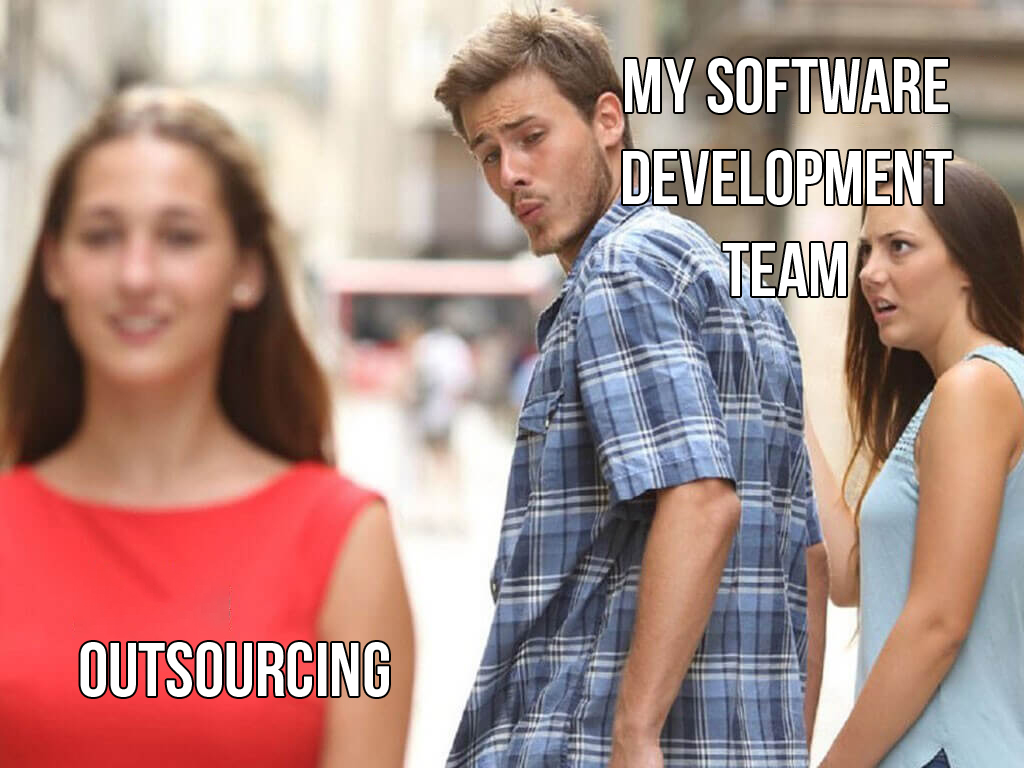
Outsourcing has become an obsession now. 78% of businesses all over the world have positive opinions about using outsourcing services. And we are wondering, what is motivating them? Either superior skills or lower recruitment costs, or BOTH!

Software Development Services

Companies are outsourcing software engineers for several reasons. Software development is frequently outsourced to companies or freelancers since it speeds up development, gives you access to experts with the knowledge you might not have on your in-house team, and is usually comparatively cheap.

Business Wire estimates that the worldwide IT outsourcing business, which was worth $333.7 billion in 2019, will grow by 4.5% annually to reach $397.6 billion by 2025. (2020–2025).

But before we begin with our complete guide on outsourcing software engineers, let us first understand What IT outsourcing is and what is up with Software outsourcing.

What is IT out-sourcing ?

IT outsourcing is the practice of managing your company’s IT requirements with the help of a third party or a freelancer.

In simpler words- When you assign your IT needs to an external pool of experts and not your In-house team, it is considered IT outsourcing.

What is Software Outsourcing ?

Software outsourcing is the process of appointing another company to develop software for you. Software development outsourcing offers several advantages, such as increased productivity, lower prices, greater quality, lower risk, and access to a wide pool of experts.

Pros and Cons of IT outsourcing

IT outsourcing

Before indulging in the pros and cons of outsourcing a software engineer. Let’s first consider one of the most underrated aspects of outsourcing, and that is TRUST. Note that outsourcing is not one time process, it is more like building a valuable relationship with the service provider to achieve IT goals.

Pros of outsourcing software outsourcing

1-Reduced time to market

In a market where competition is high, delivering your products to customers before the competition reaches them is a major benefit. By outsourcing your IT requirements directly to experts, there is a significant reduction in the time spent on recruiting, verifying, interviewing, and training, thus aiding in developing the project speedily.

2- Expertise in a large talent pool

The most important thing while recruiting is to hire the right people, and the most difficult thing is where to find them. Companies have started outsourcing their services frequently because of the availability of skilled experts from all over the world.

3- Demands fulfilled, Anytime and from Anywhere!

Imagine hiring IT professionals that can handle all of your demands quickly, effectively, and without costing you excessive amounts of money. That is how flexibility in outsourcing IT is currently manifested.

4- Cost-effective

Companies have to bear the cost of training while hiring in-house engineers for software development. Outsourcing software engineers save money by directly employing IT experts and lowering operating, rental, equipment, and other supply costs. Outsourcing software development saves 58% on development costs.

Cons of outsourcing software outsourcing

1- Communication

Outsourcing experts offshore having time zone differences can sometimes lead to a lack of communication or even worse miss communication. Having In-house management that stays connected with the outsourced expert can be a mindful step toward IT outsourcing.

2-Security risk

While outsourcing, it is difficult to measure the risk factors that can impact highly on the company. There are several risks such as outdated software, chances of hacking, and low network.

3-Loss of control

Whether you sign a contract to have another company perform the function of an entire department or a single task, you are turning the management and control of that function over to another company. When you outsource an entire project, you are not much involved in the development process or the software used, and you risk losing control.

Platforms to outsource Software Development Engineers

outsource Software Development Engineers

Dedicated Team

When we talk about a dedicated team model, turn on the partnership mode! For longer projects or complex development processes, a dedicated team model is the best choice for companies because the outsourcing agency will handpick professionals to collaborate and work collectively on a shared company goal.

Staff Augmentation

A staff augmentation model is a good option for businesses that do not want to go through the entire recruitment process but only require a professional’s expertise for a limited timeframe on their current team.

Project-based

The project-based model works best for companies that have a clear idea of their product and do not want to be involved in the whole product development process.
Once they specify their requirements, the whole project is assigned to a team of experts, and the company is free to work on other areas of business.

Types of IT Outsourcing

Outsourcing is of different types typically known as Location based outsourcing.

Onshore Outsourcing

Same country, Same time zones
Pros– Easy Communication, No language barrier
Cons– Higher cost, Limited pool of experts

Nearshore Outsourcing

Close to a country usually same time zone
Pros– Similar cultural values, Easy access to services, Low-risk
Cons– Comparatively expensive, Limited expertise

Offshore Outsourcing

Away from country different time zone
Pros– Cost Effective, Wide pool of experts
Cons– Different Time-zone. Communication Barriers

The term “outsourcing” is no longer new. Companies are now relying on outsourcing to address complicated development problems, rather than just reducing costs and gaining flexibility.

Your biggest victory can come from outsourcing to the right people. And we can help you get there. With 17+ years of hands-on experience, Communication crafts utilities a potent mix of technology and innovation to provide end-to-end Website development solutions under one roof.
By outsourcing with CC ,you can add a skilled crew, high-quality code, and accelerated development to your project.

 Looking for an expert? Your wait is over.
We’ve got you covered.

Don’t overlook these MUST DOs while Hiring a Node.js Developer

Why are tech giants still romanticizing Node.js? Let’s find out.

The world hates change, yet it is the only thing that has brought progress. And when we talk about progress, we are hinting toward some impeccable transformations done by exceptional technology in application development. Yes, it’s none other than Node.js. Over 30 million websites use Node.js, tempting businesses of all sizes with its game-changing benefits such as reduced startup time, innovative features, and seamless scalability.

Ever since Ryan Dahl introduced Node.js 13 years ago, it has become the top choice for tech giants to build real-time, fast, and high-traffic applications.

Ever since Ryan Dahl introduced Node.js 13 years ago, it has become the top choice for tech giants to build real-time, fast, and high-traffic applications.

Hiring a Node.js Developer

Amazon, Netflix, eBay, Reddit, LinkedIn, Tumblr, and PayPal, are all using Node.js extensively. There are ample reasons why Node.js can benefit your company. But before we jump to that, let’s first understand What is Node.js exactly?

What is Node.js?

A server-side framework called Node.js is used to create scalable web applications. It involves the use of Javascript and provides key building blocks and capabilities to make the development of huge apps faster. It includes extra libraries and functionalities to help developers create complex applications more quickly.

Node.js

Hiring Node.js developers can be an easy and smooth procedure, but it cannot be done with our eyes shut. There are a few roles and responsibilities and a skill set to have an eye for while hiring a Node.js developer. But before we begin with how to hire Node.js developers, let’s understand the employment type of Node.js developers before hiring.

Employment type

Outsource

Hiring globally gives several doors of opportunity to select the top applicant in this fiercely competitive market. Since the pandemic, remote recruiting has been the new standard, and there are numerous benefits that cannot be overlooked.

In-house

Like any traditional hiring, In- house hiring of Node.js developers works best because new hires are already a part of your team and are familiar with your culture and procedures.

Freelance

For start-ups or mid-size companies, hiring freelance Node.js developers can be both time and money-saving, when it comes to fixing minor bugs or carrying out minor improvements.

The Creator. The expediter. The Administrator

They wear too many hats!

NODE.JS DEVELOPER – ROLES AND RESPONSIBILITIES

Node.js developers are extensively involved in the development of code for the Windows, iOS, and Android platforms as well as the design of user interfaces. When working on a project to develop a Node.js mobile app, Node.js developers are dedicated to the following responsibilities:

  1. Write clean and efficient codes.
  2. Incorporate cybersecurity and data interpretation measures.
  3. Fix bugs and provide technical support to users.
  4. Implementing security protocols, data protection measures, and storage solutions.
  5. Recommending and Implementing improvements to processes and technologies.
  6. Staying updated with the advancement in the field of Node.js development.

Skills to look for before hiring a Node.js developer-

They say, “Shoot for the moon. Even if you miss it, you will land among the stars”. And thus, we have listed down some of the most in-demand skills for Node.js developers that will help you land amongst the stars of Node.js developers.

  • Technical expertise
  • Coding abilities
  • Working knowledge of the Node.js framework
  • Familiarity with DevOps and Agile approaches
  • Front-end development knowledge
  • Database Administration

Each Node.js developer has unique support skills, and you must find the one whose abilities best match your requirements

Interview Questions

Asking the right questions leads to the hiring of the right candidate. After clarifying the roles, responsibilities, and skill sets required according to your business or project, it is crucial to ask appropriate questions to hire the ideal candidate. Here we have compiled a list of questions you can look into before hiring:

  1. How does concurrency work in Node.js?
  2. What is REPL? What purpose is it used for?
  3. What is the preferred method of handling unhandled exceptions in Node.js?
  4. What is an error-first callback?
  5. What tools can be used to assist consistent style?
  6. What skills do you have in Node.js?
  7. Explain what Reactor Pattern is in Node.js.
  8. Explain NodeJs web application architecture.
  9. How many types of API functions are available in Node.js?
  10. Do you specialize in front-end development or back-end development?
  11. What is an event loop?
  12. What are the exit codes for Node.js?

Five reasons WHY Node.js is a total savior!

Ever since Node.js was introduced, the lives of developers and business operations have completely changed and modified. Be it shopping, chatting, gaming, emailing, tracking data, or social media, Node.js provides an all-in-one platform addressing all the issues and helping the users manage applications smoothly.

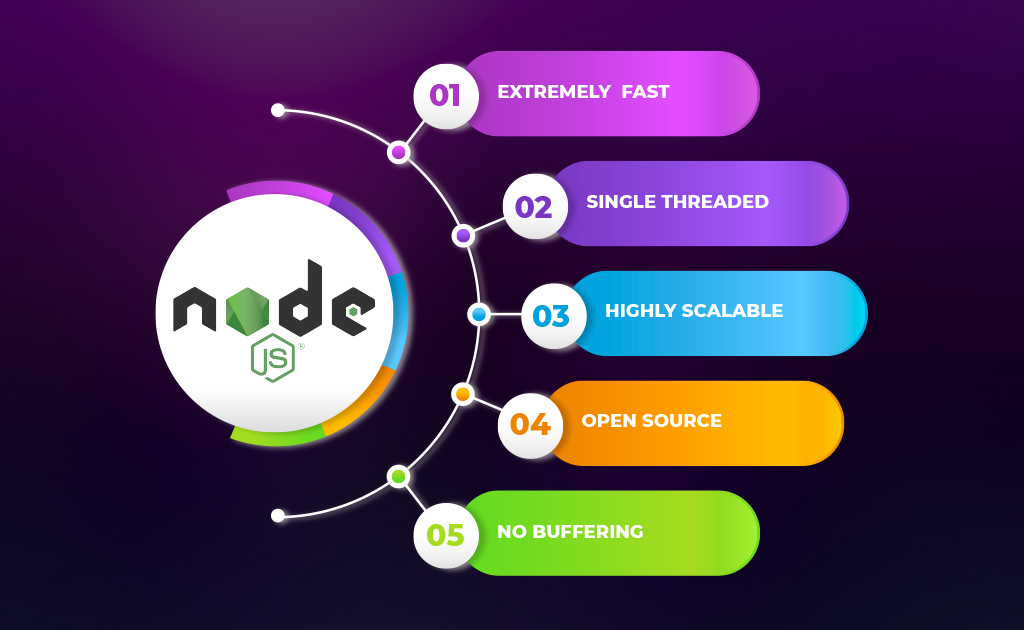
1- Fast delivery

Node.js functions in V8, just like JavaScript. It is a runtime environment that converts the web developer’s written code into machine code, which is a collection of simple instructions for the computer that don’t need to be interpreted. This helps low-level code run quickly and be recognized by computers.

2- High scalability

One of the main benefits of a Node.js developer is that it allows multiple nodes to run simultaneously and interact with each other. It is a single-threaded language that uses multiple threads in the background to execute asynchronous code. Based on the interest, age, location, or language, Node.js aids in showing different versions of apps to the users, reducing workload and increasing personalization.

3- Quicker app response

Developers can leverage from a single cache module thanks to Node.js’ open-source nature. As a result, web developers can load web pages more quickly because the codes don’t need to be executed again. These apps’ quick responses allow users to navigate them more quickly.

4- Powerful community support

Millions of developers are actively contributing to the development of Node.js. Real-time chat, Stack overflow, and Dev community are some of the excellent platforms to ask questions and share information related to Node.js.

5- Easy to learn and quick to adapt

Based on Javascript, Node.js is one of the most popular programming languages making it easy to adapt and utilize. Even a beginner and junior developer can learn and work with Node.js in less time and effort.

 Node.js

Also read: How to Hire Full Stack Developers?

With 17+ years of proven experience and an enviable list of clients, Communication Crafts offers a wide pool of Node.js developers to hire. Let’s admit it, Node.js developers are in high demand and it’s not easy to hire the right candidate in this cutthroat competition. We filter out top developers from a wide pool of talent and help you hire a Node.js developer whose abilities match best with your requirements.

Why hire a Node.js developer from Communication Crafts?

  • Tech-talent pool of 4000+ Developers
  • 17+ Years of Experience
  • 350+ Digital Products Delivered
  • 150+ Active clients
  • Remote success across 25+ Countries
  • ISO 27001:2013 certified
  • 98% trial-to-hire success rate
  • 100+ In-demand skills
Looking for exceptional Node.js Developers?

We’ve got you covered.