Top 9 Real World IoT apps that Simplify Everyday Tasks

In 1999, Kevin Ashton coined the term Internet of Things, aka IoT. Fast forward to two decades later, IoT is one of the most popular used technology in the world. Currently, there are more than 10 billion IoT devices, which is going to increase to a staggering 25 billion by the end of 2021.

What is the IoT technology?

The Internet of Things is comprised of four components- sensors, people, devices and the Internet.

In a nutshell, the sensors sense and collect data, and using internet connectivity sensors send the data back to the device. IoT is a network of connected devices with embedded sensors that can communicate, get insights and share data over the Cloud.

For example, a smart light bulb- switched on and off using an app is an IoT device. With an active internet connection, a connection is well-established with the light bulb- it can be turned on and off when the user wants.

Just like this, there are billions of physical devices connected online, all collecting and sharing data for various interesting purposes.

It is a money market, a 1.5 trillion dollar market!

We already talked about how IoT is transforming the development industry. It is the present and the future. IoT technology is embedded in many aspects of our life- we are not even aware of it. As technology continues to evolve, it is going to make performing day-to-day tasks smoother, for which, IoT is going to be an integral part of this change.

Let us see some of the areas where IoT is present. You may have come across some of them.

Top 9 IoT Applications in the world

1. Smart Home
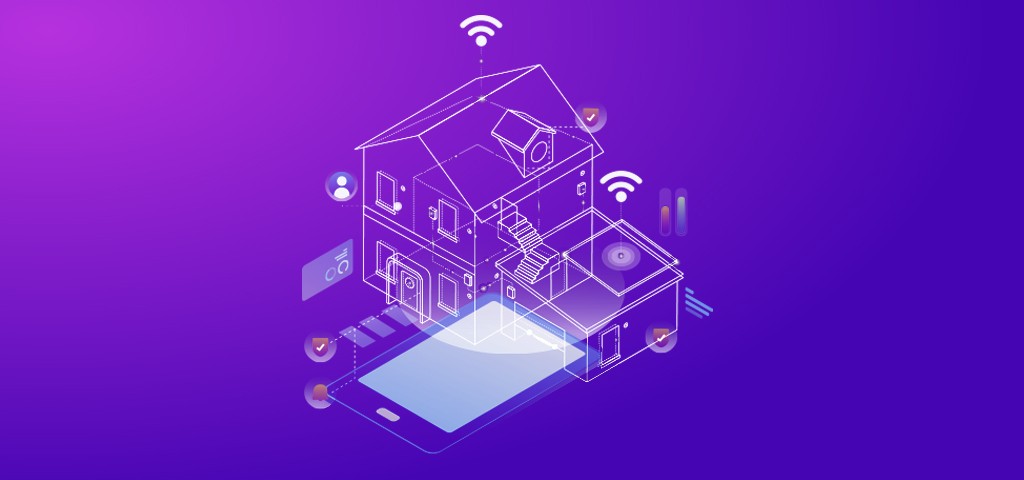
Smart Home

Even homes are smart now! IoT technology is solely responsible for the turn of such events. There are more than 42.2 million smart homes in the U.S. alone.

Imagine switching on the air-conditioning before you reach home from a hectic day of work or turning off the lights from your mobile app even after you have left home.

How is this even possible?

IoT makes it possible!

Smart homes allow you to manage your home devices from one place- your smartphone app. Monitoring and placing security measures, controlling electronics in the house- this is the foreseeable vision that IoT has for smartphones.

More and more companies are investing in IoT technology. With multinational corporations like Philips, Haier and Belkin joining the game, soon there will be even better innovative IoT home solutions.

2. Wearable devices

Apple Watch is one of the best internet of things examples in daily life. From your wrist, you can make and pick up calls, monitor your heart rate, number of steps you have walked, and be notified of alerts from your other apps on your iPhone.

But what roles does IoT play here?

Wearable devices are installed with sensors and software patches, which collect data and information about the users. This data is later pre-processed to extract essential insights about the user.

The pre-requisite from the internet of things technology for wearable applications is to be highly energy-efficient or ultra-low power and small-sized. There has been an increased investment in the retail industry for using this technology. Of all the IoT start-ups, wearable maker Jawbone is probably the one with the biggest funding to date- more than half a billion dollars!

3. Connected Cars
Connected Cars

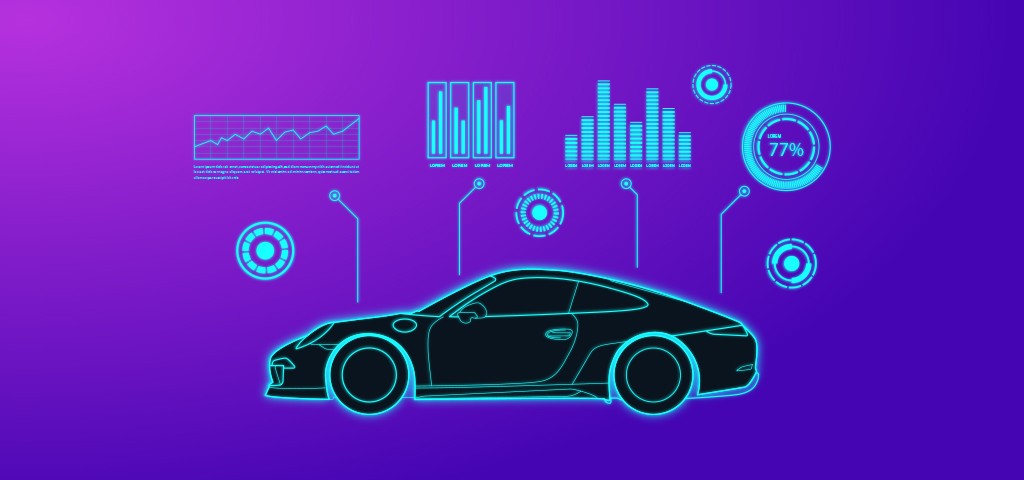
The automotive industry is now even more focused on making vehicles more automated and providing tech features that will enhance the in-car experience.

Automobile company Tesla is creating self-driving cars that are going to completely automate driving and take you from the start to the end of the destination without manually having to take control of the car. Using advanced hardware capabilities integrated with an extensive network of multiple networks, antennas, embedded software and technologies- it will completely assist in communication and navigation on the road.

As of now, most cars are IoT integrated and take real-time decisions controlling the vehicle operations like assisting in parking using proximity sensors and cameras.

Companies like BMW, and Mercedes are even more focused on using IoT for their new line of cars. BMW already has a feature for some of its top-end models that can self-park the car using IoT.

4. Industrial Internet

Industrial Internet is relatively new term. It is known as the Industrial Internet of Things (IIoT).

Imagine managing heavy types of machinery and devices in industries for power generation, oil and gas. It can get difficult to manage and keeping track of everything.

The driving philosophy behind IIoT is that smart machines are more accurate and consistent than humans in communicating through data. And, this data can help companies pick inefficiencies and problems sooner. IoT devices can send real-time updates to the end-user and make them aware of problems quicker. Empowered with sensors, software and big data analytics, brilliant IoT systems can be created for better quality control and sustainability.

5. Smart Cities
Smart Cities

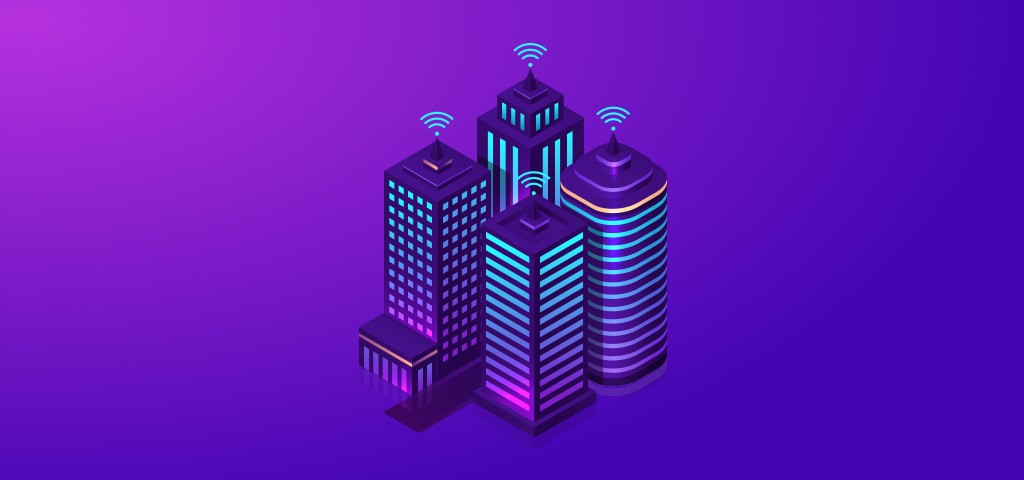
Smart cities, as its name suggests, is a big innovation and span a wide variety of use cases, from water distribution and traffic management to waste management and environmental monitoring. IoT solutions offered in the smart city sector solve various city-related problems, comprising of traffic, reducing air and noise pollution, and helping to make cities safer.

6. IoT in Agriculture & Farming

Smart farming is one of the fastest-growing fields in IoT. It is going to be $23 billion industry by 2022, as farmers worldwide are gearing up to utilize RFID, GPS, drones, sensors, and more to gather actionable data and to automate every part of the process.

With the world population rising, the demand for food supply is on a continuous rise. And to help farmers yield better crops, many governments are helping farmers use advanced techniques to increase food production.

Using IoT devices, farmers can gather meaningful insights that help monitor soil moisture and nutrients level. This helps the farmers water the section of the crops that require it.

Even the health of animals and cattle can be gathered using IoT devices that can help farmers know if there are any sick animals. This can help them separate the ill animals from the rest so that others don’t get ill as well, saving treatment costs.

7. Smart Retail
Smart Retail

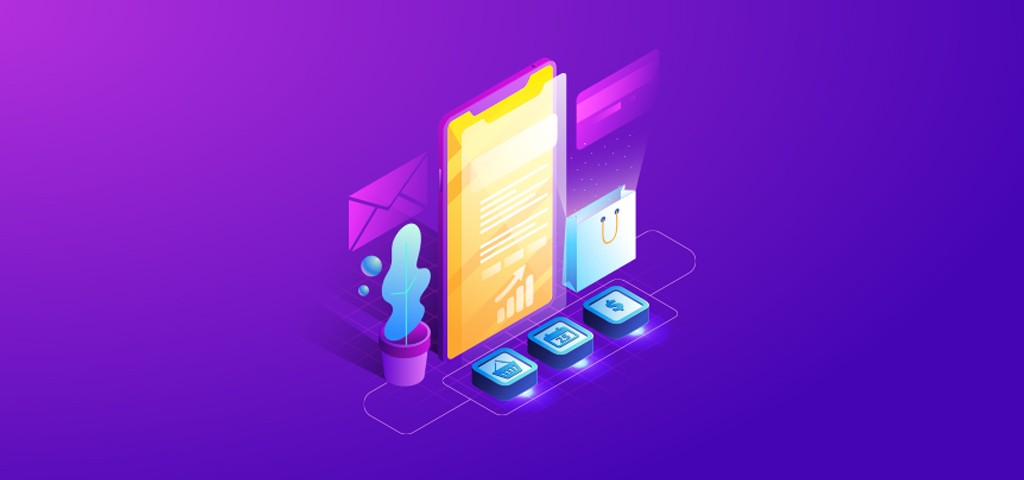
Smart retail is a term used to describe a set of smart technologies that are designed to give the consumer a greater, faster, safer and smarter experience when shopping. A world in which nearly everybody now carries around a smart device – i.e. the smartphone – is what has enabled this revolution in retail. The potential of IoT in the retail sector is enormous. IoT provides an opportunity for retailers to connect with the customers to enhance the in-store experience.

Smartphones will be the way for retailers to remain connected with their consumers even out of the store. Interacting through Smartphones and using Beacon technology can help retailers serve their consumers better. Using IoT beacons, companies can keep track of their customer’s journey through the store and using these insights they can optimize the store layout and place premium products in those areas of the store, where traffic is maximum.

8. Smart Grid

Power grids of the future will not only be intelligent, but also highly reliable. IoT implementation in such large electric grids helps create an intelligent system that can analyse and collect data in an automated fashion.

Smart Grids will also be able to detect sources of power outages more quickly, even at individual households. Smart grids are paving way for a cleaner environment for the future.

9. IoT in Health Care
IoT in Health Care

The healthcare IoT market is going to increase to 534 billion by 2025. It comes as no surprise as IoT has so many benefits in this industry. With IoT tracking systems, hospital staff can get alerted immediately when critical changes in patients’ parameters occur- accelerating the processing of patients’ data. Normally it would take doctors hours to process different kinds of information. With IoT, it will only take a few minutes.

Now hospitals can even manage their instruments and medicines more efficiently. The unfolding crisis in the industry caused by the pandemic once again proved the importance of implementing technologies like IoT, big data and AI to enhance efficiency and improve safety in healthcare. Implementing IoT solutions is no longer about staying ahead of the competition, it is about making sure crises can be handled much better.

Summing up

The future of IoT is bright. It is going to change the way we live and work.

We at Communication Crafts help companies leverage IoT in their respective industry. Our teams of professional developers have the required expertise your projects would require. We understand your needs and put it into effect.

Bring your idea to life-get your IoT apps the way you want!
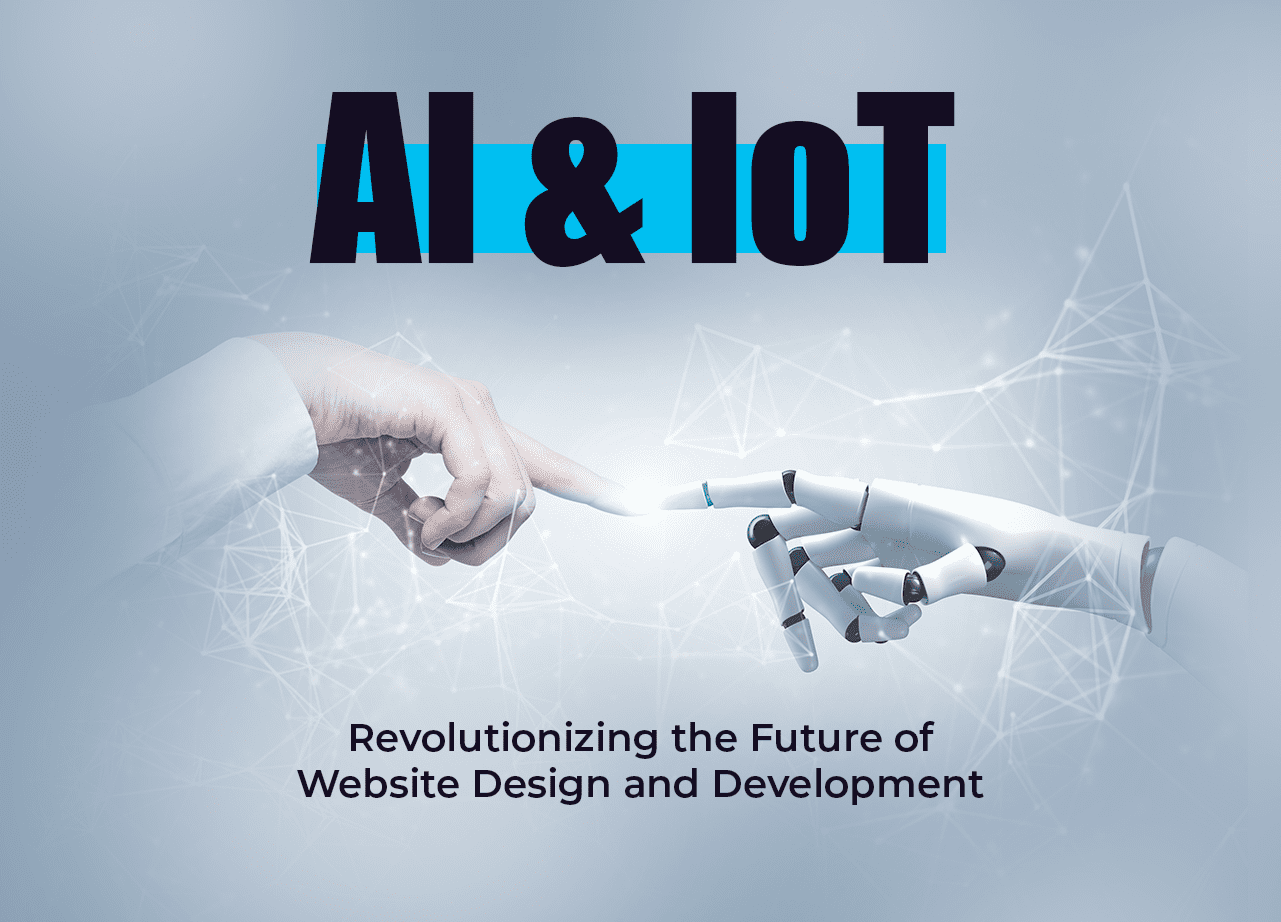
 

AI & IoT: Revolutionizing the Future of Website Design and Development

The technological revolution for the future is already in motion, with Artificial Intelligence (AI) & Internet of Things (IoT) paving the way. The AI market is projected to grow to a staggering 190 billion dollars industry by 2025, with the IoT market far ahead projected to be at a staggering 1.6 trillion dollars industry, also by 2025.

As of today, what we make of these technologies in our smartphones, websites, mobile apps, and many more tech products, is just the gist of what the future holds for it.

75% of commercial enterprise apps are set to incorporate AI by 2021, with 83% of businesses saying AI is a strategic priority for their businesses as of today. And we saw this coming. AI combined with IoT is a gold mine- and the backbone of the coming future.

But why do only AI & IoT lead the way?

Keep reading and I’ll lay it out.

What is the Internet of Things?

What is Internet of Things?

Internet of Things” was initially coined by Kevin Ashton in 1999. IoT represents a general concept for the ability of network devices to sense and collect data from the world around us, and then share that data across the Internet where it can be processed and utilized for various interesting purposes.

There are three components of IoT:

  • Sensors
  • People/ Processes
  • Internet connection

IoT utilizes the web for establishing its online presence of the business and creating powerful communications with the users with the help of a good web design resulting in the expansion of the business appearance globally. This is often possible due to IoT because it utilizes smart trending technologies and creates features that connect flawlessly.

Why is IoT Important?

IoT allows organizations to better analyze and respond to customer needs or preferences. It helps improve the business productivity and strategy and improves the consumer experience by only delivering relevant content and solutions.

IoT provides a clean and intuitive user interface made accessible on all types of devices.

Living in this digital era, where user experience is everything, the scope of varying styles and techniques of IoT makes it possible to create a great web design that helps engage people the most online.

In which areas is IoT used as of now?

Many industries have found a use for IoT technologies for their businesses. Some of the modern-day IoT apps are seen in:

  • Healthcare Industry: Using different types of sensors, data can be collected for blood pressure, heart rate, glucose level, monitoring brain activity, and much more & then analyzed and collected and sent via the internet to the apps or devices associated with it.

If there are spikes or drops in blood pressure or anything else health emergency, the sensors are programmed to alert the users immediately so they can take quick actions.

  • Media, Marketing & Advertising: The applications of IoT in media and advertising involve a customized experience in which the system analyzes and responds to the needs and interests of each customer. This includes their general behavior patterns, buying habits, preferences, culture, and other characteristics. This helps the companies show only relevant data & improve the consumer experience.
  • Environmental Monitoring: For farming, the sensors can measure moisture at different levels and send data to the central system so that the farmers can only water the areas needed. The sensors can even measure the quality of air.

If we go on talking about the great uses of IoT- it could take all day!

What is Artificial Intelligence?

What is Artificial Intelligence?

Artificial intelligence (AI) refers to the simulation of human intelligence in machines that are programmed to think like humans and give the appropriate result. It is one of the essential technology in the world today. It is a part of computer science that emphasizes the creation of intelligent machines that work and react like humans.

AI is possible in these things only when a model is well-trained through the right machine learning training data using suitable algorithms to make it fully functional in their relevant fields.

AI learns, identifies, and implements using machines to design websites consistent with the present trends of the market by generating a customized website design. Using Machine Learning (ML) insights & natural language processing, AI learns from existing experience to adjust to new inputs and perform better tasks.

Using these technologies, computer systems can be trained to accomplish specific tasks by processing large amounts of data and recognizing patterns in the data.

Why is AI Importance?

AI is the present and the future.

The main purpose of Artificial Intelligence is to increase the growth of technology and humans today.

It helps in handling problems related to user experiences like web design quality and secure coding. Not only this but, the ability to learn from experiences, adapt well, and execute the best suitable solution as the world evolves, is unparalleled.

AI can increase the automation of specific processes within an organization, which results in both time and money being saved.

As of now, for any business, user experience is crucial. If the customers are happy, the business does well. And AI is just what businesses needed. It has taken the user experience to the next level.

In which areas is AI used as of now?

More than 61% of business professionals consider implementing AI strategy of growing importance for success. AI is used in various fields of work as of today.

Some of them being:

  • Sports Analytics and Activities
  • Healthcare and Medical Image Analysis
  • Security and surveillance
  • Warehousing and Logistic supply chain
  • E-commerce
  • Web design and mobile apps

Matter of fact, the bounce rate of websites has drastically reduced by 45% due to better customer experience- all thanks to AI.

Why customer experience matters so much? Here is a quick read on that.

Transformation in website design is feasible by using AI thanks to the development in applications like — speech and image recognition, status analysis, language processing, large data processing, and deep learning- completely changing the way we used to think or design websites.

Any industry can profit heavily from AI technology and provide excellent end value results to its customers.

Benefits of IoT for Web development & Design

IoT is on a roll. It has brought drastic changes to web development. Here are some amazing benefits websites have due to IoT integration.

  • Engaging interface: Designers and developers can create an interactive website that has a clean and intuitive look.
  • Great back-end capabilities: By transmitting all data back to the servers, there is clear communication between the smart devices- work as per the user’s preferences seamlessly.
  • Faster processing: Directly connected with the Cloud- results in the transmission of all data quickly and efficiently.

Benefits of AI for Web development & Design

With AI transforming responsive web design, it has become even more functional. A responsive web design system consists of a series of modules, patterns, and elements that together form the design language of a specific brand or product.

Here are some amazing benefits of AI in web development & design: 

  • Better user experience: With modules like live Chabot- websites can now engage better with their audience and answer questions as they come instantly. Even with automated replying- AI can strike up real conversations and adapts better and gives appropriate responses.
  • Provides better quality assurance: AI can fix any errors with minutes of it coming up. As the AI algorithms are developed in a way that can test almost every kind of human input. AI can discover fault patterns and correct the predictions with maximum efficiency.
  • Better SEO: AI supports the analysis and mining of data using machine learning. Due to this, metadata generated by the users can be put to good use. With its predictive capabilities, these engines perform the tasks of promoting the websites and highlighting their content.
  • Better designs for websites: There are tools created using AI that helps stimulate the visual appeal of multimedia content on websites with visual styles. This helps designers curate a better design that people would love.
  • Responsive and smarter systems: The main goal of a design system is to help users achieve additional functionalities with its elements and modules. As people don’t prefer looking at websites that don’t load fast, Artificial Intelligence optimizes the design module for boosting the loading speed of pages on websites.

What the future holds for Web development & Design with IoT

Around 3.5 billion cellular IoT connections are expected by 2023, with 20 billion IoT devices going to be active by end of this year.

The future of IoT has the potential to be limitless. Advances to the industrial internet will be accelerated through increased network agility, integrated artificial intelligence (AI), and the capacity to deploy, automate, orchestrate, and secure diverse use cases at a hyper-scale. The potential is not just in enabling billions of devices simultaneously but leveraging the huge volumes of actionable data that can automate diverse business processes.

Although there are hurdles to overcome for the front-end using IoT- due to the large volume of data, security, and reliability issues, with time they surely will be effective solutions in place for them.

As networks and IoT platforms evolve to overcome these challenges, through increased capacity and AI, service providers will edge furthermore into IT and web-scale markets – opening entire new streams of revenue.

What the future holds for Web development & Design with AI

Over the past decade, AI has created a niche for website developers. With AI transforming responsive web design, customizing website UI has also become simpler than ever before. It has even resulted in faster loading of sites.

These days, businesses are exploring various possibilities to use AI for improving the quality of professional websites. As things stand, it has been instrumental in transforming the concept of web designing. Due to its constant innovation, AI has tremendous potential for the future.

With its unique set of tools and evolving technology AI is going to be even more integrated into many domains that will make everyday tasks feel like a breeze.

On an Endnote

AI & IoT is going to have a transformative effect on consumers, enterprises, and governments around the world. While there are certainly some obstacles to overcome, the usage of these technologies is on a constant rise. With market growth expected to grow around 40% in the next couple of years, this just seems the tip of the iceberg.

Looking for expert developers who are pros using IoT & AI? Well, you found the best!

Communication Crafts is a leading web development company. With a large clientele around the world, our 100% customer satisfaction for all the development projects speaks volumes. Using the latest technologies at hand- our team understands your needs thoroughly and crafts the design of the website to perfection. Using AI & IoT to create a more engaging and intuitive website & UI interface, your audience is going to find it so easy to use!

We aim to help you grow your business website. We only have one thing to ask you, what are you waiting for?

Take your business to the next level!