How to Build a Top React Native Development Team

Why are top-notch mobile applications now steering away from traditional native development? The answer lies in the evolving landscape of user demands. As user experience takes the spotlight, the need for agility and speed in meeting expectations has never been more crucial. To help businesses achieve a competitive edge, React Native has been popularly used now by big giants like Uber, Facebook, Microsoft and many more. Then why delay when opportunity awaits?

React Native, the ultimate game-changer in the realm of app development, is here to solve your application development issues. Whether you’re a seasoned developer aiming to conquer new frontiers or a visionary entrepreneur with a dream to disrupt the market, React Native is a choice to consider. It is an open-source application development framework for Android, iOS, Windows and others that combines JavaScript libraries with the platform’s native components making it look as if applications are built on native platforms. This blog will delve deeper into the reasons behind selecting React Native for
creating native mobile apps, highlighting its key advantages. It will explore strategies for assembling a robust React Native App Development Team followed by the future trends in the industry.

React Native is broadly used because of its flexibility, cost effectiveness and optimization, which are key performance indicators in running a business today. One of the best features of React Native that is worth considering is live reloading which means react native’s environment supports instant app reload which lets you view changes made in code without needing to recompile the app during development. This enables faster iterate testing cycles, reduces the time to market and increases productivity amongst the developers.

The key benefit of
Hiring React Native Developers is their ability to develop mobile apps faster and with a smaller team compared to purely native development. Rather than having to build your app logic twice, once for iOS and again for Android in different code languages, the same React Native codebase works for both platforms which in turn helps significantly in reducing your implementation and maintenance costs by 50-70%. Lower development overheads also mean maximization of ROI for your business.

Additional strengths of React Native include the large ecosystem of third-party libraries and components, integration with native APIs for things like location or push notifications, direct deployment to app stores and access to the latest native features like hot reloading which allows for scalability and long-term stability.

React Native stands out in UI development, enabling the creation of stunning and top-notch designs for mobile applications. Its component-based methodology fosters a user-friendly environment for both technical and non-technical users. From a business standpoint, it enhances accessibility and efficiency in interface building.

As React Native explodes in popularity with industry giants rapidly adopting it across their tech stacks, the demand for React Native developers is far outpacing supply. This talent crunch means businesses must invest early in hiring and training React Native teams to avoid project delays or greater costs. Partnering with specialized React Native consultant firm, PeoplActive you can help secure world-class React Native talent before competitors.

Form your Dream Team Towards Success

Define Project Goals and Timelines: Get clear on the vision, business objectives, target users and timeline ambition you have for your mobile products built on React Native. This clarity will determine the skillsets and team size you’ll need. Complex apps with custom integrations would require more specialized talent than general application, so the idea is to frame objectives smartly to scope team capabilities.

Team Size-
Ideally start with forming a team of 2-3 React Native developers with core capabilities and 1-2 designers and scale up or down as per project needs. Keeping the core team small with 6-8 members is the key to efficiency.

Job Specifications-
Determine the roles needed for React Native App Development with proper job descriptions of each role that aids in hiring qualified candidates.

Writing clear and concise job descriptions highlighting
must-have and good-to-have skills with the experience level you are targeting will simplify the hiring process. Some of the roles that your team shall include are as follows:

  1. Project Manager- This person will oversee the development and navigate the challenges in the right direction. He will coordinate between team members, create schedules/timelines and manage the project’s budget. It is necessary to hire qualified individuals with prior experience of handling similar projects for successful completion.

  2. React Native Developers: They will build the actual app using React Native framework. Hence Proficiency in JavaScript and React principles is a must. Look for developers with knowledge in React Native Framework with extensive mastery in React Native Libraries like Redux, Expo etc.


Search for your talent based on skills in Cross Platform Development and Back-End technologies like
Integration of API and familiarity with native platforms like Android & iOS.

  1. UI/UX Designers They will design the look, feel and flow of your app. Look for designers familiar with mobile design patterns. Hire Talent based on strong mobile visual design skills, familiarity with mobile UI patterns, prototyping and wireframing skills, knowledge of tools like Sketch, Figma, Adobe XD etc. who can help in smooth completion of the project.

  2. Quality AssuranceThese personnel will develop and execute testing plans to catch software defects or identify performance issues during the build. The skills required while looking out to hire include QA automation skills like Appium for simulating real user interactions, Detox for iOS/Android gray box automation, CI/CD integration expertise become highly valuable for engineering teams to enable test automation at scale and optimizing workflows.


Building a diverse skill set, covering technical, design, and other advanced areas, requires businesses to identify the most suitable candidates for their project. For finding technical experts, Communication Crafts offers a proficient team of on-demand developers and swiftly connects international businesses with offshore talent aligned with their project requirements within 48 hours of client engagement.

Screening –
Post sourcing the candidates from various platforms and recruitment agency, screening begins. Examine candidates based on their previous portfolios and vet skills thoroughly with technical interviews, assessments and code tests. Use online platforms for screening and interviewing to greatly reduce your time and provide detailed reports and insights into candidate’s strength and performance. Assess cultural fit as well for better retention.

Onboarding-
This stage includes onboarding new members systematically to know each other, align them with the process and expectations, make them feel supported and promote collaboration for joint efforts on the project. Arrange bootcamps and training workshops to gain hands-on experience of the new features and project outlook. Covering product goals, tech stack details, app architecture, design systems and code guidelines in this stage will help you in achieving better outputs.

Final Thoughts and Future Trends

Looking ahead, React Native has a promising future to become even more attractive framework for application development because of its potential in accessibility and inclusivity domain that allows developers to build apps for everyone including people with disability. With AI and ML technologies advancing, there is room for developers to innovate and create smart applications through React Native that are based on the models of personalized recommendations, applications adjustable to user conduct and anticipating user’s needs before them. With the recommendations outlined in this blog, Hire React Native Developers and form a high-performance mobile team with Communication Crafts’ global talent pool only to fully utilize React Native’s existing and emerging capabilities. Trust us, the result will be robust, smooth apps that delight your users!
To get on-demand senior developers Get In Touch Today!

Web Apps VS Native Apps: Which is the better choice for businesses?

Mobile devices and desktops continue to compete in this modern world with their innovative technological solutions to get their target users’ attention.

Mobile apps have opened a new gateway for start-ups, businesses and companies to effectively gain their audiences’ attention. It is estimated that by 2023, the global mobile app revenues will grow to more than 935 billion dollars.

And this doesn’t seem surprising. Considering the time mobile users spend on their phones compared to a desktop. The thing is that with new ground-breaking mobile solutions that come every year, mobile phones are becoming even more convenient.

Not only mobile developers are benefiting from this growing mobile app market but also native app developers.

With Progressive web apps now into the picture, many companies and start-ups have found the perfect opportunity to revive their businesses by leveraging the PWA technology to their advantage.

Mobile Apps and PWA apps have been able to provide a fast and responsive app experience to their users, something that desktop browsing didn’t always enable.

That’s why PWAs vs Native apps (iOS or Android) are becoming a significant debate among developers. But the question still asked is: will PWA replace native apps in the future? Which is the better choice for startups, companies and organizations? What is the difference between progressive web app and native app?

Before we go into detail, let us see how exactly they are different from each other.

What Is the Difference Between Progressive Web App and Native App?

Progressive Web Apps (PWAs)

Progressive Web Apps, also known as PWAs, leverage the latest browsing & web development technologies to provide their end-users with a better user experience.

Built using HTML, CSS & JavaScript framework, PWAs can run on any given platform that is standard-compliant, which includes desktops and mobile phones.

What makes them unique is that the faster development associated with it compared to that of native development.

But it harnesses all the features of a native apps like- caching, push notifications, API integration, and responsive design; PWAs have bridged the gap between web browsers and mobile phones.

Think of PWAs like websites that act like native or mobile apps.

Native Mobile Apps

While Native apps are mobile software solutions developed for devices for both iOS and Android. They can be downloaded via the App Store or Google Play Store respectively.

Unlike PWAs which show only the essential functionality, native or mobile apps have the ability to provide a large range of advance functionalities. By harnessing the hardware and software capabilities of a smartphone, native apps are able to deliver impeccable performance and provide users with an intuitive journey.

Both, PWA VS Native Apps have their pros and cons. And ultimately it comes down to making the right choice that can help maximize the growth.

Whether you are a startup, a growing small or middle-sized company or an organization, which depends heavily on digital success, here’s everything you need to know between: Progressive Web Apps VS Native Apps.

We’ve laid down all the main advantages and disadvantages of both of PWA VS Native Apps.

Go over it, it will help you make the right business decisions.

  1. Pros of Progressive Web Apps (PWAs)
  2. Cons of Progressive Web Apps PWAs
  3. Pros of Native Mobile Apps
  4. Cons of Native Mobile Apps

Web App VS Native App PROS and CONS

PWA PROs and CONs

1. Pros of Progressive Web Apps (PWAs)

Better Performance

A research study by Google shows that at least 53% of the website users leave a website if it doesn’t load within 3 seconds.

With PWAs, website owners don’t have to worry about that. PWAs are faster to load compared to sites that use JavaScript (JS) rendering which takes comparatively more time to load.

You can use it in Offline Mode

PWAs save cache in the web browser. Due to this, users don’t have to worry about accessing the site in case they’ve exhausted their mobile data or are in a region where there is no network. This feature enables users to access the last information they accessed online. Making it one of the main reasons for increasing user engagement.

No Installation Require

No Installation Require

Unlike mobile apps, PWAs do not require any installation. Users don’t have to bother about going to the app store to install any progressive web apps.

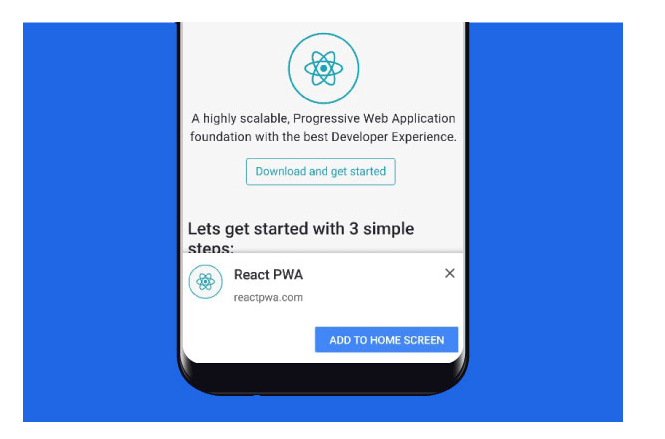
Progressive web apps have a link-adding feature that allows the app to be cached so that you can access it right from your mobile phones.

Since 65% of mobile users download no apps on their phone, progressive apps make it easy for users to access their sites without having to download them and yet get an app like user-interface to use. And since there are no installations, there are no updates to be done from the user side.

The user just has to open the URL icon on the phone and access the app. Simple as that.

Cost-Effective and Faster Development

As a PWA is technically still a website, it doesn’t require that large of a budget as a mobile app does. And since they include only the essential features- making PWAs lightweight apps- quicker to develop and cost-effective scalable solutions.

2. Cons of Progressive Web Apps(PWAs)

Battery consumption

Since a progressive web app requires an internet connection, it consumes a lot of battery pretty fast. Another reason is that PWAs run on technologies that aren’t yet intended to optimally perform in a given mobile environment. And that’s why PWAs don’t optimally use battery power.

Limited functionality for iOS users

Push Notifications are one example. Push notifications have become an essential part for businesses to interact with the users by sending them regular updates regarding business offers and more. But since push notification services aren’t available for iPhone users and since most of the eCommerce consumers use an iPhone, eCommerce stores lose a majority of their target audience.

But that’s not it, where it hurts most for iOS users is that PWA has only a limited storage window for iPhones. Meaning that when a user adds a PWA, their offline data will be stored for no more than two weeks, after which the PWA cache will be cleared.

Limited hardware access

Progressive web applications have limited access to software and hardware capabilities. They don’t support features that are not powered by HTML5. But also for iOS devices yet again, PWA can’t work with Face ID, Touch ID, Siri, ARKit, In-App payments and other core features of Apple.

Getting troublesome for iOS users to use PWA optimally even if they want to. That means if the majority of your target audience uses an iPhone, PWA might not be the best option to go with. But then again, it depends on your business’s requirement and how PWA plays out to it.

Native App PROs and CONs

3. Pros of Native Mobile Apps

Enhanced Performance

Unlike PWAs, native apps are platform dependent. That means they are developed and greatly optimized per the specific mobile operating system.

Due to this, mobile apps work faster and provide unparalleled performance that PWAs are unable to match as of now.

Since the data is stored locally, the app takes less time to load and thus providing the users with a seamless experience.

Intuitive User Experience

When users face any bug issues with their app repetitively, it leads to them having a poor experience. That’s where native mobile apps come as the knight in shining armour. Native applications are built keeping in mind the mobile hardware’s technical capabilities so that the UI can impeccably integrate with the underlying computing functionalities to provide the users with a great experience.

Highly-secure environment

While PWAs use HTML5 which is a more secure version, they still can’t ensure the utmost protection against vulnerabilities.

Native apps are created with the latest cutting-edge technologies which ensure utmost security protection, data intrusions measures that enable users to use their mobile apps without feeling vulnerable to attacks.

Increases Business Productivity

With cutting-edge technologies at the helm of mobile app development, mobile apps have been contributing so much to improve and simplify the performance of everyday tasks.

4. Cons of Native Mobile Apps

High-Cost Development and Maintenance

Since a native app is platform-specific, you’ll need to hire a separate development team for each platform you choose to run your app on. And for eCommerce shop owners, having to create separate apps for different platforms can get quite expensive.

That means you’ll need a specific team of Java or Kotlin developers for an Android app and Swift or Objective-C developers for an iOS app.

While you can create a hybrid app that works on both platforms using a single codebase, it won’t be able to offer in-depth personalization of features like a native app.

Inconsistent Quality

Not all developers maintain high development and coding standards. That’s why finding the right team of expert iOS developers & Android developers that are at par and can satisfactorily overcome any technological hurdles to build a great mobile app and provide users with a seamless experience has become difficult.

Many development companies don’t have an in-house team of experts for both Android and iOS and that’s where this problem arises.

Looking for a dedicated team of Android or iOS developers from an established native mobile app development company? Get in touch!

User acquisition

Users have to download a native app from the app store as it is the only place to access it. For most online consumers, that are short on patience, it is an extra step in their shopping journey. That’s where customers will opt for PWA more since it can quickly provide users with the results they are looking for.

Progressive Web Apps vs native apps: Which is right for you?

We are not thinking of Progressive Web Apps vs Native apps as a competition and neither should you. Think of it as rather a friendly discussion on these vast mobile platforms so that it can help you make the right choice.

Summing it up, progressive web apps are websites with a dynamic framework, so if you’re a start-up or a small-sized business, as far as the PWA development costs are concerned, you don’t have to worry about not getting cost-effective solutions.

Between PWA VS Native Apps, building a PWA from scratch is must cheaper than developing a native app.

While native app development costs much more and is a heavily time-consuming process, it offers a custom-tailored experience, much better performance and an amazing user experience.

If you’re looking to create an eCommerce app for your online shop, native app development will be the right choice for you between PWA VS Native Apps. With custom-tailored iOS & Android app solutions, you can engage with your target audience on both platforms effectively and greatly empower your growth.

We hope this helps clear the fog in your head regarding which is better and which is right for you between PWA VS Native Apps.

But as always, whichever way you proceed to take your online business ventures, bringing on board a trusted & established web & mobile app development can accelerate your business growth.

Communication Crafts has been helping businesses, start-ups and organizations turn their visions into reality with our innovative mobile app development solutions and PWA solutions for the last 15 years.

With customer satisfaction at the core of everything we do, we are truly dedicated to creating lasting success for you. Our amazing team of expert Android developers (Java & Kotlin), iOS developers (Swift & Objective-C) and PWA developers are industry experts with years of hands-on experience working on creating custom mobile apps from scratch that meets all requirements successfully.

Whatever mobile solutions you need, we have you covered!

Get your custom-tailored PWA or Native app and grow your business successfully!

You’re in the right place!

Native vs. Hybrid app- Choose the right one for your App development

As of today, mobile apps are the gateway to increase business sales. Living in this digital age, where everyone is glued to their devices, building good relations with the customers is really easy.

According to Comscore, mobile users spend 90% of their time using apps. It is predicted that mobile apps are going to generate a revenue of $935.2 billion in 2023!

This seems like the best time to invest in a mobile app to yield fruitful returns for your brand. But here is the thing, people prefer using mobile apps that provide good customer experience. For which, building the right type of mobile app that caters to a positive user experience is important.

It is important to choose between iOS and Android mobile platform and the type of app- native app or a hybrid app, that would be perfect for your business requirements.

Native app and hybrid app, both are unique in their ways. Presently, these two types of apps are the most preferred choice for developing a mobile app.

Here is everything you need to know about native apps and hybrid apps and make the right choice.

What is a Native app?

What is a Native app?

Each native app is developed to work with a specific operating system (OS). This means an app coded for iOS apps will not be compatible with Android and vice-versa. Native mobile apps follow certain methodology to enhance the user experience. Native developers can build apps that leverage all the features of an OS. However a Native app will require different code written for each platform it is on.

What is a Hybrid app?

What is a Hybrid app?

While a native app is platform dependent, a hybrid app has cross-platform compatibility. This means that a hybrid app can run on iOS & Android platforms with the same development code. These applications can be viewed as websites put into containers using the Cloud. Most of the time, a hybrid app uses the rendering engine of the built-in OS browsers.

Advantages of Native App development

Advantages of Native App development
  • Better User Experience: Great user experience is the backbone of any brand wanting to increase their reach to potential customers. During native app development, programmers adhere to the platform specific features for which the native app is being built. This helps improve the functionality of the app that helps enhance the user experience. Native apps can also better utilize offline mode capabilities.
  • Increased Performance rate: Native app, compared to a hybrid app, always has a higher rate of performance. This is due to better optimization of memory and storage achieved through code that is written only for a single platform. This makes maintaining a native app much easier.
  • Better Security: Contrary to a hybrid app, a native app can fully consume the hardware capabilities of the operating system it uses. Thus implementing efficient data security features for a native app is easy.
  • Functionality: Native app development offers access to latest features as soon as they are launched in the market, so that developers can quickly integrate them within the native app.
  • Personalization of the native app: Different mobile devices have different sizes and features. A native app can help adjust the different layouts of the devices. With a native app, creating the best user design (UX) that delivers satisfactory user experience (UI) is easily doable.

Advantages of Hybrid App development

Advantages of Hybrid App development
  • Cross platform compatibility: A hybrid app can run on both iOS and Android with the same base code. This helps reduce the development cost if the developer plans to launch a hybrid app for both mobile platforms.
  • Less development time: Hybrid app development requires the developers to work on a single set of code, making it very time-efficient to roll out a hybrid app.
  • Easy Maintenance: Since there is only one core set of code, it becomes effortless to update and maintain the hybrid app. There is no need for the user to download the latest version to fix a bug.

Disadvantages of Native App development

  • Higher Cost of development: The need for excellent development resources at hand and experienced native app developers who can curate app requirements specifically for business needs, makes developing a native app an expensive process.
  • Time-Consuming process: Developers need to write a separate code for each platform the native app is going to be released on. Native app development seems to go on forever in such cases. For example, even if the native app is ready to be released on iOS, and development for Android is still left, business won’t prefer releasing it on iOS platform just yet. As they prefer to simultaneously release the apps on both platforms. Even developing one native app takes more time than a hybrid mobile app.

Disadvantages of Hybrid App development

  • Continuous internet connection required: Most of the hybrid apps are like websites that function through the containers (contains the mobile app code) downloaded from the Cloud. Due to this, continuous internet connectivity is required for hybrid apps.
  • Bad User Interface: As the user interface needs to be compatible with as many platforms as the hybrid app is on, several functionalities are compromised. One being the UI. Developers need to write code that is compatible for Android & iOS, leading to minimal UI features being implemented for the hybrid app that might not be so appealing to the eye.
  • Native App Developer needed at times: Many functionality issues in a hybrid app requires a native app developer work on the issues at times. This leads to increased development costs. Businesses have a problem incurring these costs as the main reason of choosing a hybrid app over a native app is the lower cost of development associated with hybrid app development.

Technology Stack used for a Native app

The most preferred frameworks to develop a native app are:

For iOS apps:

  • Objective-C: This is a programming language that has phenomenal development experience and many available libraries. It is also compatible with other programming technologies. However it requires more coding time due to its dependencies.
  • Swift: Swift is the new programming language from Apple and has replaced Objective C. Having better performance than Objective-C, it is a preferred choice to build an iOS native app that simply delivers seamless experience.

For Android apps:

  • Java: This language is not only used for mobile applications but also for desktop and web development. It provides gives developers access to a vast library of APIs to develop Android OS features.
  • Kotlin: This programming language was specifically developed to work with Java for Android. Google declared Kotlin as ‘the programming language’ for android app development. Kotlin reduces the time required for programming in app development.

Technology Stack used for a Hybrid app

The most popular frameworks for hybrid app development are:

  • React Native: This is an open-source, cross-platform compatible software developed by Facebook. It offers a simple elegant UI, higher rate of performance, and short development cycles.
  • Xamarin: It is suitable for a simple hybrid app, this open-source framework is maintained and strongly supported by Microsoft. Xamarin is the popular choice for business driven projects.
  • Ionic: It produces mobile hybrid apps with technologies like JavaScript, CSS, and HTML. It is easy to learn and has a simple UI but can be challenging to maintain. But since the introduction of React Native, Ionic isn’t a preferred choice any longer.

This should help clear things up between how a native app & a hybrid app are different from each other.

Still having a tough time making up your mind? Don’t worry! That’s where Communication Crafts comes to play!

Give us a call and we’ll lay out the best development plan for your business needs. , Throughout the last 15 years, our team of expert hybrid & native app developers have worked on creating just the right kind of mobile apps for our clients. With the latest Mobile App monitoring systems, our app developers not only gather in depth analytics of your app’s performance after it is launched, but also help roll out timely updates to make your app’s performance better. With the best mobile app developers working in our development team, every line of code we write for your mobile app is quality assured. Crafting your native or hybrid mobile app to meet all your business needs is our forte! Customer satisfaction is of utmost priority for us and we tend to achieve it no matter what!

Hire us and get the best native or hybrid app made quickly!