How Custom Web Applications Can Skyrocket Your Business Growth

Introductions

Businesses must change as fast as a cat on a hot tin roof if they are to survive in this chaotic world of digital chaos—that is, if they are to keep up with the lightning-fast technical innovation happening constantly. Consumers in the modern market need unique experiences created especially to fit their own tastes and areas of interest. The opportunity has arrived to hold a red-carpet party for those online applications that really are unique!

These custom web applications, created to fit the needs of a company, can help to accomplish better operational efficiency, more client interaction, and growth-oriented project initiatives. This article aims to explore the ways in which using the specialized web app development services provided by a company and collaborating with a web application development firm of outstanding quality can change your business management and help you forward. Prepare yourself for some surprises that will most certainly thrill you!

A look into how websites can be personalized

You really need to be clear about your own needs before you start looking for a mobile app development service. Building a web application tailored to every company’s needs would help each one of them. Web apps that are custom developed differ from those previously created in that the former are built from the ground up and have more limited purposes. This gives groups total control over the features, operation, and architecture of the application.

Pre-made solutions may seem more appealing than industry standards because they are less expensive and easier to use; yet companies may find that these solutions lack the flexibility they need to meet their needs. This is true even if ready-made solutions are usually thought of as being easy to use. Conversely, custom web apps offer solutions that fit for your business’s needs and can evolve in line with its expansion.

Improving the most efficient running of operations

The main benefit of personalized web apps is that they can make operations more efficient.
By using custom web applications to automate tasks that used to require a lot of work, mistakes made by people are less likely to happen and valuable time is saved. Businesses can use staff time on more valuable projects when they automate tasks that used to be hard to do by hand. This makes the overall output higher.
If the planning for the development process is done right, a custom web application can use tools and systems that already exist to make work easier. Systems like project management, product control, and customer relationship management (CRM) can be linked together so that customized applications can be used in a wide range of business activities. This makes it easier for workers to share information and work together.

Scalability means that an organization’s needs grow along with its size. Scalability is built into custom web applications so that companies can meet the needs of their customers as they grow without affecting performance. This is a big plus over generic solutions, which don’t always meet the needs of businesses, whose needs are always changing.

Getting customers to be happier and more interested in your business

In today’s highly competitive business world, one thing that could set one company apart from its competitors is the quality of the experience it gives to its customers.

Personalized User Experience: When businesses make custom web apps, they can give each user a unique experience, which makes customers happier. After studying the specific needs and wants of their target audience, companies can come up with features that appeal to those people. This helps the businesses reach their goal of getting more people to connect.

Mobile Optimization:  Due to the wide availability of mobile devices today, it is not an option but a must to have an app that works on mobile devices. When customers use custom web apps, they are sure to have the same experience on all devices because these apps are designed to work best on phones. It is very important to stress this because studies show that more and more people are using their cell phones to browse and shop online.

Businesses have a greater capacity to promptly address their clients’ inquiries and satisfy their needs when they offer them personalized options. Businesses can establish more intimate relationships with their consumers and be more responsive to their needs by employing tools like automated assistants, tailored ideas, and live chat.

Getting an edge over the competition

In a market where competition is high, you must make a name for yourself. Personalized web tools are one of the most unique ways for businesses to set themselves apart from their competitors.

When an app is custom made for a business, it lets that business show its unique personality. Customers are more interested in custom web apps than in standard ones, which usually look and work the same way. And this is because custom web apps show off the unique personality and ideals of a brand.

Custom web application deployment helps companies to quickly adapt and grow. Companies who can change their products and add fresh features in response to market changes set themselves up to be more competitive than their competitors. When companies can adapt to new conditions, they may keep ahead of the competitors and seize fresh opportunities.

Making sure that the finances will be stable in the long term

For some people, the beginning costs of making a custom web application may be higher than the costs of using ready-made options. However, the long-term benefits usually outweigh the costs.

When you use custom web app creation services, you might get a big return on your money (ROI) in the long run. Businesses can get a better return on their investment (ROI) by cutting down on waste and making more things. Also, when the company’s needs change, custom applications often need changes that are easier to make and cost less.

Modular software can be changed to fit the exact needs of your business because it can be customized. Businesses can use this freedom to add features and changes whenever they are needed to get around the problems that come with long-term solutions. Buying custom web apps is a smart move because they save money and time over time.

Case studies and good examples are looked at.

For the purpose of showing how important custom web apps are, let us look at a few real-life companies that have grown a lot since they started using customized solutions.


Here are a few examples:

Using a web application created especially for them allowed them to keep track of their inventory and engage with consumers in a better manner. Along with a twenty to twenty-25 percent rise in consumer confidence, this choice resulted in a thirty percent drop in the processing times needed for orders.

The healthcare provider claims that their new patient management system is made to be compatible with the electronic medical records they now own. The quality of the treatment patients received made them happier; forty percent more appointments could be booked in a limited period and with no effort.

The manufacturing company could real-time monitor the production lines thanks to a smart program. This made things clearer, which helped to identify bottlenecks, boost general operational efficiency, and enable the fifteen percent cost cut.

Last Thoughts

Businesses can get a competitive edge in the ever-evolving digital landscape and support the expansion of their operations with the help of custom web applications. An organization’s bottom line can be significantly impacted by customized web applications. These applications have the power to enhance operational efficiency, foster client interaction, and offer personalized solutions, thereby strengthening the organization.

Working with a top web application development company will help you to create a web application customized for the needs of your company by means of knowledge and resources. If you apply the suitable web app building solutions, you may help your business to be even more successful than you had first thought possible and realize its full potential.

If you are interested in knowing how the deployment of tailored web applications could enhance the performance of your business, get in touch with a qualified development team right now. The first step on the road to development might be a response customized to fit your needs.
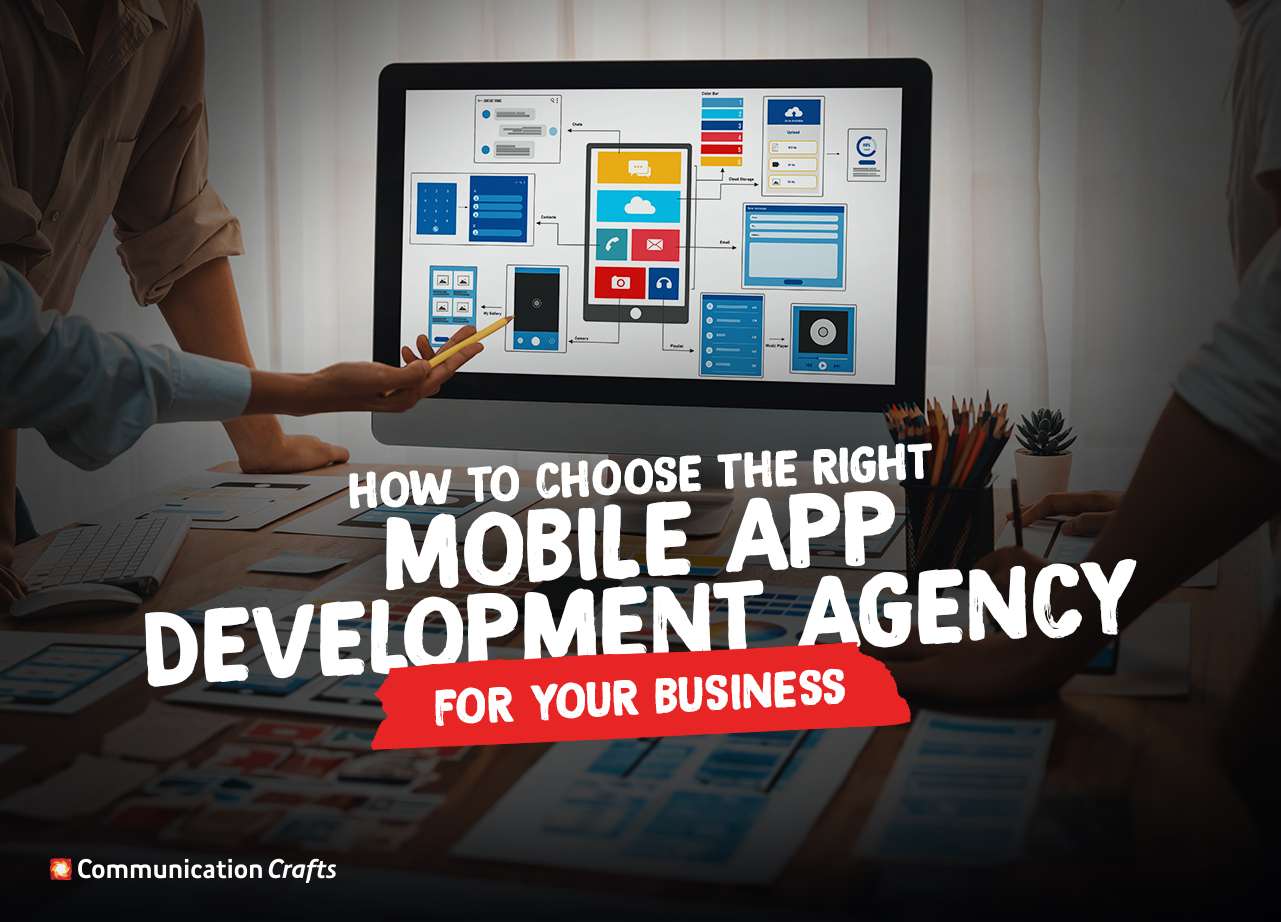

How to Choose the Right Mobile App Development Agency for Your Business

In the digital age, a mobile app is often the core of a business’s plan for client engagement, sales growth, and brand development. Whether you’re a startup with an innovative idea or a well-known corporation trying to grow, your mobile app may determine your success. However, the best mobile app takes more than a distinctive idea. Choosing the mobile app development business that will maximize your idea is most important.

With so many possibilities, picking an app development company might be challenging. Prioritizing technical know-how, communication, support, and experience will ensure that your cooperation produces a profitable, user-friendly product that supports your company’s goals.

Recognize Your Company’s Requirements

You really need to be clear about your own needs before you start looking for a mobile app development service. You will assess possible development partners from this basis. Here are some important questions you should prove yourself:

  • What specific goal does your app serve?
  • Is it for client interaction, e-commerce, service booking, or something else entirely?
  • Who is your target audience?
  • Do the majority of them use iOS or Android?
  • What tools and features do your app need to include?
  • Will you require payment gateways, location services, or access to external services?
  • Could you please outline your budget and timeline?

Answering these questions will enable you not only to define your search but also to properly present your needs to the app development business.

Review the agency’s experience and portfolio of work.

You should start the investigation when you have outlined the needs of your business. The most crucial factor guiding choice is the experience of a mobile app development company. The suitable agency will be knowledgeable in modern development methods, user experience design ideas, and the most recent technologies. How, therefore, can you be sure the agency you are considering possesses the required knowledge?
Examining an agency’s portfolio is one of the best ways to evaluate its competencies. Take a close look at the apps they have built in the past. Are the intricacy and degree of functionality of these apps what those of the app you wish to create? Have they created apps fit for your sector or a like audience? If you own an e-commerce company, for instance, it would be rather beneficial to deal with an agency that has developed several successful e-commerce apps.

Review Client Notes and Testimonials

Although a portfolio might provide you a taste of the skills of an app development business, you must hear from their clients to fully appreciate what it is like working with them. Client testimonials and reviews offer valuable insights into the agency’s work ethic, communication, and problem-solving abilities. You can find reviews on the agency’s website, as well as on platforms like Clutch and GoodFirms.

Search the comments for reoccurring themes. Clients are complimenting the agency for its post-launch support, prompt delivery, and cooperative approach. Alternatively, are they bringing up problems including poor communication, delayed schedules, or unstated expenses?

Ask the agency developing a mobile app for client references without delay. Direct communication with prior clients allows you to personally understand their agency experience—both positive and negative.

Assess the methodology and technology stack used for development.

As with any technological field, the creation of new mobile apps is a lightning-fast process. Think about which mobile app development company stays up-to-date on the latest frameworks, languages, and tools. Their choice of technology stack will have an impact on every aspect, including the app’s scalability.

Consider this:

While Android often uses Java or Kotlin for app development, iOS usually requires knowledge of Swift and Objective-C.
If you wish an app operating both iOS and Android, the company should be informed with skills like React Native or Flutter.

Find out from them also their development plan. Agile methods are used by many modern app development companies since they allow for constant client feedback, flexibility, and slow progress. Agile development is a great fit if you want to change your application throughout its building.

Transmission and Project Management

Dealing with a mobile app development agency requires for good communication. You look for a responsive, open, cooperative agency. Before you choose an agency, check their communication style:

Transparency:

Are they often offering updates on project development? Find out which of Jira, Trello, Slack, among other project management software, they prefer. Regular milestone reports and check-ins ensure the project stays on target and helps avoid any possible misinterpretation.


The group particularly values:

Make sure the person designated to keep an eye on the initiatives keeps in touch. Perfect communication is vitally necessary for the success of the product, so a project manager assists you and the development team to have it.

Financial Aspects

Although budget is usually quite important for decision-making, choosing a mobile app development company requires careful research. Although selecting the least expensive choice could sound enticing, often you find yourself with precisely what you paid for. Tight budget companies may overlook design, testing, or security in order to save money now, which would eventually result in higher expenditures down-stream.

Keep an eye out for value rather than the agency that offers the lowest price. Request a detailed estimate that breaks down the costs associated with design, development, testing, and post-launch support with each category. In comparison to what the agency is offering in terms of expertise, guidance, and more skills, this is a significant difference. Hourly rates, fixed charges, and benchmark payments are used by some companies.

Post-launch maintenance and support

Launching your app is just the beginning. As your firm grows and customers provide feedback, every app will need upgrades, fixes, and new ideas. For this reason, it is imperative to select a mobile app development provider providing continuous post-launch maintenance and support.

Ask following questions to the potential mobile app development agency:

Do they typically provide their consumers with new versions and fixes?

  • How soon do they address any issues that arise after the launch has concluded?
  • Will they assist you in expanding the program as your business expands, or will they incorporate new features as required?

The app development company’s long-term support ensures that your app remains secure, functional, and up-to-date with the latest technological advancements and trends.


Fit with Your Vision and Culture

Beyond just technical ability, great communication between you and your mobile app developer is essential Crucially, you should be working with a team that reflects your company goals, vision, and brand values. Mostly depending on compatibility, encouragement of creativity and teamwork across the project comes from here.

During the screening process, review agency understanding of your company, brand, and long-term goals. Are they truly motivated in seeing you succeed, or are they just aiming to accomplish the assignment quickly? A common vision assures that the final product not only meets your technical requirements but also attracts to your intended market.

You will eventually identify the ideal partner to assist in creating a mobile app.
Choosing the right mobile app development agency for your company is a crucial decision that can determine the success of your app. To make a solid choice, know what you need, evaluate the agency’s experience and credentials, check client evaluations, and rate their technical skills, communication, and support.

Remember, the best app development company is the one that aligns with your vision, has the technical expertise you need, and is invested in your success; it’s not always the fastest or the cheapest option. Spend some time, probe the appropriate questions, and collaborate with an agency to transform your app concept into a practical, simple tool benefiting your company.

Are you ready to begin your journey on a smartphone app? Consider things as your app might turn into the next major sensation.


The Benefits of Mobile Learning with LMS for Modern Education

In a world where approximately 7 billion smartphones are at play, sticking to outdated learning methods is a risky game. Today, learners expect access to educational resources on the go. And if your learning resources aren’t mobile-friendly, then don’t expect your course downloads to go higher anytime soon. Infact, archaic methods of learning are leading your institute to a serious fall. Whereas educational institutes that are amplifying their Learning Management Software (LMS), can train their learners better. Partnering with an LMS development company, can help you harness this dynamic approach and empower your learners to seek knowledge anytime, anywhere. Let’s dive into the game-changing benefits of mobile learning with an LMS and why educational institutes must embrace this for a better learning experience.

Redefines Learning Flexibility

Getting stuck in hour long sessions to learn? That pedagogy is used by educators before COVID-19. With mobile learning, your learners can access training modules, interactive quizzes, and can get real-time updates from their mobile phones. No more wasting time on travelling long hours and battling schedules. Whether they are commuting, grabbing a coffee, or sitting at their home, learning happens when it suits their schedule. The advantage? The learning curve remains untouched, and the engagement remains high.

But convenience isn’t the only win here. Learners retain information better when they are learning in a comfortable environment. And who better to deliver such flexibility than an LMS development company?

Instantaneous Updates

Businesses today are moving at a breakneck speed. This implies that if your training materials aren’t updated in real time, you might not be in the race anymore. With a well-implemented LMS, learners don’t have to wait for updated materials and access the course. They get instant updates on matters regarding their learning modules, a personalised learning path and any other updates regarding quizzes. Mobile learning pushes this further ahead. For instance; got a new history lesson? Push it to your learners’ phones and track who’s read it. No more excuses, no more delays.

This is where the role of a mobile app development company steps in to level up your learning management software. A sleek, intuitive app translates into learners staying sharp, informed, and ready to take up on whatever comes next.

Higher Engagement

Studies show that 85% of learners prefer online learning (which includes mobile learning) over traditional learning as it boosts their motivation, engagement, and academic achievement. An LMS lets you add that gamification features. For instance, you can add learning quizzes, games, simulation exercises to turn learning into a thrilling experience. This does not hamper the learner’s knowledge consumption at the same time adds that element of engagement.

Also, you can add a leaderboard to gauge who is able to perform better out of all the students and compare the stage on which learners are at. Furthermore, you can add social learning tools like discussion forums and peer reviews, to take the learning to the next level. Ultimately, creating a learning culture where people challenge each other and share knowledge. To get this right, trust an LMS development company, who will help you gamify and add social learning elements like a pro.

Data Driven Decisions

Training without data is like sailing without a boat, you’re about to drown. If your students are learning through mobile, you need to integrate it with an LMS. As a result, you get insights on the student engagement, the completion rate of the course, the performance on tests, and more. Through such insights, you can optimise the learning path for learners, identify the skills gap and add more content to polish the gap, and predict future training needs.

Here, partnering with an LMS development company, gives you an edge as the software doesn’t just work for you as a tool but also as a strategic asset. Need to check whether the physics module that you added to the LMS is working or not? Check the engagement rates. Want to know who’s slacking in the course? It’s all there in black and white. Data driven training takes your learning from plain boring to smart.

Cost Effectiveness

Let’s calculate the cost of running a physical learning course for an entire month. The list of expenses includes renting out a place, furniture, a tutor’s fee, electricity bills, and other expenses. That is too much! Whereas, when you opt for a mobile-based learning method, the initial investment pays off in no time. Traditional training methods are resource draining. In contrast, mobile learning methodology focuses on cost-effective, flexible and engaging learning.

Plus, when you get your learning solution developed from a top-tier LMS development company, you get a solution tailored to your needs. It means no unnecessary changes before launching the course, no inflated costs. But a streamlined learning experience for your students and other learners.

Scalable and Adaptable

Whether you want to create a course for a class of 60 students or create a course for 6000 students, you can scale your LMS course when it is mobile friendly. A few of the benefits that scalability offers is that educators can add new courses or resources in a few clicks. At the same time, learners can access these courses from anywhere, without their learning being disrupted.

Furthermore, it is not just about handling huge numbers. A thoughtfully developed mobile app from a mobile app development company ensures that your LMS delivers a flawless experience to its users across all devices. Whether students are accessing the course from their mobile phones, tablets or laptops, they will be able to access everything without a glitch.

Personalisation

Learning today is not just about creating a generic self-paced course for everyone but creating a learning path that helps the students achieve the goals that they are looking for. Hence, there are student mentoring sessions where they are guided by mentors on learning paths to achieve their goals. Same should be with your mobile app! You should be able to provide your students with personalised learning paths based on their performance, challenges, and their learning goals.

And that can be made possible with the help of AI and machine learning. But, to leverage these technologies, you need to partner with a seasoned LMS development company who can help you fulfil this requirement and deliver personal learning experiences for students. This learning approach takes your learning methodology from being just course centric to student centric that is transformative in its own way.

Final Thoughts: Ready to go Mobile?

The future is mobile and if your institute wants to stay in the competition, then it’s high time you consider making your LMS mobile centric. Through mobile learning you will be able to achieve that student engagement and academic excellence, that you are looking for. Whether it is about enhancing classroom experiences or providing personalised learning paths; mobile learning acts as a catalyst for your goals.

Now, what’s ahead? Partnering with an LMS development company to improve your educational approach. Furthermore, if you want to create a cutting-edge user experience, we have got you covered in that too. At Communication Crafts, we understand any successful solution whether it be an LMS, or a mobile app isn’t just coded, it is personalised. So, let us take your services to the next level.

Let us transform your learners’ experience together!

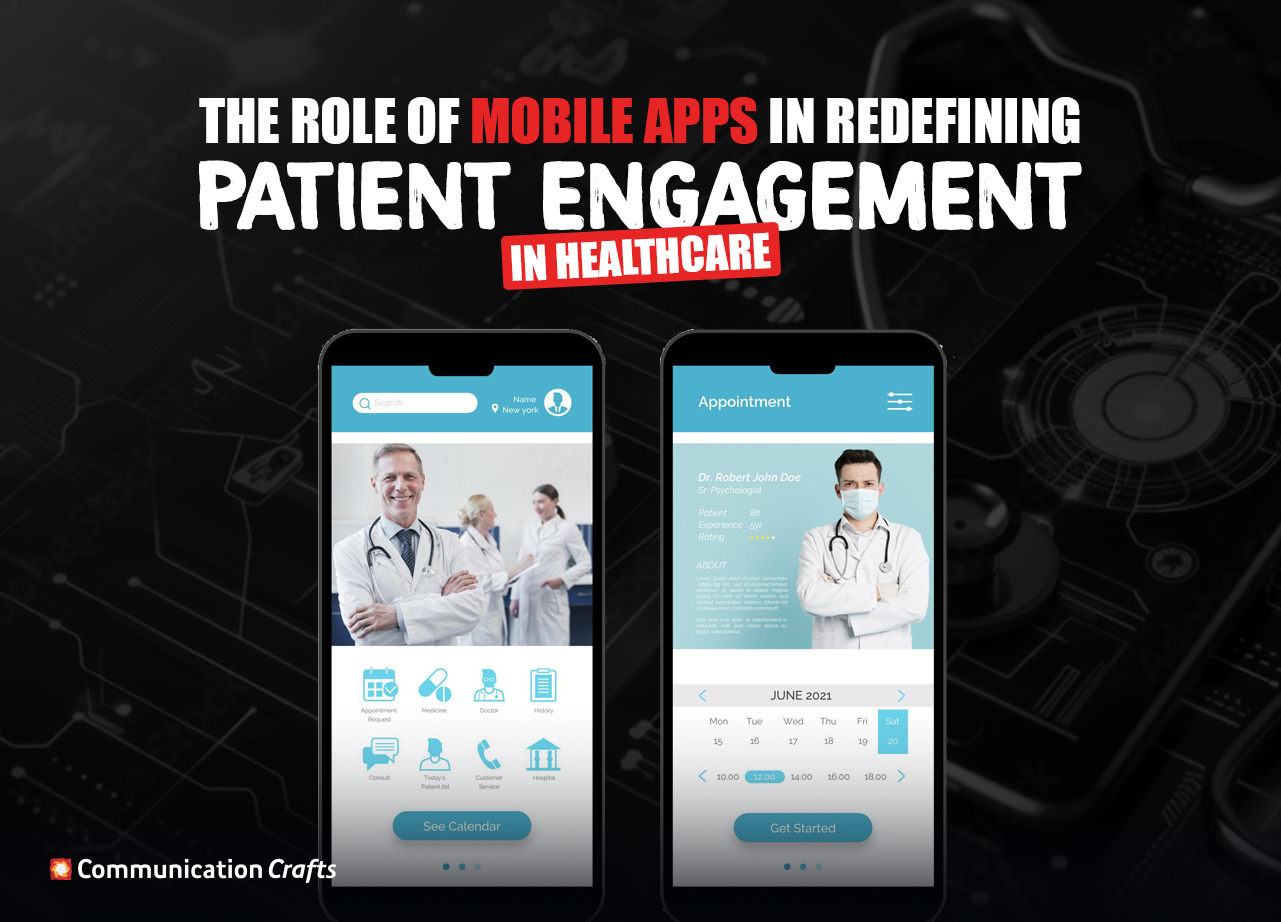
The Role of Mobile Apps in Redefining Patient Engagement in Healthcare

Today, patient experience is taking the centre stage in healthcare industry as patients are actively taking participation in their own health and well-being. Patients today expect more from the healthcare organisations in terms of access, convenience, and control. Healthcare institutions are also making their services more patient-centric keeping these points in mind. At the heart of this patient-centric services lies mobile apps, revolutionising the way hospitals interact with patients. It would be safe to say, the future of healthcare is not just digital, but it is mobile-first. Infact, 54% of patients have expressed the desire to take a more dramatic shift from regular office appointments towards mobile interactions. So, as a healthcare app development services company we suggest if you aren’t taking steps towards creating mobile apps to engage patients, you might be giving them more reasons to drift apart from your hospital. Let us understand how mobile apps are creating a shift in this segment through this blog. 

Mobile Apps: The Non-Negotiable 

Let us first understand why mobile apps have become a non-negotiable for your healthcare strategy. There are many facets to this, but it boils down to 2 main reasons 

  1. Patients today don’t trust healthcare providers with their personal information given the number of data breaches that are occurring in the healthcare sector. They want to keep their personal information in a more secure and controlled manner. Hence, the shift towards mobile apps is there. 
  2. Traditional methods to engage customers won’t cut in anymore. Your customers are on mobile phones today and that’s where you should be. If you are still using brochures and follow-up email, your communication will likely be in their spam folder rather than where it should be. 

And as a mobile app development company, we have seen this happen with our clients, when patients are in control, it simply translates into better engagement, better compliance and higher satisfaction. Furthermore, it saves your resources and time which can be utilised for better purposes. Because when a patient knows what is going on they are more likely to follow their treatment. Imagine if a patient refers your hospital in their social circle just because of that amazing app of yours. It ultimately impacts the bottom line of the business.  

Eliminating the Accessibility Barrier 

One of the major advantages of mobile applications in healthcare is the accessibility to the healthcare services they provide to the end customers. Today, convenience is the new currency in healthcare, and if you are not offering it, customers don’t care about your services. Mobile apps are facilitating this accessibility of care which was not there earlier and kept patients disconnected. Today, patients can book their appointments through mobile apps, access their medical records with a tap, and even consult the doctors through a video call all because of healthcare app development services that focus on patient care. 

Furthermore, this transparency and access of information also builds trust. When patients have information regarding the doctors who are consulting, their expertise and their experience they won’t shy away from taking a remote consulting too. This adds as a channel of income for your hospital as with multiple requests you can monetise your services via. a mobile app. 

Killing the communication gap 

Communication has always been a problem with healthcare institutes. Missed calls, confusing voicemails and unread messages add up to the communication gap between the hospitals and the patient. Imagine you have sent across an important email to your patient regarding a follow-up they are having after a treatment. However, due to their work it gets lost in the ocean of mails. This adds to the frustration and ultimately affecting the patient engagement. A major issue that can result because of this, is poor health outcomes, increase patient readmissions and a damaged reputation in the long run. 

Mobile applications eliminate this issue by automating the communication process to the patients through by adding automatic reminders and messages on your behalf. It’s clear, smart, and effective. The patient can get in touch with the healthcare services anytime, anywhere. This heightens the level of engagement for your patients and a game-changer for your healthcare institute. As a mobile app development company, we suggest jumping to mobile apps before there is a tint on your reputation. 

Trust is everything!  

Patients are handing over their most sensitive information to healthcare institutions. One cyber incident and they might not trust you again with their bank details or National Insurance Number (NI number). A mobile app with up-to-date security endorses that you are capable enough to keep their information intact. By taking the expertise of a mobile app development company, you can develop a mobile app that adheres to the security requirements like data encryption, secure storage, advanced access control and compliance standards such as GDPR and HIPAA. 

A secure mobile app acts like a partner for your business. When customers feel safe, they are likely to share more information and engage with your mobile app. This engagement translates into better health outcomes as they are more likely to follow their treatment plans, participate in healthcare monitoring and communicate openly. 

Leveraging Data for Continuous Improvement 

It is not a hidden fact that mobile apps continuously collect data from users. Apart from the patients’ medical information, mobile apps collect data to improve its functionality and usability. This data assists healthcare app development service companies to identify areas of improvement and innovation. Additionally, they can deliver personalised care based on the feedback received from multiple users (patients in this case) through multiple touch points. 

Thus, with the help of this additional data these companies can improve the overall user experience, add new features or eliminate the ones that are not needed. By converting the data into actionable results, you can drive better outcomes for the patient and meet their evolving needs. As a result, the engagement levels remain undropped and patients satisfied 

Wrapping up

Still thinking whether you need a mobile app or not? Let’s put it this way: If you can’t provide the patients what they want, someone else will. This is not just about making sure you are using the best technology available; it is about staying ahead of your competition. But to keep up to the mark, you need a mobile app development company to help you develop a bespoke app that aligns with your services and WOWs your customers too. 

And who better to take your business to that next level than WOWHeads. At Communication Crafts, we don’t just align with your vision but convert it into a reality. Our healthcare app development services ensure that we don’t just transform your healthcare business from inside out.  

Cloud-Powered Mobile App Development: Maximizing Benefits for Businesses

/*! elementor – v3.18.0 – 20-12-2023 */
.elementor-widget-text-editor.elementor-drop-cap-view-stacked .elementor-drop-cap{background-color:#69727d;color:#fff}.elementor-widget-text-editor.elementor-drop-cap-view-framed .elementor-drop-cap{color:#69727d;border:3px solid;background-color:transparent}.elementor-widget-text-editor:not(.elementor-drop-cap-view-default) .elementor-drop-cap{margin-top:8px}.elementor-widget-text-editor:not(.elementor-drop-cap-view-default) .elementor-drop-cap-letter{width:1em;height:1em}.elementor-widget-text-editor .elementor-drop-cap{float:left;text-align:center;line-height:1;font-size:50px}.elementor-widget-text-editor .elementor-drop-cap-letter{display:inline-block}

Smartphones have become an extension of our lifestyle and transformed the way we interact with businesses. This transformation has given a boost to the mobile application development companies building applications for everything. Businesses are trying to woo customers by setting their offerings apart from the crowded market and convincing potential customers about the value of their services. However, with this expansion businesses are finding it hard to scale up their mobile apps and improve its performance with existing infrastructure. An ideal approach to overcome this challenge is cloud-powered mobile app development.

Think about having several strong and powerful servers, storages, and databases which you can use to build your apps without investing in the necessary hardware infrastructure. Cloud-powered mobile applications are a growing trend in the mobile development market today. Did you know? 77% of companies have one or more apps on the cloud. But how will cloud-based mobile applications help my business? To answer your question here are the benefits of cloud-powered mobile application development.

If you wish to create a mobile app without having to spend tremendous amount of money, invest in cloud computing. Cloud services are flexible, and the only cost incurred will be for the resources used. It is unnecessary to spend hundreds of thousands of dollars on equipment. Additionally, the costs associated with continuous upkeep, upgrades and security are minimized that helps you reallocate your resources to more strategic initiatives. You can take the help of mobile app development agency to choose which services your mobile application should opt for in case you are unsure which cloud services would work best for your business.

Scalability:

Add or remove resources as demand changes. Yes! Cloud computing offers your mobile application the flexibility to change the level of your services by adding more features or reducing them. Think of a situation, you would not have all the features ready when you launch your mobile app. Based on user feedback, you would add more features to enhance the user experience. Cloud enables your business to do that without causing hiccups. Furthermore, your users won’t have to update the application every time and their user experience will remain intact due to this flexibility. It’s like having a service that adapts to your needs and grows accordingly.

Storage:

Think of the cloud as your app data’s personal storage unit – a virtual space where you can keep all your data safe and sound. Mobile applications developed on physical storage infrastructure often have storage issues when the user base increases. This might hamper their performance, or you might have to incur more expenses to increase the infrastructure. With the cloud, there are no more concerns about exceeding storage space as your data is stored on a remote server which can be accessed anytime from anywhere. This also helps in accessing data on mobile devices and managing them. Migrating your storage to cloud can be tricky, you can take the help of an offshore mobile app development company to reduce the risk.

Data Synchronization:

Cloud-based apps work to sync your data across all your devices effortlessly. A task started on your phone can then seamlessly switch between your tablet or laptop without a lag or any deviations. Through cloud computing your progress, bookmarks, and settings are always stored no matter which computing device you are using. Since no installation is required, the application directly interacts with the cloud to fetch the appropriate data. It makes sure that there is no disruption of continuity, no matter the device is being used to access the document. Want an error-free data management process for your application? You can consult a mobile app development company to help you in this area.

Quicker Deployment Times

Imagine you are developing native mobile apps for both Android and iOS for your business. This can be a time-consuming process, often resulting in late market entry and giving the first-mover advantage to your competitor. In contrast, when you choose cloud-based mobile app development they offer you the advantage of moving to market quickly. As the cloud-based applications are platform agnostic, you can create the app and be in both the app stores in no time. Furthermore, they save your development and maintenance costs since you must only maintain a single application instead of two.

Data Security

Data security is critical for any business today. Losing data is like losing reputation these days. Hardware-based infrastructures often lack the security measures when compared to cloud. We have often heard stories of data getting lost or corrupted due to errors, making it vulnerable to cyber-attacks and other threats.

Well, not in the case of cloud-based applications. Your cloud provider offers your business advanced security measures for your mobile application like data encryption and access control measures which protect your sensitive user data. Likewise, it also helps in data recovery and back-up in case the data is lost due to some incident as data is backed up on regular intervals. But which cloud platform to choose for security? Consulting a mobile app development company helps you clear the air and choose the right platform.

Integration

Another benefit of developing mobile applications on cloud-platform for your business in integration. Businesses often integrate database for a seamless functionality. This can be a challenging task when it comes to native applications as you might have to code your way through the whole process. Not in case of cloud! With cloud platforms, you can seamlessly sync the database on the cloud platform without the hassle.  

Wait a minute! Database integration is just one part. With cloud-based applications you can integrate API seamlessly without using different APIs for different platforms. This makes the process far more streamlined and simpler rather than relying on different codes. You can rely on coding, or you can rely on a mobile app development company to help you start your journey to unlocking business potential.

Final Thoughts:

Cloud computing is the way forward if you want to develop your mobile app. The benefits of cloud offered by cloud providers are abundant and it would be a wise decision and good investment for your innovations and ideas. But to navigate through the installation and integration of cloud computing into your mobile app, you require the help of an expert. Research says, 60% of global companies outsource app development for better digital presence and customer journey flexibility. It’s time for you to trust one too!

At Communication Crafts, we understand the transformative power of cloud computing and the opportunities they present for businesses. After taking you through the benefits of cloud computing for successful mobile app development, we invite you to collaborate with us and to exploit our expertise as a mobile app development company.

/*! elementor – v3.18.0 – 20-12-2023 */
.elementor-column .elementor-spacer-inner{height:var(–spacer-size)}.e-con{–container-widget-width:100%}.e-con-inner>.elementor-widget-spacer,.e-con>.elementor-widget-spacer{width:var(–container-widget-width,var(–spacer-size));–align-self:var(–container-widget-align-self,initial);–flex-shrink:0}.e-con-inner>.elementor-widget-spacer>.elementor-widget-container,.e-con>.elementor-widget-spacer>.elementor-widget-container{height:100%;width:100%}.e-con-inner>.elementor-widget-spacer>.elementor-widget-container>.elementor-spacer,.e-con>.elementor-widget-spacer>.elementor-widget-container>.elementor-spacer{height:100%}.e-con-inner>.elementor-widget-spacer>.elementor-widget-container>.elementor-spacer>.elementor-spacer-inner,.e-con>.elementor-widget-spacer>.elementor-widget-container>.elementor-spacer>.elementor-spacer-inner{height:var(–container-widget-height,var(–spacer-size))}.e-con-inner>.elementor-widget-spacer.elementor-widget-empty,.e-con>.elementor-widget-spacer.elementor-widget-empty{position:relative;min-height:22px;min-width:22px}.e-con-inner>.elementor-widget-spacer.elementor-widget-empty .elementor-widget-empty-icon,.e-con>.elementor-widget-spacer.elementor-widget-empty .elementor-widget-empty-icon{position:absolute;top:0;bottom:0;left:0;right:0;margin:auto;padding:0;width:22px;height:22px}

So, why wait? Making your innovations a reality is just one click away!

Beyond the Buzzword: How AI is Transforming Mobile Applications

Artificial intelligence is transforming every industry, revolutionizing businesses’ operations and customer relations. Global statistics show 9 out of 10 organizations support AI as it drives efficiency, personalization, and decision-making. One of the major areas influenced by AI is mobile app development, as businesses turn to mobile app development companies to meet the need of the hour. In fact, 6 out of 10 businesses are turning to offshore mobile app development to keep up with the competitive market.

With mobile technology constantly evolving, the need for creative and intuitive applications has grown rapidly and AI has been an influential part of it. Users expect custom-designed experiences based on their tastes and behaviors, forcing app developers to stay ahead and make apps accordingly. This marks the integration of AI and mobile app development services will change the way we interact with our apps. In this blog, we’ll explore AI’s transformative role in mobile app development. We’ll also explore how it’s revolutionizing mobile application creation and interaction.

There are many advantages of investing in AI-powered mobile app development services over traditional ways. When you develop an AI-driven mobile system, these include intelligent sensors and highly personalized user experiences, forecasting capabilities, automation of development processes and new possibilities for using computer vision and natural language processing technologies become possible.

One of the most profound manifestations of artificial intelligence is its ability to constantly learn and update itself. Therefore, it can remain relevant in mobile apps as users’ preferences change. By leveraging AI, you can get smarter, more efficient mobile applications developed that offer a competitive edge in today’s user-centric market. This overview highlights the transformative potential of AI in mobile app development, setting the stage for a deeper exploration into the specific benefits it offers:

1. Intelligent User Interface and a Personalized Experience

A powerful area of application for artificial intelligence in mobile app development services is the creation of interactive and customized user interfaces. AI algorithms can examine users’ data i.e. browsing patterns, preferences and communication, to deliver highly contextualized and individualized experiences. Because of this, mobile apps can adjust themselves in terms of layout, content material, and functionality, providing users with unique and innovative experiences tailored to their diverse needs and habits. Through delivering an excellent user experience and responding to personal wants and needs, AI provides users with more control over their experiences.

2. Intelligent Virtual Assistants and Conversational Interface

NLP enables machines to understand, interpret, and generate human language. It is used to create AI-powered virtual assistants and conversational interfaces that are rapidly gaining popularity in mobile app development services. These capable virtual assistants understand natural language prompts, provide contextual answers, and even perform some tasks such as smart scheduling, automatic reminders and rule-based decision making at the same time, which saves time for users. Hence, through the addition of virtual assistants to mobile apps, users can enjoy a more natural and easy interaction.

3. Competitive Differentiation and Innovation

AI-driven computer vision and Augmented Reality (AR) technologies are opening new possibilities for mobile app development services. Computer vision algorithms recognize and interpret visual data, enabling mobile apps to identify objects, faces, text, and even emotions from images or video streams. This capability is leveraged in various domains, such as retail (e.g., visualizing how furniture or clothing would look in a particular space), healthcare (e.g., analyzing medical images for early disease detection), and transportation (e.g., enabling autonomous vehicles to navigate safely). Marketing and sales processes can be streamlined with detailed virtual product demonstrations or walkthroughs.

4. Real-time Data Processing and Decision-making

With edge computing and IoT, along with AI-enabled mobile applications, devices can operate in real-time, cutting off cloud-based networks. This method reduces latency, improves privacy and provides solutions for apps to connect seamlessly with different devices and sensors. For example, consider a smart home app powered by AI, edge computing, and IoT technologies. It could process data from many sensors and connected systems (like smart door control, security cameras, and appliances) directly on the user’s mobile phone through edge computing functionality. AI algorithms running on the device could read this data, discern patterns, and make intelligent decisions.

5. Enabling Security and Fraud Detection

In the digital age marked by escalating cyber threats, AI-driven security measures have emerged as an indispensable safeguard for mobile applications. By leveraging AI’s ability to analyze vast data patterns and user behaviors, apps can proactively identify anomalies, flag potential breaches, and thwart fraudulent activities before they cause harm. The financial sector has been at the forefront of adopting AI security, with banking and finance apps relying heavily on AI for robust user data protection and secure transactions through techniques like biometric authentication and real-time fraud detection.

6. Continuous Learning and Adaption

To begin with, one of the biggest advantages of AI in mobile app development services is the ability to learn and adapt continuously. In this way, AI algorithms analyze users’ interactions with mobile apps and learn from them. This enhances the functionality and user experience of an app over time. In other words, this process of continuous learning languages ensures that mobile apps remain relevant to modern tastes. For instance, a language learning app integrated with AI could monitor a learner’s progress, locate weak points or areas and customize study material or teaching approaches accordingly.

7. Efficient Development and Maintenance

AI enhances mobile app development and maintenance processes. Using machine learning algorithms and automation tools AI automatically creates code, tests and debugs it. These measures save money, time, and effort. As a result, development cycles are shorter and faster. AI-powered analytics can detect possible problems as well as performance bottlenecks that can minimize the effect on the user’s experience. Furthermore, AI could also be employed to ensure advanced mobile application security by detecting possible threats, vulnerabilities, or unusual activities instantly.

Be Ready to Leverage AI Power

In the age of digitalization, integrating AI and the latest technologies into mobile application development is no longer an option but a necessity. Adopting these advanced technologies can give businesses an edge over others and help deliver impeccable mobile experiences that keep users engaged and delighted. The future of AI in mobile app development is not about replacing human expertise. Instead, it is about building a symbiotic environment where humans and AI complement each other. In the coming years, mobile app development services will focus on creating AI-powered solutions that can seamlessly integrate and operate across multiple platforms and devices.

However, such technologies require expertise. And as we mentioned earlier, 6 out of 10 businesses outsource mobile app development to offshore companies. The reason is simple because they have the finest of experts in every field related to mobile app development. So, if you want a mobile app developed that stands out from the crowd, you can contact Communication Crafts for their mobile app development services.

How to Build a Top React Native Development Team

Why are top-notch mobile applications now steering away from traditional native development? The answer lies in the evolving landscape of user demands. As user experience takes the spotlight, the need for agility and speed in meeting expectations has never been more crucial. To help businesses achieve a competitive edge, React Native has been popularly used now by big giants like Uber, Facebook, Microsoft and many more. Then why delay when opportunity awaits?

React Native, the ultimate game-changer in the realm of app development, is here to solve your application development issues. Whether you’re a seasoned developer aiming to conquer new frontiers or a visionary entrepreneur with a dream to disrupt the market, React Native is a choice to consider. It is an open-source application development framework for Android, iOS, Windows and others that combines JavaScript libraries with the platform’s native components making it look as if applications are built on native platforms. This blog will delve deeper into the reasons behind selecting React Native for
creating native mobile apps, highlighting its key advantages. It will explore strategies for assembling a robust React Native App Development Team followed by the future trends in the industry.

React Native is broadly used because of its flexibility, cost effectiveness and optimization, which are key performance indicators in running a business today. One of the best features of React Native that is worth considering is live reloading which means react native’s environment supports instant app reload which lets you view changes made in code without needing to recompile the app during development. This enables faster iterate testing cycles, reduces the time to market and increases productivity amongst the developers.

The key benefit of
Hiring React Native Developers is their ability to develop mobile apps faster and with a smaller team compared to purely native development. Rather than having to build your app logic twice, once for iOS and again for Android in different code languages, the same React Native codebase works for both platforms which in turn helps significantly in reducing your implementation and maintenance costs by 50-70%. Lower development overheads also mean maximization of ROI for your business.

Additional strengths of React Native include the large ecosystem of third-party libraries and components, integration with native APIs for things like location or push notifications, direct deployment to app stores and access to the latest native features like hot reloading which allows for scalability and long-term stability.

React Native stands out in UI development, enabling the creation of stunning and top-notch designs for mobile applications. Its component-based methodology fosters a user-friendly environment for both technical and non-technical users. From a business standpoint, it enhances accessibility and efficiency in interface building.

As React Native explodes in popularity with industry giants rapidly adopting it across their tech stacks, the demand for React Native developers is far outpacing supply. This talent crunch means businesses must invest early in hiring and training React Native teams to avoid project delays or greater costs. Partnering with specialized React Native consultant firm, PeoplActive you can help secure world-class React Native talent before competitors.

Form your Dream Team Towards Success

Define Project Goals and Timelines: Get clear on the vision, business objectives, target users and timeline ambition you have for your mobile products built on React Native. This clarity will determine the skillsets and team size you’ll need. Complex apps with custom integrations would require more specialized talent than general application, so the idea is to frame objectives smartly to scope team capabilities.

Team Size-
Ideally start with forming a team of 2-3 React Native developers with core capabilities and 1-2 designers and scale up or down as per project needs. Keeping the core team small with 6-8 members is the key to efficiency.

Job Specifications-
Determine the roles needed for React Native App Development with proper job descriptions of each role that aids in hiring qualified candidates.

Writing clear and concise job descriptions highlighting
must-have and good-to-have skills with the experience level you are targeting will simplify the hiring process. Some of the roles that your team shall include are as follows:

  1. Project Manager- This person will oversee the development and navigate the challenges in the right direction. He will coordinate between team members, create schedules/timelines and manage the project’s budget. It is necessary to hire qualified individuals with prior experience of handling similar projects for successful completion.

  2. React Native Developers: They will build the actual app using React Native framework. Hence Proficiency in JavaScript and React principles is a must. Look for developers with knowledge in React Native Framework with extensive mastery in React Native Libraries like Redux, Expo etc.


Search for your talent based on skills in Cross Platform Development and Back-End technologies like
Integration of API and familiarity with native platforms like Android & iOS.

  1. UI/UX Designers They will design the look, feel and flow of your app. Look for designers familiar with mobile design patterns. Hire Talent based on strong mobile visual design skills, familiarity with mobile UI patterns, prototyping and wireframing skills, knowledge of tools like Sketch, Figma, Adobe XD etc. who can help in smooth completion of the project.

  2. Quality AssuranceThese personnel will develop and execute testing plans to catch software defects or identify performance issues during the build. The skills required while looking out to hire include QA automation skills like Appium for simulating real user interactions, Detox for iOS/Android gray box automation, CI/CD integration expertise become highly valuable for engineering teams to enable test automation at scale and optimizing workflows.


Building a diverse skill set, covering technical, design, and other advanced areas, requires businesses to identify the most suitable candidates for their project. For finding technical experts, Communication Crafts offers a proficient team of on-demand developers and swiftly connects international businesses with offshore talent aligned with their project requirements within 48 hours of client engagement.

Screening –
Post sourcing the candidates from various platforms and recruitment agency, screening begins. Examine candidates based on their previous portfolios and vet skills thoroughly with technical interviews, assessments and code tests. Use online platforms for screening and interviewing to greatly reduce your time and provide detailed reports and insights into candidate’s strength and performance. Assess cultural fit as well for better retention.

Onboarding-
This stage includes onboarding new members systematically to know each other, align them with the process and expectations, make them feel supported and promote collaboration for joint efforts on the project. Arrange bootcamps and training workshops to gain hands-on experience of the new features and project outlook. Covering product goals, tech stack details, app architecture, design systems and code guidelines in this stage will help you in achieving better outputs.

Final Thoughts and Future Trends

Looking ahead, React Native has a promising future to become even more attractive framework for application development because of its potential in accessibility and inclusivity domain that allows developers to build apps for everyone including people with disability. With AI and ML technologies advancing, there is room for developers to innovate and create smart applications through React Native that are based on the models of personalized recommendations, applications adjustable to user conduct and anticipating user’s needs before them. With the recommendations outlined in this blog, Hire React Native Developers and form a high-performance mobile team with Communication Crafts’ global talent pool only to fully utilize React Native’s existing and emerging capabilities. Trust us, the result will be robust, smooth apps that delight your users!

To get on-demand senior developers Get In Touch Today!

Native vs Cross-Platform: An Expert Guide from a Mobile App Development Company

Businesses used to succeed by concentrating solely on their products. But the age of technology has also forced companies to keep up with the newest developments in software development, including automation, cloud computing, artificial intelligence (AI), augmented and virtual reality (AR/VR), and more. Businesses can increase corporate efficiency, seize market opportunities, and obtain a competitive edge with the use of enterprise mobile apps, often developed in collaboration with a trusted mobile app development company

Mobile applications can be created in two different ways: natively, for a single operating system, and cross-platform, for a variety of operating systems. Selecting between native and cross-platform development is a crucial choice for any mobile application project. The design of the app, the technologies utilized to make it, and eventually the consumers who can access it are all greatly impacted by this one choice.  

Despite the equal popularity of these two platforms, according to a recent Statista study, only roughly 33% of mobile application developers worldwide employ cross-platform frameworks; the remainder prefer native technology. 

Based on our experience, we think both strategies have advantages and disadvantages. For this reason, before making a decision, it’s advisable for you to obtain thorough information, including the distinctions between native and cross-platform apps. 

Partnering with a reputable mobile app development agency can provide valuable insights and expertise to guide you in making this crucial decision.

Native App Mobile Application

Native mobile applications are those made specifically for iOS or Android platforms. Typically, the programming language used to write your apps depends on the operating system for which they are being developed. 

You use the Java or Kotlin programming languages to create native Android applications. The first language used to develop Android apps was Java. In 2017, Google brought Kotlin support to Android. While Java can only be used for object-oriented programming, a trusted mobile app development company can leverage Kotlin to handle both functional and object-oriented programming in the development of cutting-edge Android applications. 

Native mobile applications are created just for one operating system, such as iOS or Android OS, as was previously discussed. Therefore, you would choose native mobile app development, which entails writing the application in the OS’s programming language needed, based on your desired operating system (both business and customer-wise).  

Top Native App Examples 

  1. Google Maps 
  1. Artsy 
  1. Pinterest 
  1. Spotify 
  1. WhatsApp

Tools for native apps 

Native mobile development necessitates an integrated development environment (IDE) in addition to operating system-specific software development kits (SDKs). 

You must use Android Studio or IntelliJ IDEA to create Android apps. Linux, macOS, and Windows can all use these tools. You must use Xcode or AppCode as your IDE while creating iOS apps. These are macOS-only tools.

Native App Advantages 

  1. Improved app security 

When comparing native vs cross-platform mobile development, app security is yet another crucial aspect to take into account. Compared to cross-platform apps, native mobile apps have more comprehensive and specialized security protections by default.  

Additionally, using the tools and libraries provided by the intended platform to add sophisticated fraud detection, file encryption, and other security features is usually easier for native mobile app developers. 

  1. Wide Range of Use 

Every tool and API offered by the platform you’re working on will be available to you. There are theoretically no restrictions on how the programmers can utilize the new application. 

  1. Improved Shop Assistance 

Because native mobile apps operate faster and provide superior performance, they are typically easier to publish and rank higher in the app store on the platform. 

  1. Improved app stability 

Android and iOS are known for receiving ongoing maintenance and development from Google and Apple. For example, to help developers of iOS and Android create and improve mobile apps, both tech giants provide SDKs, interface components, and other essential development tools. 

Native App Disadvantages 

1. No Reusability of Code 

You will need to write code and develop apps for both iOS and Android if native apps are to be created independently for each mobile platform. In contrast to cross-platform apps with a reusable codebase or hybrid mobile apps with common backend code, this would need a significant investment of time, money, and resources. Engaging a trusted mobile app development company can help streamline the process, reduce costs, and ensure efficient development for both platforms. 

2. Development time 

It takes time for different teams to work on comparable programs for different platforms. Enhancements and maintenance also take a lot of work. 

3. Cost 

The deployment of native mobile applications is typically expensive. For each platform, you must have a different team of developers. For instance, to create a native Android app, you need developers who are skilled in Kotlin or Java. For native iOS, you will additionally want additional Swift/Objective-C developers.

Cross-platform App Development

A single codebase is used to create a cross-platform mobile application, which targets many operating systems with a single development effort. These mobile applications are developed using cross-platform frameworks that leverage a single API and a platform-specific SDK (iOS or Android). 

Because of this, cross-platform development is a popular option for creating enterprise mobile apps because it makes the platform’s numerous frameworks and SDKs easily accessible to developers. 

Mobile cross-platform apps are typically built with native user interface components to give them a native feel. They offer an abstraction to the underlying platform SDKs, as was previously indicated. Access to the GPS, battery level, camera, and microphone are among the exposed sensors. 

Cross Platform Popular Tools

You still need to have a Windows, macOS, or Linux computer with the Android SDK installed in order to launch your program on Android. You still require Xcode, the iOS SDK, and a macOS computer in order to use iOS. The list of IDEs that are compatible with the previously stated cross-platform frameworks is as follows: 

  1. Mobile apps for React Native: VS Code, Android Studio, WebStorm, Xcode, and Atom 
  1. Mobile apps for Flutter: VS Code, Android Studio, and IntelliJ 
  1. Mobile apps for.NET MAUI/Xamarin: Picture Studio 

Cross Platform App Advantages

  1. Reduced Cost   

To design a cross-platform mobile app, you only need one development team rather than two. As a result, you will save money on development. 

  1. Faster total development time  

Cross-platform apps are developed faster since they only require one development cycle to be deployed across several platforms. Additionally, because of the app’s code reusability, businesses can cut out the requirement for different teams to work on different platform projects, which shortens time-to-market. 

  1. Code reusability & Less maintenance 

You can use a single codebase with cross-platform frameworks. This guarantees that the business logic is applied consistently. 

It’s simpler to update a cross-platform application. The reason for this is that you are working with a single codebase. The same code is used in all builds intended for the various platforms, guaranteeing consistency. 

Cross Platform App Disadvantages

  1. Restricted UX Design  

Native UX components are not available for cross-platform apps. As a result, it is unable to provide the same user experience as someone who is familiar with the platform. 

  1. Reduced app performance 

The poor speed and performance of cross-platform mobile apps is one of their main disadvantages. Cross-platform applications are slower and perform worse because they require an extra abstraction layer and a rendering process. 

  1. Slower Application & Restricted Capabilities 

The cross-platform application is slower than its native counterpart due to the requirement for an extra abstraction layer and rendering process. 

Developers could find it challenging to use smartphone features like the camera, microphone, and geolocation in ways that are feasible for native apps.

Which is Better for Developing Enterprise Mobile Apps: Native or Cross-Platform?

Businesses are naturally adopting corporate mobile app development at an increasing rate given its many advantages. In the end, those who will have to choose between native and cross-platform mobile development.  

There are basic differences between native and cross-platform development when it comes to the operating system that your software will run on. Native mobile apps, like those for iOS or Android, are designed for a particular operating system. Cross-platform applications, on the other hand, are compatible with several operating systems and enable companies to use a single source code to target numerous platforms. 

When facing this decision, consulting with a trusted mobile app development agency can provide valuable insights and expertise to help you choose the right path for your project. 

Final Thoughts

One of the first steps in developing a successful, reliable, and well-received mobile application is deciding which operating system, or platforms, your application should work with. 

While developing a mobile application, keep in mind that while there are native and cross-platform development approaches for the Android and iOS operating systems, you should weigh the advantages, disadvantages, tools, and techniques of each approach. 

Both native and cross-platform development can assist you in creating a successful app, but in order to ensure effective development, you must take into account the tools, frameworks, advantages, and disadvantages of each. 

As you delve into the complexities of choosing between Cross-platform and Native Mobile Development for your enterprise, you need a partner you can trust. Our team of experts understands the nuances of both approaches inside and out. With years of experience and a proven track record, we’re uniquely equipped to guide you through this critical decision.

Don’t Settle for Second Best.  

Choose Excellence and Expertise.  

Advantages Of Hiring Offshore Mobile App Development Company

Pivoting around offshore mobile app development and IT-related processes, the global managed services market is predicted to exceed 400 billion U.S. dollars by 2026.  

But what does this mean for you?  

Well for starters, mobile app development is a survival necessity today. Secondly, more and more global enterprises collaborating with remote mobile app development companies to outsource talents, expertise, and all-around digital solutions.  

Thirdly, brands are actively leveraging transformative advantages from remote hiring to streamline their business operations and improve consumer experience. With all this, it is safe to say the trend is only set to grow in the future.  

If you too want to fish out the pros of outsourcing an app development company, dive in with us.

What Exactly is Offshore Mobile App Development?

Simply put, offshore mobile app development is a strategic business and developmental approach, wherein remote teams and/or organizations (from a different country) help you with niche tasks and application development projects. 

So… is it like ‘outsourcing’? Yes and No.  

While remote teams are part of both approaches, an offshore app development company will particularly be set in a different country. Hence the name ‘Offshore’.  

Owning to this very differentiating factor, the various benefits of offshore and remote app development come forward. 

Benefits of Hiring an Offshore App Development Company

The top benefits of offshore mobile app development include:  

  • Resource-Saving 
  • Access to the Global Talent Pool 
  • Scalability and Flexibility Flex 
  • Tech Expertise  
  • Enhanced Productivity  
  • Wide-Range Services 
  • Global Client Expertise 
  • The Marketing Edge 

Let us unravel each in more detail. 

1. Resource-Saving 

Hiring a team from offshore can save you both time and costs in a resource-constrained world. App development companies in many countries like India, offer competitive charges for equally excellent services.  

This results in a cost-effective approach compared to maintaining an on-premises development team, leading to substantial cost savings. Moreover, taking advantage of different time zones, it can provide round-the-clock services. Hence, pacing up the project’s speed and efficiency.

2. Access to the Global Talent Pool 

This one is a no-brainer. 

There is a treasure trove of talent across the globe that can be accessible by embracing offshore software development. You can tap into the niche expertise, and years of experience as per your needs.  

Furthermore, by involving international talents in your project, you bring in more innovation, fresh ideas, viewpoints, and better solutions.

3. Scalability and Flexibility Flex  

Whether you have a startup that needs a whole app development company to be working back and forth or have an established enterprise with the need of just one app developer, offshoring is your solution.  

You have control over the number of developers required, the duration of the collaboration, the expertise involved, and the technology used, when it comes to scaling with a remote app development company.

4. Tech Expertise 

Face it, it is a constant challenge to stay up to date with all updates in the tech tangent.  

Traditionally, you would have to train your in-house team to stay relevant. However, with offshore hiring, the mobile app development company itself will upgrade in order to provide its services effectively.  

Second to this, offshore enterprises often have a plethora of resources at their disposal to match any of your requirements. 

5. Enhanced Productivity

With expertise in quick, secure, and steady app development, you can enjoy enhanced productivity in two major folds. Firstly, the team will have a well-defined method and a knack for completing projects within the predetermined time frames. Hence getting more work done efficiently.  

Now, at your end, there is extra time due to delegation and redistribution of the workload. This can be utilized in more core competencies and other projects.  

A win-win for all.

6. Wide-Range Services

The end-to-end services provided by most mobile app development companies hit right at the bull’s eye. With it comes the value for money invested.  

These services encompass all aspects of mobile app development, ranging from initial conceptualization and design to coding, testing, deployment, and ongoing maintenance, ensuring a holistic approach that meets your project’s needs.

7. Global Client Expertise

Another victory with offshore app development is that they have international customer standards right under their sleeves. This exposure helps them (and in turn you) to maintain professional relations and also provides insightful information and best practices prevailing in the market.

8. The Marketing Edge

Hiring a mobile app development company from offshore delivers you a better and faster marketing advantage too. 

With their team’s dedication, effective practices, and proficiency in mobile app development, you may launch your app more quickly. You may be able to gain a competitive advantage and take advantage of possibilities in your target market thanks to this speed to market. 

More benefits come with an offshore team of mobile app developers, we cannot put more emphasis on the need to develop effective communication, transparency, cultural and time zone understanding, intellectual property protection, and data security processes.  

Only with the right and full understanding of these elements can you proceed to make well-informed judgments. 

Pro Tips to Consider

Your app project’s success depends on selecting a reliable remote application development business. These five pointers will assist you in making a wise choice: 

  • Peek into their portfolio. Look for previous projects that fit your app’s requirements, technology, design aesthetic, and industry. Try out their apps and note their usefulness, user experience, and caliber of their output.  
  • Review the testimonials. Reviews from past customers on their website, and sites like Clutch or Good Firms can help you understand the company better. It reflects their ethics, client experience, work process, and commitments, and highlights their reputation.  
  • Inspect legal elements. While outsourcing the development of apps, data security, contracts, and IP protection are crucial. Find out about the company’s rules regarding intellectual property, confidentiality agreements, and data security.  
  • Evaluate Communication Skills. Your offshore mobile app development team must be your perfect match. Analyze the responsiveness, project management, adeptness, transparency, and communication process.  
  • Dig into the values. Evaluate the company’s core values, culture, and work ethics to ensure they align with your project’s goals and principles. Companies that value long-term partnerships are more likely to provide ongoing support and maintenance services after the app is developed. 

Beyond these suggestions, it is vital that you take into account aspects like the company’s approach to growth, stability, culture, and client-centric approach.

In Conclusion

Offshore mobile app development is the way to a sustainable and successful future. It gives you a practical and affordable way to utilize talents from around the world, to suit your needs and project specifications in a shorter time. But it must come with careful planning, robust partnership, and transparent project management procedures.  

At Communication Crafts, we lead your interest a notch above with our adaptable work models, committed professionals, wide range of expertise, and tailored strategies.

Lead Away with our Powerful Mobile App Development  

The Complete Guide to Mobile Healthcare App Development for Businesses

The COVID-19 pandemic has contributed to the recent rapid growth of the healthcare industry. The worldwide healthcare market is expected to generate $57.86 billion in revenue in 2023, rising at a compound annual growth rate (CAGR) of 10.40% from 2023 to 2027, and reaching a market volume of $85.95 billion by 2027, according to Statista. This presents a tremendous opportunity for a mobile app development company looking to innovate in this thriving sector.

The reason for this growth is because more and more medical organizations are choosing to develop healthcare mobile apps in order to raise the standard of care provided to patients.

2020 undoubtedly created history in the market for health apps as well as in our lives. Every facet of telemedicine, such as remote patient monitoring (RPM), health education services, and virtual doctor-patient consultations, saw significant growth (up almost 300% in investment), according to CB Insights.

About Healthcare App

A smartphone application that provides features like symptom tracking, medical record access, appointment booking, and health monitoring is known as a healthcare app.

Applications for healthcare might be geared at patients as well as healthcare providers. Apps for medical coding, invoicing, practice management, and telemedicine, for example, can assist healthcare practitioners in running their businesses more efficiently and effectively.

The mHealth market is huge and offers a wide range of apps, from sophisticated to simpler ones. Additionally, mobile healthcare applications serve different purposes. Our lives are made easier by mHealth apps, which monitor our health information, provide remote help, provide access to doctors around-the-clock, offer health-related advice, and much more. In general, the goal is determined by the app category you select, and it’s where the expertise of a skilled mobile app development company truly shines.

What is Healthcare App Development?

The process of creating an app for mobile devices that enables users to effectively track and monitor their health conditions in real-time is known as healthcare app development. With just a few taps on their smartphones, users of mobile healthcare apps can also access a range of medical resources and healthcare facilities.

For example, the development of mobile health applications is highly recommended for EHR (Electronic Health Records), hospital services, medical service experience, digitalized medical insurance claims, etc.

How Do Health and Medical Applications Differ From One Another? </H2>

A health app is not the same as a medical app; instead, health apps are designed to offer health-related services for various smartphone and communication device types.

On the other hand, medical apps refer to applications for mobile devices that allow users to utilize regulated medical devices.

Although the goal of wellbeing is shared by both medical app development and healthcare, there are some subtle differences between the two. Their precise objectives, legal obligations, target markets, and the types of data they manage all range considerably.

Healthcare Apps Medical Apps
For the Generic Public. 1. For those in the medical field
Emphasizes prescriptions or medical information based on a patient’s condition. 2. Focuses on making diagnoses via data analysis.
Is able to manage any patient’s functioning without relying on medical proof. 3. Respects the medical evidence, testing requirements, and adherence guidelines.  
Usually, the development is less expensive. 4. The process of development may be expensive.  
Gives them access to health applications that monitor their everyday health information. 5. Makes patient data and electronic health records accessible.

Advantages of Healthcare App Development for Patients and Medical Professionals

1. Integrated Diagnostic Programs 

These technologies make it possible to gather and process data from the Internet of Things and embedded devices that are connected to EHR platforms. Doctors working remotely can quickly assess and diagnose patients’ conditions, monitor their progress, and decide on the best course of action.

2. Awareness of Brands 

A toothache is no less painful than a lack of trust and loyalty. A clinic’s or a doctor’s brand awareness is increased by having a healthcare app. Growing trust and loyalty is facilitated when patients receive care at a clinic with a digital presence. They are therefore more likely to select the same clinic the following time.

3. Improved Method of Treatment  

Through the use of mHealth apps, video conferences between patients and doctors can be scheduled to facilitate more comfortable communication. Physicians possess all the instruments required to effectively examine patients and this seamless integration is made possible by the expertise of a skilled mobile app development company. They can manage the medication schedule via the app and create prescription lists.

4. Equitable Distribution of Work and Enhanced Interaction 

Doctors are able to schedule appointments at the most convenient time with the use of mobile health apps. They can also use online and mobile apps to handle important chores.

Doctors can engage in meaningful remote consultations and talks with patients through a variety of telehealth tools.

Types of Healthcare Apps

Developing apps for healthcare allows users to track and handle their wellbeing and health-related problems in real time.

Therefore, to differentiate healthcare applications from one another, it is essential to comprehend the numerous categories when searching for application development. Let’s now examine the many categories of healthcare applications.

1. Healthcare Apps for Patients

People with a variety of diseases who may need to monitor their health, medication use, symptoms, or prescriptions can utilize these applications. Additionally, these apps may contain instructional materials and data, such as symptom checklists and tracking.

2. Apps for Healthcare Providers

The work of providers is made more productive by these apps. These applications can facilitate the management of clinical reports, offer patient data, and enhance workflow.

3. Apps for Healthcare in Medical Administration

Healthcare professionals, including physicians and nurses at all levels, can use digital whiteboards, made possible by advanced mobile app development services, to organize their workspace and exchange patient information. These capabilities facilitate faster access to critical patient data, facilitating communication among coworkers and perhaps saving time on billing procedures and other chores.

4. mHealth Applications

The use of mobile phones and other wireless technology in medical treatment is referred to as “mHealth” (mobile health). The most popular use of mHealth is informing customers about preventive healthcare services through mobile devices.

Bottom Line

We cannot downplay the significance of healthcare app development in the ever-changing healthcare industry. It’s evolved into a ground-breaking method for improving patient care, managing data, streamlining operations, gaining an advantage over competitors, and completely redefining the healthcare sector.

At Communication Crafts, we pride ourselves on delivering top-tier solutions that set you apart in the healthcare landscape. Don’t miss this opportunity to lead the way in innovation, enhance patient care, and streamline your operations. Whether it’s designing intuitive interfaces, ensuring data security, or providing ongoing support, we’ve got you covered. Don’t miss the chance to collaborate with the best in the industry.

Ready to make waves in the healthcare world?