The Benefits of Mobile Learning with LMS for Modern Education

In a world where approximately 7 billion smartphones are at play, sticking to outdated learning methods is a risky game. Today, learners expect access to educational resources on the go. And if your learning resources aren’t mobile-friendly, then don’t expect your course downloads to go higher anytime soon. Infact, archaic methods of learning are leading your institute to a serious fall. Whereas educational institutes that are amplifying their Learning Management Software (LMS), can train their learners better. Partnering with an LMS development company, can help you harness this dynamic approach and empower your learners to seek knowledge anytime, anywhere. Let’s dive into the game-changing benefits of mobile learning with an LMS and why educational institutes must embrace this for a better learning experience.

Redefines Learning Flexibility

Getting stuck in hour long sessions to learn? That pedagogy is used by educators before COVID-19. With mobile learning, your learners can access training modules, interactive quizzes, and can get real-time updates from their mobile phones. No more wasting time on travelling long hours and battling schedules. Whether they are commuting, grabbing a coffee, or sitting at their home, learning happens when it suits their schedule. The advantage? The learning curve remains untouched, and the engagement remains high.

But convenience isn’t the only win here. Learners retain information better when they are learning in a comfortable environment. And who better to deliver such flexibility than an LMS development company?

Instantaneous Updates

Businesses today are moving at a breakneck speed. This implies that if your training materials aren’t updated in real time, you might not be in the race anymore. With a well-implemented LMS, learners don’t have to wait for updated materials and access the course. They get instant updates on matters regarding their learning modules, a personalised learning path and any other updates regarding quizzes. Mobile learning pushes this further ahead. For instance; got a new history lesson? Push it to your learners’ phones and track who’s read it. No more excuses, no more delays.

This is where the role of a mobile app development company steps in to level up your learning management software. A sleek, intuitive app translates into learners staying sharp, informed, and ready to take up on whatever comes next.

Higher Engagement

Studies show that 85% of learners prefer online learning (which includes mobile learning) over traditional learning as it boosts their motivation, engagement, and academic achievement. An LMS lets you add that gamification features. For instance, you can add learning quizzes, games, simulation exercises to turn learning into a thrilling experience. This does not hamper the learner’s knowledge consumption at the same time adds that element of engagement.

Also, you can add a leaderboard to gauge who is able to perform better out of all the students and compare the stage on which learners are at. Furthermore, you can add social learning tools like discussion forums and peer reviews, to take the learning to the next level. Ultimately, creating a learning culture where people challenge each other and share knowledge. To get this right, trust an LMS development company, who will help you gamify and add social learning elements like a pro.

Data Driven Decisions

Training without data is like sailing without a boat, you’re about to drown. If your students are learning through mobile, you need to integrate it with an LMS. As a result, you get insights on the student engagement, the completion rate of the course, the performance on tests, and more. Through such insights, you can optimise the learning path for learners, identify the skills gap and add more content to polish the gap, and predict future training needs.

Here, partnering with an LMS development company, gives you an edge as the software doesn’t just work for you as a tool but also as a strategic asset. Need to check whether the physics module that you added to the LMS is working or not? Check the engagement rates. Want to know who’s slacking in the course? It’s all there in black and white. Data driven training takes your learning from plain boring to smart.

Cost Effectiveness

Let’s calculate the cost of running a physical learning course for an entire month. The list of expenses includes renting out a place, furniture, a tutor’s fee, electricity bills, and other expenses. That is too much! Whereas, when you opt for a mobile-based learning method, the initial investment pays off in no time. Traditional training methods are resource draining. In contrast, mobile learning methodology focuses on cost-effective, flexible and engaging learning.

Plus, when you get your learning solution developed from a top-tier LMS development company, you get a solution tailored to your needs. It means no unnecessary changes before launching the course, no inflated costs. But a streamlined learning experience for your students and other learners.

Scalable and Adaptable

Whether you want to create a course for a class of 60 students or create a course for 6000 students, you can scale your LMS course when it is mobile friendly. A few of the benefits that scalability offers is that educators can add new courses or resources in a few clicks. At the same time, learners can access these courses from anywhere, without their learning being disrupted.

Furthermore, it is not just about handling huge numbers. A thoughtfully developed mobile app from a mobile app development company ensures that your LMS delivers a flawless experience to its users across all devices. Whether students are accessing the course from their mobile phones, tablets or laptops, they will be able to access everything without a glitch.

Personalisation

Learning today is not just about creating a generic self-paced course for everyone but creating a learning path that helps the students achieve the goals that they are looking for. Hence, there are student mentoring sessions where they are guided by mentors on learning paths to achieve their goals. Same should be with your mobile app! You should be able to provide your students with personalised learning paths based on their performance, challenges, and their learning goals.

And that can be made possible with the help of AI and machine learning. But, to leverage these technologies, you need to partner with a seasoned LMS development company who can help you fulfil this requirement and deliver personal learning experiences for students. This learning approach takes your learning methodology from being just course centric to student centric that is transformative in its own way.

Final Thoughts: Ready to go Mobile?

The future is mobile and if your institute wants to stay in the competition, then it’s high time you consider making your LMS mobile centric. Through mobile learning you will be able to achieve that student engagement and academic excellence, that you are looking for. Whether it is about enhancing classroom experiences or providing personalised learning paths; mobile learning acts as a catalyst for your goals.

Now, what’s ahead? Partnering with an LMS development company to improve your educational approach. Furthermore, if you want to create a cutting-edge user experience, we have got you covered in that too. At Communication Crafts, we understand any successful solution whether it be an LMS, or a mobile app isn’t just coded, it is personalised. So, let us take your services to the next level.

Let us transform your learners’ experience together!
Role of Full-Stack Developers in Powering Fintech Industry

The ever-evolving world of fintech demands business owners to make unconventional choices that disrupt the market and choose technology that complements their success. Amidst these choices, one of the choices that can really alter the outcomes is the right tech stack. With the right tech stack on your team, you can take your business offerings to the next level. In today’s blog, we will discuss the game-changing role of full-stack developers, who can take your fintech business from ordinary to extraordinary. Let’s learn more about them, what challenges they solve and what to look for when you hire full-stack developers for your business.

Before we begin, let’s get to know who are full-stack developers? Business owners are often unaware of what they do and why they are important to their business.

Who are full-stack developers? 

The term “full-stack developer” may sound confusing, but to simplify – developers who are capable of both backend and frontend development. Imagine a developer who can develop modern, user-friendly websites with an impeccable interface and handle the complex server-side queries for your application or website. That’s the power of full-stack developers. Their only limitation is the language or stack they have worked on before. For instance, if a developer has worked on JavaScript before, they might not be well-versed in Python or Ruby programming languages.

Why are they Fintech game-changers? 

Now, obviously the first question that might come to mind is: How will they help me? Here’s what you need to see:

  1. Agility and Versatility

In fintech industry, agility and adaptability are not just desirable; they are crucial for staying ahead in the game. And to give you that edge, full-stack developers are a must have on your team. Need a new feature quickly developed? These people won’t disappoint you. Need to tweak the backend too to support a particular frontend development? They have got you covered, without compromising on the speed and quality. This versatility means a resource who can iterate quickly, solve your problems and can rapidly response to market demands. As a result, your vision turns into reality in no time. As a company that offers talent-on demand services, we suggest to hire full stack developers quickly before your competitor gets ahead.

  1. Seamless Integration

You just read about their agility and versatility. Well, that’s not the only benefit your business gains through their expertise. When you hire a full stack developer, you can even expect them to carry out the complex integrations required for your fintech application. They make sure your payment gateways and data management systems work in sync. Since, fintech is a booming industry and new technologies emerge every day, you need to make sure both legacy systems and modern technologies work in sync. And this task is a match for a full-stack developer. Their ability to connect multiple databases, APIs, and services, make sure that data flows smoothly. This expertise ensures there are no costly disruptions for your fintech business.

  1. Security:

Another important area where the expertise of full-stack developers keeps your fintech business intact is security. To ensure that data does not get corrupted, they deploy multi-layered security measures to address potential threats and vulnerabilities. Let’s understand a few of them

  • Implementing encryption algorithms to ensure security of data both at rest and in transit
  • Deploying multi-factor authentication to reduce the risk of unauthorised access
  • Following secure coding practices to ensure website code does not get corrupted
  • Conducting regular audits and maintenance to find out new vulnerabilities and patch them

These are a few of the responsibilities that a full-stack developer carries out to keep your business away from threats. If you want your users to trust your application, then you must hire a full stack developer before it is too late.

  1. Collaboration and Leadership

Think full-stack developers are just coders for your fintech business? Think again! These are not just your average coding resource; their expertise goes beyond that. Whether it is collaborating with product managers, designers, or key stakeholders, they add clarity to the complex requirements. As a result, you get those sleek, high-performing solutions that add value to your service portfolio.

Furthermore, you don’t just get a resource who codes day in and out. You can build an entire team, since their knowledge spans in both areas. So, they can act as a mentor for junior developers. Result? Quick execution of tasks and deadlines are met on time.

Now, you know that why these developers are a boon for your fintech organisation. But the next question that will pop up your mind, how to get one on your team. Well, there are two options to it.

  • Hire from the job market in your native place and put the resource on payroll. That can be a tough call looking at the present job market
  • Outsource the developer through a third-party company and get their expertise.

Why hire full stack developers from India?

Now, when it comes to outsourcing full-stack developers there are many countries, but if you are looking for some specific country for outsourcing, we would suggest ‘India’. Here are the reasons for the same.

  1. Wide Talent Pool:

Whether you are looking to hire full-stack developers from India or any other tech stack, they have a wide talent pool that won’t disappoint you. I mean we are talking about software developers, mobile app developers, full stack developers, AI developers. Fun fact, 16% of global AI talent pool comes from India. So, you can expect talent which is technically sound as well as proficient in communication. Multiple reports rank India 2nd in English proficiency, and it is also backed up with strong education system.

  1. Cost Benefits:

Let’s talk money. Yes! if you are outsourcing talent from India especially hiring full-stack developers, expect your operational costs to go down. Outsourcing in India can save up to 60% of your IT development costs. This is not only a major advantage but also it can become your competitive edge in the long run. And with technologies like AI entering the development space, the role of full-stack developers is likely to turn crucial. So, cost might be that secret weapon for you in the long run.

  1. Operational Benefits

The final advantage when you hire full-stack developers from India is benefit in your operations. These developers work as per your time zone. It means when your team has started their work, these people align themselves with you to work on projects together and build applications quickly. It means quick iterations, development cycles and quicker market entry and capture.  Furthermore, these third-party companies even provide you the benefit of nearshore talent on-demand. Thus, ensuring that your working hours are not affected. With these developers on your team, you are not just working smarter but faster too.

Wrapping up:

In the high-stakes world of fintech, full-stack developers add more value than just developing applications. They reflect the dynamic, fast-evolving powerhouse it is today. As the industry continues to grow, so will their influence on the industry, steering it to better innovation and disruption.

But hiring full-stack developers can be challenging. With the competitive market and the high demand of full-stack developers, your fintech application can look like a dream till you find the right talent. There is a silver bullet to this problem – Communication Crafts! With our talent on-demand services, you get the top 3% talent joining your fintech projects without any hassle in 48 hours. So, it’s time to drop the desperate hiring, and hire with us! Learn more about our services; visit www.communicationcrafts.com

The Role of Mobile Apps in Redefining Patient Engagement in Healthcare

Today, patient experience is taking the centre stage in healthcare industry as patients are actively taking participation in their own health and well-being. Patients today expect more from the healthcare organisations in terms of access, convenience, and control. Healthcare institutions are also making their services more patient-centric keeping these points in mind. At the heart of this patient-centric services lies mobile apps, revolutionising the way hospitals interact with patients. It would be safe to say, the future of healthcare is not just digital, but it is mobile-first. Infact, 54% of patients have expressed the desire to take a more dramatic shift from regular office appointments towards mobile interactions. So, as a healthcare app development services company we suggest if you aren’t taking steps towards creating mobile apps to engage patients, you might be giving them more reasons to drift apart from your hospital. Let us understand how mobile apps are creating a shift in this segment through this blog. 

Mobile Apps: The Non-Negotiable 

Let us first understand why mobile apps have become a non-negotiable for your healthcare strategy. There are many facets to this, but it boils down to 2 main reasons 

  1. Patients today don’t trust healthcare providers with their personal information given the number of data breaches that are occurring in the healthcare sector. They want to keep their personal information in a more secure and controlled manner. Hence, the shift towards mobile apps is there. 
  2. Traditional methods to engage customers won’t cut in anymore. Your customers are on mobile phones today and that’s where you should be. If you are still using brochures and follow-up email, your communication will likely be in their spam folder rather than where it should be. 

And as a mobile app development company, we have seen this happen with our clients, when patients are in control, it simply translates into better engagement, better compliance and higher satisfaction. Furthermore, it saves your resources and time which can be utilised for better purposes. Because when a patient knows what is going on they are more likely to follow their treatment. Imagine if a patient refers your hospital in their social circle just because of that amazing app of yours. It ultimately impacts the bottom line of the business.  

Eliminating the Accessibility Barrier 

One of the major advantages of mobile applications in healthcare is the accessibility to the healthcare services they provide to the end customers. Today, convenience is the new currency in healthcare, and if you are not offering it, customers don’t care about your services. Mobile apps are facilitating this accessibility of care which was not there earlier and kept patients disconnected. Today, patients can book their appointments through mobile apps, access their medical records with a tap, and even consult the doctors through a video call all because of healthcare app development services that focus on patient care. 

Furthermore, this transparency and access of information also builds trust. When patients have information regarding the doctors who are consulting, their expertise and their experience they won’t shy away from taking a remote consulting too. This adds as a channel of income for your hospital as with multiple requests you can monetise your services via. a mobile app. 

Killing the communication gap 

Communication has always been a problem with healthcare institutes. Missed calls, confusing voicemails and unread messages add up to the communication gap between the hospitals and the patient. Imagine you have sent across an important email to your patient regarding a follow-up they are having after a treatment. However, due to their work it gets lost in the ocean of mails. This adds to the frustration and ultimately affecting the patient engagement. A major issue that can result because of this, is poor health outcomes, increase patient readmissions and a damaged reputation in the long run. 

Mobile applications eliminate this issue by automating the communication process to the patients through by adding automatic reminders and messages on your behalf. It’s clear, smart, and effective. The patient can get in touch with the healthcare services anytime, anywhere. This heightens the level of engagement for your patients and a game-changer for your healthcare institute. As a mobile app development company, we suggest jumping to mobile apps before there is a tint on your reputation. 

Trust is everything!  

Patients are handing over their most sensitive information to healthcare institutions. One cyber incident and they might not trust you again with their bank details or National Insurance Number (NI number). A mobile app with up-to-date security endorses that you are capable enough to keep their information intact. By taking the expertise of a mobile app development company, you can develop a mobile app that adheres to the security requirements like data encryption, secure storage, advanced access control and compliance standards such as GDPR and HIPAA. 

A secure mobile app acts like a partner for your business. When customers feel safe, they are likely to share more information and engage with your mobile app. This engagement translates into better health outcomes as they are more likely to follow their treatment plans, participate in healthcare monitoring and communicate openly. 

Leveraging Data for Continuous Improvement 

It is not a hidden fact that mobile apps continuously collect data from users. Apart from the patients’ medical information, mobile apps collect data to improve its functionality and usability. This data assists healthcare app development service companies to identify areas of improvement and innovation. Additionally, they can deliver personalised care based on the feedback received from multiple users (patients in this case) through multiple touch points. 

Thus, with the help of this additional data these companies can improve the overall user experience, add new features or eliminate the ones that are not needed. By converting the data into actionable results, you can drive better outcomes for the patient and meet their evolving needs. As a result, the engagement levels remain undropped and patients satisfied 

Wrapping up

Still thinking whether you need a mobile app or not? Let’s put it this way: If you can’t provide the patients what they want, someone else will. This is not just about making sure you are using the best technology available; it is about staying ahead of your competition. But to keep up to the mark, you need a mobile app development company to help you develop a bespoke app that aligns with your services and WOWs your customers too. 

And who better to take your business to that next level than WOWHeads. At Communication Crafts, we don’t just align with your vision but convert it into a reality. Our healthcare app development services ensure that we don’t just transform your healthcare business from inside out.  

How Custom Healthcare Software Solutions are Transforming Patient Care?

In the high-stakes world of healthcare, using off-the-shelf software is like wearing a one-size-fits-all suit to a black-tie event; it simply doesn’t cut it. A more personalised era of patient care has arrived where more personalised service is demanded. And what can fulfil this demand is custom healthcare software development. These are not just off-the-shelf software solutions; these solutions are designed to meet the unique needs of your healthcare organisation. Imagine a working environment where every click, data entry, and patient interaction is perfectly aligned with your operations. That’s the benefit you can expect from custom healthcare software solutions. So, let’s dive into how these solutions transform patient care.

The Need of the Hour – Custom Solutions!

Healthcare sector’s complexity demands precision and adaptability; this requirement cannot be met by off-the- shelf solutions. It is not just about adding cutting-edge features like telemedicine and AI diagnostics that improve patient care; but it is about meeting compliance requirements like HIPAA and GDPR which are crucial in healthcare today.

Furthermore, with the pace of digitisation in healthcare, emerging technologies such as AI and ML being introduced, integration becomes a concern too. Custom software solutions can fulfil these requirements. So, why settle for less when you can have a solution that’s tailored to your needs? Let’s explore the benefits these solutions offer to healthcare organisations.

Benefits of Custom Software Solutions in Healthcare

Improved Efficiency

Each hospital or healthcare facility has certain processes for appointment scheduling, data entry, claims processing and billing. Custom healthcare solutions automate these processes and improve the overall operational efficiency of the healthcare facility. As a result, this saves a lot of time and minimises the errors. While, off-the-shelf solutions offer efficiency improvements, but they come with certain limitations. These softwares are not designed to match your healthcare organisation’s specific processes. This might lead to some manual spillovers and bottlenecks which might dilute the benefits offered by such solutions. To avoid such situations, a viable option can be consulting a healthcare software development service provider who can help you with a roadmap.

Data Security and Privacy

The true cost of healthcare digitisation should not be patient privacy. Data privacy is a growing concern among healthcare facilities across the globe. Custom software solutions for healthcare offer robust security measures tailored to your facility’s requirements. Advanced encryption and role-based access-control measures ensure not everyone has the same access to patient information. Furthermore, this leads to better security compliance in the healthcare industry.

On the other hand, off-the-shelf solutions offer generic security measures that might not be sufficient against sophisticated attacks. This can lead to data being stolen or corrupted. To avoid such circumstances, your business can hire a custom healthcare software development company.

Integration and Interoperability

Interoperability is not just a buzzword; it’s a critical goal for healthcare organisations to achieve. Custom healthcare solutions help you achieve that. Their ability to integrate with the existing systems and communicate with them to work in a cohesive manner helps you achieve the goal. By this we mean that a patient’s medical information, can flow between different systems seamlessly and provides a comprehensive picture of the patient’s medical history.

Whereas off-the-shelf solutions often have limited integration capabilities leading to dependency on manual processes. This also further impacts the data accessibility across departments and coordination between them. To eliminate such scenarios, you can get a custom software developed through an offshore custom software development company.

Scalability

Another area where hospitals gain from custom software solutions is scalability. Yes! Off-the-shelf solutions are not designed to meet the rapid changes of customer demands and often require upgrades. These upgrades can be costly as well as time-consuming. Custom software solutions, on the other hand, are designed to meet the changing customer demands which can help hospitals can scale up their services. They allow the hospital to grow without any constraints.
This is made possible because of the modular architecture of custom software solutions which allows healthcare facilities to add more features or modules as per the requirement without overhauling the entire system. This flexibility is also reflected when it comes to scaling up the data storage or resource handling. So, if you are a growing healthcare business, you should opt for healthcare software development services to skyrocket your business.

Considerations in Custom Software Development for Healthcare

Custom software solutions for healthcare come with a plethora of benefits but there are also some considerations your hospital must keep in mind

Data Security

Data security in healthcare is often looked upon as a suggestion rather than a mandate. One of the key considerations to be kept in mind while opting for custom healthcare solutions is data security. Data security mechanisms such as advanced data encryption and role-based access control should be in place to protect data privacy and reduced unauthorised access,

Employee Training

A software is only good as the people who are using it! Without proper employee training the custom software will reap no benefits to the healthcare organisation. A proper training ensures that all the employees are on-board with the adoption of new software and there is no friction in the adoption process.

Compliance & Regulations

Is your custom software solution adhering to compliance standards such as HIPAA or GDPR? Healthcare organisations must keep this thing in mind during the development of custom healthcare software. This saves them from regulatory fines as well as ensures that best practices are followed. Furthermore, the software should ensure all actions in the software are accountable and recorded to maintain transparency and accountability

Conclusion:

As the healthcare sector advances towards more patient-centric approach, technology will play a crucial role in achieving this objective. With technologies like AI and ML being integrated into custom healthcare solutions, it is evident that these technologies will only enable healthcare providers to achieve better levels of patient care. However, concerns like data privacy and data security must not be overlooked to achieve this objective.

But to truly achieve the full result of a custom healthcare software for your business, you need a thorough understanding of your requirements. And a partner to translate these requirements into a bespoke solution. At Communication Crafts, we help you break the cycle of manual processes into a tailored solution for your company. Learn more about our solutions and how we can help you achieve your dream. Click here to know more.

How AI-Powered E-commerce Mobile Apps Are Changing Shopping Experiences?

Have you ever engaged with a custom service chatbot while shopping online through your mobile application? Or perhaps, you’ve received a product recommendation that exactly matches your style? That’s just a few examples of how artificial intelligence is changing the e-commerce landscape and mobile applications are the forefront of it. With 2.64 billion people shopping online in 2024, not having a presence in digital marketplace means your business is catching up. But, with AI technologies leveraging industries, just having an e-commerce mobile app is not enough, it should have AI imbibed in it. Let’s explore how AI is transforming your online shopping experience and how a mobile app development agency can help your business achieve AI capabilities.

AI Powered E-Commerce Experience

Below are some of the powerful ways in which AI can improve e-commerce mobile apps.

Personalisation:

Remember those hours you spend scrolling to find something interesting, but ended up buying the same black t-shirt? Yes, us too. But AI is here to change the way you shop online. Just like Netflix gives you suggestions on what to watch next, AI is personalising your shopping experience. Ever scrolled down while shopping through Amazon and saw the section ‘You might also like’ and ‘Based on your recent views’? These are not just random recommendations, that is AI trying to study your buying behaviour.

These AI-powered systems study what you love, what you hate and even what you didn’t even know you wanted. As a result, you are discovering clothes that is making you go, “Where has this been my entire life!” And that’s just the tip of the iceberg, AI is great when it comes to recommendations, but that’s not all, with its predictive capabilities it would be able to help customers buy the things even before they know it. Yes! That is the kind of personalisation we are talking about. And your business can achieve that too by partnering with a mobile app development company.

Enhanced Search Functionality

Many users often stay away from e-commerce mobile applications that doesn’t show suitable information. This is because the search results are often too broad or narrow. But with AI algorithms, this issue will be eliminated. When E-commerce mobile apps integrate AI algorithms in their search functionality, it adds precision and ease to your results. Voice search, image recognition and natural language processing are a few of the ways in which AI boosts your search results, making it sharper, smarter and intuitive.

Apps like Pinterest and Google Lens are paving the way forward for such smart and intuitive searches where users can search based on an image and shop. Voice search on the other hand uses natural language processing application to understand your query and give you the desired results. However, for e-commerce businesses, to integrate such features on their own is a no brainer. Teaming up with a mobile app development company can help them achieve this objective along with a seamless, stand out user experience at the same time.

Customer Support and Chatbots

Customers today demand instant responses and solutions. With their short interest span, if a business is not able to meet their expectations, they might leave the app too. That can be a business killer for your mobile app! AI is saving the day here. AI chatbots are replacing the role of a human chatbot in this scenario. With AI chatbots in place, customers can get quick answers to their queries and can be navigated on the desired page. With AI in place, businesses get 24/7 support and handling a wide range of customer queries.

Well, if you think the role of AI chatbots is just providing customers with support, you need to expand your vision. AI chatbots can act as your sales agents too. They can cross-sell products to customers by understanding their buying history. Furthermore, their capabilities involve suggesting products to customers and even assist them in completing transactions. However, developing such a sophisticated chatbot can be a tricky task. You can hire an app developer from Communication Crafts, who can handle such complex development processes on your behalf.

Data Analytics and Insights

E-commerce giants collect terabytes of customer data every day. But what’s the use of this data if they can’t improve their business processes and gain competitive edge. AI brings that capability for your business. AI is more powerful than just giving customer recommendations and improved search results. It is a tool that can offer you deep insights into customer behaviour and market trends.

For instance, when you put AI into use for such cases, with the help of predictive analysis, you can anticipate customer needs and preferences. This helps businesses to gain insights into future product demands and stock their inventory, accordingly, giving them a competitive edge. But, to gain such competitive edge, the mobile app needs to be developed with cutting-edge tech. Partnering with an offshore mobile app development company can give e-commerce businesses the edge they are looking with global talent at their disposal.

VR and AR

We are living in a world where AI is bringing the shopping store to your doorstep. With technologies like Augmented Reality (AR) and Virtual Reality (VR) into play, it is no more a dream but a reality. Earlier what used to be a cumbersome process for customers to purchase a product and then undergo the return process in case of any issue is eliminated. Customers can sit at their homes and with the help of such technologies do pre-trials of products before buying them.

Brands like Lenskart have already introduced such features in their mobile apps. Their 3D try-on feature for glasses lets you try them before you buy them. Next, IKEA’s AR app allows customers to visualise how the furniture will look and fit in a particular space. All these features dramatically improve the customer’s buying experience on the app wanting them to return again. But adding these features to your mobile app requires expertise. And that shoe can only be filled by a mobile app development agency.

Conclusion:

As the e-commerce competition gets more fiercer, adopting AI will be a requirement and not an option for businesses. With its plethora of benefits for e-commerce companies and customers both, businesses would need to incorporate AI into their offerings. And as AI technologies get more sophisticated, the possibilities to integrate them become endless.

But, to integrate AI into your mobile app would require you to collaborate with a skilled mobile app development agency. With the right expertise you will be able to harness the full potential of AI and take your business forward. At Communication Crafts, we have been in your shoes and partnering with us means you are in good hands. Don’t hesitate to reach out to us and exploit our expertise!

Cloud-Powered Mobile App Development: Maximizing Benefits for Businesses

/*! elementor – v3.18.0 – 20-12-2023 */
.elementor-widget-text-editor.elementor-drop-cap-view-stacked .elementor-drop-cap{background-color:#69727d;color:#fff}.elementor-widget-text-editor.elementor-drop-cap-view-framed .elementor-drop-cap{color:#69727d;border:3px solid;background-color:transparent}.elementor-widget-text-editor:not(.elementor-drop-cap-view-default) .elementor-drop-cap{margin-top:8px}.elementor-widget-text-editor:not(.elementor-drop-cap-view-default) .elementor-drop-cap-letter{width:1em;height:1em}.elementor-widget-text-editor .elementor-drop-cap{float:left;text-align:center;line-height:1;font-size:50px}.elementor-widget-text-editor .elementor-drop-cap-letter{display:inline-block}

Smartphones have become an extension of our lifestyle and transformed the way we interact with businesses. This transformation has given a boost to the mobile application development companies building applications for everything. Businesses are trying to woo customers by setting their offerings apart from the crowded market and convincing potential customers about the value of their services. However, with this expansion businesses are finding it hard to scale up their mobile apps and improve its performance with existing infrastructure. An ideal approach to overcome this challenge is cloud-powered mobile app development.

Think about having several strong and powerful servers, storages, and databases which you can use to build your apps without investing in the necessary hardware infrastructure. Cloud-powered mobile applications are a growing trend in the mobile development market today. Did you know? 77% of companies have one or more apps on the cloud. But how will cloud-based mobile applications help my business? To answer your question here are the benefits of cloud-powered mobile application development.

If you wish to create a mobile app without having to spend tremendous amount of money, invest in cloud computing. Cloud services are flexible, and the only cost incurred will be for the resources used. It is unnecessary to spend hundreds of thousands of dollars on equipment. Additionally, the costs associated with continuous upkeep, upgrades and security are minimized that helps you reallocate your resources to more strategic initiatives. You can take the help of mobile app development agency to choose which services your mobile application should opt for in case you are unsure which cloud services would work best for your business.

Scalability:

Add or remove resources as demand changes. Yes! Cloud computing offers your mobile application the flexibility to change the level of your services by adding more features or reducing them. Think of a situation, you would not have all the features ready when you launch your mobile app. Based on user feedback, you would add more features to enhance the user experience. Cloud enables your business to do that without causing hiccups. Furthermore, your users won’t have to update the application every time and their user experience will remain intact due to this flexibility. It’s like having a service that adapts to your needs and grows accordingly.

Storage:

Think of the cloud as your app data’s personal storage unit – a virtual space where you can keep all your data safe and sound. Mobile applications developed on physical storage infrastructure often have storage issues when the user base increases. This might hamper their performance, or you might have to incur more expenses to increase the infrastructure. With the cloud, there are no more concerns about exceeding storage space as your data is stored on a remote server which can be accessed anytime from anywhere. This also helps in accessing data on mobile devices and managing them. Migrating your storage to cloud can be tricky, you can take the help of an offshore mobile app development company to reduce the risk.

Data Synchronization:

Cloud-based apps work to sync your data across all your devices effortlessly. A task started on your phone can then seamlessly switch between your tablet or laptop without a lag or any deviations. Through cloud computing your progress, bookmarks, and settings are always stored no matter which computing device you are using. Since no installation is required, the application directly interacts with the cloud to fetch the appropriate data. It makes sure that there is no disruption of continuity, no matter the device is being used to access the document. Want an error-free data management process for your application? You can consult a mobile app development company to help you in this area.

Quicker Deployment Times

Imagine you are developing native mobile apps for both Android and iOS for your business. This can be a time-consuming process, often resulting in late market entry and giving the first-mover advantage to your competitor. In contrast, when you choose cloud-based mobile app development they offer you the advantage of moving to market quickly. As the cloud-based applications are platform agnostic, you can create the app and be in both the app stores in no time. Furthermore, they save your development and maintenance costs since you must only maintain a single application instead of two.

Data Security

Data security is critical for any business today. Losing data is like losing reputation these days. Hardware-based infrastructures often lack the security measures when compared to cloud. We have often heard stories of data getting lost or corrupted due to errors, making it vulnerable to cyber-attacks and other threats.

Well, not in the case of cloud-based applications. Your cloud provider offers your business advanced security measures for your mobile application like data encryption and access control measures which protect your sensitive user data. Likewise, it also helps in data recovery and back-up in case the data is lost due to some incident as data is backed up on regular intervals. But which cloud platform to choose for security? Consulting a mobile app development company helps you clear the air and choose the right platform.

Integration

Another benefit of developing mobile applications on cloud-platform for your business in integration. Businesses often integrate database for a seamless functionality. This can be a challenging task when it comes to native applications as you might have to code your way through the whole process. Not in case of cloud! With cloud platforms, you can seamlessly sync the database on the cloud platform without the hassle.  

Wait a minute! Database integration is just one part. With cloud-based applications you can integrate API seamlessly without using different APIs for different platforms. This makes the process far more streamlined and simpler rather than relying on different codes. You can rely on coding, or you can rely on a mobile app development company to help you start your journey to unlocking business potential.

Final Thoughts:

Cloud computing is the way forward if you want to develop your mobile app. The benefits of cloud offered by cloud providers are abundant and it would be a wise decision and good investment for your innovations and ideas. But to navigate through the installation and integration of cloud computing into your mobile app, you require the help of an expert. Research says, 60% of global companies outsource app development for better digital presence and customer journey flexibility. It’s time for you to trust one too!

At Communication Crafts, we understand the transformative power of cloud computing and the opportunities they present for businesses. After taking you through the benefits of cloud computing for successful mobile app development, we invite you to collaborate with us and to exploit our expertise as a mobile app development company.

/*! elementor – v3.18.0 – 20-12-2023 */
.elementor-column .elementor-spacer-inner{height:var(–spacer-size)}.e-con{–container-widget-width:100%}.e-con-inner>.elementor-widget-spacer,.e-con>.elementor-widget-spacer{width:var(–container-widget-width,var(–spacer-size));–align-self:var(–container-widget-align-self,initial);–flex-shrink:0}.e-con-inner>.elementor-widget-spacer>.elementor-widget-container,.e-con>.elementor-widget-spacer>.elementor-widget-container{height:100%;width:100%}.e-con-inner>.elementor-widget-spacer>.elementor-widget-container>.elementor-spacer,.e-con>.elementor-widget-spacer>.elementor-widget-container>.elementor-spacer{height:100%}.e-con-inner>.elementor-widget-spacer>.elementor-widget-container>.elementor-spacer>.elementor-spacer-inner,.e-con>.elementor-widget-spacer>.elementor-widget-container>.elementor-spacer>.elementor-spacer-inner{height:var(–container-widget-height,var(–spacer-size))}.e-con-inner>.elementor-widget-spacer.elementor-widget-empty,.e-con>.elementor-widget-spacer.elementor-widget-empty{position:relative;min-height:22px;min-width:22px}.e-con-inner>.elementor-widget-spacer.elementor-widget-empty .elementor-widget-empty-icon,.e-con>.elementor-widget-spacer.elementor-widget-empty .elementor-widget-empty-icon{position:absolute;top:0;bottom:0;left:0;right:0;margin:auto;padding:0;width:22px;height:22px}

So, why wait? Making your innovations a reality is just one click away!

The Future of Custom Software Development

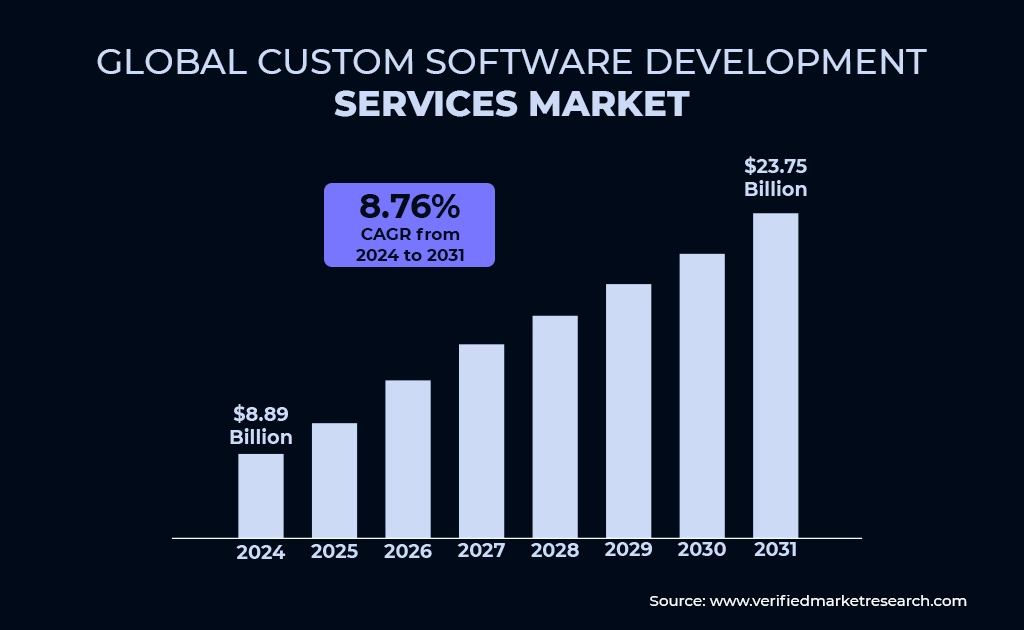
We are living in an age that is being influenced by AI and multiple new technologies that are continuously evolving to meet the needs of businesses and customers. One of such areas is custom software development. The area is slowly becoming the honey pot, making it difficult for businesses to not invest in it. Growing at 8.76% CAGR, the industry is projected to hit the mark of $23.75 billion by 2031. This fast-paced industry is looking at many new developments in the coming decade. Before we explore further, let’s first get to know what custom software development entails?

/*! elementor – v3.18.0 – 20-12-2023 */
.elementor-widget-image{text-align:center}.elementor-widget-image a{display:inline-block}.elementor-widget-image a img[src$=”.svg”]{width:48px}.elementor-widget-image img{vertical-align:middle;display:inline-block} global custom software development services market

Custom software development refers to the process of designing, creating and maintaining software applications tailored to meet the specific requirements of a particular business or organization. The development involves a custom software development company working in close collaboration between the development team and client to ensure that the final product aligns perfectly with the client’s goals and objectives. So, what will the future look like for this industry? Let’s dive in.

Artificial intelligence is intertwined with the future of custom software development. With industries leveraging the massive potential artificial intelligence has, they are using it to accelerate the custom software development processes through automation and optimization of development processes. Custom software development companies are utilizing technologies like AI and machine learning to add personalization and predictive capabilities to the custom softwares.

For instance, companies like Netflix have created AI based algorithms that provide customers with personalized choices based on the way they interact with the platform. They analyze the viewing patterns, what they search for the most and what they have viewed to give them personalized suggestions. This not only engages users with the software but also adapts to their preferences.

Internet of Behaviour (IoB)

internet of behaviour (iob)

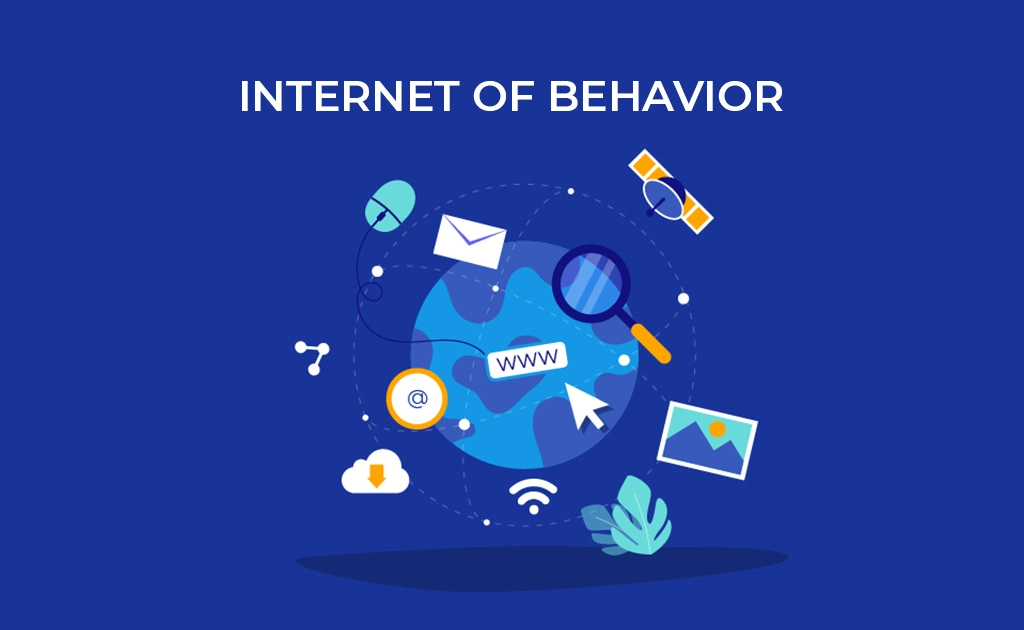
This latest buzzword is an emerging trend that uses various devices and technologies to observe and gather data from human behaviour. It analyses data collected from human activities, habits, and preferences. A software development agency can use this to develop customized solutions that match customers’ behaviour preferences. For instance, they can create personalized experiences. This might encompass customizing interfaces, content or recommendations. Furthermore, they can use the data to anticipate user needs and potential issues to extend support.

Agile Development Methodology

Unlike traditional methodologies that lack insight into the development process or collaboration with stakeholders, agile methodologies provide custom software development companies a way to work closely with their clients. By using rapid iterations, ongoing communication, and continuous feedback, they deliver quality software that is efficient and personalized. This helps to detect issues early on, ensuring timely project completion and deployment.

Cybersecurity for Custom Software

It is essential to protect a company’s most valuable asset, its data. Concerns like data safety, data privacy and cyber threats make cybersecurity the need of the hour. Custom software development companies must place a strong emphasis on safety procedures and protocols to secure sensitive data right from the designing stage to the deployment stage. By adhering to cybersecurity measures, they not only strengthen their data protection against such threats but also maintain compliance and business continuity. Secure coding practices, early security testing and automated security tools are few of the practices that are being implemented in custom software development lifecycle.

Progressive Web Apps (PWAs)

This is a combination of a webpage and a mobile app offering the benefits of both worlds. They are adaptive in nature and rich in features such as camera integration, offline support and more. There are several functionalities available, such as responding offline or with a low-quality network connection. It provides better security and cost-effectiveness than a regular webpage. They are considered the most reliable way to deliver mobile experiences and expected to penetrate more markets in the upcoming years.

Web 3.0

Known as the decentralized web, Web 3.0 is built upon blockchain technology and has a huge impact on custom software. It is backed by AI integration and machine learning and provides users with a secure network. It enables user data ownership, security and privacy. Web 3.0 seeks to integrate all applications so they can communicate in the future. Bespoke software development companies can utilize the technology to deliver custom software solutions to customers who want better security and control the user experience in their software.

Blockchain Technology

The next emerging trend is blockchain. It provides a secure and transparent way to store and manage data. With this technology data will no longer be lost or tampered. Blockchain uses a decentralized ledger system which is viewable by users. It also facilitates smart contracts, which is a contract that executes itself upon predefined terms. Custom software development service providers are utilizing the technology to deliver integrated solution in industries like healthcare, supply chain and finance to make them more streamlined and optimize their operations.

Microservice Architecture

Microservice architecture another trend that is taking the custom software development industry by a storm. It is an advanced approach to designing custom software. It works by breaking down the application into various small services. Each of which corresponds to a different business process. These services can work independently, so if there is an error in one service it will not affect the rest of the services. By making the business faster and easier to scale, they will be able to provide better service. The services can be scaled differently as per their requirements.

Low-code and No code platforms

low-code and no code platforms

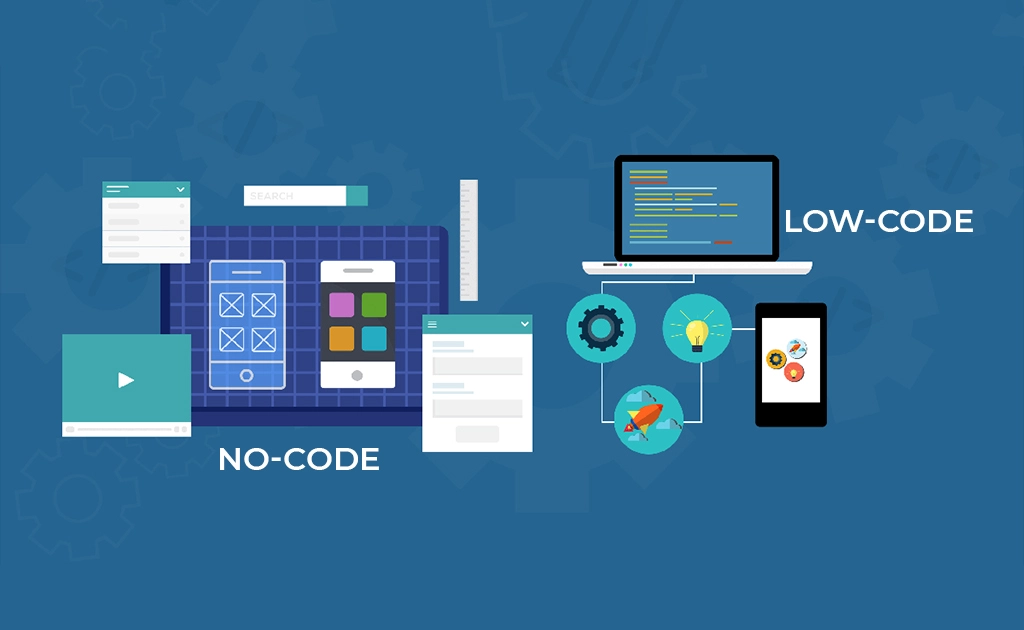
No code or low code platforms allow users to create software or an app by using drag-and-drop features and pre-built components. They make it easier to develop and deploy custom software. It improves development time; it is easy to use by users with varying or no technical background and easy to integrate with existing systems. These platforms make custom software development more accessible to a wider range of users and businesses. Custom software development agencies are using low-code platforms or no code platforms to deliver softwares in no time that delivers benefits like predictive data analysis, effortless task automation and increased opportunity for collaboration. This trend will continue to grow as businesses adopt this approach to gain a competitive advantage.

Final Thoughts

In a globally competitive world with relentless change and ever-increasing demand for innovation, it has become crucial for businesses to embrace new trends and emerging technologies. It is no longer an option but a requirement to remain relevant in this changing landscape. It is necessary for companies to implement customization, adaptability, and advanced software solutions that not only help streamline their processes for maximum efficiency but also give them an added advantage against rivals and lay the foundation for future success.

To ensure you get the right technology solutions, you need a reliable partner. We are a custom software development company characterized by outstanding quality, continuous innovation, and absolute commitment to delivering constant results that accelerate business growth while improving customer experience. Our philosophy of custom software development originates from recognizing the unique challenges as well as opportunities of every client.

Additionally, we provide post-deployment support and maintenance services whereby your customized software systems will continue running smoothly with regular updates containing the latest security updates and feature enhancements. So, collaborate with us to give your business that cutting edge!

/*! elementor – v3.18.0 – 20-12-2023 */
.elementor-heading-title{padding:0;margin:0;line-height:1}.elementor-widget-heading .elementor-heading-title[class*=elementor-size-]>a{color:inherit;font-size:inherit;line-height:inherit}.elementor-widget-heading .elementor-heading-title.elementor-size-small{font-size:15px}.elementor-widget-heading .elementor-heading-title.elementor-size-medium{font-size:19px}.elementor-widget-heading .elementor-heading-title.elementor-size-large{font-size:29px}.elementor-widget-heading .elementor-heading-title.elementor-size-xl{font-size:39px}.elementor-widget-heading .elementor-heading-title.elementor-size-xxl{font-size:59px}

Start your software development journey with us!

Beyond the Buzzword: How AI is Transforming Mobile Applications

Artificial intelligence is transforming every industry, revolutionizing businesses’ operations and customer relations. Global statistics show 9 out of 10 organizations support AI as it drives efficiency, personalization, and decision-making. One of the major areas influenced by AI is mobile app development, as businesses turn to mobile app development companies to meet the need of the hour. In fact, 6 out of 10 businesses are turning to offshore mobile app development to keep up with the competitive market.

With mobile technology constantly evolving, the need for creative and intuitive applications has grown rapidly and AI has been an influential part of it. Users expect custom-designed experiences based on their tastes and behaviors, forcing app developers to stay ahead and make apps accordingly. This marks the integration of AI and mobile app development services will change the way we interact with our apps. In this blog, we’ll explore AI’s transformative role in mobile app development. We’ll also explore how it’s revolutionizing mobile application creation and interaction.

There are many advantages of investing in AI-powered mobile app development services over traditional ways. When you develop an AI-driven mobile system, these include intelligent sensors and highly personalized user experiences, forecasting capabilities, automation of development processes and new possibilities for using computer vision and natural language processing technologies become possible.

One of the most profound manifestations of artificial intelligence is its ability to constantly learn and update itself. Therefore, it can remain relevant in mobile apps as users’ preferences change. By leveraging AI, you can get smarter, more efficient mobile applications developed that offer a competitive edge in today’s user-centric market. This overview highlights the transformative potential of AI in mobile app development, setting the stage for a deeper exploration into the specific benefits it offers:

1. Intelligent User Interface and a Personalized Experience

A powerful area of application for artificial intelligence in mobile app development services is the creation of interactive and customized user interfaces. AI algorithms can examine users’ data i.e. browsing patterns, preferences and communication, to deliver highly contextualized and individualized experiences. Because of this, mobile apps can adjust themselves in terms of layout, content material, and functionality, providing users with unique and innovative experiences tailored to their diverse needs and habits. Through delivering an excellent user experience and responding to personal wants and needs, AI provides users with more control over their experiences.

2. Intelligent Virtual Assistants and Conversational Interface

NLP enables machines to understand, interpret, and generate human language. It is used to create AI-powered virtual assistants and conversational interfaces that are rapidly gaining popularity in mobile app development services. These capable virtual assistants understand natural language prompts, provide contextual answers, and even perform some tasks such as smart scheduling, automatic reminders and rule-based decision making at the same time, which saves time for users. Hence, through the addition of virtual assistants to mobile apps, users can enjoy a more natural and easy interaction.

3. Competitive Differentiation and Innovation

AI-driven computer vision and Augmented Reality (AR) technologies are opening new possibilities for mobile app development services. Computer vision algorithms recognize and interpret visual data, enabling mobile apps to identify objects, faces, text, and even emotions from images or video streams. This capability is leveraged in various domains, such as retail (e.g., visualizing how furniture or clothing would look in a particular space), healthcare (e.g., analyzing medical images for early disease detection), and transportation (e.g., enabling autonomous vehicles to navigate safely). Marketing and sales processes can be streamlined with detailed virtual product demonstrations or walkthroughs.

4. Real-time Data Processing and Decision-making

With edge computing and IoT, along with AI-enabled mobile applications, devices can operate in real-time, cutting off cloud-based networks. This method reduces latency, improves privacy and provides solutions for apps to connect seamlessly with different devices and sensors. For example, consider a smart home app powered by AI, edge computing, and IoT technologies. It could process data from many sensors and connected systems (like smart door control, security cameras, and appliances) directly on the user’s mobile phone through edge computing functionality. AI algorithms running on the device could read this data, discern patterns, and make intelligent decisions.

5. Enabling Security and Fraud Detection

In the digital age marked by escalating cyber threats, AI-driven security measures have emerged as an indispensable safeguard for mobile applications. By leveraging AI’s ability to analyze vast data patterns and user behaviors, apps can proactively identify anomalies, flag potential breaches, and thwart fraudulent activities before they cause harm. The financial sector has been at the forefront of adopting AI security, with banking and finance apps relying heavily on AI for robust user data protection and secure transactions through techniques like biometric authentication and real-time fraud detection.

6. Continuous Learning and Adaption

To begin with, one of the biggest advantages of AI in mobile app development services is the ability to learn and adapt continuously. In this way, AI algorithms analyze users’ interactions with mobile apps and learn from them. This enhances the functionality and user experience of an app over time. In other words, this process of continuous learning languages ensures that mobile apps remain relevant to modern tastes. For instance, a language learning app integrated with AI could monitor a learner’s progress, locate weak points or areas and customize study material or teaching approaches accordingly.

7. Efficient Development and Maintenance

AI enhances mobile app development and maintenance processes. Using machine learning algorithms and automation tools AI automatically creates code, tests and debugs it. These measures save money, time, and effort. As a result, development cycles are shorter and faster. AI-powered analytics can detect possible problems as well as performance bottlenecks that can minimize the effect on the user’s experience. Furthermore, AI could also be employed to ensure advanced mobile application security by detecting possible threats, vulnerabilities, or unusual activities instantly.

Be Ready to Leverage AI Power

In the age of digitalization, integrating AI and the latest technologies into mobile application development is no longer an option but a necessity. Adopting these advanced technologies can give businesses an edge over others and help deliver impeccable mobile experiences that keep users engaged and delighted. The future of AI in mobile app development is not about replacing human expertise. Instead, it is about building a symbiotic environment where humans and AI complement each other. In the coming years, mobile app development services will focus on creating AI-powered solutions that can seamlessly integrate and operate across multiple platforms and devices.

However, such technologies require expertise. And as we mentioned earlier, 6 out of 10 businesses outsource mobile app development to offshore companies. The reason is simple because they have the finest of experts in every field related to mobile app development. So, if you want a mobile app developed that stands out from the crowd, you can contact Communication Crafts for their mobile app development services.

Everything You Need to Know About Offshore Software Development

Technology has created a competitive environment in which enterprises are racing to stay ahead through innovation and efficiency. Whether you are a business owner or a project manager, coming up with innovative ideas as well as ensuring they are pocket-friendly can be challenging. As companies increasingly seek to benefit from specialized and less expensive resources around the world, offshore software development has become more popular.

In this comprehensive article, we will delve into the arteries of offshore software development. We will consider the portfolio of benefits, challenges and most effective practices when it comes to custom software development through outsourcing.

Organizations are moving towards becoming digital, and opting for offshore software development will be a key component of the company’s transformation strategy. By this we mean, when a company hires a custom software development company, they are utilizing their capabilities and resources which are costly in their native country In this way, businesses can deliver outstanding, individual solutions on time and at lower costs. Such an approach puts businesses ahead of the curve in a volatile market. Let’s learn more about the benefits of this approach for business.

Benefits of Offshore Custom Software Development

  • Cost Efficiency:
    Software development outsourcing is a profitable decision because it is cost-effective. By outsourcing development to countries with lower labour costs, companies can substantially reduce costs without compromising their quality. As a result, businesses can allocate their assets more effectively and spend savings earned elsewhere or pass them on to their clients or consumers.
  • Access to Global Talent:
    To capitalize on an offshore custom software development initiative, businesses can access a myriad of global skilled talent from different parts of the world. Strengthening offshore development partnerships enables organizations to hire teams with actual expert knowledge and experience that may be hard to find in their localities. Diversity in talent allows the team to be creative, innovative, and problem-solving, which enables them to come up with far-reaching solutions.
  • Scalability and Flexibility:
    If compared to traditional in-house software development, offshore software development is more flexible and scalable. Using the flexible project requirements, businesses can easily scale their development departments according to changing priorities. This flexibility is crucial in dynamic industries characterized by high market volatility and fickle customer preferences.
  • Tailored Solutions:
    The most persuasive reason, likely, is the power to design customized software to solve specific business issues and objectives. However, unlike mass-market software products that offer a clerical function, these solutions can be customized to the unique needs of each business. It is this differentiation that enables companies to improve their own competitiveness, meet their customers’ needs in an efficient manner, and ultimately increase revenue growth.

Challenges of Outsourcing Software Development

While outsourcing custom software development offers numerous benefits, it also presents its own set of challenges that organizations must navigate effectively.

  • Communication Barriers:
    Outsourcing software development projects depend heavily on communication. Language barriers and cultural gaps in addition to time zone differences can disrupt development teams’ communication with the clients. Nonetheless, these issues can be effectively managed through timely communication activities, regular status check-ups, then adoption of collaborative tools and technologies.
  • Quality Assurance:
    Quality assurance when outsourcing software development to offshore companies could be challenging sometimes. Onshore development methodologies, code standards, and quality assurance protocols can sometimes differ from offshore methods. A solution to this problem can be achieved by establishing quality assured standards, conducting rigorous testing and forwarding feedback from international development teams throughout the process.
  • Data Security and Intellectual Property Protection:
    Critical data security and software ownership are top concerns for contemporary businesses dealing with offshore teams. An offshore team may communicate with employees in nations with diverse data protection and intellectual property law systems, which raises concerns about confidentiality and security. Also, with cyber incidents on the rise, this can be a point of concern. Installing strong security measures such as data encryption, access controls, and NDAs are key to absorbing these risks.

Choosing the Right Partner

The choice of the most suitable custom software development company is key, for it has a large impact on your offshore project results. When evaluating potential partners, businesses should consider the following factors:

  • Reputation and Experience:
    Select a software development company that has demonstrated the ability to produce top-notch projects and meet deadlines while keeping the budget as expected. Check reviews, testimonials and customer acquisition figures for businesses’ trustworthiness and reliability.
  • Technical Expertise:
    Providing the necessary technical expertise and experience to make the job a success is a must for the company developing custom software. Analyse the company’s skills, certifications, and areas of expertise in the technologies they already are well-versed in through the pre-qualification process.
  • Communication and Collaboration: Teamwork and communication are just one of the key factors for offshore custom development projects to be successful. Find a partner who presents a clear communication strategy, including progress reports, timelines, and solutions for problems.
  • Cultural Fit:
    The cultural differences are another important factor. When you find a partner who shares your values, the work principle, and even strives for excellence, then you will work together with great effort to achieve related goals.

Best Practices for Offshore Software Development

To maximize offshore software development partnerships and mitigate potential challenges, organizations should follow these best practices:

  • Define Clear Requirements:
    Clearly set project requirements, objectives and success parameters to guide all stakeholders towards the goal. Such an approach, besides being mutually confirmed and eliminating semantic and functional divergences, will help to avoid expanded functionality at later design stages. 
  • Establish a Robust Communication Plan: Create a comprehensive communication plan with channels such as direct communication, immediate updates, and escalation as part of the process. Frequent exchanges of ideas and information as well as responses or calls for immediate solutions are very vital in ensuring no misalignment of efforts.

  • Implement Agile Development Methodologies: In an offshore custom software development project, agile transformation techniques like Scrum and Kanban will be useful. To make such steps successful, participants must be engaged, protocols must be flexible, or approaches must be able to be modified as required due to the team’s ability to respond quickly to varied priorities and requests. 

  • Invest in Project Management Tools: Capitalize on project management software and technology to communicate, track progress, and organize workflow successfully. Jira, Trello, Asana or any other project management tools can be used for process organization and keeping teams in order. 

  • Conduct Regular Quality Assurance Testing: Introduce a strong quality assurance process that locates and resolves any problem or minimizes flaws as early as possible in the development stage. Automated testing tools, review and testing by developers will guarantee product quality and reliability.

Final Thoughts

Addressing the wide range of opportunities and challenges of today’s technology and business realm necessitates the adoption of a strategic blueprint like international partnerships. Over the past few years, there has been a surge in the importance and application of offshore custom software development as a viable option to unlock the unlimited talent pool, creation of new innovations and provision of features and solutions that yield growth and competitive edge to businesses. Though the challenges exist, applying exemplary practices with clear communication, agile methodologies and strong project management tools can help in avoiding risks and the achievement of high-level results. A well-chosen offshore partner opens a world of possibilities for an organization.

Partner with us for your next custom software development project!

How to Build a Top React Native Development Team

Why are top-notch mobile applications now steering away from traditional native development? The answer lies in the evolving landscape of user demands. As user experience takes the spotlight, the need for agility and speed in meeting expectations has never been more crucial. To help businesses achieve a competitive edge, React Native has been popularly used now by big giants like Uber, Facebook, Microsoft and many more. Then why delay when opportunity awaits?

React Native, the ultimate game-changer in the realm of app development, is here to solve your application development issues. Whether you’re a seasoned developer aiming to conquer new frontiers or a visionary entrepreneur with a dream to disrupt the market, React Native is a choice to consider. It is an open-source application development framework for Android, iOS, Windows and others that combines JavaScript libraries with the platform’s native components making it look as if applications are built on native platforms. This blog will delve deeper into the reasons behind selecting React Native for
creating native mobile apps, highlighting its key advantages. It will explore strategies for assembling a robust React Native App Development Team followed by the future trends in the industry.

React Native is broadly used because of its flexibility, cost effectiveness and optimization, which are key performance indicators in running a business today. One of the best features of React Native that is worth considering is live reloading which means react native’s environment supports instant app reload which lets you view changes made in code without needing to recompile the app during development. This enables faster iterate testing cycles, reduces the time to market and increases productivity amongst the developers.

The key benefit of
Hiring React Native Developers is their ability to develop mobile apps faster and with a smaller team compared to purely native development. Rather than having to build your app logic twice, once for iOS and again for Android in different code languages, the same React Native codebase works for both platforms which in turn helps significantly in reducing your implementation and maintenance costs by 50-70%. Lower development overheads also mean maximization of ROI for your business.

Additional strengths of React Native include the large ecosystem of third-party libraries and components, integration with native APIs for things like location or push notifications, direct deployment to app stores and access to the latest native features like hot reloading which allows for scalability and long-term stability.

React Native stands out in UI development, enabling the creation of stunning and top-notch designs for mobile applications. Its component-based methodology fosters a user-friendly environment for both technical and non-technical users. From a business standpoint, it enhances accessibility and efficiency in interface building.

As React Native explodes in popularity with industry giants rapidly adopting it across their tech stacks, the demand for React Native developers is far outpacing supply. This talent crunch means businesses must invest early in hiring and training React Native teams to avoid project delays or greater costs. Partnering with specialized React Native consultant firm, PeoplActive you can help secure world-class React Native talent before competitors.

Form your Dream Team Towards Success

Define Project Goals and Timelines: Get clear on the vision, business objectives, target users and timeline ambition you have for your mobile products built on React Native. This clarity will determine the skillsets and team size you’ll need. Complex apps with custom integrations would require more specialized talent than general application, so the idea is to frame objectives smartly to scope team capabilities.

Team Size-
Ideally start with forming a team of 2-3 React Native developers with core capabilities and 1-2 designers and scale up or down as per project needs. Keeping the core team small with 6-8 members is the key to efficiency.

Job Specifications-
Determine the roles needed for React Native App Development with proper job descriptions of each role that aids in hiring qualified candidates.

Writing clear and concise job descriptions highlighting
must-have and good-to-have skills with the experience level you are targeting will simplify the hiring process. Some of the roles that your team shall include are as follows:

  1. Project Manager- This person will oversee the development and navigate the challenges in the right direction. He will coordinate between team members, create schedules/timelines and manage the project’s budget. It is necessary to hire qualified individuals with prior experience of handling similar projects for successful completion.

  2. React Native Developers: They will build the actual app using React Native framework. Hence Proficiency in JavaScript and React principles is a must. Look for developers with knowledge in React Native Framework with extensive mastery in React Native Libraries like Redux, Expo etc.


Search for your talent based on skills in Cross Platform Development and Back-End technologies like
Integration of API and familiarity with native platforms like Android & iOS.

  1. UI/UX Designers They will design the look, feel and flow of your app. Look for designers familiar with mobile design patterns. Hire Talent based on strong mobile visual design skills, familiarity with mobile UI patterns, prototyping and wireframing skills, knowledge of tools like Sketch, Figma, Adobe XD etc. who can help in smooth completion of the project.

  2. Quality AssuranceThese personnel will develop and execute testing plans to catch software defects or identify performance issues during the build. The skills required while looking out to hire include QA automation skills like Appium for simulating real user interactions, Detox for iOS/Android gray box automation, CI/CD integration expertise become highly valuable for engineering teams to enable test automation at scale and optimizing workflows.


Building a diverse skill set, covering technical, design, and other advanced areas, requires businesses to identify the most suitable candidates for their project. For finding technical experts, Communication Crafts offers a proficient team of on-demand developers and swiftly connects international businesses with offshore talent aligned with their project requirements within 48 hours of client engagement.

Screening –
Post sourcing the candidates from various platforms and recruitment agency, screening begins. Examine candidates based on their previous portfolios and vet skills thoroughly with technical interviews, assessments and code tests. Use online platforms for screening and interviewing to greatly reduce your time and provide detailed reports and insights into candidate’s strength and performance. Assess cultural fit as well for better retention.

Onboarding-
This stage includes onboarding new members systematically to know each other, align them with the process and expectations, make them feel supported and promote collaboration for joint efforts on the project. Arrange bootcamps and training workshops to gain hands-on experience of the new features and project outlook. Covering product goals, tech stack details, app architecture, design systems and code guidelines in this stage will help you in achieving better outputs.

Final Thoughts and Future Trends

Looking ahead, React Native has a promising future to become even more attractive framework for application development because of its potential in accessibility and inclusivity domain that allows developers to build apps for everyone including people with disability. With AI and ML technologies advancing, there is room for developers to innovate and create smart applications through React Native that are based on the models of personalized recommendations, applications adjustable to user conduct and anticipating user’s needs before them. With the recommendations outlined in this blog, Hire React Native Developers and form a high-performance mobile team with Communication Crafts’ global talent pool only to fully utilize React Native’s existing and emerging capabilities. Trust us, the result will be robust, smooth apps that delight your users!

To get on-demand senior developers Get In Touch Today!