The Ultimate Rebranding Checklist – Expert Guide for Your Business Transformation

Where To Start? 

Your company’s most valuable asset is your brand.  

A good company brand can influence customer and stakeholder behaviour, stimulate action, and foster loyalty. Nonetheless, due to the rising variety of marketing communication channels used, branding remains one of the most difficult marketing challenges for a firm in the twenty-first century.  

Once you’ve designed a brand that elicits the appropriate actions and emotions from your stakeholders, it’s time to launch and deploy your new branding. Any faults in your brand launch, from old email footers to altering social media accounts, will raise a red flag and leave a terrible first impression on stakeholders – all of which you’ve worked far too hard to avoid. Hence, A rebrand marketing checklist will walk you through all the steps necessary to revitalise your brand. 

But, before we embark on our journey to explore the ultimate checklist to rebranding, let’s understand what is rebranding. 

What Is Rebranding?  

When your firm rethinks its marketing approach by adopting a new name, logo, or design, the goal is to create a new, distinct identity in the minds of customers and other stakeholders. 

Okay, now that we’ve defined rebranding, let’s make sure you have the correct reasons to rebrand. 

Why do you need to rebrand? 

Here are a few good reasons why your company might need rebranding: 

  1. Outdated Brand: A stale brand is the most frequent justification for wanting to rebrand. You need a contemporary brand if you wish to compete with your rivals. Your company may not be able to operate to its full potential in your market if its brand appears old. 
  1. Your Website is Not Generating Leads: It could be time to rebrand and revamp your website if it’s hard to browse and isn’t bringing in visitors or leads for your company. One of your most crucial marketing resources is your website. If it’s out of date, it can be more harmful than beneficial. 
  1. You Revised Your Company Structure: When the corporate structure changes, many brands rebrand. You require a rebrand if your business recently merged with another business, bought a new business, or established itself as a separate entity. Establishing your brand’s style or combining the two firm identities is what rebranding does. 
  1. Shifted Market: You might require a rebrand if your industry’s market has changed and your business is now less competitive. You can re-establish yourself in your market and keep up with the changes with the aid of a rebrand. 

Imagine a rebranding journey that propels your company into the spotlight, rejuvenates your products, and launches your brand to unparalleled heights. Wouldn’t that just be PERFECT? So, why dream perfection, let’s turn it into reality. With 18+ years industry experience we end your quest for digital excellency. Whether your brand needs a complete make over, or you want to make small, significant alterations, we ace in all of it.

Embrace the Power of Rebranding 

And Revamp Your Brand Today! 

So, are you ready to embark on a transformative journey for your business? In this blog, we’ll explore the essential steps and strategies you need to consider before revamping your brand. Whether you’re a small startup or an established company, rebranding can breathe new life into your business and propel it to new heights. Get ready to discover practical tips, valuable insights, and actionable advice to ensure a successful rebranding process.  

What Kind of Branding Do You Need? 

  1. Brand Merger or Acquisition 

This kind of rebranding takes place when two current brands combine to create a new brand. When there is a purchase, brands will change together. When two brands are coherent with one another, brand mergers are most successful. In other circumstances, it can be a better idea to completely rebrand the two businesses. Be advised that a complete rebranding may require additional time.  

  1. Brand Refresh 

Refreshing your brand can be as easy as changing your logo or as complex as refocusing your objective. This is significantly less intensive than completely rebranding your organisation. But it still needs updating all current versions of your logo, printing materials, website, and other design elements.  

  1. Full Rebrand 

A complete redesign involves ripping your brand down and starting over from scratch. Perhaps you are extending your business into a different sector, or perhaps there has been a significant shift in management. Full rebranding requires a lot of work in either case. 

Key Considerations for a Successful Business Transformation 

  1. Assess Your Brand’s Current State 

Before embarking on a rebranding journey, it’s vital to gain a clear understanding of your brand’s current state. Evaluate your brand’s strengths, weaknesses, and unique selling points. Identify what aspects of your brand resonate with your target audience and what elements may need improvement. Conduct a comprehensive brand audit, including a review of your visual identity, messaging, and brand perception in the market. This evaluation will serve as a foundation for your rebranding strategy, helping you identify areas that require enhancement and setting goals for your transformation. 

  1. Define Your Rebranding Objectives 

Clearly defining your rebranding objectives is crucial to ensure a focused and purposeful transformation. Ask yourself what you hope to achieve through rebranding. Are you aiming to attract a new target audience, differentiate yourself from competitors, or reposition your brand in the market? By setting specific and measurable goals, you can align your rebranding efforts and track the effectiveness of your strategy. 

  1. Craft a Compelling Rebranding Strategy 

A well-crafted rebranding strategy is the roadmap that guides your transformation journey. It outlines the steps, tactics, and timeline for executing your rebranding efforts. Define your brand positioning, brand messaging, and visual identity elements that align with your rebranding objectives and target audience. Consider how your brand’s personality, tone of voice, and values will evolve through the rebranding process. 

  1. Prepare for Implementation and Rollout 

Before initiating the implementation phase, prepare a detailed plan for executing your rebranding strategy. This includes updating all brand touchpoints, such as your website, logo, packaging, marketing materials, and social media profiles. Ensure that all internal and external stakeholders are aware of the rebranding initiative and understand their roles in the process. Develop a communication strategy to announce your rebranding to your audience, leveraging various channels to generate excitement and garner support. 

Rounding Up 

Rebranding offers an incredible opportunity to rejuvenate your brand and propel your business to new heights. By carefully considering the key factors discussed in this blog, you can embark on a rebranding journey that is grounded in purpose and executed.  

Whether you are looking to build a brand identity or revamp your existing one we will accompany you at every step of the way as you revamp and redefine your brand. From the initial brainstorming sessions to the final unveiling, our team of seasoned professionals will be your trusted partners in this exciting rebranding adventure.  

Contact us today and let us be your partner in crafting a remarkable rebranding story. Your brand’s success starts here!

Ready to Reinvent Your Brand?

7 Game Changing Ways SaaS Software is Transforming the Core Industries

Introduction

Do you remember the days when every computer had a disc drive and getting new software required a trip to Office Max or Best Buy? Today, it’s more difficult to locate a laptop with a drive and SaaS plays a significant role in this. 

“Software as a service,” or SaaS, is one component of cloud computing. And what it does is distribute software programs online, usually via subscription. Because a cloud provider hosts the program, you are no longer responsible for upgrades or maintenance. The benefits of SaaS typically involve fewer upfront expenses, quick configuration, scalability, and overall ease of use. Hence, it is not an exaggeration to say that SaaS is a game changer for businesses looking to embrace digital transformation. 

Some Eye-Opening SaaS Stats You Must Know 

According to Gartner, spending on public cloud services is projected to grow by 20.7% to reach a total of $591.8 billion by 2023. This rapid growth will have a significant impact on SaaS trends in the upcoming year. These advantages are the main reasons why SaaS continues to gain preference in the business world. Gartner projects a market value growth of over 16% for SaaS in 2023 as a result. 

By 2022, SaaS revenue was projected to be at $233 billion. From this point, SaaS software shows an annual revenue of $369.4 billion in 2024. Kbv Research, on the other hand, forecasts a global market size of $185.8 billion by 2024. It is important to note that SaaS apps account for up to 70% of all business software usage globally. Furthermore, it is anticipated that 85% of corporate software would be SaaS by 2025. To put it another way, SaaS has been nothing short of revolutionary, and it has the revenue to prove it. 

So, are you ready to take your business to new heights with the power of SaaS? Don’t miss out on this game-changing opportunity! Let’s revolutionize your business together and pave the way for unprecedented success.

“Ready to Level Up Your Business with SaaS?  

Get in touch now and let the SaaS transformation begin!” 

Welcome to the future, where software as a service (SaaS) is not just a buzzword, but a game-changer in the business world. In 2023, SaaS software is poised to unleash its transformative powers on core industries. It will disrupt the status quo propelling them towards unprecedented growth. From custom software development to cutting-edge SaaS solutions, this blog will explore seven exciting ways SaaS is poised to make its mark in 2023. So, buckle up and get ready for a wild ride into the world of SaaS!

How Does SaaS Work its Magic on Core Industries?

  1. Custom Software Development: Tailor-Made Solutions for Enhanced Efficiency 

Gone are the days of generic software solutions. With custom software development services powered by SaaS, businesses can now enjoy tailored solutions that perfectly align with their unique needs. Imagine having software that understands your business quirks and adapts to your workflows like a pro. Whether you’re a small startup or a multinational corporation, SaaS empowers you to streamline processes, boost productivity, and skyrocket efficiency.  

  1. Software as a Service Examples: Real-World Success Stories 

You may be wondering, “But how does SaaS actually work?” Well, let’s take a peek at some real-world software as a service example. Look at companies like Salesforce, Slack, and Dropbox industry giants that have revolutionized how businesses operate. These SaaS trailblazers have proven that by shifting from traditional software to cloud-based solutions, organizations can enjoy seamless scalability, enhanced collaboration, and hassle-free updates. The possibilities are endless when it comes to SaaS!  

  1. SaaS Solutions: A One-Stop Shop for All Your Business Needs 

Picture a world where you can find all the software solutions you need in one place—a SaaS platform that caters to your every business whim. From project management to customer relationship management, human resources to accounting, SaaS solutions offer a comprehensive suite of tools that can transform the way you run your core operations. Say goodbye to juggling multiple software licenses and hello to a streamlined, all-in-one SaaS software experience!  

  1. Software Development Company: Unlocking Innovation through SaaS 

In this era of digital disruption, staying ahead of the curve is crucial for businesses to thrive. Enter a software development company armed with SaaS expertise. These tech wizards are constantly pushing the boundaries of what’s possible, leveraging the power of SaaS to build innovative solutions that address specific industry pain points. From fintech to healthcare, logistics to retail, SaaS-powered software development is redefining the game and reshaping the future.  

  1. SaaS Platform: The Launchpad for Entrepreneurial Dreams 

Are you an aspiring entrepreneur with a million-dollar idea? Look no further than a SaaS platform to turn that dream into reality. With the right SaaS tools at your disposal, you can quickly prototype, iterate, and launch your product without breaking the bank. The low entry barriers and scalable nature of SaaS platforms make it the perfect breeding ground for startups, allowing them to focus on building their business while leaving the technical heavy lifting to the experts.  

  1. SaaS Software: The Key to Agility and Flexibility 

In today’s fast-paced business landscape, agility is the name of the game. And SaaS software is the key that unlocks this competitive advantage. Traditional software solutions often come with lengthy deployment times and rigid structures, but SaaS software flips the script. With its cloud-based nature, updates can be rolled out seamlessly, bugs can be fixed in a snap, and new features can be added with ease. Say goodbye to software stagnation and hello to a world of agility and flexibility! 

  1. Embracing the SaaS Revolution: Thriving in a Changing World 

In 2023, the world is ready for a SaaS revolution. Businesses that embrace the power of SaaS are positioning themselves for success in a rapidly evolving landscape. From optimized workflows to cost savings, enhanced collaboration to improved customer experiences, the benefits of SaaS software are far-reaching. So, let your business join the ranks of the SaaS pioneers, harness the potential of these innovative solutions, and unleash your true potential. 

Conclusion

SaaS has become inevitable in all businesses throughout the world. Modern businesses tend to employ the SaaS model to take advantage of its affordability and scalability. Whether they are SMEs or well-established industries, SaaS can successfully meet their needs and create new opportunities. As quoted by Chris Makkreel, SalesForce’s chief of technology, in a blog post by Fusebill: 

“The future of SaaS will be defined by doing more with less. Today, technology is proactive but tomorrow technology will be predictive.” 

Hence, we understand that in 2023, SaaS software is set to make a profound impact on core industries. From custom software development to embracing SaaS solutions, whatever your needs are Communication Crafts is here to save the day. Hire from the talent base of 4000+ pre-vetted developers, launch a project execution strategy and boost the capabilities of your team within just… 48 hrs. So, jump on board the SaaS train and ride it towards enhanced efficiency, agility, and growth. Don’t get left behind in the digital dust—embrace the SaaS revolution and prepare to take your core industry to new heights! 

Embrace the SaaS Revolution and Unleash Your Business Potential!  

Join the SaaS Party Now! 

Create A Winning Mobile App Development Plan [Guide By Experts]

In a world where smartphones have become an inseparable part of our daily lives, it’s undeniable that mobile apps wield tremendous power. 

With the mobile app industry projected to generate a colossal $935 billion in revenue by 2023, it’s no wonder that you’re considering a mobile app as a game-changing addition to your business plan. 

You’re on the right path to success. But here’s the crucial question: Are you truly ready for this incredible opportunity? Have you meticulously thought through every aspect?

Given the massive potential and fierce competition, crafting a solid app development project plan is absolutely essential. It’s the blueprint that will guide you toward triumph in this ever-evolving landscape. By partnering with a top-notch custom mobile app development company, you can transform your dreams into a tangible, revenue-generating reality.

Imagine the impact your app could have on your business. Picture the convenience it could provide to your customers, the new horizons it could open, and the incredible growth it could unlock. The demand for mobile apps is only going to skyrocket, and you have the chance to be at the forefront of this digital revolution.

In this blog post, we will help you make a robust strategy for mobile app development that will help you reap the benefits that you are expecting from your mobile app idea. 

With a well-crafted project plan for mobile app development and the right app development partner by your side, your app will captivate users, generate substantial revenue, and leave a lasting impact on your business.

So, ready to seize the moment? Let’s go

A successful mobile app development plan looks like this:

  1. Define the “why” behind your mobile app idea
  2.  Visualize your app with a rough sketch
  3. Decide for whom the app is going to be
  4.  Get to know about your competitors
  5. Define why people will use your app over others
  6. Determine the key features
  7. Plan the back-end architecture
  8. Choose appropriate technologies
  9. Prototype testing
  10. Consider an MVP approach

Define the “why” behind your mobile app idea

Developing an app without a clear purpose or scalability plan is likely to result in wasted resources. Your app idea should either aim to solve a problem, entertain, or add value to users’ daily lives. It is crucial to define your app’s purpose concisely, in no more than two sentences, to avoid confusion during development. By understanding the problem your app solves or the need it fulfills, you can concentrate on creating a compelling solution that resonates with your target audience and delivers a satisfying user experience.

 Visualize your app with a rough sketch

Visualizing your app is an essential step for your mobile app development plan. There are various design tools available that can help you create a rough sketch. Consider using tools like Sketch, Adobe XD, or even simple pen and paper to outline the layout, user interface components, and navigation flow of your app.

Start by identifying the key screens and features your app will have. Sketch out the main screens, such as the home screen, login/sign-up screen, and any unique features you want to highlight. Keep in mind usability and intuitive design principles to ensure a seamless user experience.

Decide for whom the app is going to be

Knowing your target audience is vital to developing a successful mobile app. Understanding their demographics, interests, behaviors, and pain points will guide your design and feature decisions.

Start by creating user personas, fictional representations of your ideal users. Consider factors such as age, gender, occupation, and tech-savviness. Conduct market research, surveys, and interviews to gain insights into their needs, preferences, and motivations.

By defining your target audience, you can tailor your app’s features, design, and marketing efforts to appeal directly to the people who are most likely to benefit from and use your app.

 Get to know about your competitors

Competition in the app market is fierce, so it’s crucial to research your competitors. Identify apps that offer similar features or target a similar audience to understand their strengths, weaknesses, and unique selling points.

Evaluate their user experience, design, features, pricing models, and customer reviews. Look for gaps or areas for improvement that you can capitalize on. This research will help you differentiate your app and offer a superior experience to users.

Define why people will use your app over others

To stand out from the competition, you need to clearly define your unique value proposition. Ask yourself: What makes your app special? Why would people choose to use it over other similar options?

Identify your app’s key differentiators. It could be a unique feature, a more intuitive user interface, better performance, or a specific niche audience you serve exceptionally well. Communicate these differentiators effectively in your marketing efforts to attract users and convince them to choose your app.

Determine the key features

With a clear purpose and understanding of your target audience, you can now define the features that will bring value to your users. Start by brainstorming a list of features based on the problem your app aims to solve. Then order them according to their significance and viability.

Consider features that enhance the user experience, provide utility, and align with your app’s purpose. Don’t overload your app with unnecessary features that could confuse or overwhelm users. Instead, focus on delivering a core set of features that address your users’ needs effectively.

Plan the back-end architecture

The back end of your app is where the magic happens behind the scenes. It involves the server-side components, databases, APIs, and other infrastructure that support your app’s functionality.

Consider the scalability and security requirements of your app. Determine whether you’ll need a cloud-based infrastructure, and choose the appropriate hosting and database solutions. Define the architecture and choose a suitable programming language or framework for your back-end development.

Ensure that your back end is efficient, reliable, and capable of handling potential user growth. Plan for data storage, user authentication, API integrations, and any other necessary back-end functionalities that align with your app’s purpose and features.

Choose appropriate technologies

Choosing the right technologies is crucial for the success of your mobile app. Consider factors such as the app’s purpose, target audience, scalability requirements, and development team’s expertise.

Select a suitable programming language and framework for your app’s front-end development. Consider whether you’ll develop a native app using languages like Swift (for iOS) or Kotlin (for Android), or opt for cross-platform frameworks like React Native or Flutter.

For the back end, choose a language or framework that aligns with your app’s requirements, scalability, and security needs. Consider options like Node.js, Ruby on Rails, Django, or ASP.NET. Also, determine the database technology that best suits your app, such as MySQL, PostgreSQL, MongoDB, or Firebase.

Additionally, explore available libraries, tools, and APIs that can enhance your app’s functionality and improve development efficiency.

Prototype testing

Before proceeding with full-scale development, it’s essential to test your app’s prototype. Prototyping allows you to validate your design, user flow, and functionality early on, saving time and resources in the long run.

Create a prototype of your app using tools like InVision, Figma, or Adobe XD. To get opinions and insights, conduct user testing sessions. Identify areas of improvement and refine your design based on user feedback.

Perform functional testing, ensuring that all features work as intended and there are no bugs or usability issues. Consider usability testing to assess the user experience and make necessary adjustments. Iterate on your prototype until you have a solid foundation to move forward with.

Consider an MVP approach

When developing your mobile app, it’s wise to adopt an MVP (Minimum Viable Product) approach. An MVP focuses on delivering the core functionality and features necessary to address the primary needs of your target audience.

Identify the key features that are essential for your app’s initial release. By prioritizing these features, you can develop and launch a functional version of your app more quickly. This allows you to gather user feedback, validate your assumptions, and make informed decisions for future iterations.

Remember that an MVP is not about sacrificing quality but rather about focusing on what’s most important to your users. It helps you validate your concept, test the market, and gather valuable insights before investing more resources into additional features.

Wrapping up

At Communication Crafts, we understand the transformative power of mobile apps and the immense opportunities they present for businesses. After taking you through the essential steps of a successful mobile app development plan, we invite you to exploit our expertise in custom mobile app development.

As a strategic technology partner to market leaders such as Colgate, Infosys, Wipro, Mercedes Benz, Nanosonics, Versace, and Cathay Pacific to name a few,  Communication Crafts holds supremacy in digital innovation technologies. 

We have been in this industry for the last 18 years and have a proven track record of developing scalable mobile apps. We understand that collaboration is key, and our process involves working closely with you to understand your vision, goals, and target audience. We strive to provide a seamless development experience, ensuring timely delivery, transparent communication, and a high level of professionalism throughout the project.

So, why wait? Your mobile app reality is just one click away!

Let us help you rock the app store
With our custom mobile app development services

Angular Vs React- Let’s make a wise choice today

So, you’re about to embark on a front-end development project and you find yourself standing at a crossroads. On one side, there’s React, a popular JavaScript library known for its flexibility and component-based approach. On the other side, there’s Angular, a full-fledged framework that offers a comprehensive set of tools and features. The question is: which one should you choose?

Don’t worry, we have got this cover. Keep reading and explore the strengths and weaknesses of React and Angular. Let’s dive in!

What is React?

For the development of user interfaces, Facebook created the React JavaScript library. It was initially published in 2013, and since then the web development community has embraced it widely and given it a ton of popularity. Building dynamic and interactive UI components with React enables developers to quickly update and display changes to the user experience.

When did React become popular?

React gained significant traction and popularity shortly after its release. Its popularity soared due to its innovative approach to building user interfaces and its ability to handle complex applications efficiently. The release of React Native in 2015, which extended React’s capabilities to mobile app development, further contributed to its popularity. Today, React is widely used in both small-scale projects and large-scale applications, making it one of the most dominant front-end frameworks in the industry.

Pros of React:

Virtual DOM: React’s virtual DOM efficiently updates and renders changes to the user interface, resulting in faster performance compared to traditional direct DOM manipulation. It updates only the necessary parts of the UI, leading to a smoother user experience.

Component-Based Architecture: React promotes a modular approach to building UI components, allowing for reusability and easier maintenance. Components can be composed and nested, creating a clear and organized structure for the application.

Vast Ecosystem and Community Support: React has a thriving ecosystem with a wide range of open-source libraries, tools, and community-driven solutions. This extensive ecosystem makes it easier to find pre-built solutions for common challenges and fosters active community support.

React Native: With React Native, you can use React to build mobile applications for iOS and Android platforms. This allows for code sharing between web and mobile applications, reducing development time and effort.

Cons of React:

Steep Learning Curve: React has a learning curve, especially for developers who are new to the concept of component-based architecture and JSX (JavaScript XML) syntax. Understanding concepts like state management and lifecycle methods can take some time and practice.

Tooling Complexity: While React itself is relatively simple, setting up a development environment and configuring build tools can be daunting, especially for beginners. The tooling ecosystem around React can be complex, requiring additional configuration and setup.

Lack of Official Opinionated Structure: React is a library, not a framework, which means it leaves architectural decisions up to the developer. While this flexibility can be advantageous, it can also lead to inconsistent codebases if not properly managed.

Frequent Updates: React releases updates and new features regularly, which can result in versioning challenges and compatibility issues with older projects. Staying up-to-date with the latest changes requires ongoing effort.

What is Angular?

Angular is a full-fledged JavaScript framework developed by Google for building web applications. It was first introduced as AngularJS in 2010, and later, a complete rewrite called Angular (or Angular 2+) was released in 2016. Angular follows the Model-View-Controller (MVC) architectural pattern and provides a comprehensive set of tools and features to facilitate front-end development.

When did Angular become popular?

Angular gained popularity with the release of AngularJS, which introduced a powerful and declarative approach to building dynamic web applications. However, it was the release of Angular 2+ that truly propelled its popularity. The rewrite offered significant improvements in terms of performance, modularity, and developer experience. Since then, Angular has established itself as a prominent framework for enterprise-level applications.

Pros of Angular:

Comprehensive Framework: Angular is a complete solution that provides a clear structure and guidelines for building complex applications. It offers features like dependency injection, data binding, routing, form handling, and testing out of the box. This integrated approach saves developers from making choices about third-party libraries and ensures compatibility between different parts of the application.

Structure and Maintainability: Angular enforces a structured architecture that promotes code organization and maintainability. The separation of concerns in the MVC pattern makes it easier for teams to collaborate, understand, and maintain codebases, particularly in large-scale projects.

Powerful CLI: Angular’s Command Line Interface (CLI) is a valuable tool that streamlines the development process. It provides generators and scaffolding for creating components, services, modules, and more, reducing the boilerplate code and enabling developers to focus on the core logic of the application.

Robust Tooling and Ecosystem: Angular offers a rich ecosystem of libraries, tools, and extensions that enhance developer productivity. Angular Material provides a comprehensive set of UI components, while tools like Protractor simplify end-to-end testing. The wide community support ensures a wealth of resources and solutions for common challenges.

Cons of Angular:

Learning Curve: Angular has a steeper learning curve compared to some other frameworks due to its comprehensive nature and the need to understand concepts like decorators, modules, and dependency injection. Developers new to Angular may require time and effort to grasp its concepts and best practices.

Performance Overhead: Angular’s extensive feature set and opinionated structure come with a performance cost. The framework itself has a larger bundle size compared to libraries like React, which may affect the initial loading time of the application. However, optimizations like lazy loading and Ahead-of-Time (AOT) compilation can mitigate this issue.

Complex Setup: Setting up an Angular project and configuring the build tools can be more complex compared to other frameworks. The initial setup requires understanding the project structure, module system, and build configurations, which may be overwhelming for beginners.

Versioning Challenges: Similar to React, Angular releases updates regularly. While these updates bring improvements and new features, they can create versioning challenges and compatibility issues with older projects. Keeping up with the latest version and managing upgrades requires attention and effort.

React Vs Angular

 ReactAngular
TypeJavaScript libraryJavaScript framework
DOMUses Virtual DOM for efficient updatesUses real DOM with two-way data binding
StructureComponent-based architectureFollows Model-View-Controller (MVC) pattern
SizeSmaller bundle sizeLarger bundle size
Learning CurveRelatively easier to learnSteeper learning curve, especially for beginners
CommunityLarge and active communityStrong community support
EcosystemExtensive ecosystem with many librariesComprehensive built-in tools and features
FlexibilityHighly flexible with freedom of choiceOpinionated structure and guidelines
PerformanceFast updates with efficient renderingSlightly slower due to extensive features
Mobile DevelopmentReact Native for cross-platform mobile appsNo built-in solution, requires additional frameworks like Ionic
ToolingRequires additional setup and configurationPowerful CLI for streamlined development
UpdatesRegular updates with potential versioning issuesRegular updates with potential versioning issues

Conclusion:

Both React and Angular are powerful tools for front-end development, each with its own strengths and considerations. The choice between the two depends on your specific project requirements, team expertise, and personal preferences. Here are some scenarios where each framework shines:

Choose React when:

  • Flexibility is a top priority, and you prefer a library rather than a comprehensive framework.
  • You want a lightweight solution with a smaller bundle size.
  • You value a vibrant and extensive ecosystem with a wide range of community-driven tools and libraries.
  • Your project involves building complex and interactive user interfaces that require efficient updates.

Choose Angular when:

  • You prefer a complete and opinionated framework that provides a clear structure and guidelines.
  • Building large-scale, enterprise-level applications is your primary focus.
  • You value a comprehensive set of built-in tools and features, reducing the need for external libraries.
  • You prioritize code organization, maintainability, and collaboration within a team.
  • Your project requires strong out-of-the-box support for features like dependency injection, data binding, and testing.
  • Ultimately, it’s essential to evaluate the specific needs of your project, your team’s familiarity with the frameworks, and the long-term goals of your application. Both React and Angular have proven their worth in the industry and have strong communities supporting them. Experimenting with both frameworks and prototyping your application can help you make an informed decision that aligns with your project’s unique requirements.

Remember, the best choice is the one that empowers you to build scalable, maintainable, and performant applications while aligning with your development team’s expertise and goals.

Whether you choose React, Angular, or any other framework for your front-end development needs, Communication Crafts is here to help. With our pool of 4000+ rigorously vetted and project-ready developers, we can provide you with the talent you need to bring your vision to life. Our hiring process is simple and tailored to your specific requirements, ensuring that you find the ideal developer to meet your project’s demands. 

Stop Struggling, Start Hiring 
Your ideal developer in 48 hours

Why it’s wise to develop an App In the Automobile Industry?

The world has gone app-happy, and it’s not hard to see why. Apps offer the ultimate in convenience, allowing us to access all the services we need from the comfort of our phones. It’s like having a personal assistant in your pocket – without the awkward small talk.

And when we take a close look at the Automobile Industry, the rise of apps has made driving an even more convenient and personalized experience. From monitoring charging status to scheduling maintenance appointments, apps have become an essential tool for drivers looking to get the most out of their vehicles.

What Automobile App Usage Is Booming?

Increasing smartphone usage: Smartphones are now an essential part of our daily lives, and people use them for various tasks, including managing their vehicles. An app for the automobile industry can leverage this trend to provide convenient, accessible, and user-friendly services to car owners.

Enhancing customer experience: An app can provide a seamless and personalized experience to car owners, from booking a service appointment to getting real-time updates on repairs, tracking fuel efficiency, and finding parking spots.

Streamlining operations: An app can help automobile companies streamline their operations and reduce costs by automating processes, such as scheduling appointments, managing inventory, and tracking sales.

Promoting sustainability: An app can promote sustainable transportation by encouraging carpooling, ride-sharing, and EV charging, reducing carbon emissions, and promoting more efficient use of resources.

Opening new revenue streams: An app can create new revenue streams for automobile companies, such as offering premium features, selling merchandise, or partnering with other businesses to offer complementary services.

Overview Of The Automobile App Industry

IndustryGlobal Automotive App Market SizeDetails
Value in 2019$20.1 billion– Growing popularity of smartphone
-Rise of electric and hybrid vehicles
Projected value in 2027$70.9 billion– Increasing adoption of electric vehicles
– Demand for connected car services
Compound Annual Growth Rate (CAGR)18.2% (2020-2027)– Increasing demand for connected car services

Must-Have Automobile App Features

Vehicle Search: The app should allow users to search for vehicles by make, model, year, price range, and other relevant criteria.

Inventory Management: The app should enable dealerships to manage their inventory, update pricing, and track vehicle availability.

Financing Options: The app should provide users with financing options such as loan calculators, interest rates, and other financing details.

Vehicle Comparison: The app should enable users to compare vehicles side-by-side based on their features, specifications, and pricing.

Booking and Test Drive: The app should allow users to book test drives and schedule appointments with dealerships.

Service Booking: The app should allow users to schedule service appointments and track the status of their service requests.

Maintenance Alerts: The app should send users maintenance alerts based on their vehicle’s mileage and other factors.

Push Notifications: The app should send users to push notifications about new inventory, special deals, and other relevant information.

User Profile: The app should allow users to create profiles, save their favorite vehicles, and track their search history.

Customer Support: The app should provide users with customer support through chat, email, or phone.

Innovative App Ideas For the Automobile Industry In 2023

Eco-driving app: An app that tracks your driving habits and provides personalized tips on how to improve fuel efficiency and reduce carbon emissions.

Car customization app: An app that allows car owners to customize their cars with different colors, wheels, body kits, and other accessories to see how they will look before making a purchase.

Intelligent car assistant app: An app that uses AI and machine learning to learn your driving habits and provides personalized suggestions for routes, fuel stops, and maintenance reminders.

Autonomous vehicle coordination app: An app that helps autonomous vehicles communicate with each other to optimize traffic flow, reduce congestion, and minimize accidents.

Smart traffic prediction app: An app that uses real-time traffic data and machine learning algorithms to predict traffic patterns and suggest alternate routes to avoid congestion.

Electric vehicle range optimization app: An app that helps electric vehicle owners optimize their driving habits to maximize battery life and range.

Car-sharing platform app: An app that allows car owners to share their vehicles with other users for a fee, reducing the need for individual car ownership and promoting a more sustainable transportation model.

Augmented reality car repair app: An app that uses augmented reality technology to guide users through the process of repairing or maintaining their vehicles.

Car theft prevention app: An app that uses GPS tracking and motion sensors to detect and prevent car theft, sending alerts to the owner and the police in case of suspicious activity.

Driver monitoring and feedback app: An app that uses sensors and cameras to monitor driver behavior and provide real-time feedback on driving habits, such as speeding, harsh braking, and distracted driving.

What makes people use these top Automobile Industry Apps?

Waze: Waze is a crowd-sourced navigation app that provides real-time traffic updates, alerts, and alternative routes. It also has social features that allow drivers to interact with other users and share information about accidents, road hazards, and police activity.

GasBuddy: GasBuddy helps drivers find the cheapest gas prices in their area, saving them money on fuel. Users can also earn rewards points and participate in challenges to win prizes.

My Car Maintenance & Repair: This app helps car owners keep track of their vehicle maintenance schedule and alerts them when it’s time for routine service or repairs. It also provides detailed information on car parts, troubleshooting tips, and repair estimates.

PlugShare: PlugShare is an app for electric vehicle (EV) drivers that helps them find charging stations, plan road trips, and connect with other EV owners. It also provides information on charging costs, availability, and compatibility with different EV models.

AutoScout24: AutoScout24 is a popular app for buying and selling new and used cars. It has a large inventory of vehicles from dealers and private sellers, and users can filter their search by make model, price, and location.

Summing Up

The automobile industry has tremendous potential for app development, and there are many innovative ideas that can be explored in the coming years. If you are looking for a reliable software development company to develop your automobile app ideas, Communication Crafts can be your go-to partner. 

At Communication Crafts, we offer a full suite of app development services, from design and development to maintenance and support. We collaborate closely with clients to comprehend their company objectives and create solutions that are tailored to their particular requirements.

Let’s build apps that people want to use
  Start today

Revolutionizing Financial Services: Top Fintech App Concepts for 2023

Fintech is a term used to describe companies that use technology to provide financial services, products, and solutions. These companies use innovative technologies to improve the efficiency and effectiveness of financial services, including banking, lending, payments, insurance, and investment management.

Fintech is booming for several reasons:

Increased demand for digital services: With the widespread adoption of smartphones and other mobile devices, consumers have come to expect quick, convenient, and accessible digital services, including financial services.

Reduced barriers to entry: Fintech startups can quickly develop and launch new products and services with fewer regulatory barriers compared to traditional financial institutions.

Disintermediation: Fintech companies are often able to provide financial services more efficiently and cost-effectively than traditional institutions, cutting out intermediaries and passing on savings to consumers.

Increased access to data: The vast amounts of data generated by digital transactions and interactions provide opportunities for fintech companies to develop new products and services and make more informed business decisions.
Evolving regulatory landscape: Governments and regulators around the world are recognizing the potential of fintech to improve financial services and are adapting regulations to encourage innovation and competition.

Fintech Market Overview

MetricValue
Global fintech marketExpected to reach $460 billion by 2025
Fintech investment$105 billion in 2020
Consumer adoption96% of consumers have used at least one fintech service
Digital paymentsProjected market size of $8.2 trillion by 2024
Digital bankingProjected market size of $22.3 billion by 2026
InsurtechProjected market size of $16.8 billion by 2025


Trends that will revolutionize fintech in 2023

AI & ML: With the help of automation and more precise consumer behavior insights, AI and ML may change banking, payments, investments, risk management, and more.

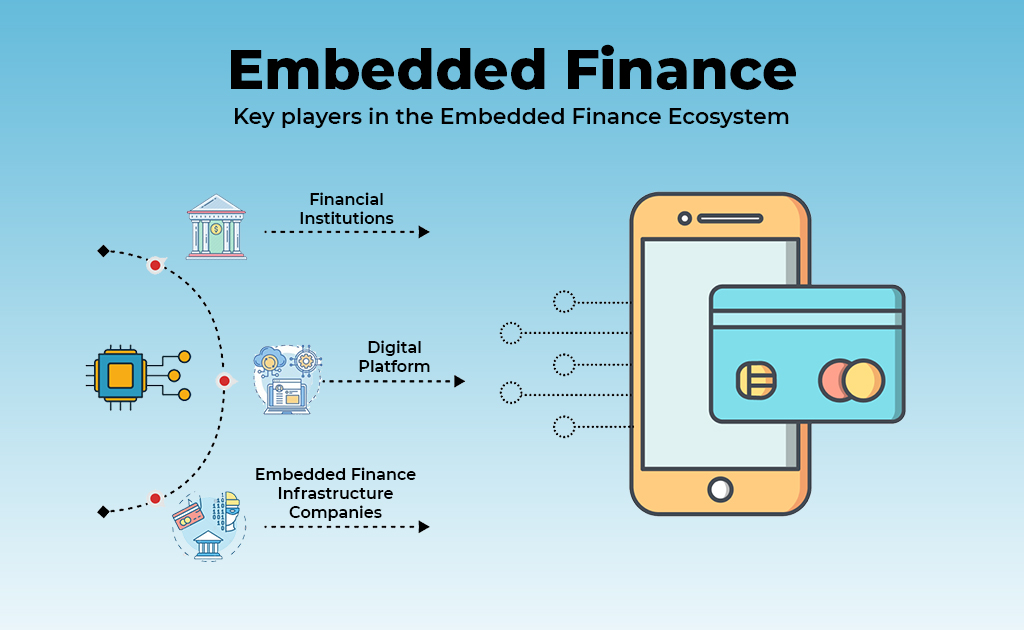
Embedded Finance: Financial services and products embedded within an existing app or platform, such as “Buy Now Pay Later,” are gaining popularity, predicted to expand by 40.4% annually.

SaaS: The SaaS sector is expected to hit $623 billion in 2023, allowing companies to access and pay for software applications hosted in the cloud without installing them on their servers or computers.

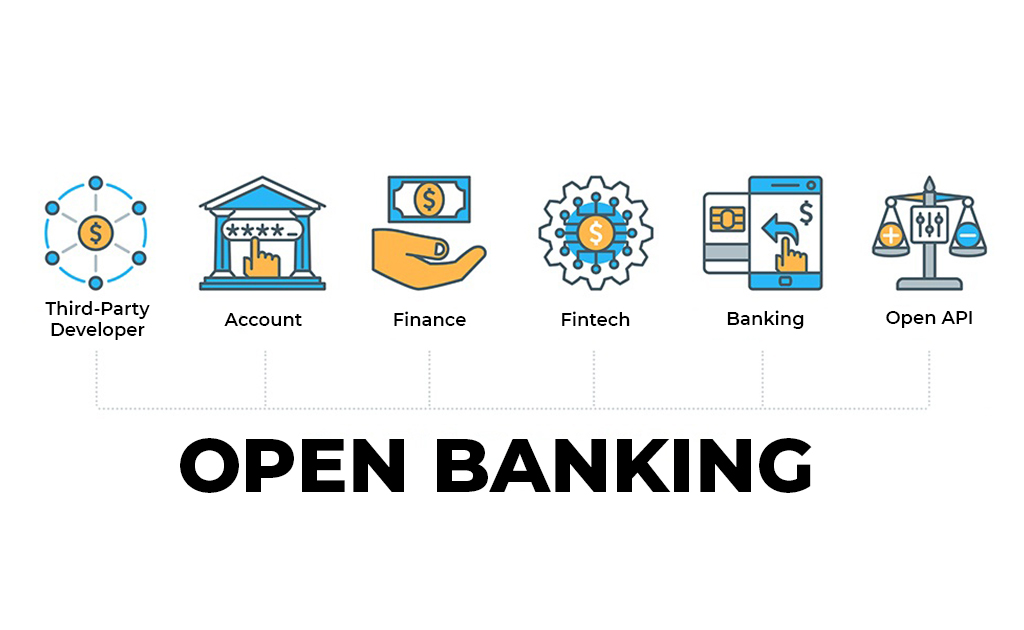
Open Banking: Customers can securely share their financial information with third parties, providing convenience for customers and opportunities for businesses to access new markets and increase efficiency.

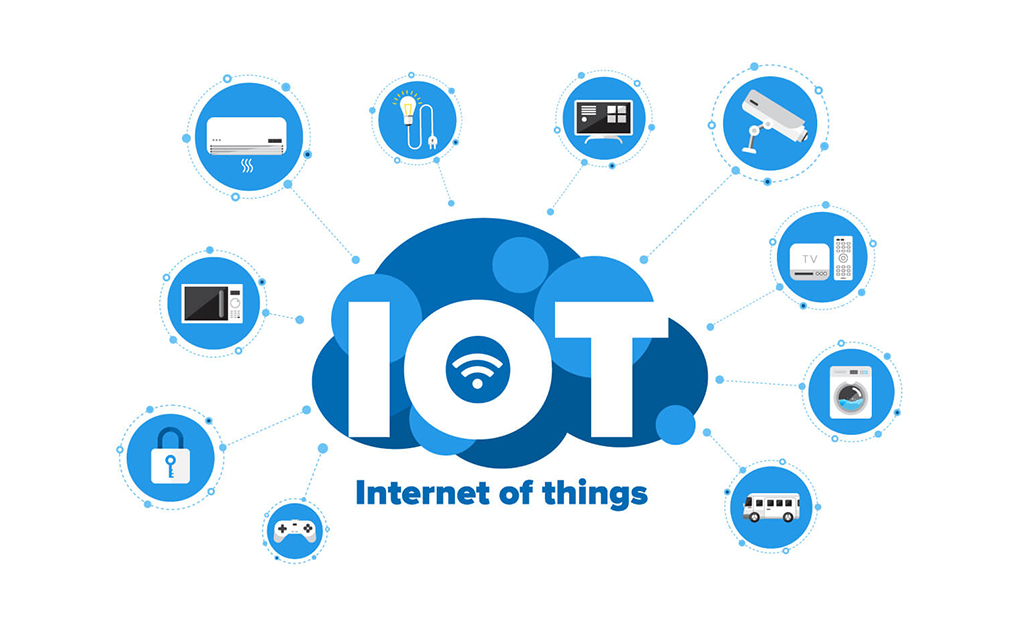
IoT: Physical devices connected to the internet can collect data, analyze it, and automate responses based on preset preferences or behaviors, making banking more secure, efficient, and convenient.

Blockchain: A digital ledger that records and verifies different types of transactions, allowing for secure transfer of digital assets without relying on central authorities or intermediaries.

Fintech App Ideas That Will Definitely Work In 2023

Personal finance management app: An app that uses artificial intelligence and machine learning to help users manage their finances. The app could track spending, provide insights into spending habits, and suggest ways to save money and invest.

Instant loan approval app: An app that uses blockchain technology to provide instant loan approval and disbursement. The app could use smart contracts to verify identity, creditworthiness, and other criteria, allowing users to get a loan quickly and easily.

Digital wealth management app: An app that provides personalized investment advice and portfolio management. The app could use algorithms to recommend investments based on users’ financial goals, risk tolerance, and other factors.

Digital identity verification app: An app that uses biometrics and other technology to verify identity for financial transactions. The app could help prevent fraud and streamline the onboarding process for financial services.

Social impact investing app: An app that allows users to invest in companies and projects that have a positive social or environmental impact. The app could provide information on the impact of investments and allow users to track their social and financial returns.

Why Invest In Fintech?

Growing market: The fintech industry is expanding rapidly, driven by technological advancements and increasing consumer demand for digital financial services. As a result, there is ample opportunity for fintech businesses to grow and capture a larger share of the market.

Disruptive potential: Fintech startups have the potential to disrupt traditional financial services, which can lead to significant market share gains and revenue growth.

Innovative technology: Fintech businesses often leverage innovative technology, such as artificial intelligence, blockchain, and machine learning, to provide more efficient and effective financial services. This can lead to cost-of-development savings and improved customer experiences.

Scalability: Fintech businesses can often scale more quickly and easily than traditional financial institutions, as they are not burdened by legacy systems and processes.

Access to data: Fintech businesses have access to vast amounts of data, which can be used to improve services and develop new products.

Attracting younger consumers: Fintech businesses are often popular among younger consumers who prefer digital solutions over traditional financial services.

Summing up

 Fintech is evolving at an unprecedented pace, and businesses need to keep up with the latest trends to stay competitive. From AI and machine learning to embedded finance, SaaS, open banking, IoT, and blockchain, there are numerous opportunities for companies to innovate and provide better services to their customers.

With over 18 years of expertise, Communication Crafts is a leading software development company with a proven experience in the fintech industry. Our team of experts can help you develop and implement cutting-edge fintech solutions tailored to your specific needs.

Whether you are looking to automate your processes, improve your customer experiences, or expand your market reach, our team has the knowledge and skills to deliver scalable results. 

Challenge the status quo
Develop Scalable Fintech Apps With Us

Core PHP vs Laravel: Let’s Conclude This Debate

If you’re a PHP developer or are looking to get into PHP development, you may have come across the debate of Core PHP vs Laravel. Both are popular choices for web development, but which one is better? Let’s take a closer look.

Core PHP is the original PHP language, and it’s been around since 1994. It’s a server-side scripting language that’s used to create dynamic web pages. Core PHP is a bare-bones language that gives developers full control over their code. You can use it to build anything from a simple blog to a complex web application.

On the other hand, Laravel is a PHP framework that was introduced in 2011. It’s built on top of Core PHP and provides developers with a set of tools and resources to streamline web development. Laravel is known for its elegant syntax and its focus on creating clean, maintainable code.

What is Core PHP?

Core PHP is the foundation of PHP that provides the building blocks for developers to create web applications and dynamic websites. It includes features such as variables, arrays, loops, functions, and other basic programming concepts.

With Core PHP, developers can create custom solutions for various web-based projects, from simple websites to complex web applications. It is the backbone of the PHP language and provides a solid foundation for developers to build upon.

What is Laravel?

Laravel is a web development framework for building web applications using PHP programming language. It provides developers with a set of tools and features to quickly and efficiently create web applications, from small websites to large enterprise systems.

Some of the features provided by Laravel include a simple and expressive syntax, a powerful ORM for database interactions, built-in user authentication and authorization, a routing system, a template engine, and more. Laravel is also known for its robust ecosystem, with a large and active community of developers, and many third-party packages and extensions available.

Hire  Developers That Help You Rock The Market

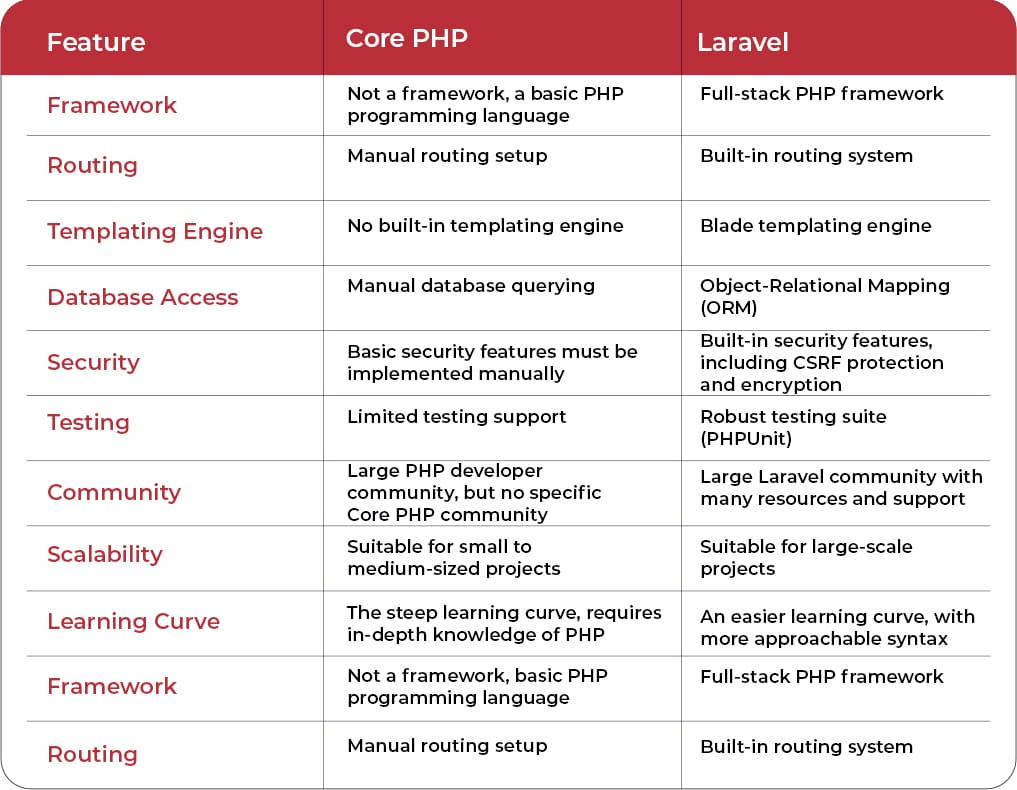
Difference between Core PHP vs Laravel

Difference between Core PHP vs Laravel

But, who’s the champion

If you’re building a simple website or web application, Core PHP might be the way to go. Since it’s a bare-bones language, it’s lightweight and fast. You can build a website using Core PHP with just a text editor and a web server.

However, if you’re working on a more complex project, Laravel might be the better choice. Laravel provides a lot of built-in functionality, such as authentication, routing, and database management. This can help you save a ton of time and work when developing.  Plus, Laravel has a large community of developers who have created a variety of packages that you can use to extend the framework’s functionality.

In addition, Laravel has a more modern syntax than Core PHP. Its syntax is designed to be easy to read and write, which can make it easier to maintain your code over time. Plus, Laravel has a built-in testing suite that can help you ensure that your code is working as intended.

So, in conclusion, there isn’t necessarily a “better” option between Core PHP and Laravel. Both have their advantages and disadvantages, and the choice really comes down to your specific needs and preferences. If you want more control over your code and are comfortable with a bare-bones language, Core PHP might be the way to go. But if you’re looking for a more streamlined development experience and a modern syntax, Laravel might be the better choice.

Still confused?

Connect with us.

Hire seasoned developers in Laravel, CorePHP, and 100+ in-demand skills with Communication Crafts.

With 18+ years of hands-on experience, Communication Crafts is a trusted technology partner that offers a wide pool of exceptional remote developers for hire. We have a dedicated team of professionals who are adept at developing a website and mobile applications that aid your company dominate the ever-expanding digital competition. 

We welcome you to exploit our expertise.

Connect with us

Looking for top-tier web developers?

Low-Code Love: Why Writing Less Code is More Fun {With Complete Guide}

Low code development has its roots in the early 2000s, but it gained momentum in the mid to late 2010s as the demand for faster application development and deployment increased.

The term “low code” was first coined by Forrester Research in a report published in 2014, although the concept had been around for a few years before that.

Low-Code Development Platforms

What is Low-Code Application Development?

Low-code application development is a software development approach that uses visual interfaces and pre-built components to enable users to create applications with minimal coding or programming knowledge.

In simpler terms, it’s a way of creating software applications using drag-and-drop components and building blocks instead of writing code from scratch. This approach allows developers and non-developers alike to quickly build custom applications to solve business problems and automate workflows, without needing extensive programming skills or knowledge.

Low Code Application Development Principles

Low-code application development is based on a few key principles, including:

Visual modeling: Low-code platforms typically feature a drag-and-drop interface that allows users to visually model their applications, without the need to write code manually.

Pre-built components: Low-code platforms offer pre-built components and modules, which users can assemble into their applications. These components are designed to be reusable and configurable, so users can customize them to their specific needs.

Rapid iteration: Low-code development enables rapid iteration, allowing users to quickly create, test, and refine their applications. This is because changes can be made quickly and easily, without the need for extensive coding.

Integration with other systems: Low-code platforms can integrate with other systems and applications, making it easy to connect with existing databases, APIs, and services.

Agile development: Low-code development is often associated with agile development methodologies, which prioritize speed, flexibility, and collaboration over rigid planning and documentation.

Collaboration and sharing: Low-code platforms often include collaboration and sharing features, allowing multiple users to work on the same application simultaneously and share their work with others.

Types of Low-Code Platforms

General purpose low-code platforms: Platforms that can be used to create a wide range of applications for different industries and use cases. They provide pre-built components and tools to help users build custom applications quickly and easily.

Process-centric low-code platforms: Platforms that help automate specific business processes, such as human resources, finance, or customer service. They create workflows and automate tasks that can be repetitive and time-consuming.

Mobile-centric low-code platforms: Platforms that specialize in creating mobile applications for iOS and Android devices. They provide tools to create custom user interfaces and integrate them with mobile-specific features such as location services and push notifications.

Database-centric low-code platforms: Platforms that help users create custom databases and data-driven applications. They provide tools to design, manage, and connect to databases, as well as tools to create custom user interfaces and reports.

AI-centric low code platforms: Platforms that use artificial intelligence and machine learning to help users build applications that can learn and adapt over time. They include features such as natural language processing, predictive analytics, and image recognition.

IoT-centric low-code platforms: Platforms that help users build applications for the Internet of Things (IoT) ecosystem. They include tools to connect to sensors, devices, and other IoT components, as well as tools to visualize and analyze IoT data.

Popular Low Code Apps 

Airtable – Airtable is a popular low-code app that enables users to create custom databases and workflow solutions without the need for extensive coding skills.

Zapier – Zapier is a platform that allows users to integrate and automate workflows across different applications and tools, making it a popular choice for businesses and individuals looking to streamline their processes.

Bubble – Bubble is a low-code platform that enables users to build web applications and mobile apps without the need for traditional coding skills. It is popular among entrepreneurs and startups looking to rapidly develop and launch new products.

AppSheet – AppSheet is a no-code platform that enables users to build and deploy mobile apps without writing any code. It is popular among businesses looking to create custom apps for their employees or customers.

Microsoft Power Apps – Microsoft Power Apps is a low-code platform that enables users to build custom business applications and automate workflows without the need for extensive coding skills. It is popular among enterprises looking to rapidly develop and deploy new solutions.

Pros of low code application development

Faster timetomarket: With low code, developers can quickly build and deploy applications, reducing the time it takes to bring a new product to market.

Reduced costs: Low code development can reduce the overall cost of development, as less time and resources are required for traditional coding.

Increased productivity: By using visual interfaces and drag-and-drop tools, low code development can allow developers to work more efficiently and quickly, increasing productivity.

Increased agility: Low code development can allow organizations to quickly adapt to changing business needs by rapidly developing and deploying new applications.

Accessibility to nondevelopers: Low code development can enable non-technical team members to contribute to the development process, reducing the burden on developers and expanding the potential talent pool for software development.

Improved collaboration: Low code development tools can facilitate collaboration between developers and business stakeholders, helping to ensure that applications meet the needs of the organization.

Choose a reliable low-code app development company

No code? No Problem!

Let us do the heavy lifting.

With over 18 years of experience in the industry, Communication Crafts has a proven track record of delivering high-quality mobile apps that work seamlessly across multiple platforms.

Our team of skilled developers is proficient in developing low-code apps that meet our client’s requirements.

Our commitment to transparency, timely delivery, and cost-effectiveness make us a top choice for cross-platform app development projects.

Laravel for Healthy Healthcare App Development: Why It’s the Perfect Medicine

Hold onto your stethoscopes and get ready for some high-tech healing! In a world where everything from our morning coffee to our dog’s bedtime stories is powered by technology, it’s no surprise that healthcare is also getting a digital upgrade. From virtual consultations to wearables that track our every step (and heartbeat), modern healthcare solutions are revolutionizing how we approach our well-being. So, grab your laptops, and let’s journey into the world of quirky healthcare solutions!

Modern healthcare solutions refer to the use of advanced technologies, data-driven insights, and innovative approaches to improve the delivery and quality of healthcare services. These solutions are designed to enhance patient outcomes, reduce costs, increase efficiency, and streamline healthcare operations.

Some of the key modern healthcare solutions include:

Electronic Health Records (EHRs): EHRs are digital records of a patient’s health information that can be easily accessed by healthcare providers. They improve patient care by providing accurate and up-to-date medical information, reducing errors, and improving communication among healthcare providers.

Telemedicine –Telemedicine is the use of technology to deliver medical treatment remotely. It lessens the need for in-person visits by allowing patients to obtain healthcare services from anywhere, at any time. Video conferencing, remote monitoring, and virtual consultations are all examples of telemedicine.

Wearable Technology: Wearable technology, such as fitness trackers, smartwatches, and health monitoring devices, can track a patient’s vital signs, activity levels, and other health-related data. This information can be used to identify potential health issues, monitor chronic conditions, and provide personalized care.

Artificial Intelligence (AI): AI can be used in healthcare to analyze vast amounts of data, identify patterns and insights, and improve clinical decision-making. AI-powered tools can also be used for disease diagnosis, patient triage, and drug discovery.

Blockchain: Blockchain is a decentralized, secure database that can be used to securely store and share medical records, clinical trial data, and other health-related information. Blockchain can improve data security, reduce fraud, and increase patient privacy.

What is Laravel What’s it’s role in Healthcare Industry?

  • Laravel is a software tool that helps programmers build web applications quickly and easily.
  • It’s particularly useful for building secure and robust web applications, and it’s free and open source.
  • In the healthcare industry, Laravel is used to build various applications, including electronic medical records (EMR) systems, patient portals, telemedicine platforms, and health information exchanges.
  • Laravel-based EMR systems help doctors and healthcare providers manage electronic patient records, reducing errors and making it easier to share patient information.
  • Laravel-based patient portals give patients access to their medical records, lab results, and other health-related information from anywhere with an internet connection.
  • Laravel-based telemedicine platforms allow healthcare providers to deliver care remotely, reducing the need for in-person visits and making healthcare more accessible to patients.

Laravel Framework: A Versatile Solution for Your Development Needs

E-commerce websites: Laravel can be used for building e-commerce websites with features such as product catalogs, shopping carts, payment gateways, and order management. It provides tools such as Laravel Cashier for handling subscriptions and payments and Laravel Scout for adding search functionality.

Social networking platforms: Laravel is well-suited for building social networking platforms with features such as user profiles, friend connections, messaging, and news feeds. It provides tools such as Laravel Socialite for social authentication and Laravel Echo for real-time communication.

Content management systems: Laravel can be used for building content management systems with features such as content creation, editing, and publishing, as well as user and role management. It provides tools such as Laravel Nova for building admin interfaces and Laravel Voyager for building CMS platforms.

Enterprise web applications: Laravel is suitable for building enterprise web applications with features such as multi-tenancy, role-based access control, and advanced caching. It provides tools such as Laravel Horizon for managing job queues and Laravel Telescope for debugging and monitoring.

API development: Laravel can be used for building APIs that can be consumed by other applications. It provides tools such as Laravel Passport for API authentication and Laravel Sanctum for API token management. It also supports RESTful and GraphQL APIs.

Hire Top Laravel Developers  in 48 hours

What makes Laravel the best choice for HealthCare Apps?

Security: Security is of utmost importance when it comes to mhealthcare applications. Laravel provides built-in security features, such as protection against SQL injection, cross-site scripting (XSS), and cross-site request forgery (CSRF), which makes it a secure choice for healthcare app development.

Robustness: Healthcare applications are often complex, with a lot of data and functionality. Laravel’s architecture provides robustness and scalability, allowing developers to build complex healthcare applications with ease.

Rapid Application Development (RAD): Laravel provides a lot of built-in features and tools that help developers to create applications quickly. This allows healthcare app developers to save time and resources and focus on building features that add value to the application.

Easy Integration: Healthcare applications often need to integrate with other systems, such as Electronic Health Records (EHRs) or Medical Devices. Laravel provides easy integration with third-party systems, making it a popular choice for healthcare app development.

Developer Community: Laravel has a large developer community, providing access to a wealth of resources, tutorials, and documentation. This helps developers to troubleshoot issues, learn best practices, and stay up-to-date with the latest features and updates.

Hire seasoned developers in Laravel, and 100+ in-demand skills in Communication Crafts.

With 18+ years of hands-on experience, Communication Crafts is a trusted technology partner that offers a wide pool of exceptional remote developers for hire. We have a dedicated team of professionals who are adept at developing a website and mobile applications that aid your company dominate the ever-expanding digital competition. 

We welcome you to exploit our expertise.

Connect with us

      Looking for top-tier Laravel developers?

App-absolutely Everywhere: 2023’s Coolest Cross-Platform App Development Frameworks!

In cross-platform app development, a single codebase is used to create mobile applications that can run on several operating systems or platforms, such as iOS and Android.

This approach saves time and effort for developers, as they don’t have to create separate applications for each platform. Instead, they can use tools and frameworks to write code once and deploy it on multiple platforms, resulting in faster development and wider reach for their applications.

Cross-platform app development offers several benefits, including:

Cost savings: With cross-platform development, developers can write code once and deploy it on multiple platforms, which saves time and reduces development costs.

Faster time-to-market: Developing an app for multiple platforms simultaneously with cross-platform development reduces time-to-market compared to building separate native apps.

Wider audience reaches: Cross-platform apps can run on multiple platforms, reaching a wider audience base and providing more opportunities for user engagement.

Easier maintenance: With a single codebase, maintenance, and updates become easier, as changes need to be made only once and are then applied across all platforms.

Consistent user experience: Since cross-platform apps utilize the same codebase and design components on all platforms, they may deliver a consistent user experience on each one.

Access to native features: Cross-platform development frameworks provide access to native device features and APIs, allowing developers to create native-like apps that take advantage of device capabilities such as cameras, GPS, and sensors.

Types of App Development Frameworks

Hybrid frameworks: Hybrid frameworks use web technologies such as HTML, CSS, and JavaScript to create cross-platform mobile applications. These apps run inside a container on the target platform, which enables them to access device-specific features like a camera, accelerometer, and GPS. Examples of hybrid frameworks include Apache Cordova, PhoneGap, and Ionic.

Native frameworks: Native frameworks allow developers to write code in a single language (such as C# or Java) and compile it for multiple platforms. This approach can offer better performance and access to native features than hybrid frameworks. Examples of native frameworks include Xamarin and React Native.

Web-based frameworks: Web-based frameworks use web technologies like HTML, CSS, and JavaScript to create web applications that run across multiple platforms. These frameworks typically use responsive design to optimize the user experience for different screen sizes and device types. Examples of web-based frameworks include AngularJS, ReactJS, and VueJS.

Game engines: Game engines are frameworks that are specifically designed for developing games. They often provide tools for creating 2D and 3D graphics, physics engines, and other features that are essential for game development. Examples of game engines that support cross-platform development include Unity and Unreal Engine.

Desktop app frameworks: Desktop app frameworks allow developers to create native desktop applications that run on multiple platforms. These frameworks typically use web technologies like HTML, CSS, and JavaScript to create user interfaces that are consistent across platforms. Examples of desktop app frameworks include Electron, Qt, and JavaFX.

But, which one is best?

There are several popular cross-platform app development frameworks available today, each with its own strengths and weaknesses. Ultimately, the best framework for your needs will depend on a variety of factors, such as your app requirements, the development team’s skillset, and budget. Here are a few of the most popular frameworks to consider:

React Native: This is a popular framework for building mobile apps that uses JavaScript and allows for code reuse across multiple platforms. It is backed by Facebook and has a sizable development community.

Flutter: This is a relatively new framework from Google that uses the Dart programming language. It allows for the fast development of high-quality, natively compiled apps for mobile, web, and desktop platforms.

Xamarin: This is a framework from Microsoft that allows developers to build native apps for iOS, Android, and Windows using a single codebase. It uses C# programming language and has good integration with Visual Studio.

Ionic: This is a popular open-source framework that uses web technologies such as HTML, CSS, and JavaScript to build hybrid mobile apps. It allows for cross-platform development and has a large community of developers.

What are the Pros and Cons?

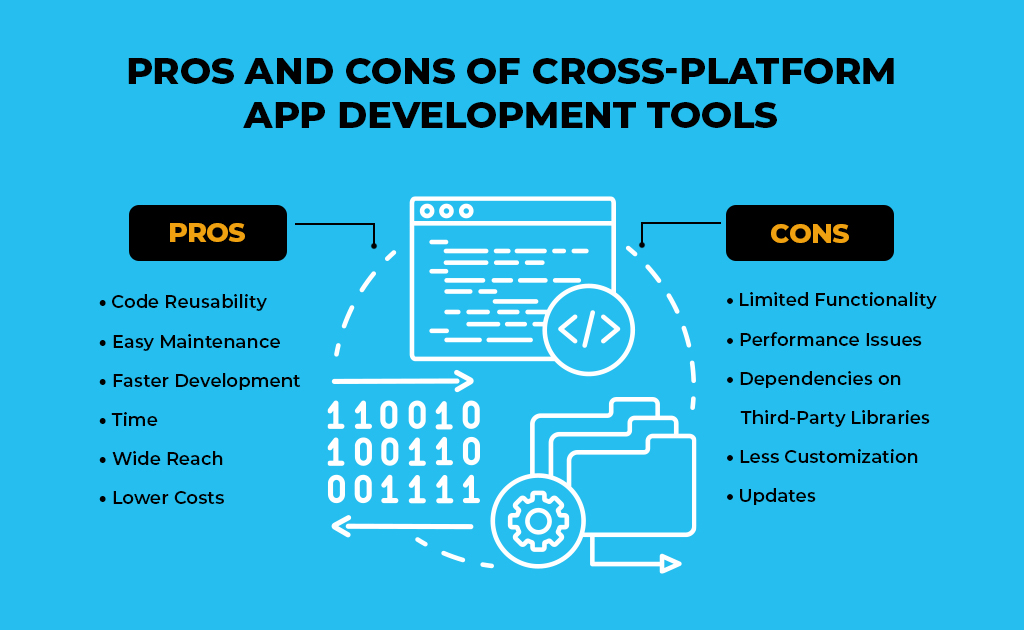
Pros and Cons of Cross-Platform App Development Tools

Pros:

Code Reusability: One of the biggest advantages of cross-platform mobile app development tools is that they allow developers to write code once and use it across multiple platforms, rather than developing separate code for each platform. This can save a lot of time and effort, and reduce development costs.

Easy Maintenance: Since cross-platform development tools allow developers to use a single codebase for multiple platforms, it is easy to maintain and update the code across all platforms simultaneously.

Faster Development Time: Cross-platform development tools have built-in libraries, tools, and frameworks that can speed up the development process, as well as eliminate the need for developers to write code from scratch.

Wide Reach: Cross-platform development tools allow developers to reach a wider audience, as the same code can be used to create apps for multiple platforms, which means the app can be released on multiple app stores.

Lower Costs: By using cross-platform development tools, developers can save money on development costs, as they don’t need to hire separate teams for each platform.

Cons:

Limited Functionality: Cross-platform mobile app development tools are designed to work across multiple platforms, which means they may not provide all the features and functionalities that are available on each platform.

Performance Issues: Since cross-platform development tools rely on a single codebase to run on multiple platforms, the app may not perform as well as a native app that is specifically designed for a particular platform.

Dependencies on Third-Party Libraries: Cross-platform development tools rely on third-party libraries, which may not always be reliable or compatible with all platforms.

Less Customization: Cross-platform development tools have pre-built templates and frameworks, which can limit the customization options for the app.

Updates: Cross-platform development tools rely on updates from the provider, which may not always be timely, leading to issues in the app’s performance and compatibility with the latest platform versions.

Choosing the best cross-platform app development framework can be a daunting task, given the numerous options available in the market. However, a good cross-platform framework should offer flexibility, scalability, and cost-effectiveness.

Choose a reliable cross-platform app development company

Let us do the heavy lifting

With over 18 years of experience in the industry, Communication Crafts has a proven track record of delivering high-quality mobile apps that work seamlessly across multiple platforms.

Our team of skilled developers is proficient in all the leading cross-platform frameworks, including React Native, Flutter, Xamarin, and Ionic.

Our commitment to transparency, timely delivery, and cost-effectiveness make us a top choice for cross-platform app development projects.

Create a high-quality cross-platform app with exceptional developers