Mobile App Development: A Booming Industry in 2023

Picture this: You’re standing on a bustling street corner, surrounded by people. Everyone around you has their eyes glued to their mobile devices, scrolling and tapping away. You can see it in their faces – they’re engaged, connected, and completely immersed in the digital world. And if you’re a business owner, that’s exactly where you want to be.

In 2023, mobile app development is essential because it’s the key to unlocking the full potential of your business. The demand for mobile apps has been driven by the increasing adoption of smartphones and other mobile devices, as well as the growing popularity of mobile commerce and other mobile-based services. In addition, the COVID-19 pandemic has accelerated the shift towards digitalization and remote work, leading to a surge in demand for mobile apps that support these trends.

Mobile development involves creating software applications that are designed to run on mobile devices, such as smartphones and tablets.

 Hire Mobile App Developers With Proven Expertise In Building Successful Apps

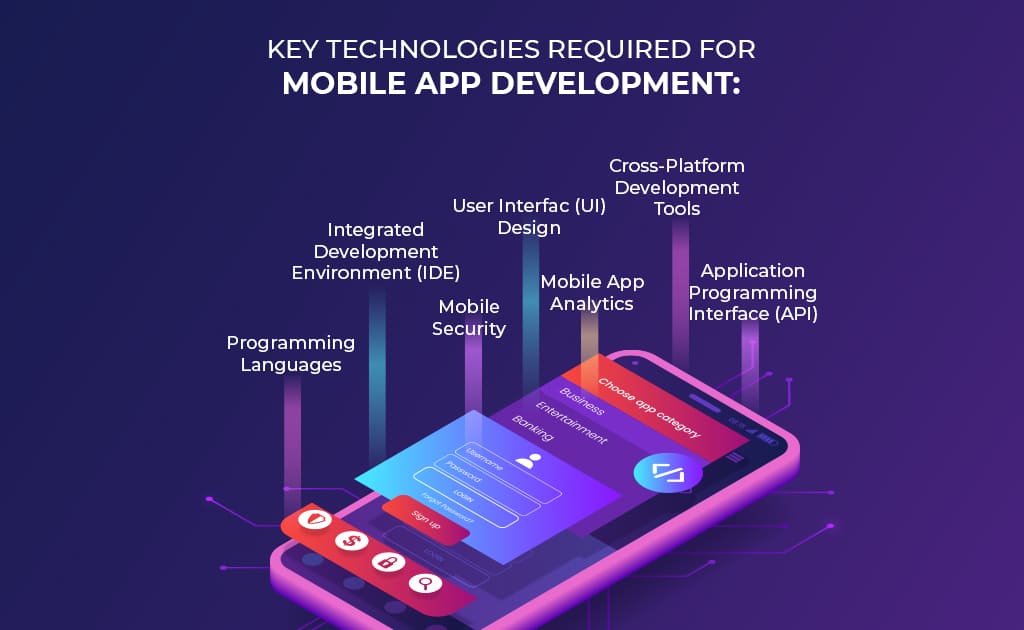
Key technologies required for mobile app development:
Key technologies

Programming Languages: Developers must have a strong understanding of programming languages such as Java, Kotlin, Swift, and Objective-C.

Integrated Development Environment (IDE): An IDE is a piece of software that offers complete tools for software development to computer programmers. Xcode, Visual Studio, and Android Studio are a few examples.

User Interface (UI) Design: Developers must have a good understanding of UI design principles and tools such as Sketch, Adobe XD, and Figma.

Application Programming Interface (API): An API is a collection of tools and protocols used in the development of software programs. It makes it possible for various software programs to communicate with one another. Examples include GraphQL and REST.

Cross-Platform Development Tools: These tools allow developers to build on-demand apps that can run on multiple platforms such as iOS and Android. React Native, Flutter, and Xamarin are a few examples.

Cloud-Based Services: Mobile apps often require cloud-based services for data storage, authentication, and notifications. Examples include Firebase, Amazon Web Services (AWS), and Microsoft Azure.

Mobile App Analytics: Developers use analytics tools to track app usage, user engagement, and other metrics. Examples include Google Analytics and Flurry Analytics.

Mobile Security: Developers must be aware of mobile app security risks and implement measures to protect user data. Examples include SSL encryption, data encryption, and two-factor authentication.

Identifying the right technology stack for mobile app development is crucial for several reasons, including

Performance and user experience: Choosing the right technology stack helps to ensure that your mobile app runs smoothly and provides an excellent user experience. The right technology stack should be able to handle the app’s requirements efficiently, such as processing power, memory, and network connectivity.

Scalability: As your app grows, you need a technology stack that can scale with it. Choosing the right technology stack can help you avoid scalability issues as you add more features and users.

Security: Mobile apps can be vulnerable to security breaches, and the right technology stack can help you implement security features that protect your app and its users.

Maintenance and development costs: Selecting the right technology stack can help you keep your app’s maintenance and development costs under control. Some technology stacks are easier and cheaper to maintain and develop than others, depending on the complexity of the app.

But how to identify the right technology stack for your mobile app? 

Define your app’s requirements: Before choosing a technology stack, you need to understand your app’s requirements, such as its features, expected user base, and target platforms.

Research available technology stacks: Research the technology stacks available for mobile app development and compare them based on their suitability for your app’s requirements.

Evaluate the pros and cons: Evaluate the pros and cons of each technology stack based on factors such as performance, scalability, security, and development costs.

Consider your team’s skills: Consider your team’s skills and expertise when choosing a technology stack. If your team is experienced in a particular technology stack, it may be easier and faster to develop your app using that stack.

Test and validate: Test and validate the technology stack by building a prototype or a minimum viable product (MVP) to ensure that it meets your app’s requirements.

Framework Frenzy: How to Choose the Perfect Platform for Your Mobile App

Define your project requirements: Before choosing a framework, you should have a clear understanding of your project requirements, such as the type of app you want to develop, the target platform, and the app’s functionality.

Consider the platform: Decide whether you want to develop a native app, a hybrid app, or a web app. Native apps are built for a specific platform, such as iOS or Android, and provide the best user experience. Hybrid apps are built using web technologies and are wrapped in a native container, making them easier to develop but less performant. Web apps run on the web and are accessible from any device with a web browser.

Evaluate the framework’s features: Once you have defined your project requirements and platform, evaluate the features of each framework you are considering. Look for features that meet your project requirements, such as support for push notifications, offline data storage, or integrations with third-party services.

Consider the learning curve: Evaluate the learning curve of each framework. Some frameworks may require more time and effort to learn, while others may be more straightforward. Consider your team’s skillset and their ability to learn new technologies.

Look at community support: Evaluate the community support for each framework. Look for active communities, online resources, and documentation that can help you get started and troubleshoot issues.

Consider the cost: Evaluate the cost of each framework. Some frameworks may be free, while others may require a licensing fee or subscription. Consider your budget and the long-term cost of using the framework.

Well Well, 

Let us do the heavy lifting

Whether you’re launching your first business or working on a software-driven project, we understand why a mobile app or responsive web app is essential to your goals. Since 2005, we have used our expertise to assist other business owners in applying effective startup techniques to their own digital goods.

With a group of expert designers and developers, we have a track record of producing high-quality iOS apps that are tailored to the particular requirements of organizations.

From design and development to maintenance and support, Communication Crafts offers the complete range of services needed for app development. We work closely with customers to fully understand their business goals and to develop solutions that are customized to meet their needs.

Power Up Your Web Development Game in 2023 with These Top PHP Frameworks

PHP was created by Rasmus Lerdorf in 1994 as a set of Common Gateway Interface (CGI) scripts to track visitors to his personal website. Over time, Lerdorf added more functionality to PHP, and it evolved into a server-side scripting language that could be used to build dynamic websites and web applications.

PHP’s popularity continued to grow, and with the release of PHP 4 in 2000, it became a more mature and stable language. PHP 4 included many new features, including support for object-oriented programming, and it became the most widely used server-side scripting language for building dynamic web applications.

There are many PHP frameworks available, each with its own strengths and weaknesses. In this blog post, we’ll take a look at some of the most popular PHP frameworks and help you decide which one might be right for your next project.

Hire top PHP Developers in less than two days

What is a PHP Framework?

In simple words, a PHP framework is a collection of pre-written code that makes it easier for developers to build web applications by providing a structured and standardized way to develop software.

A PHP framework can be thought of as a set of tools and guidelines that help developers write code more efficiently and effectively. It provides a foundation of code that can be reused across different projects, saving time and effort.

PHP frameworks are designed to help developers overcome the challenges of building complex web applications, by providing a standardized way to handle tasks such as database access, user authentication, and session management.

PHP Framework Features 

Routing and URL handling: The framework provides a way to map URLs to specific controllers and actions in the application.

Database access: The framework provides a way to interact with databases using an ORM (Object-Relational Mapping) layer, making it easier to work with data.

Templating: The framework provides a way to separate the presentation layer from the logic layer, using templates that can be reused across the application.

Security: The framework provides features such as input validation, output escaping, and authentication to help developers build secure applications.

Testing: The framework provides tools and libraries for testing code, making it easier to write and maintain high-quality code.

Top 7 PHP Frameworks you should know about

Laravel – A full-featured framework for web application development, including features like routing, ORM, MVC architecture, and more.

Symfony – A flexible framework that emphasizes modularity, allowing developers to pick and choose components to use in their projects.

CodeIgniter – A lightweight framework designed for rapid development, with a small footprint and simple syntax.

Yii – A high-performance framework that emphasizes security and extensibility, with features like caching, authentication, and more.

CakePHP – A framework that follows the “convention over configuration” approach, with built-in features for scaffolding, authentication, and more

Zend Framework – A modular framework that emphasizes loose coupling and allows developers to use only the components they need.

Phalcon – A high-performance framework that’s implemented as a C extension, providing fast execution times and low resource usage.

PHP Framework

Why Use a PHP Framework?

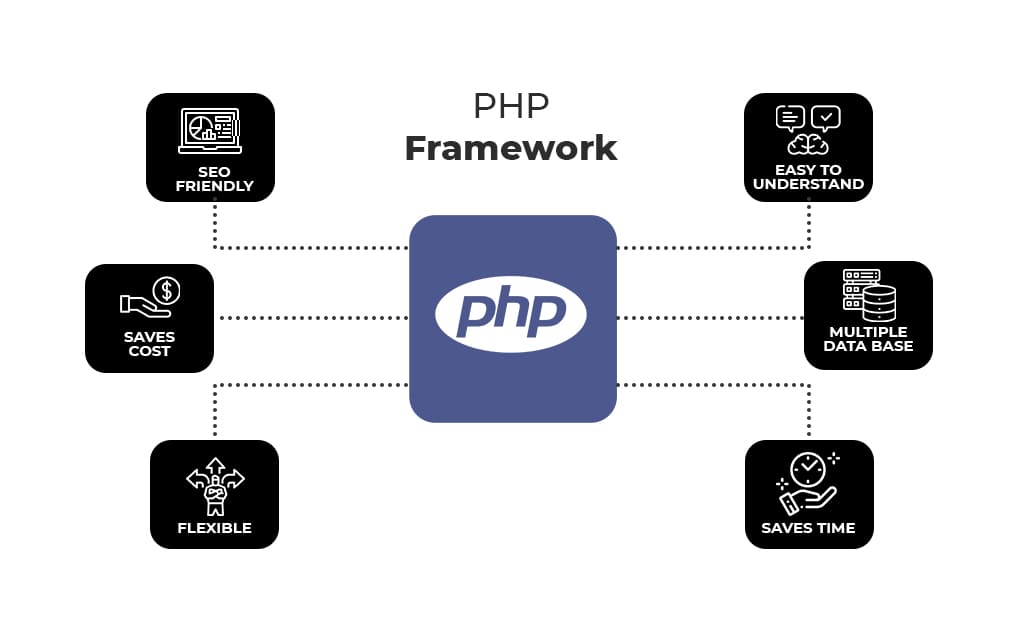
Speed up development: A PHP framework can help you build applications faster, thanks to the pre-built components and libraries that provide a solid foundation for your project.

Improved code quality: Frameworks can help enforce best practices and coding standards, leading to cleaner, more maintainable code.

Easier maintenance: Frameworks often include built-in tools for debugging and testing, making it easier to maintain and update your code.

Scalability: Frameworks provide a modular architecture, allowing you to easily add new features and scale your application as your needs evolve.

Better security: Frameworks often include security features like input validation, SQL injection prevention, and cross-site scripting (XSS) protection, helping to keep your application secure.

Community support: Frameworks are often backed by large and active communities, providing resources, documentation, and support for developers.

Code reusability: Frameworks provide pre-built components and libraries that can be reused across multiple projects, saving time and effort.

Flexibility: Frameworks can be tailored to your specific needs and requirements, with the ability to add or remove components as needed.

Improved collaboration: Using a framework can help teams work more efficiently and collaboratively, with a shared codebase and consistent development practices.

Reduced costs: By using a PHP framework, you can save time and effort, resulting in reduced development costs and a faster time to market.

Points to consider when choosing the best PHP framework for your business:

Choosing the right PHP framework for a project can be a critical decision that can affect the overall success of the project. To make the right choice, it is essential to consider a few key factors such as the project’s requirements, team expertise, community support, scalability, and security.

Purpose and Requirements: The first step is to identify the purpose of your application and the requirements needed to accomplish it. This will help you narrow down your search to frameworks that cater to your needs.

Popularity and Community: The popularity of a PHP framework is important as it indicates its level of support, stability, and resources available. A popular framework will have a large community of developers who can provide support, tutorials, and plugins.

Security: Security is a crucial factor in choosing a PHP framework, especially if your application involves sensitive data. Look for frameworks with built-in security features such as CSRF protection, XSS protection, and input validation.

Scalability: Choose a PHP framework that can easily scale with your business needs. A scalable framework will allow you to add more features and functionality as your business grows without compromising performance.

Performance: Performance is a key consideration for any web application. Choose a framework that has a good balance between performance and functionality, and consider frameworks that use caching and optimization techniques to improve performance.

Documentation: Good documentation is essential for efficient development and maintenance. Choose a framework that has comprehensive and up-to-date documentation, including tutorials, API references, and code examples.

Flexibility: Choose a PHP framework that offers flexibility in terms of coding standards, development approach, and project structure. This will allow you to customize the framework to fit your specific needs and preferences.

Ease of Use: A user-friendly PHP framework can save development time and reduce the learning curve for new developers. Choose a framework that has a clear and intuitive API, easy-to-use syntax, and built-in tools for debugging and testing.

Licensing: Consider the licensing terms of the PHP framework you choose, as it can affect the cost of development and distribution of your application.

Compatibility: Make sure that the PHP framework you choose is compatible with your development environment, hosting platform, and third-party libraries or services that you plan to use in your application.

Overall, there is no one-size-fits-all answer when it comes to choosing the right PHP framework. The best approach is to carefully evaluate your project’s specific needs and requirements, team expertise, community support, scalability, and security before making a decision.

At communication crafts,  we ensure that your PHP application is developed efficiently and effectively, saving you time and money in the long run.

As a leading PHP development company, with a group of expert designers and developers, we have a track record of producing high-quality apps that are tailored to the particular requirements of organizations.

Hire dedicated and proactive PHP developers within 48 hours


Innovate Like a Pro: The 7 Hottest Software Development Technologies for 2023

According to Gartner, Inc.’s most recent projection, global IT investment would reach $4.6 trillion in 2023, an increase of 5.5% from 2022. It’s simple to become lost in all the technological advances and trends that are emerging at an incredible velocity which makes it difficult to stay up with them. 

So, what are the  Top 7 Trending Software Development Technologies to Innovate in 2023?

Let’s check out.

But before let’s understand what are software development technologies in simple terms-

What are software development technologies?

Imagine you’re a chef trying to cook a gourmet meal without any utensils or appliances. You wouldn’t be able to chop vegetables, sauté meat, or even boil water. Software development technologies are like chefs’ utensils and appliances. They allow developers to create code, test applications, and deploy software products with ease.

Programming languages like Python, Java, and C++ are like chef’s knives, spatulas, and ladles. They are the basic tools that allow developers to create software applications from scratch. Frameworks like React, Angular, and Vue are like a chef’s oven, microwave, and grill. They provide a foundation for building complex applications quickly and efficiently.

Databases like MongoDB, MySQL, and PostgreSQL are like a chef’s pantry. They provide a place to store and organize ingredients and recipes. Software development technologies help businesses by making it easier for them to build and deploy software products quickly and efficiently. They enable businesses to innovate and stay competitive in a rapidly changing market.

Software development technologies are tools and frameworks that developers use to create and deploy software applications. These technologies can range from programming languages, databases, and development platforms to cloud computing services, version control systems, and testing frameworks.

Software development technologies are helping tech businesses in several ways.

1-Tthey allow developers to build applications more efficiently and with fewer errors, reducing development time and costs. This enables businesses to get their products to market faster and stay ahead of the competition.

2- Software development technologies provide businesses with a range of options for developing and deploying their applications, such as cloud computing services and containerization. These options allow businesses to scale their applications quickly and easily, providing the flexibility needed to meet changing market demands.

3- Software development technologies provide businesses with the ability to analyze and understand their data, enabling them to make better decisions and gain a competitive advantage. For example, machine learning and artificial intelligence technologies allow businesses to analyze vast amounts of data to identify patterns and trends that can inform business strategies.

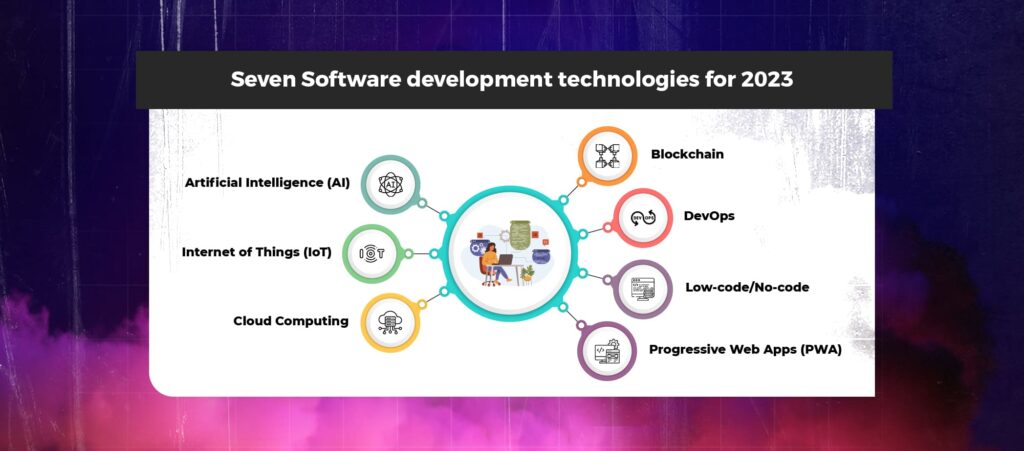
Seven Software development technologies for 2023:

Seven Software development technologies

Artificial Intelligence (AI): AI has been a popular topic for several years, and it’s not going away anytime soon. AI is being used in various applications, such as natural language processing, image and speech recognition, chatbots, and self-driving cars. In 2023, AI is expected to continue to evolve and improve, with more sophisticated algorithms and more advanced use cases.

Internet of Things (IoT): IoT is the network of physical devices, vehicles, home appliances, and other items that are embedded with sensors, software, and connectivity, which allows them to connect and exchange data. IoT is expected to grow in popularity in 2023 as more devices become connected, and the need for real-time data analysis and decision-making increases.

Cloud Computing: Cloud computing allows businesses to access computing resources on demand, such as servers, storage, and applications, over the internet. Cloud computing is becoming more popular as businesses look to reduce IT infrastructure costs, improve flexibility, and enable remote work. In 2023, cloud computing is expected to continue to grow, with more companies adopting cloud-based solutions and services.

Blockchain: Blockchain is a distributed ledger technology that allows multiple parties to have a shared view of transactions, without the need for intermediaries. Blockchain is being used in various applications, such as cryptocurrency, supply chain management, and voting systems. In 2023, blockchain is expected to continue to evolve, with more use cases and applications emerging.

DevOps: DevOps is a set of practices that combines software development and IT operations to enable faster and more reliable software delivery. DevOps is becoming more popular as businesses look to reduce time-to-market, improve collaboration, and increase agility. In 2023, DevOps is expected to continue to grow, with more organizations adopting DevOps practices.

Low-code/No-code: Low-code/no-code development platforms allow non-technical users to build and deploy applications without writing code. Low-code/no-code platforms are becoming more popular as businesses look to increase agility, reduce development costs, and enable citizen developers. In 2023, low-code/no-code platforms are expected to continue to grow, with more businesses adopting them.

Progressive Web Apps (PWA): PWAs are web applications that provide an app-like experience to users, with the ability to work offline, receive push notifications, and access device features such as a camera and microphone. PWAs are becoming more popular as businesses look to improve user experience, increase engagement, and reduce development costs. In 2023, PWAs are expected to continue to grow, with more businesses adopting them.

Conclusion

To stay competitive in the market, businesses must be willing to embrace these technologies and incorporate them into their work. 

At Communication Crafts, we have over 17 years of experience in software development, and we are always looking for ways to innovate and stay ahead of the curve. Our team of experts is dedicated to providing cutting-edge and dependable software solutions that are tailored to the specific requirements of our clients.

How to Choose a Software Development Company- (NEVER SETTLE FOR LESS)

Imagine you’re building a house – a beautiful, spacious, and sturdy one that you can be proud of. You wouldn’t just hire any contractor off the street to build it, would you? You’d want someone with the skills, experience, and reputation to do the job right.

The same goes for software development. Your software is the digital equivalent of your house – it’s your online presence, your business’s backbone, and your customers’ interface with your brand. A good software development company can build you robust, efficient, and user-friendly software that will help you achieve your business goals and keep your customers satisfied.

A poorly built software can crash, glitch, or even compromise your security. It can lead to lost revenue, lost customers, and lost reputation – all of which can be difficult to recover from.
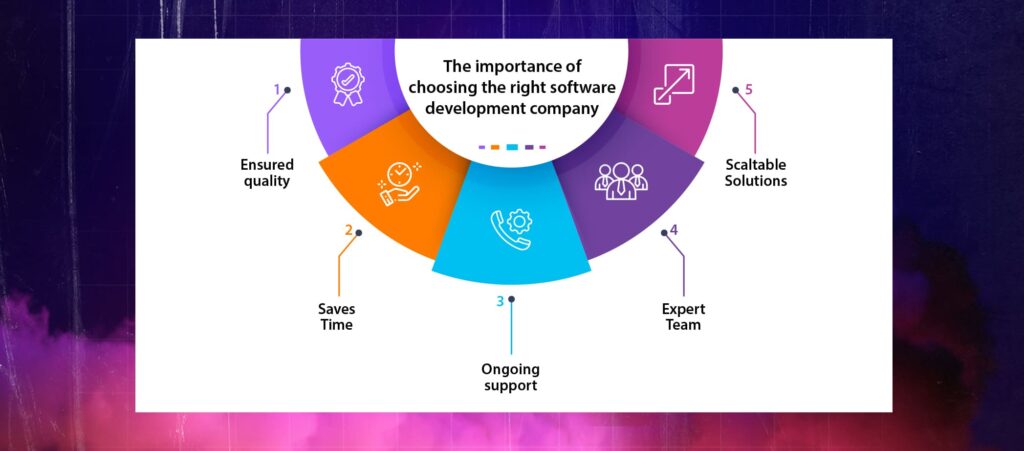
On the other hand, a good software development company can save you time, money, and headaches by delivering a high-quality product that meets your needs and exceeds your expectations. They can provide you with expertise, guidance, and support throughout the development process and beyond. And they can help you stay ahead of the curve by keeping your software up-to-date and adaptable to changing technologies and market demands.

Start your software development journey today and scale forever

So, how to choose a reliable software company and Never settle for less!

Research, research, research!

Before choosing any software development company, you need to do your research. Start by creating a list of potential companies that you think might be a good fit for your business. Then, do a deep dive into their websites, reviews, social media pages, and case studies to get a sense of their experience, expertise, and reputation.

Check out their portfolio

A software development company’s portfolio can give you a good idea of its capabilities and the kind of work they have done in the past. Look for projects that are similar in scope and complexity to your project, and assess whether the company has the skills and experience to deliver quality work.

Consider the company’s expertise

Different software development companies specialize in different areas, such as web development, mobile app development, or cloud computing. When choosing a company, make sure they have the expertise and experience in the area you need. For example, if you need a mobile app developed, choose a company that has a proven track record in mobile app development.

Look for communication and collaboration

Software development is a collaborative process, and effective communication is key to success. Look for a company that values communication and collaboration, and has a proven track record of working well with clients.

Evaluate their development process

A good software development company will have a well-defined development process that ensures the timely delivery of quality work. Ask about their development process and make sure it aligns with your expectations and needs.

Check for security

Your software development company will have access to sensitive business information, so security is a critical concern. Look for a company that takes security seriously and has robust measures in place to protect your data.

Assess their customer service

Finally, make sure the software development company you choose has a strong focus on customer service. You want to work with a company that is responsive, transparent, and committed to your success.

Red flags While Looking for a software development company

There are several red flags to look out for while searching for a software development company:

Lack of experience: If the company has little or no experience in developing software, it could lead to a poorly developed product.

Lack of communication: If the company is not communicative, doesn’t respond to your questions, or doesn’t provide regular updates, it could be a sign of poor customer service and could lead to communication problems later on.

Lack of portfolio: If the company doesn’t have a portfolio or case studies of their previous work, it could be a sign of inexperience or lack of quality work.

No clear process: If the company doesn’t have a clear software development process or methodology, it could lead to delays, cost overruns, and poor quality work.

No focus on testing: If the company doesn’t have a testing process or doesn’t prioritize testing, it could lead to bugs and other issues that could negatively impact your product.

Unrealistic promises: If the company makes unrealistic promises or guarantees, it could be a sign of dishonesty or incompetence.

Lack of transparency: If the company is not transparent about its pricing, deadlines, or other important information, it could lead to surprises later on.

Poor reviews: If the company has a lot of negative reviews or a low rating on review sites, it could be a sign of poor quality work or bad customer service.

Lack of security: If the company doesn’t have proper security measures in place to protect your data, it could lead to data breaches and other security issues.

Lack of compatibility: If the company doesn’t have experience with the technology or platforms you require, it could lead to compatibility issues with your existing systems or hardware.

Maximize the digital potential of your business

Are you tired of being let down by unreliable software development companies?

 Finding a reliable software partner is like finding a  needle in a haystack. But don’t worry, as we have got you covered. 

Let’s face it, our industry is rife with nonsense, unnecessary barriers, and break old ways of doing things. Communication Crafts kick that stuff to the curb. It’s been 17+ years since we have been helping businesses around the globe to build robust software for their vision.

Our team of experts is dedicated to providing cutting-edge and dependable software solutions that are tailored to each client’s specific requirements.

We understand that choosing the right software development company can be a daunting task, but with Communication Crafts, you can rest assured that you are in good hands. We have a proven track record of delivering exceptional software solutions to our clients, and we are confident that we can do the same for you.

 Maximize the digital potential of your business

The Cost of Building a Web Application in 2023: What You Need to Know

The demand for web applications has only been increasing over the years and for good reason. They offer numerous benefits, such as convenience, cost-effectiveness, scalability, and flexibility. With a web application, you can easily reach a global audience, automate business processes, and improve customer engagement.

The cost of developing a web application in 2023 will depend on several factors, such as the complexity of the application, the technologies used, the development team’s location, and the development time.

In this blog, we’ll explore the different aspects that affect the cost of web application development and provide some estimates based on industry standards.

What you will read in this blog?

1- What is a web application

2-How is a web application different from a mobile application?

3-Types of web application

4-Factors Affecting the App Development Cost

5- Cost of developing a web application

6- Key features to look for before developing a web application

7- Conclusion

Let’s start!

What is a Web Application?

A web application (also known as a web app) is a type of software application that runs on a web server and is accessed by users through a web browser over the internet or an intranet.

Web applications are built using web development technologies such as HTML, CSS, and JavaScript, and they can be accessed from various devices, including desktop computers, laptops, tablets, and smartphones.

How is a web application different from a mobile application?

A web application is accessed through a web browser and runs on a server, while a mobile application is specifically designed to run on a mobile device such as a smartphone or a tablet.

Here are some major differences between the web and mobile applications:

Platform: Web applications are accessed through a web browser and can be used on any device with a compatible browser, including desktops, laptops, tablets, and smartphones. On the other hand, mobile applications are designed for specific mobile platforms, such as iOS or Android, and can only be used on devices that run those platforms.

Development: Web applications are developed using web technologies such as HTML, CSS, and JavaScript, while mobile applications are developed using platform-specific programming languages such as Swift for iOS and Java or Kotlin for Android.

User Interface: Web applications are designed to work on various screen sizes, which means they must be optimized for a responsive user interface. Mobile applications, on the other hand, are designed to work specifically on smaller screens and may have different user interface elements than web applications.

Access to Device Features: Mobile applications have access to specific device features, such as the camera, GPS, and contacts, that web applications may not have access to.

Connectivity: Web applications require an internet connection, while mobile applications may have offline capabilities.

Distribution: Web applications are accessed through a web URL, while mobile applications are typically downloaded from an app store such as the Apple App Store or Google Play Store.

Types of Web Applications

There are several types of web applications, and the most popular types are:

E-commerce Web Applications: These web applications are designed for online shopping and transactions, such as Amazon, eBay, and Alibaba.

Social Media Web Applications: These web applications are designed for social networking and communication, such as Facebook, Instagram, and Twitter.

Content Management Systems (CMS): These web applications are designed to manage and organize content, such as WordPress, Joomla, and Drupal.

Business Management Web Applications: These web applications are designed to streamline business processes, such as accounting, payroll, and project management, such as Salesforce, QuickBooks, and Trello.

Educational Web Applications: These web applications are designed for educational purposes, such as e-learning, online courses, and quizzes, such as Coursera, Udemy, and Khan Academy.

Healthcare Web Applications: These web applications are designed to manage patient data and medical records, such as Epic, Cerner, and Allscripts.

Gaming Web Applications: These web applications are designed for online gaming, such as World of Warcraft, Minecraft, and Fortnite.

 Build Web applications that are robust, responsive, and simply rocking.

Factors Affecting the App Development Cost

Complexity

The complexity of the web application is one of the primary factors that determine its development cost. Simple web applications, such as a blog or a static website, are relatively easy to develop and require less time and resources. On the other hand, complex web applications, such as an e-commerce platform or a social media website, require more time and resources to develop and are therefore more expensive.

Features and Functionality

The features and functionality of a web application also play a significant role in determining its development cost. More features and functionality mean more development time, which translates into higher development costs. Features like payment gateways, user authentication, and custom integrations can significantly increase the cost of a web application.

Technology Stack

The technology stack used in developing a web application also plays a significant role in determining its cost. Choosing the right technology stack is essential for developing a scalable and secure web application. However, some technologies may require more development time and resources, leading to higher development costs.

Development Team Location

The location of the development team also plays a significant role in determining the development cost of a web application. Development teams located in developed countries, such as the USA and Europe, typically charge higher hourly rates than teams in developing countries, such as India and Pakistan. Working with a development team located in a developing country can significantly reduce the development cost without compromising the quality of the web application.

Cost of developing a web application

The cost of developing a web application in 2023 will depend on various factors, including the complexity of the application, the technology stack used, the development team’s location, and the development time required.

However, we can estimate the cost based on industry standards and trends. According to recent surveys, the average cost of developing a web application in 2023 is expected to range from $50,000 to $500,000.

For a basic web application, the cost may range from $50,000 to $100,000. For a more complex web application with advanced features, the cost may range from $100,000 to $500,000 or more.

Additionally, the cost of maintenance, updates, and hosting must also be considered when estimating the total cost of developing a web application. It’s essential to work with an experienced development team and create a detailed project plan to ensure the project stays on budget and on schedule.

Key features to look for before developing a web application

Before developing a web application, there are several key features that you should consider to ensure that your application is successful and meets the needs of your users. 

Purpose and goals: Determine the purpose and goals of your web application. Identify the specific problem you are trying to solve or the need you are trying to fulfill.

Target audience: Identify your target audience and their specific needs, preferences, and behaviors. This will help you design a user-friendly interface that meets their requirements.

User experience (UX): The user experience is critical to the success of your web application. Make sure your design is intuitive, easy to navigate, and visually appealing.

Functionality: Define the core functionalities of your web application. Decide what features are essential and what can be added later.

Security: Ensure that your web application is secure and protects sensitive user data from unauthorized access or malicious attacks.

Performance: Ensure that your web application performs well, loads quickly, and responds quickly to user actions.

Compatibility: Ensure that your web application is compatible with different browsers and devices.

Scalability: Ensure that your web application is scalable and can handle increasing traffic and data volumes.

Maintenance: Develop a maintenance plan to ensure that your web application is updated regularly and that any issues are resolved promptly.

Cost: Determine the development and ongoing maintenance costs of your web application and plan accordingly.

Let us do the heavy lifting!

Build Web Apps with communication crafts

Communication Crafts is a leading organization in web app development with more than 17+ years of extensive experience. With a team of experienced developers and designers, we have a proven track record of delivering high-quality web apps that meet the unique needs of businesses.

Our expert developers understand market trends and leverage their agile development skills to deliver responsive, fast, secure, and scalable web applications.

 Turn your ideas into scalable web application

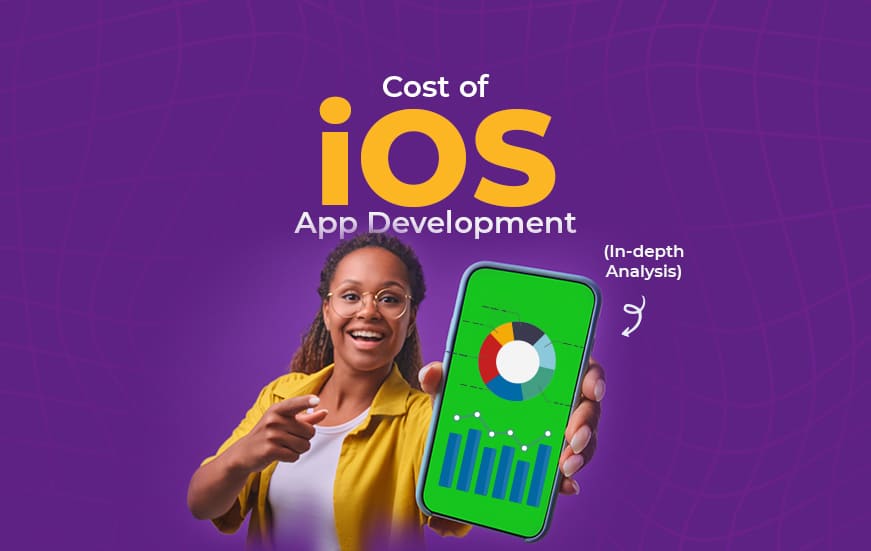
Cost of iOS App Development In 2023? (In-depth Analysis)

The way we live, work, and enjoy has been completely transformed by mobile applications. They have become an integral part of our daily routine and have significantly impacted the way we do business. However, building an iOS app can be a daunting task, especially if you’re not familiar with the process or the costs involved. 

In this blog, we’ll discuss how much it costs to build an iOS app in 2023 and the factors that determine the cost of iPhone app development.

The cost of building an iOS app in 2023 can range from $10,000 to $500,000, depending on several factors. The cost of building an iOS app is influenced by the complexity of the app, the features it offers, and the level of customization required.

Here are some factors that determine the cost of iPhone app development:

App Complexity: The more complex an app is, the more it will cost to build. An app with basic features such as a calculator or a timer will cost less than an app with advanced features such as social media integration, GPS tracking, or augmented reality. A simple app can cost between $5,000 to $25,000, while a more complex app can cost anywhere between $50,000 to $250,000 or more.

App Design: The design of the app is an important factor in the cost of development. A basic app design can cost anywhere from $1,000 to $10,000, while a more complex design with custom graphics, animations, and user interface can cost anywhere from $10,000 to $100,000.

App Development Team: The cost of hiring a development team can vary depending on the location and experience of the team. For example, hiring a team from the United States or Europe can cost significantly more than hiring a team from Asia or Africa. The hourly rate of a developer can range from $50 to $250 per hour, and the total cost can add up quickly depending on the team’s size and the number of hours worked.

App Testing: Testing an app is a crucial step in the development process, and it can add to the overall cost. The cost of testing can range from $5,000 to $25,000 or more, depending on the complexity of the app.

App Maintenance: After the app is launched, it will require ongoing maintenance to ensure it runs smoothly and remains up-to-date with the latest iOS updates. The cost of maintenance can range from $5,000 to $25,000 or more per year, depending on the complexity of the app.

Based on these factors, we can estimate that the cost of building an iOS app in 2023 can range anywhere from $10,000 to $500,000 or more, depending on the app’s complexity, design, development team, testing, and maintenance needs. It’s important to note that these estimates are general and can vary significantly based on individual project requirements.

Build Million Dollar iOS Apps with us

Start Today

Pros of Building an iOS App:

Increased Customer Reach

Building an iOS app can help businesses reach a wider audience. With over a billion active iOS devices worldwide, businesses can tap into a vast market and increase their customer reach.

Improved Customer Engagement

An iOS app can help businesses improve their customer engagement by offering personalized experiences, sending push notifications, and enabling easy communication.

Increased Revenue

An iOS app can also help businesses increase their revenue by providing a new channel for sales and offering premium features or subscriptions.

Cons of Building an iOS App:

Cost

The cost of building an iOS app can be prohibitive, especially for small businesses. However, the benefits of having an iOS app may outweigh the initial cost.

Approval Process

Submitting an app to the Apple App Store requires a rigorous approval process, which can take several days or weeks. This can delay the launch of the app and impact the overall development timeline.

Limited Customization

iOS apps have strict design guidelines that limit the level of customization that is possible. This can be frustrating for businesses that want to offer a unique user experience.

Why Choose Communication Crafts?

Communication Crafts is a leading organization in app development with more than 17+ years of extensive experience. With a team of experienced developers and designers, we have a proven track record of delivering high-quality iOS apps that meet the unique needs of businesses.

At Communication Crafts, we offer a full suite of app development services, from design and development to maintenance and support. We collaborate closely with clients to comprehend their company objectives and create solutions that are tailored to their particular requirements.

Let’s build apps that people want to use

     Start today

Develop Top-notch iOS App with the best tools in 2023- [Preferred by top developers]

Are you ready to take on the exciting challenge of developing iOS apps?

 If so, you’ll need to arm yourself with the right tools to succeed. In this blog, we’ll explore some of the best iOS app development tools you need to know in 2023. But don’t worry, we won’t bore you with the usual technical jargon – we’ll keep it fun.

But before that, let’s understand

Why is it  important to use the best tools to develop iOS apps for several reasons:

User Expectations: With advancements in technology, users expect high-quality apps that are fast, intuitive, and visually appealing. To meet these expectations, developers need to use the best tools to create apps that meet these standards.

App Store Standards: The Apple App Store has strict guidelines for the quality and performance of apps. Using the best tools can help ensure that your app meets these standards and is approved for distribution in the App Store.

Competitiveness: The app market is highly competitive, with millions of apps available for users to choose from. Using the best tools can help your app stand out from the competition by offering superior functionality, performance, and user experience.

Development Speed: Using the best tools can help speed up the development process by providing developers with powerful features and tools that make it easier to create high-quality apps in less time.

Using the best tools to develop iOS apps is essential to create apps that meet user expectations, adhere to App Store standards, remain competitive, and speed up the development process.

Build Million Dollar iOS Apps with us

Start Today

Best iOS App Development Tools

Xcode – The Swiss Army Knife of iOS Development

The first tool you need to know about is Xcode. Xcode is Apple’s official integrated development environment (IDE) for developing iOS apps. It’s like a Swiss Army knife, with everything you need to create, debug, and test iOS apps. Xcode includes a source code editor, a graphical interface builder, and many other powerful tools.

But don’t be fooled by its intimidating appearance – Xcode is very user-friendly, with an intuitive interface that makes it easy to get started. And once you get the hang of it, you’ll find that Xcode is an indispensable tool for iOS app development.

Swift – The Modern-Day Programming Language

Next up is Swift, Apple’s modern-day programming language for iOS app development. It’s a general-purpose language that can be used for everything from writing simple scripts to developing complex applications.

Swift is particularly well-suited for iOS app development because it was created specifically for Apple’s platforms. It has many features that make it easier to write efficient, reliable code for iOS, such as type inference, options, and automatic memory management.

CocoaPods – The Library Manager

One of the challenges of iOS app development is managing dependencies. You’ll often need to use third-party libraries and frameworks to get your app to do what you want it to do. That’s where CocoaPods comes in.

CocoaPods is a dependency manager for iOS apps that make it easy to add third-party libraries and iOS frameworks to your app. It has a huge library of over 80,000 pods (as they call it), which can be easily integrated into your app with a single line of code. It’s a must-have tool for any serious iOS developer.

Firebase – The All-in-One Platform

Firebase is a mobile and web application development platform that provides a number of services, including authentication, real-time database, cloud messaging, and more. It’s a powerful tool that can save you a lot of time and effort in developing your app.

Firebase is particularly useful for developing apps that require real-time updates, such as messaging apps or collaborative tools. It’s also great for building apps that require user authentication or complex backend logic.

Sketch – The Design Tool

If you’re going to develop an iOS app, you need to have a good design. That’s where Sketch comes in. A sketch is a design tool for creating user interfaces and graphics for iOS apps. It has a large library of pre-built UI elements and templates that can help you get started quickly.

The sketch is particularly useful because it’s designed specifically for UI design. It has many features that make it easier to create and manipulate UI elements, such as symbols, text styles, and artboards. And it integrates well with other tools, such as Photoshop and Illustrator, making it a great all-around design tool.

GitHub – The Code Collaboration Platform

GitHub is a code hosting platform that allows developers to collaborate on code and manage version control. It’s a must-have tool for any serious iOS developer.

GitHub is particularly useful because it makes it easy to collaborate with other developers. You can easily share code with others, track changes, and merge changes into your codebase. And it integrates well with many other tools, such as Xcode and

Let us do the heavy lifting

Communication Crafts is a leading organization in app development with more than 17+ years of extensive experience. With a team of experienced developers and designers, we have a proven track record of delivering high-quality iOS apps that meet the unique needs of businesses.

At Communication Crafts, we offer a full suite of app development services, from design and development to maintenance and support. We collaborate closely with clients to comprehend their company objectives and create solutions that are tailored to their particular requirements.

Let’s build apps that people want to use

 Start today


Top 9 iOS Framework for Top-notch App Development [2023 Edition]

The iOS app development industry is expected to reach a market value of $120 billion by 2025, according to a report by Zion Market Research. The iOS platform has a large user base of over 1 billion active devices, which can provide a significant potential audience for your app.

So, if you’re an iOS developer, you know that using frameworks can significantly improve your workflow, help you build better apps, and save time. However, with so many frameworks available, it can be challenging to choose the right ones for your project.

 In this blog, we’ll introduce you to the 9 best iOS frameworks that are worth considering in 2023. These frameworks cover a wide range of functionalities, from UI design and development to networking and data management. 

So, whether you’re a beginner or an experienced iOS developer, this blog will help you discover some of the most useful iOS frameworks available today. So, without further ado, let’s dive in!

What is the framework for iOS?

A framework for iOS is a set of tools and rules that help programmers build apps for iPhones and iPads. It’s like having a special set of building blocks that make it easier to create something.

For example, imagine you want to build a house with Lego bricks. Without a framework, you would have to start from scratch, figuring out how to put each brick in place to make walls, doors, and windows. But with a framework, you would have some pre-made pieces and instructions on how to use them to build your house more easily and efficiently.

Similarly, with an iOS framework, programmers have pre-made pieces of code that they can use to build apps faster and more easily. This can include things like buttons, text boxes, and tools for working with data. By using a framework, programmers can save time and focus on making their app work well and look great, rather than starting from scratch every time they build a new app.

 Hire Top iOS Developers in 48 hours

Know how

Top 9 iOS Framework to Know in 2023

As of 2023, iOS development has evolved significantly, and there are several powerful frameworks available to help developers create high-quality, user-friendly applications for Apple’s mobile devices.

SwiftUI: SwiftUI is a new user interface toolkit that was introduced by Apple in 2019. It allows developers to build user interfaces for iOS, macOS, watchOS, and tvOS using a declarative syntax. SwiftUI simplifies the UI development process and is a powerful framework for building responsive, interactive, and visually appealing apps.

UIKit: UIKit is the standard framework for building iOS apps. It provides a set of user interface elements, such as buttons, labels, and text fields, that can be used to build custom user interfaces. UIKit is powerful and flexible, but it can be challenging for beginners to learn.

Core Data: The foundation for handling data in iOS applications is called Core Data. It provides a set of tools for creating, retrieving, and manipulating data in a variety of formats, including relational databases and XML. Core Data is a powerful framework for building apps that need to store and manage large amounts of data.

Alamofire: Alamofire is a popular networking framework for iOS. It simplifies the process of making network requests and handling responses, making it easier for developers to build apps that communicate with servers and APIs.

Realm: Realm is a database framework that provides fast and efficient data storage and retrieval. It’s particularly useful for apps that need to work with large amounts of data and need to provide fast response times.

Firebase: Firebase is a backend-as-a-service platform that provides a variety of tools and services for building iOS apps. It includes features like authentication, cloud storage, and real-time databases, making it a powerful framework for building apps that need to interact with servers.

RxSwift: RxSwift is a reactive programming framework that simplifies the process of building complex and asynchronous apps. It provides a set of tools for working with asynchronous data streams, making it easier to build apps that need to handle complex data flows.

SnapKit: SnapKit is a popular layout framework for iOS apps. It simplifies the process of building responsive and adaptive user interfaces by providing a set of tools for working with auto-layout constraints.

XCTest: XCTest is the testing framework that is included with Xcode. It provides a set of tools for writing and running unit tests and integration tests, making it easier for developers to build high-quality, bug-free apps.

Wrapping Up

These top 9 iOS frameworks are essential tools for developers who want to build high-quality, user-friendly applications for Apple’s mobile devices. Developers can choose the framework that best suits their needs based on the specific requirements of their application.

Let us do the heavy lifting

Communication Crafts is a leading organization in app development with more than 17+ years of extensive experience. With a team of experienced developers and designers, we have a proven track record of delivering high-quality iOS apps that meet the unique needs of businesses.

At Communication Crafts, we offer a full suite of app development services, from design and development to maintenance and support. We collaborate closely with clients to comprehend their company objectives and create solutions that are tailored to their particular requirements.

Let’s build apps that people want to use

 Start today

Types of Healthcare Apps That Will Dominate The Market In 2023

Health apps are applications that have been designed and developed to assist individuals in tracking their health and wellness. Health apps can be utilized on smartphones, tablets, and wearable devices, and they are intended to help users keep track of everything from their daily calorie intake to their sleep patterns. The use of health apps has exploded in recent years, with more people than ever turning to technology to help them stay healthy and well.

Types of Health Apps

There are many different types of health apps available today, each designed to meet specific needs and objectives. Here are some of the most common types of health apps and their examples:

  1. Fitness Apps – Fitness apps are designed to help users improve their physical fitness through exercise and activity tracking. These apps often include features such as workout plans, step counters, and calorie trackers. Examples of popular fitness apps include MyFitnessPal, Fitbit, and Nike Training Club.
  2. Diet and Nutrition Apps – Diet and nutrition apps are designed to help users track their food intake and make healthier eating choices. These apps often include features such as meal planning, recipe suggestions, and calorie calculators. Examples of popular diet and nutrition apps include Lose It!, Fooducate, and MyPlate by Livestrong.
  3. Mental Health Apps – Mental health apps are designed to help users manage stress, anxiety, and other mental health conditions. These apps often include features such as guided meditations, breathing exercises, and mood tracking. Examples of popular mental health apps include Headspace, Calm, and Happify.
  4. Sleep Apps – Sleep apps are designed to help users track their sleep patterns and improve the quality of their sleep. These apps often include features such as sleep tracking, bedtime reminders, and relaxation techniques. Examples of popular sleep apps include Sleep Cycle, Pillow, and Relax Melodies.
  5. Women’s Health Apps – Women’s health apps are designed to help women track their menstrual cycle, fertility, and pregnancy. These apps often include features such as ovulation tracking, period tracking, and pregnancy tracking. Examples of popular women’s health apps include Flo, Clue, and Ovia.
  6. Medical Apps – Medical apps are designed to provide users with information and guidance on medical conditions and treatments. These apps often include features such as symptom checkers, medication reminders, and health record management. Examples of popular medical apps include WebMD, HealthTap, and Medscape.

Examples of Popular Health Apps

  1. Fitbit – Fitbit is a popular fitness app that helps users track their daily physical activity, including steps taken, distance traveled, and calories burned. The app also includes features such as workout plans, sleep tracking, and food logging.
  2. MyFitnessPal – MyFitnessPal is a diet and nutrition app that helps users track their food intake and make healthier eating choices. The app includes a food database with over 11 million foods, as well as features such as meal planning and recipe suggestions.
  3. Headspace – Headspace is a mental health app that provides users with guided meditations and mindfulness exercises. The app also includes features such as sleep aids and stress management techniques.
  4. Sleep Cycle – Sleep Cycle is a sleep app that uses the sensors on a user’s smartphone to track their sleep patterns and wake them up during their lightest sleep phase. The app also includes features such as bedtime reminders and sleep notes.
  5. Flo – Flo is a women’s health app that helps women track their menstrual cycle, fertility, and pregnancy. The app includes features such as ovulation tracking, period tracking, and pregnancy tracking.
  6. WebMD – WebMD is a medical app that provides users with information and guidance on medical conditions and treatments. The app includes features such as symptom checkers, medication reminders, and health record management.

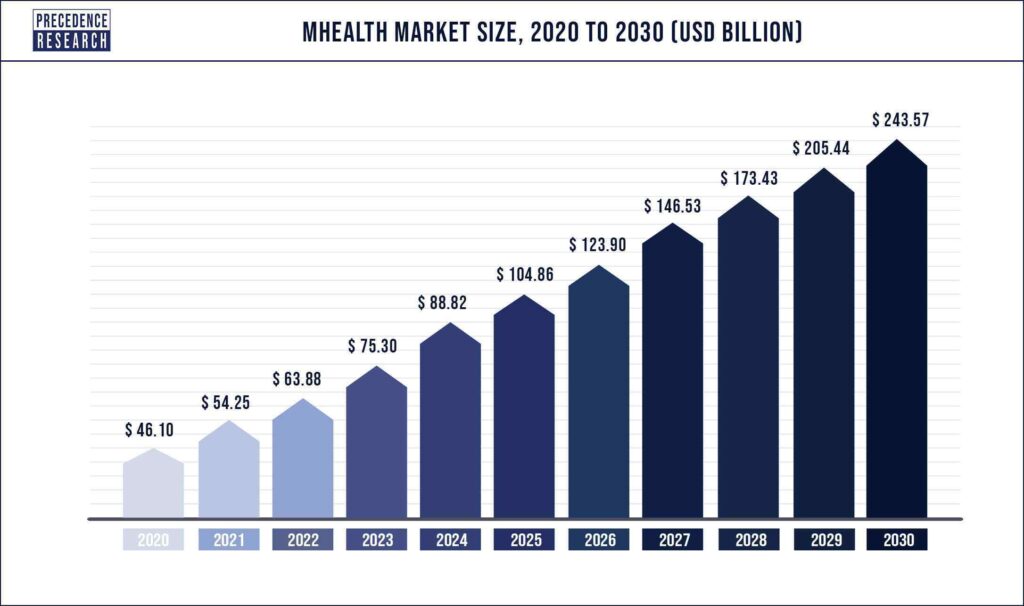
Mobile health, or mHealth, refers to the use of mobile devices such as smartphones and tablets to support healthcare and health-related services. mHealth has emerged as a rapidly growing industry, with a wide range of mobile applications designed to improve health outcomes and enhance the delivery of healthcare services. In this article, we will discuss some key features of mobile app development trends and their use.

Key Features of mHealth Apps

  1. Accessibility: One of the main features of mHealth apps is their accessibility. They can be downloaded and used on mobile devices anytime and anywhere, which makes them an ideal tool for reaching people who may not have access to traditional healthcare services.
  2. Personalization: mHealth apps are designed to cater to individual needs, with features such as personalized health tracking, targeted health messaging, and tailored advice based on user data.
  3. Data collection: mHealth apps collect a range of data from users, including health-related data such as physical activity levels, diet, sleep patterns, and medication adherence. This data can be used to provide personalized insights and recommendations to users.
  4. Monitoring: mHealth apps can be used to monitor health conditions and track progress over time. This feature is particularly useful for people with chronic conditions such as diabetes, hypertension, and asthma.
  5. Communication: mHealth apps can facilitate communication between healthcare providers and patients, enabling remote consultations, medication reminders, and other forms of support.
  6. Gamification: Some mHealth apps use gamification techniques to encourage healthy behavior and engagement with the app. This can include features such as point systems, challenges, and social sharing.
mHealth Apps

Trends in the Use of mHealth Apps

  1. Remote monitoring: Remote monitoring is becoming an increasingly popular use case for mHealth apps. By collecting data on patients’ health and wellness remotely, healthcare providers can monitor their condition in real-time and intervene when necessary. This approach can be particularly useful for people with chronic conditions, who require regular monitoring and support.
  2. Telemedicine: Telemedicine involves the use of video conferencing, messaging, or other forms of remote communication to provide healthcare services to patients. mHealth apps are being increasingly used to support telemedicine, enabling patients to consult with healthcare providers remotely.
  3. Wearables: Wearables such as smartwatches, fitness trackers, and medical devices are becoming increasingly popular in the healthcare industry. Many mHealth apps are designed to work with wearables, enabling users to track their health and wellness data more easily.
  4. Mental health: Mental health is an area where mHealth apps are showing particular promise. These apps can provide support for people with anxiety, depression, and other mental health conditions through features such as meditation exercises, stress-management tools, and access to mental health professionals.
  5. Patient engagement: Patient engagement is a key trend in the healthcare industry, and mHealth apps are increasingly being used to support this. By providing personalized health tracking, targeted health messaging, and other forms of support, mHealth apps can help patients take an active role in their own health and wellness.
  6. AI and machine learning: Artificial intelligence and machine learning are increasingly being used in the development of mHealth apps. These technologies can be used to provide personalized recommendations and insights based on user data, as well as to improve the accuracy and reliability of health tracking and monitoring.

Wrapping up

mHealth apps are rapidly becoming a key tool for healthcare providers and patients alike. With features such as accessibility, personalization, data collection, monitoring, communication, and gamification, these apps are designed to support a wide range of healthcare needs.

At Communication Crafts, our dedicated developers use a powerful mix of innovation and technology to deliver end-to-end software development solutions under one roof. Our software experts are skilled at creating websites and mobile applications that assist your business in dominating the constantly expanding digital competition.

Build Your Own FinTech App- [In-depth Budget Estimate]

Financial technology, or fintech, has seen a tremendous boom in recent years. With the rise of digital banking and mobile payments, more and more people are looking to invest, save, and manage their money using apps and online platforms. As a result, building a fintech app can be a lucrative business opportunity. However, the cost of building such an app can vary greatly depending on a number of factors. In this article, we’ll explore these factors in-depth to give you a better idea of how much it might cost to build your own fintech app.

  1. Type of Fintech App

The first factor to consider when determining the cost of building a fintech app is the type of app you want to create. Fintech is a broad category that encompasses a variety of different applications, including mobile banking, investment platforms, budgeting tools, and payment processors. Each of these types of apps has its own unique features and requirements, which can impact the cost of development.

For example, a mobile banking app that allows users to deposit checks, transfer funds, and pay bills will likely require more complex features and security measures than a simple budgeting app. As a result, the cost of developing a mobile banking app will likely be higher than that of a budgeting app.

  1. Features and Functionality

The features and functionality of your fintech app will also play a major role in determining its cost. The more complex and sophisticated your app’s features are, the more time and resources will be required to develop them. Some common features of fintech apps include:

  • Account creation and management
  • Secure login and authentication
  • Payment processing and transfers
  • Budgeting and expense tracking
  • Investment portfolio management
  • Financial analysis and reporting
  • Data analytics and insights

Keep in mind that each of these features will require careful planning and development, and some may require additional resources like third-party integrations or APIs. As a result, the more features you want to include in your app, the higher its cost is likely to be.

  1. Design and User Experience

In addition to functionality, the design and user experience of your fintech app can also impact its cost. A well-designed app with a clean, intuitive interface will likely require more time and resources to develop than a more basic or cluttered app. Consider working with a professional designer or UX specialist to ensure that your app is user-friendly and visually appealing.

  1. Platform and Technology

The platform and technology you choose to build your fintech app on can also impact its cost. For example, developing an app for iOS and Android will require additional development time and resources compared to building an app for just one platform. Additionally, certain technologies like blockchain or artificial intelligence may require specialized expertise and development tools, which can increase the cost of development.

  1. Development Team

Finally, the cost of building a fintech app will also depend on the development team you choose to work with. There are many options available, from hiring an in-house team to working with a third-party development agency. Each of these options has its own pros and cons in terms of cost, expertise, and flexibility.

Working with an in-house team can provide greater control and flexibility over the development process, but can also be more expensive in terms of hiring and managing staff. Alternatively, working with a third-party development agency can be more cost-effective, but may require sacrificing some control over the development process.

Conclusion

Building a fintech app can be a lucrative business opportunity, but it’s important to understand the factors that can impact its cost. By considering the type of app, features and functionality, design and user experience, platform and technology, and development team, you can get a better idea of how much it might cost to build your own fintech app.

Why Should You Build a FinTech App?

Financial technology, or FinTech, has revolutionized the financial industry by providing innovative solutions that make it easier and more efficient for people to manage their money. In recent years, the growth of the FinTech industry has been unprecedented, with investment in the sector reaching record highs. As a result, more and more entrepreneurs are looking to build FinTech apps. If you’re considering building a FinTech app, here are some reasons why it might be a great idea.

  1. Addressing Consumer Needs

The financial industry has traditionally been dominated by large banks and financial institutions that have been slow to adopt new technologies and cater to the evolving needs of consumers. This has left a gap in the market for FinTech startups to address these needs. By building a FinTech app, you can offer solutions that are tailored to specific consumer needs and that traditional financial institutions have not been able to provide. For example, you could build an app that makes it easier for people to manage their finances, invest their money, or access credit.

  1. Access to New Markets

FinTech apps have the potential to reach a global audience, providing access to new markets that might not have been previously accessible. By building a FinTech app that addresses the needs of a specific market, you can tap into a new customer base and grow your business.

  1. Disrupting Traditional Banking

FinTech startups are challenging the traditional banking industry by offering innovative, more user-friendly, faster, and more cost-effective solutions. By building a FinTech app, you can disrupt the traditional banking industry and provide consumers with an alternative to conventional banking services. This can be especially appealing to millennials and other tech-savvy consumers who are looking for a more modern and convenient way to manage their money.

  1. Revenue Generation

FinTech startups have the potential to generate significant revenue by providing innovative solutions that solve consumer problems. By building a FinTech app, you can generate revenue through subscription fees, transaction fees, and other revenue models. As your user base grows, your revenue potential will increase, providing a scalable business model that can generate significant profits.

  1. Competitive Advantage

Building a FinTech app can provide you with a competitive advantage by offering a unique solution that is not available from traditional financial institutions. This can make it easier to attract and retain customers, as well as differentiate your business from competitors.

  1. Lower Costs

One of the key advantages of building a FinTech app is the lower cost of entry compared to traditional banking services. Building an app is typically cheaper than building a physical bank branch, and the costs of running an app are lower than those of running a traditional bank. This can make it easier to get started and can provide a more cost-effective solution for consumers.

  1. Technology Advancements

FinTech is constantly evolving, with new technologies emerging that can be leveraged to provide innovative solutions. By building a FinTech app, you can stay at the forefront of technology advancements and provide solutions that are more advanced than those of traditional financial institutions. This can help to attract tech-savvy consumers who are looking for a more advanced solution to manage their money.

  1. Regulation

The FinTech industry is subject to regulation, but the regulatory landscape is still evolving. This means that there are opportunities for startups to build apps that are compliant with regulations but that provide innovative solutions that traditional financial institutions have not been able to provide. By building a FinTech app that complies with regulations, you can provide consumers with a more secure and reliable solution to manage their money.

In conclusion, building a FinTech app can be a great business opportunity, providing access to new markets, addressing consumer needs, disrupting traditional banking, generating revenue, providing a competitive advantage, lower costs, technology advancements, and regulatory compliance.

Build your Fintech App With Communication Crafts

Developing a fintech app is a highly complex project. and we get it. With more than 17 years of hands-on experience, we have been developing scalable apps that meet our client’s vision and requirements. We are a team of expert developers who develop ground-breaking mobile apps with a time-tested process.

 Choose from our pool of rigorously vetted mobile app developers for hire and get your app built remotely through seamless collaboration.

Hire Fintech App Developers who best match your vision.

                Onboard now