The Ultimate Rebranding Checklist – Expert Guide for Your Business Transformation

Where To Start? 

Your company’s most valuable asset is your brand.  

A good company brand can influence customer and stakeholder behaviour, stimulate action, and foster loyalty. Nonetheless, due to the rising variety of marketing communication channels used, branding remains one of the most difficult marketing challenges for a firm in the twenty-first century.  

Once you’ve designed a brand that elicits the appropriate actions and emotions from your stakeholders, it’s time to launch and deploy your new branding. Any faults in your brand launch, from old email footers to altering social media accounts, will raise a red flag and leave a terrible first impression on stakeholders – all of which you’ve worked far too hard to avoid. Hence, A rebrand marketing checklist will walk you through all the steps necessary to revitalise your brand. 

But, before we embark on our journey to explore the ultimate checklist to rebranding, let’s understand what is rebranding. 

What Is Rebranding?  

When your firm rethinks its marketing approach by adopting a new name, logo, or design, the goal is to create a new, distinct identity in the minds of customers and other stakeholders. 

Okay, now that we’ve defined rebranding, let’s make sure you have the correct reasons to rebrand. 

Why do you need to rebrand? 

Here are a few good reasons why your company might need rebranding: 

  1. Outdated Brand: A stale brand is the most frequent justification for wanting to rebrand. You need a contemporary brand if you wish to compete with your rivals. Your company may not be able to operate to its full potential in your market if its brand appears old. 
  1. Your Website is Not Generating Leads: It could be time to rebrand and revamp your website if it’s hard to browse and isn’t bringing in visitors or leads for your company. One of your most crucial marketing resources is your website. If it’s out of date, it can be more harmful than beneficial. 
  1. You Revised Your Company Structure: When the corporate structure changes, many brands rebrand. You require a rebrand if your business recently merged with another business, bought a new business, or established itself as a separate entity. Establishing your brand’s style or combining the two firm identities is what rebranding does. 
  1. Shifted Market: You might require a rebrand if your industry’s market has changed and your business is now less competitive. You can re-establish yourself in your market and keep up with the changes with the aid of a rebrand. 

Imagine a rebranding journey that propels your company into the spotlight, rejuvenates your products, and launches your brand to unparalleled heights. Wouldn’t that just be PERFECT? So, why dream perfection, let’s turn it into reality. With 18+ years industry experience we end your quest for digital excellency. Whether your brand needs a complete make over, or you want to make small, significant alterations, we ace in all of it.

Embrace the Power of Rebranding 

And Revamp Your Brand Today! 

So, are you ready to embark on a transformative journey for your business? In this blog, we’ll explore the essential steps and strategies you need to consider before revamping your brand. Whether you’re a small startup or an established company, rebranding can breathe new life into your business and propel it to new heights. Get ready to discover practical tips, valuable insights, and actionable advice to ensure a successful rebranding process.  

What Kind of Branding Do You Need? 

  1. Brand Merger or Acquisition 

This kind of rebranding takes place when two current brands combine to create a new brand. When there is a purchase, brands will change together. When two brands are coherent with one another, brand mergers are most successful. In other circumstances, it can be a better idea to completely rebrand the two businesses. Be advised that a complete rebranding may require additional time.  

  1. Brand Refresh 

Refreshing your brand can be as easy as changing your logo or as complex as refocusing your objective. This is significantly less intensive than completely rebranding your organisation. But it still needs updating all current versions of your logo, printing materials, website, and other design elements.  

  1. Full Rebrand 

A complete redesign involves ripping your brand down and starting over from scratch. Perhaps you are extending your business into a different sector, or perhaps there has been a significant shift in management. Full rebranding requires a lot of work in either case. 

Key Considerations for a Successful Business Transformation 

  1. Assess Your Brand’s Current State 

Before embarking on a rebranding journey, it’s vital to gain a clear understanding of your brand’s current state. Evaluate your brand’s strengths, weaknesses, and unique selling points. Identify what aspects of your brand resonate with your target audience and what elements may need improvement. Conduct a comprehensive brand audit, including a review of your visual identity, messaging, and brand perception in the market. This evaluation will serve as a foundation for your rebranding strategy, helping you identify areas that require enhancement and setting goals for your transformation. 

  1. Define Your Rebranding Objectives 

Clearly defining your rebranding objectives is crucial to ensure a focused and purposeful transformation. Ask yourself what you hope to achieve through rebranding. Are you aiming to attract a new target audience, differentiate yourself from competitors, or reposition your brand in the market? By setting specific and measurable goals, you can align your rebranding efforts and track the effectiveness of your strategy. 

  1. Craft a Compelling Rebranding Strategy 

A well-crafted rebranding strategy is the roadmap that guides your transformation journey. It outlines the steps, tactics, and timeline for executing your rebranding efforts. Define your brand positioning, brand messaging, and visual identity elements that align with your rebranding objectives and target audience. Consider how your brand’s personality, tone of voice, and values will evolve through the rebranding process. 

  1. Prepare for Implementation and Rollout 

Before initiating the implementation phase, prepare a detailed plan for executing your rebranding strategy. This includes updating all brand touchpoints, such as your website, logo, packaging, marketing materials, and social media profiles. Ensure that all internal and external stakeholders are aware of the rebranding initiative and understand their roles in the process. Develop a communication strategy to announce your rebranding to your audience, leveraging various channels to generate excitement and garner support. 

Rounding Up 

Rebranding offers an incredible opportunity to rejuvenate your brand and propel your business to new heights. By carefully considering the key factors discussed in this blog, you can embark on a rebranding journey that is grounded in purpose and executed.  

Whether you are looking to build a brand identity or revamp your existing one we will accompany you at every step of the way as you revamp and redefine your brand. From the initial brainstorming sessions to the final unveiling, our team of seasoned professionals will be your trusted partners in this exciting rebranding adventure.  

Contact us today and let us be your partner in crafting a remarkable rebranding story. Your brand’s success starts here!

Ready to Reinvent Your Brand?

7 Game Changing Ways SaaS Software is Transforming the Core Industries

Introduction

Do you remember the days when every computer had a disc drive and getting new software required a trip to Office Max or Best Buy? Today, it’s more difficult to locate a laptop with a drive and SaaS plays a significant role in this. 

“Software as a service,” or SaaS, is one component of cloud computing. And what it does is distribute software programs online, usually via subscription. Because a cloud provider hosts the program, you are no longer responsible for upgrades or maintenance. The benefits of SaaS typically involve fewer upfront expenses, quick configuration, scalability, and overall ease of use. Hence, it is not an exaggeration to say that SaaS is a game changer for businesses looking to embrace digital transformation. 

Some Eye-Opening SaaS Stats You Must Know 

According to Gartner, spending on public cloud services is projected to grow by 20.7% to reach a total of $591.8 billion by 2023. This rapid growth will have a significant impact on SaaS trends in the upcoming year. These advantages are the main reasons why SaaS continues to gain preference in the business world. Gartner projects a market value growth of over 16% for SaaS in 2023 as a result. 

By 2022, SaaS revenue was projected to be at $233 billion. From this point, SaaS software shows an annual revenue of $369.4 billion in 2024. Kbv Research, on the other hand, forecasts a global market size of $185.8 billion by 2024. It is important to note that SaaS apps account for up to 70% of all business software usage globally. Furthermore, it is anticipated that 85% of corporate software would be SaaS by 2025. To put it another way, SaaS has been nothing short of revolutionary, and it has the revenue to prove it. 

So, are you ready to take your business to new heights with the power of SaaS? Don’t miss out on this game-changing opportunity! Let’s revolutionize your business together and pave the way for unprecedented success.

“Ready to Level Up Your Business with SaaS?  

Get in touch now and let the SaaS transformation begin!” 

Welcome to the future, where software as a service (SaaS) is not just a buzzword, but a game-changer in the business world. In 2023, SaaS software is poised to unleash its transformative powers on core industries. It will disrupt the status quo propelling them towards unprecedented growth. From custom software development to cutting-edge SaaS solutions, this blog will explore seven exciting ways SaaS is poised to make its mark in 2023. So, buckle up and get ready for a wild ride into the world of SaaS!

How Does SaaS Work its Magic on Core Industries?

  1. Custom Software Development: Tailor-Made Solutions for Enhanced Efficiency 

Gone are the days of generic software solutions. With custom software development services powered by SaaS, businesses can now enjoy tailored solutions that perfectly align with their unique needs. Imagine having software that understands your business quirks and adapts to your workflows like a pro. Whether you’re a small startup or a multinational corporation, SaaS empowers you to streamline processes, boost productivity, and skyrocket efficiency.  

  1. Software as a Service Examples: Real-World Success Stories 

You may be wondering, “But how does SaaS actually work?” Well, let’s take a peek at some real-world software as a service example. Look at companies like Salesforce, Slack, and Dropbox industry giants that have revolutionized how businesses operate. These SaaS trailblazers have proven that by shifting from traditional software to cloud-based solutions, organizations can enjoy seamless scalability, enhanced collaboration, and hassle-free updates. The possibilities are endless when it comes to SaaS!  

  1. SaaS Solutions: A One-Stop Shop for All Your Business Needs 

Picture a world where you can find all the software solutions you need in one place—a SaaS platform that caters to your every business whim. From project management to customer relationship management, human resources to accounting, SaaS solutions offer a comprehensive suite of tools that can transform the way you run your core operations. Say goodbye to juggling multiple software licenses and hello to a streamlined, all-in-one SaaS software experience!  

  1. Software Development Company: Unlocking Innovation through SaaS 

In this era of digital disruption, staying ahead of the curve is crucial for businesses to thrive. Enter a software development company armed with SaaS expertise. These tech wizards are constantly pushing the boundaries of what’s possible, leveraging the power of SaaS to build innovative solutions that address specific industry pain points. From fintech to healthcare, logistics to retail, SaaS-powered software development is redefining the game and reshaping the future.  

  1. SaaS Platform: The Launchpad for Entrepreneurial Dreams 

Are you an aspiring entrepreneur with a million-dollar idea? Look no further than a SaaS platform to turn that dream into reality. With the right SaaS tools at your disposal, you can quickly prototype, iterate, and launch your product without breaking the bank. The low entry barriers and scalable nature of SaaS platforms make it the perfect breeding ground for startups, allowing them to focus on building their business while leaving the technical heavy lifting to the experts.  

  1. SaaS Software: The Key to Agility and Flexibility 

In today’s fast-paced business landscape, agility is the name of the game. And SaaS software is the key that unlocks this competitive advantage. Traditional software solutions often come with lengthy deployment times and rigid structures, but SaaS software flips the script. With its cloud-based nature, updates can be rolled out seamlessly, bugs can be fixed in a snap, and new features can be added with ease. Say goodbye to software stagnation and hello to a world of agility and flexibility! 

  1. Embracing the SaaS Revolution: Thriving in a Changing World 

In 2023, the world is ready for a SaaS revolution. Businesses that embrace the power of SaaS are positioning themselves for success in a rapidly evolving landscape. From optimized workflows to cost savings, enhanced collaboration to improved customer experiences, the benefits of SaaS software are far-reaching. So, let your business join the ranks of the SaaS pioneers, harness the potential of these innovative solutions, and unleash your true potential. 

Conclusion

SaaS has become inevitable in all businesses throughout the world. Modern businesses tend to employ the SaaS model to take advantage of its affordability and scalability. Whether they are SMEs or well-established industries, SaaS can successfully meet their needs and create new opportunities. As quoted by Chris Makkreel, SalesForce’s chief of technology, in a blog post by Fusebill: 

“The future of SaaS will be defined by doing more with less. Today, technology is proactive but tomorrow technology will be predictive.” 

Hence, we understand that in 2023, SaaS software is set to make a profound impact on core industries. From custom software development to embracing SaaS solutions, whatever your needs are Communication Crafts is here to save the day. Hire from the talent base of 4000+ pre-vetted developers, launch a project execution strategy and boost the capabilities of your team within just… 48 hrs. So, jump on board the SaaS train and ride it towards enhanced efficiency, agility, and growth. Don’t get left behind in the digital dust—embrace the SaaS revolution and prepare to take your core industry to new heights! 

Embrace the SaaS Revolution and Unleash Your Business Potential!  

Join the SaaS Party Now! 

Create A Winning Mobile App Development Plan [Guide By Experts]

In a world where smartphones have become an inseparable part of our daily lives, it’s undeniable that mobile apps wield tremendous power. 

With the mobile app industry projected to generate a colossal $935 billion in revenue by 2023, it’s no wonder that you’re considering a mobile app as a game-changing addition to your business plan. 

You’re on the right path to success. But here’s the crucial question: Are you truly ready for this incredible opportunity? Have you meticulously thought through every aspect?

Given the massive potential and fierce competition, crafting a solid app development project plan is absolutely essential. It’s the blueprint that will guide you toward triumph in this ever-evolving landscape. By partnering with a top-notch custom mobile app development company, you can transform your dreams into a tangible, revenue-generating reality.

Imagine the impact your app could have on your business. Picture the convenience it could provide to your customers, the new horizons it could open, and the incredible growth it could unlock. The demand for mobile apps is only going to skyrocket, and you have the chance to be at the forefront of this digital revolution.

In this blog post, we will help you make a robust strategy for mobile app development that will help you reap the benefits that you are expecting from your mobile app idea. 

With a well-crafted project plan for mobile app development and the right app development partner by your side, your app will captivate users, generate substantial revenue, and leave a lasting impact on your business.

So, ready to seize the moment? Let’s go

A successful mobile app development plan looks like this:

  1. Define the “why” behind your mobile app idea
  2.  Visualize your app with a rough sketch
  3. Decide for whom the app is going to be
  4.  Get to know about your competitors
  5. Define why people will use your app over others
  6. Determine the key features
  7. Plan the back-end architecture
  8. Choose appropriate technologies
  9. Prototype testing
  10. Consider an MVP approach

Define the “why” behind your mobile app idea

Developing an app without a clear purpose or scalability plan is likely to result in wasted resources. Your app idea should either aim to solve a problem, entertain, or add value to users’ daily lives. It is crucial to define your app’s purpose concisely, in no more than two sentences, to avoid confusion during development. By understanding the problem your app solves or the need it fulfills, you can concentrate on creating a compelling solution that resonates with your target audience and delivers a satisfying user experience.

 Visualize your app with a rough sketch

Visualizing your app is an essential step for your mobile app development plan. There are various design tools available that can help you create a rough sketch. Consider using tools like Sketch, Adobe XD, or even simple pen and paper to outline the layout, user interface components, and navigation flow of your app.

Start by identifying the key screens and features your app will have. Sketch out the main screens, such as the home screen, login/sign-up screen, and any unique features you want to highlight. Keep in mind usability and intuitive design principles to ensure a seamless user experience.

Decide for whom the app is going to be

Knowing your target audience is vital to developing a successful mobile app. Understanding their demographics, interests, behaviors, and pain points will guide your design and feature decisions.

Start by creating user personas, fictional representations of your ideal users. Consider factors such as age, gender, occupation, and tech-savviness. Conduct market research, surveys, and interviews to gain insights into their needs, preferences, and motivations.

By defining your target audience, you can tailor your app’s features, design, and marketing efforts to appeal directly to the people who are most likely to benefit from and use your app.

 Get to know about your competitors

Competition in the app market is fierce, so it’s crucial to research your competitors. Identify apps that offer similar features or target a similar audience to understand their strengths, weaknesses, and unique selling points.

Evaluate their user experience, design, features, pricing models, and customer reviews. Look for gaps or areas for improvement that you can capitalize on. This research will help you differentiate your app and offer a superior experience to users.

Define why people will use your app over others

To stand out from the competition, you need to clearly define your unique value proposition. Ask yourself: What makes your app special? Why would people choose to use it over other similar options?

Identify your app’s key differentiators. It could be a unique feature, a more intuitive user interface, better performance, or a specific niche audience you serve exceptionally well. Communicate these differentiators effectively in your marketing efforts to attract users and convince them to choose your app.

Determine the key features

With a clear purpose and understanding of your target audience, you can now define the features that will bring value to your users. Start by brainstorming a list of features based on the problem your app aims to solve. Then order them according to their significance and viability.

Consider features that enhance the user experience, provide utility, and align with your app’s purpose. Don’t overload your app with unnecessary features that could confuse or overwhelm users. Instead, focus on delivering a core set of features that address your users’ needs effectively.

Plan the back-end architecture

The back end of your app is where the magic happens behind the scenes. It involves the server-side components, databases, APIs, and other infrastructure that support your app’s functionality.

Consider the scalability and security requirements of your app. Determine whether you’ll need a cloud-based infrastructure, and choose the appropriate hosting and database solutions. Define the architecture and choose a suitable programming language or framework for your back-end development.

Ensure that your back end is efficient, reliable, and capable of handling potential user growth. Plan for data storage, user authentication, API integrations, and any other necessary back-end functionalities that align with your app’s purpose and features.

Choose appropriate technologies

Choosing the right technologies is crucial for the success of your mobile app. Consider factors such as the app’s purpose, target audience, scalability requirements, and development team’s expertise.

Select a suitable programming language and framework for your app’s front-end development. Consider whether you’ll develop a native app using languages like Swift (for iOS) or Kotlin (for Android), or opt for cross-platform frameworks like React Native or Flutter.

For the back end, choose a language or framework that aligns with your app’s requirements, scalability, and security needs. Consider options like Node.js, Ruby on Rails, Django, or ASP.NET. Also, determine the database technology that best suits your app, such as MySQL, PostgreSQL, MongoDB, or Firebase.

Additionally, explore available libraries, tools, and APIs that can enhance your app’s functionality and improve development efficiency.

Prototype testing

Before proceeding with full-scale development, it’s essential to test your app’s prototype. Prototyping allows you to validate your design, user flow, and functionality early on, saving time and resources in the long run.

Create a prototype of your app using tools like InVision, Figma, or Adobe XD. To get opinions and insights, conduct user testing sessions. Identify areas of improvement and refine your design based on user feedback.

Perform functional testing, ensuring that all features work as intended and there are no bugs or usability issues. Consider usability testing to assess the user experience and make necessary adjustments. Iterate on your prototype until you have a solid foundation to move forward with.

Consider an MVP approach

When developing your mobile app, it’s wise to adopt an MVP (Minimum Viable Product) approach. An MVP focuses on delivering the core functionality and features necessary to address the primary needs of your target audience.

Identify the key features that are essential for your app’s initial release. By prioritizing these features, you can develop and launch a functional version of your app more quickly. This allows you to gather user feedback, validate your assumptions, and make informed decisions for future iterations.

Remember that an MVP is not about sacrificing quality but rather about focusing on what’s most important to your users. It helps you validate your concept, test the market, and gather valuable insights before investing more resources into additional features.

Wrapping up

At Communication Crafts, we understand the transformative power of mobile apps and the immense opportunities they present for businesses. After taking you through the essential steps of a successful mobile app development plan, we invite you to exploit our expertise in custom mobile app development.

As a strategic technology partner to market leaders such as Colgate, Infosys, Wipro, Mercedes Benz, Nanosonics, Versace, and Cathay Pacific to name a few,  Communication Crafts holds supremacy in digital innovation technologies. 

We have been in this industry for the last 18 years and have a proven track record of developing scalable mobile apps. We understand that collaboration is key, and our process involves working closely with you to understand your vision, goals, and target audience. We strive to provide a seamless development experience, ensuring timely delivery, transparent communication, and a high level of professionalism throughout the project.

So, why wait? Your mobile app reality is just one click away!

Let us help you rock the app store
With our custom mobile app development services

Mobile App Development: A Booming Industry in 2023

Picture this: You’re standing on a bustling street corner, surrounded by people. Everyone around you has their eyes glued to their mobile devices, scrolling and tapping away. You can see it in their faces – they’re engaged, connected, and completely immersed in the digital world. And if you’re a business owner, that’s exactly where you want to be.

In 2023, mobile app development is essential because it’s the key to unlocking the full potential of your business. The demand for mobile apps has been driven by the increasing adoption of smartphones and other mobile devices, as well as the growing popularity of mobile commerce and other mobile-based services. In addition, the COVID-19 pandemic has accelerated the shift towards digitalization and remote work, leading to a surge in demand for mobile apps that support these trends.

Mobile development involves creating software applications that are designed to run on mobile devices, such as smartphones and tablets.

 Hire Mobile App Developers With Proven Expertise In Building Successful Apps

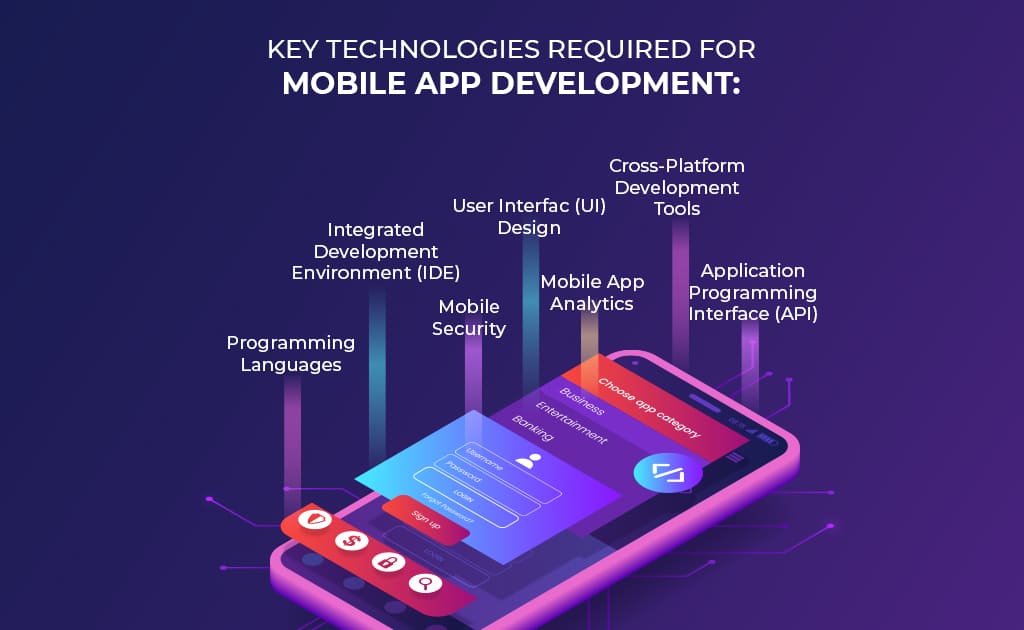
Key technologies required for mobile app development:

Key technologies

Programming Languages: Developers must have a strong understanding of programming languages such as Java, Kotlin, Swift, and Objective-C.

Integrated Development Environment (IDE): An IDE is a piece of software that offers complete tools for software development to computer programmers. Xcode, Visual Studio, and Android Studio are a few examples.

User Interface (UI) Design: Developers must have a good understanding of UI design principles and tools such as Sketch, Adobe XD, and Figma.

Application Programming Interface (API): An API is a collection of tools and protocols used in the development of software programs. It makes it possible for various software programs to communicate with one another. Examples include GraphQL and REST.

Cross-Platform Development Tools: These tools allow developers to build on-demand apps that can run on multiple platforms such as iOS and Android. React Native, Flutter, and Xamarin are a few examples.

Cloud-Based Services: Mobile apps often require cloud-based services for data storage, authentication, and notifications. Examples include Firebase, Amazon Web Services (AWS), and Microsoft Azure.

Mobile App Analytics: Developers use analytics tools to track app usage, user engagement, and other metrics. Examples include Google Analytics and Flurry Analytics.

Mobile Security: Developers must be aware of mobile app security risks and implement measures to protect user data. Examples include SSL encryption, data encryption, and two-factor authentication.

Identifying the right technology stack for mobile app development is crucial for several reasons, including

Performance and user experience: Choosing the right technology stack helps to ensure that your mobile app runs smoothly and provides an excellent user experience. The right technology stack should be able to handle the app’s requirements efficiently, such as processing power, memory, and network connectivity.

Scalability: As your app grows, you need a technology stack that can scale with it. Choosing the right technology stack can help you avoid scalability issues as you add more features and users.

Security: Mobile apps can be vulnerable to security breaches, and the right technology stack can help you implement security features that protect your app and its users.

Maintenance and development costs: Selecting the right technology stack can help you keep your app’s maintenance and development costs under control. Some technology stacks are easier and cheaper to maintain and develop than others, depending on the complexity of the app.

But how to identify the right technology stack for your mobile app? 

Define your app’s requirements: Before choosing a technology stack, you need to understand your app’s requirements, such as its features, expected user base, and target platforms.

Research available technology stacks: Research the technology stacks available for mobile app development and compare them based on their suitability for your app’s requirements.

Evaluate the pros and cons: Evaluate the pros and cons of each technology stack based on factors such as performance, scalability, security, and development costs.

Consider your team’s skills: Consider your team’s skills and expertise when choosing a technology stack. If your team is experienced in a particular technology stack, it may be easier and faster to develop your app using that stack.

Test and validate: Test and validate the technology stack by building a prototype or a minimum viable product (MVP) to ensure that it meets your app’s requirements.

Framework Frenzy: How to Choose the Perfect Platform for Your Mobile App

Define your project requirements: Before choosing a framework, you should have a clear understanding of your project requirements, such as the type of app you want to develop, the target platform, and the app’s functionality.

Consider the platform: Decide whether you want to develop a native app, a hybrid app, or a web app. Native apps are built for a specific platform, such as iOS or Android, and provide the best user experience. Hybrid apps are built using web technologies and are wrapped in a native container, making them easier to develop but less performant. Web apps run on the web and are accessible from any device with a web browser.

Evaluate the framework’s features: Once you have defined your project requirements and platform, evaluate the features of each framework you are considering. Look for features that meet your project requirements, such as support for push notifications, offline data storage, or integrations with third-party services.

Consider the learning curve: Evaluate the learning curve of each framework. Some frameworks may require more time and effort to learn, while others may be more straightforward. Consider your team’s skillset and their ability to learn new technologies.

Look at community support: Evaluate the community support for each framework. Look for active communities, online resources, and documentation that can help you get started and troubleshoot issues.

Consider the cost: Evaluate the cost of each framework. Some frameworks may be free, while others may require a licensing fee or subscription. Consider your budget and the long-term cost of using the framework.

Well Well, 

Let us do the heavy lifting

Whether you’re launching your first business or working on a software-driven project, we understand why a mobile app or responsive web app is essential to your goals. Since 2005, we have used our expertise to assist other business owners in applying effective startup techniques to their own digital goods.

With a group of expert designers and developers, we have a track record of producing high-quality iOS apps that are tailored to the particular requirements of organizations.

From design and development to maintenance and support, Communication Crafts offers the complete range of services needed for app development. We work closely with customers to fully understand their business goals and to develop solutions that are customized to meet their needs.

Google Assistant and SiriKit Ushers the Age of AI in Mobile App Development

We are no longer in a smartphone-only world!

AI introduces virtual assistant and chat bots towards a shift from the simple search query to an ongoing two-way dialogue, enriched by context.

As Google flexes its muscles in Artificial Intelligence with the launch of Google Assistant service, an iteration of intelligent personal assistant (IPA) and Apple Siri gains ability to control third-party apps, we witness a new wave of AI ushering in mobile app development.

With reports that Google’ s AI can identify images with 93.9 percent accuracy and approaches human levels of understanding when it comes to natural language processing image recognition abilities is a sign that we’re moving from a mobile first to an AI- first world.

Although Apple allows iOS app developers to tap into Siri’s vast potential with iOS 10 SiriKit, Google voice interface is presently limited to Google Allo, Google Home device and Google Pixel. The possibilities for Android app developers are immense once Google allows third-party access driven by Google’s deep learning technology. So how can you too give your Android or iOS mobile app a competitive edge by infusing the intelligent personal assistant function or voice interface?

SiriKit comes integrated with Intents Framework which enables iOS 10 apps to work with Siri and get things done in messaging, Photo Search, Phone Calls and third-party apps including support for new services including ride booking and personal payments. From user-interaction to working with extensions to get information and handle user request, virtual assistants and chat bots help create unique and recognizable experience for your customers.

CC Advantage offers excellent, scalable infrastructure and teams which are easily expandable to drive growth with mobility managed services. Our highly-skilled and experienced team of mobile app developers can be easily scaled at will based on your project requirement with just a phone call. Available in flexible hiring model of full-time, part-time or hourly basis, they work as your dedicated in-house team to help reduce cost, and improve agility for your business.

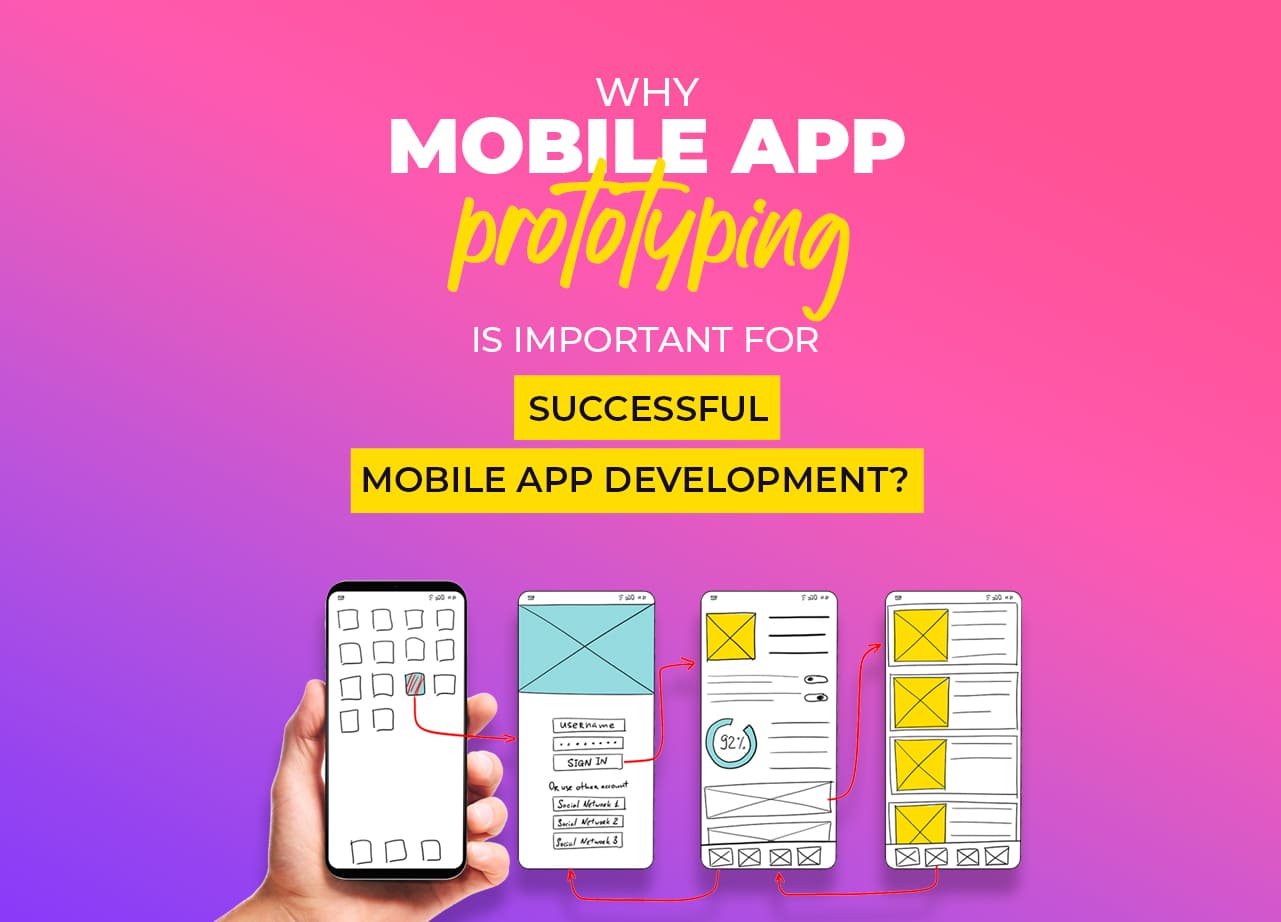
Why mobile app prototyping is important for successful mobile app development?

Mobile app prototyping is an integral part of the mobile app design and development process.

The iterative design process involves creating mock-ups of the app that allows mobile app developers to review the app flow, give feedback and improvise. This translates into faster app development and better user experience.

Mobile App Development Agencies like CC Advantage makes mobile app prototyping easier and affordable by giving clients access to scalable teams of expert mobile app developers along with state of the art infrastructure at fraction of the cost it takes to hire these team.

Benefits of Mobile App Prototyping

High-fidelity mobile prototyping tools enable mobile app designers deliver a functional app with enhanced user experience. App prototyping allows them to get feedbacks into all aspects of an app process by identifying shortcoming, obstacles and insights during the research process. Here are some other major benefits of Mobile App Prototyping that help design a successful app:

Helps Evaluate app idea

Mobile app prototyping includes both low-fidelity wireframe and sketches that help you layout the blueprint of the app for better clarity at one end of the continuum and high-fidelity prototyping with interactive mock-ups to evaluate the flow and function of the app at the other end. App prototyping also accelerates the app development apart from cutting down on the amount of time spent and thus help keep costs down.

Want to further improvise your app idea with world-class experts? Mobile app developers at CC Advantage help you evaluate app idea by app prototyping and leveraging their expertise and experience in Android app development, iOS app development and cross-platform apps.

Enables better user experience

App prototyping helps focus on app functionality and user experience by identifying obstacles in app process and flow. Not only does it help solve design issues, it also helps emphasis the core app functionality, interactions, UX and flow.

App prototyping becomes more beneficial when you also involve the end user. This focus on end-user experience and deeper understanding of app functionality and usability helps develops apps with better user experience.

We at CC Advantage understand the importance of UX in the success of an app. Therefore our expert mobile app developers constantly stay updated, thus you do not have to invest hours in training them and be rest assured of timely delivery.

Promotes better collaboration in design and development team

Mobile app prototyping allows everybody on the team get clarity on the app functionality, give feedback and insights. This promotes better collaboration which in-turn translates into better feedback. Many popular Interactive high-fidelity prototyping platforms also offer collaboration through seamless design communication. This ensures that the team is able to monitor the flow and usability of the app in real-time.

Our scalable resources and infrastructure are just a call away and they grow with you. Our highly-skilled, dynamic app developers work as your dedicated in-house team for better collaboration to create amazing final result.

Top 3 Mobile App Prototyping Tool

Invision:

Prototype for: Android apps, iOS apps, Web Apps, Websites

  • Most popular mobile app prototyping and collaboration platform that comes packed with unique features updated frequently.
  • Powerful design prototyping tools that transform your static screens into clickable, interactive prototypes.
  • Allows you more control over how other see your design prototype, offers better collaboration, presentation and easier feedback.

Justinmind:

Prototype for: Android and iOS apps

  • All-in-one sophisticated prototyping tool with nice tools and great results.
  • Best for feature rich apps, web products to build complicated interactive prototypes.
  • Vast UI library, excellent web widget and user-friendly UI.

Marvel:

Prototype for: Mobile and Web Apps

  • The web-based app turns your designs into interactive mobile and web prototypes instantly.
  • Simple and easy to use interface with clearer product focus.
  • Ability to sync with sketch, Google Drive, Dropbox, YouTube, Vimeo.

Are you looking for expert mobile app prototyping services for your clients but aren’t sure where to start? CC Advantage is here for you.

Our scalable mobile development teams and infrastructure accelerate the app design and development to help you save time and cut down costs. Contact our expert android app developers or iOS app designers today and we will help you with best solutions at fraction of the cost.

Don’t Kill your App Before Launch- Top 7 App Development Mistakes

When it comes to mobile app development, perfection demands time, effort and budget.

App development blunders are common all over the globe, the trick is to effectively evade the deadliest mistakes that can destroy your app.

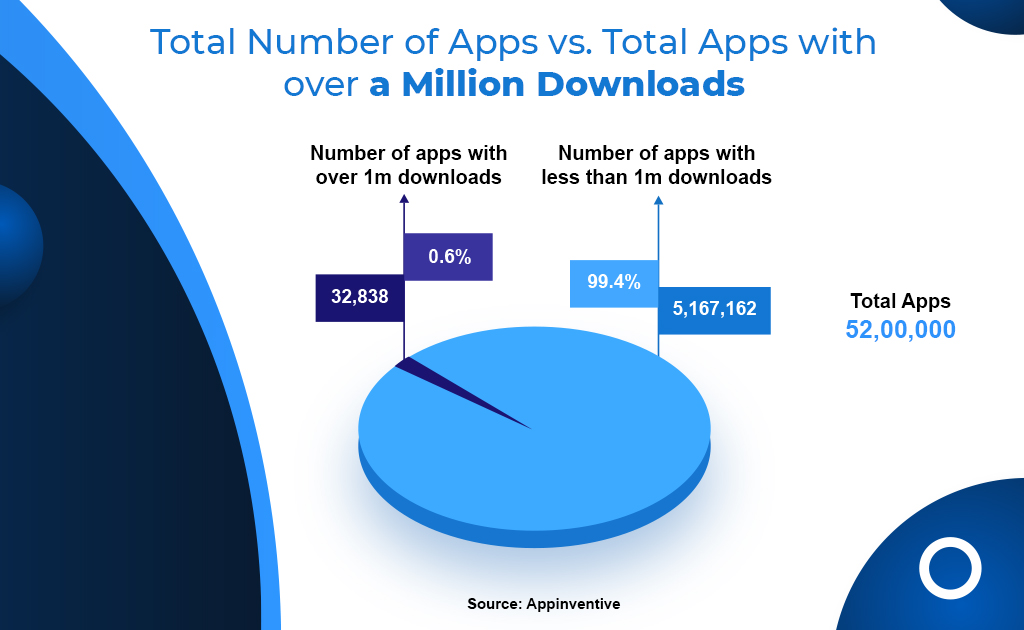
The global number of app downloads will surpass 250 billion in 2022, yet only a mere 0.6% of total apps have reached over 1m downloads.

global number of app downloads

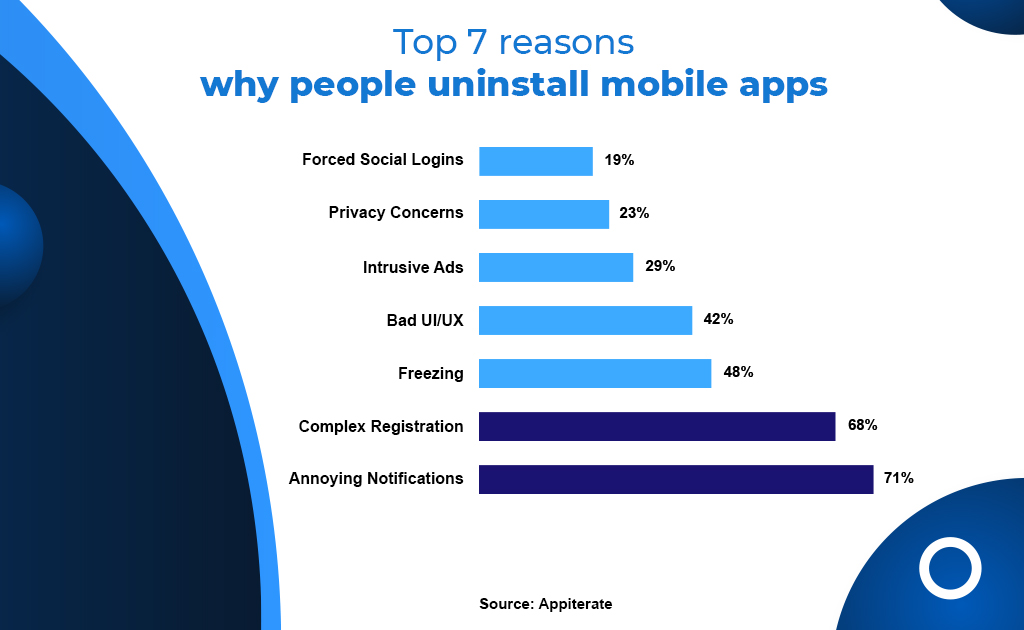
There are many reasons why users uninstall a mobile app and bounce off to one of the many alternatives in this digitally competitive era.

mobile app

As a leading app development agency in London, we know the impact of such app development mistakes. That’s why our experts have compiled the top 7 mistakes to avoid while developing an app.

This article digs deeper and answers the following:

  • What are the challenges of developing an app?
  • What should be avoided when developing a platform-specific mobile app?
  • What are some of the mobile app development mistakes to avoid?
  • What are the top 7 mistakes to avoid while developing an app?

Let’s begin…

Communication Crafts is a trusted App Development Agency in London, UK that offers end-to-end app development solutions as well as rigorously vetted Remote App Developers for Hire. We’re a reliable remote partner that helps you achieve your goals with a potent blend of technology, innovation, and seamless collaboration.

Mobile App Development Mistakes to AVOID

Let’s discuss the top 7 app development mistakes in detail:

Have a look!

MISTAKE-1: Not Identifying the Use-Case for your App

Developing an app without considering the use case is like serving food at a restaurant before receiving the guest’s order.
This should be the first step of your app development process. If you don’t take the time to identify the needs and problems of your audience, the vision for your mobile app gets blurry.

Ask yourself- “What problems do my app solve for my users?”

This is one of the app development mistakes that can be solved by simply conducting extensive research and analysis. Explore and understand what your mobile app needs to fulfil. When you’re getting into a project that is going to consume a lot of time and money, it is highly recommended to take it slow.

  • Does the app offer any products or services?
  • Is it just for engaging with your audience?
  • Does it simplify daily businesses operations?
  • WHAT IS IT FOR?

Answer the aforementioned questions by conducting market research- Firstly, analyse your competitors to find out what they’re doing. Check if your competitors already have a mobile app and the main purpose of it. Secondly, research and survey your target audience. Learn what they’re looking for and identify specific problems that can be solved with a mobile app.

Using precise data and insights as the foundation leads to a mobile app that drives customer acquisition and retention easily. Also, identifying the use of your mobile app helps you create a plan for a unique value proposition.

From research to deployment, follow each step carefully for a successful app development process.

MISTAKE-2: Cluttering your App with Too Many Features

When people think of developing a “feature-rich app”, they often think of overloading the app with as many features as possible, which is one of the biggest mobile app development mistakes.

A “feature-rich app” should be planned, designed and developed in a way that includes just the features needed for fulfilling the app’s purpose.
Adding too many features confuses your users instead of solving their problems, subsequently increasing the bounce rate of your app. Moreover, unnecessary features make your app slower and bulkier.

Focussing only on the main features and a few supporting features not only makes your app easier to understand and navigate, but also makes your app more appealing to users.

A decluttered UI is the key to success in mobile app development.

For instance, The only features to prioritize in an eCommerce mobile app would be

  1. Product Browsing
  2. AI-Powered Personalized Suggestions
  3. Shopping Cart Management
  4. Location Detection
  5. Payment Gateways
  6. Order Tracking
  7. Help & Support

These 7 features should be enough to deliver satisfying online retail experiences through your mobile app.

When it comes to mobile apps, consumers love a minimalistic approach.

mobile apps

MISTAKE-3: Choosing an Agency without Adequate Research

Oftentimes, business owners get confused and lost in the jungle of remote developers. This is one of the mobile app development mistakes that leads to wrong decisions and futile expenditures.

The perfect fit for your project is out there, outsourcing app development requires a systematic approach.

Finding the ideal talent or outsourcing agency for your app development goals may seem like a daunting task, but it gets simpler if you make a carefully thought-out checklist for the selection process.

Here are a few questions to consider to avoid this mobile app development mistake and Hire Top App Developers:

  • Does the agency align with your app development needs and goals?
  • Does the agency have rich experience in similar projects?
  • Does the agency have expertise in the latest technologies?
  • Does the agency exhibit a transparent development process?
  • Does the agency have creative mobile app UI/UX, designers?
  • Does the agency have a high rating and positive client reviews on clutch. co?
  • Does the agency provide utmost confidentiality with NDA agreements?
  • Does the agency offer end-to-end solutions- design to deployment?
  • Does the agency have any major accolades or global benchmarks?

Use this checklist of questions to thoroughly understand the outsourcing agencies. Shortlist the ones that align with your project needs and cross out the rest.

MISTAKE-4: Subpar UI/UX Designing

We might get so caught up in the development of an app that we lose sight of how it will be used. Neglecting an app’s user interface is a costly mistake.

42% of users uninstall a mobile app because of a bad UI/UX design.

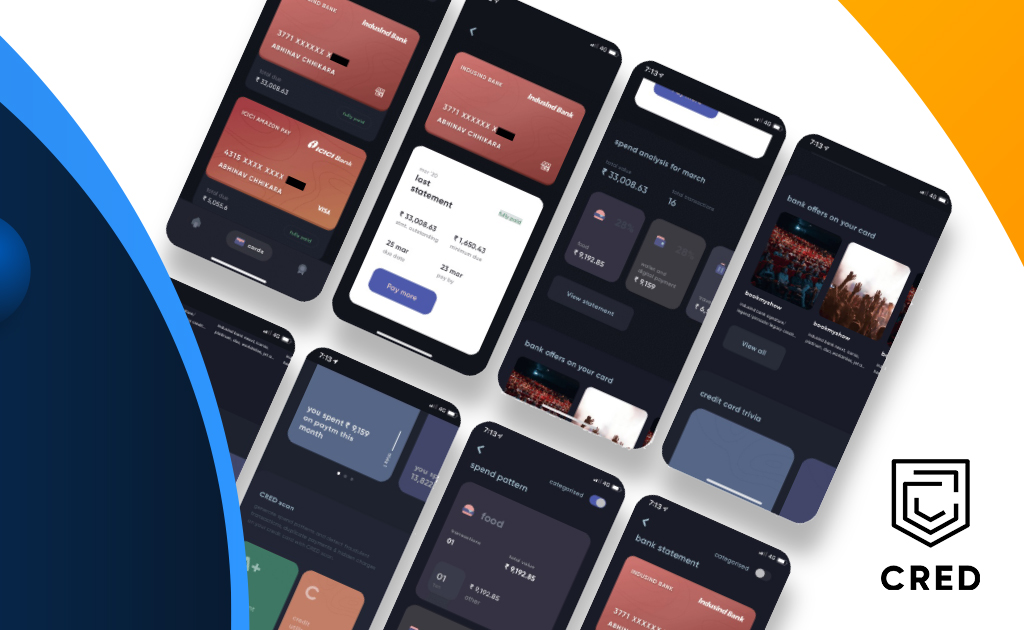
When someone opens an app, they have certain expectations. Check out the top apps around the world as examples to follow.

All these apps offer easy-to-use navigation, a search option, a beautiful UI design, a clear hierarchy in landing pages, a home button that can be accessed from any part of the app, and many other impressive features.

A bad UI/UX can harm your app’s chances in a variety of ways, including:

  • The mobile app takes an excessive amount of time to load. The longer it takes for your app pages to load, the more users bounce off your app.
  • Your UI design is boring and unimaginative. Users will be more likely to stick around if the app design is appealing, uncluttered, and easy to use.
  • Poor navigation confuses your users, making them click and scroll more times than needed to find what they are looking for.

Other avoidable components of bad UI/UX designing are low-quality content and inessential login pages.

A user-centric design is the most important aspect of successful UI and UX. User feedback is essential for success even after you’ve designed and implemented a UX design for the app.

The most common customer preference isn’t usually the most technically sound solution. In the end, the objective should always be to maintain a profit-oriented balance.

MISTAKE-5: Faulty Budget Estimation Before Development

One of the most common mobile app development mistakes that every business owner has to deal with- Going over budget.
There have been a few major causes behind this:

  • Erroneous budget estimation
  • Improper phase-wise budget planning
  • Unexpected expenses & hidden costs

Overcome this app development mistake by creating an expense plan from the very beginning of the app development project.
Here are a few tools that you can use to estimate the budget:

  • Cleveroad
  • Digitalya
  • Oozou
  • Inoxoft

How much to make an app?

You can use these tools to create a rough idea of how much your app may cost, but this is not a complete solution. You need to plan for various unexpected and hidden costs. Without a budget contingency plan, you won’t be able to add more features than you initially planned. For example- Integrating modern technologies like AI, AR and VR are much more expensive than regular app features.

Set a realistic budget estimation by planning the expenses for each phase of development.

You must plan the budget for the long run. The two types of costs that you should plan for post-development:
Marketing Costs: Every newly launched mobile app needs paid promotions and content creation for customer acquisition and retention.

Maintenance: The ongoing costs for maintenance and updates are pivotal for the long-term success of a mobile app.

There can’t be a definite way of budget estimation for such a complex and multifaceted process. But the answer becomes a little less blurry with in-depth research and analysis.

MISTAKE-6: Insufficient Communication During Development

Inefficient communication during the development process is to blame for most mobile app failures.

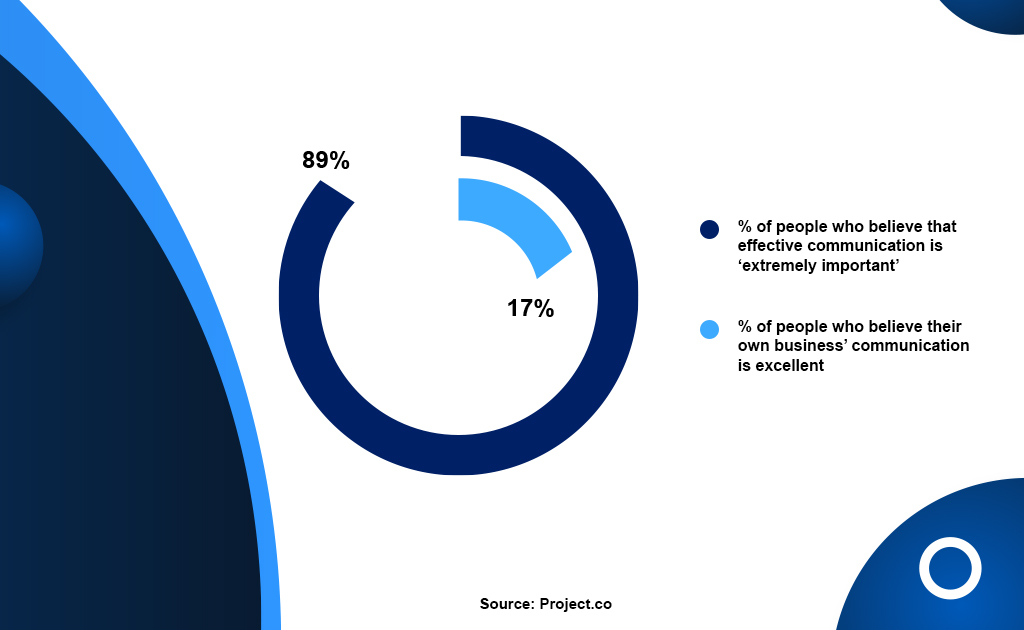
While most people seem to agree that excellent communication is critical during a project, just a tiny minority of people believe their company is doing so.

This is true for every project, but when it comes to something as complex and vital as mobile app development, the stakes are even higher.

The key to avoiding this blunder is to put communication first from the start. Communication is an essential component of any successful app development project, just as it is in any other business endeavor.

Getting developers to grasp the big picture of your software may seem impossible, but it’s one you must take on.

How well you perform can have a significant impact on the outcomes.

When communicating with developers, the best way is to leave no details unanswered and to avoid making assumptions.

When it comes to a completely new piece of software, full documentation with all of the relevant pictures is essential. Your app’s documentation should include a synopsis (a brief summary of what it does), a detailed feature list, and an app wireframe. In most circumstances, a professional developer will expect you to provide these items.

In exchange, the developer or agency will provide feedback and generate a project price.

During this initial talk, you will gain insight into the developer’s communication method and will be able to determine whether it is ideal for you.

MISTAKE-7: Inadequate Testing After Development

All of your efforts invested in the app- research, designing, coding, go to waste if you deploy the app without proper testing. The app may end up in an endless cycle of improvements or it may stop functioning altogether, damaging your brand’s reputation in the process.

Quality control through rigorous testing is indispensable and still, inadequate testing is one of the most overlooked app development mistakes.

Generally, developers test their apps by getting them checked by another developer. Although it may work well as a peer review, it is still not enough.

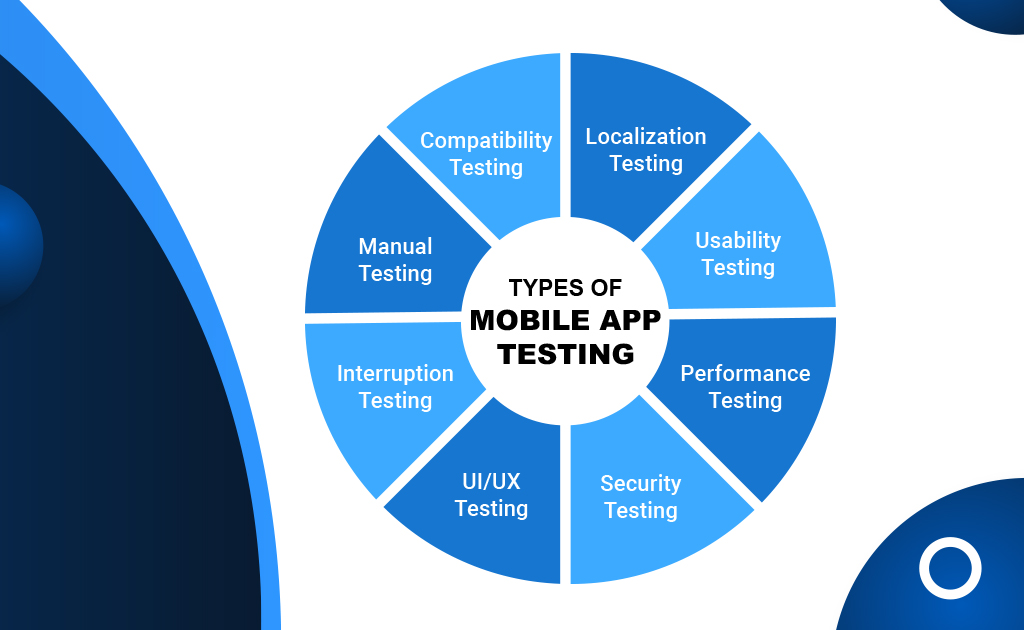
You need a dedicated team of quality assurance and app testers to conduct rigorous testing in multiple aspects of a mobile application:

app testers

How to test your mobile app effectively?

  1. Schedule enough time and allot enough budget for app testing
  2. Plan and define your testing procedure
  3. Use templates to create test case documentation
  4. Get the right tools and software to execute testing
  5. Individually test each aspect with a quality assurance team

There are many other strategies for successful testing, and you may form your own strategies as well. But the main objective of app testing should include identifying and eradicating all types of errors/glitches/bugs/vulnerabilities before app deployment.

In this competitive market, it is essential to launch a flawless mobile app to stop users from bouncing off to a competitor’s app.

Your brand’s personality, likability, and reputation are dependent on the quality of your digital platforms. A properly tested bug-free mobile app facilitates positive brand growth, subsequently increasing sales and ROI.

In a nutshell

App development is a burdensome task that takes place over a long period. It is always a possibility that developers can make mistakes along the way, jeopardizing the app’s success.

Some of the top mobile app development mistakes to avoid include a lack of understanding of consumers’ demands, cluttering the app with too many features, inadequate app testing, and many more.

We’ve identified and explored the top 7 mistakes to avoid while developing an app in this article. We hope that this comprehensive list helps to position your mobile app for success.

If you have further questions regarding mobile app development, feel free to contact us.

Communication Crafts offers a wide range of app development services that include mobile commerce development, Android app development, iOS app development, cross-platform app development, UI/UX design, app maintenance/support, and much more.

Get in touch with our highly skilled remote mobile app developers today.

Get the online presence your brand deserves!

Frequently Asked Questions [FAQs]

1. What are the challenges of developing an app?

– Here are some of the most common challenges of developing an app:

  1. Wrong assessing and development approach
  2. Compatibility issues with different platforms
  3. Following standard design & lack of innovation
  4. Insufficient budget to sustain the whole process
  5. Hiring efficient developers from subpar agencies
  6. Issues regarding cybersecurity and data leaks
  7. Lack of resources and platforms

2. What are the most common app development mistakes?

– Here are some of the most common mistakes to avoid while developing an app:

  1. Not Identifying the Use-Case for your App
  2. Cluttering your App with Too Many Features
  3. Choosing an Agency without Adequate Research
  4. Subpar UI/UX Designing
  5. Faulty Budget Estimation Before Development
  6. Insufficient Communication During Development
  7. Inadequate Testing After Development

3. How to avoid app development mistakes?

  • All of the mobile app development mistakes to avoid can be evaded with good research and strategic development. Study your target audience and learn what they need to define the purpose of your app. Study your competitors and learn what makes their apps unique. Rigorous research will help you get a clear vision for your app, and a systematic phase-by-phase development will help you pay attention to detail throughout the whole process.
Looking for developers to build impactful and intuitive mobile applications?

You demand we deliver!

How to Create Non-game Apps in Unity

Firstly let us understand what is Unity and its implications. Unity is a cross-platform game engine developed by Unity Technologies, as a Mac OS X exclusive game engine. The engine can be used to create three-dimensional, two-dimensional, virtual reality, and augmented reality games, as well as simulations and other experiences.

Now, how does Unity help in non-game apps? It’s quicker and a lot easier to make as it lets you use C# rather than Java or Kotlin. C# is generally considered to be a little simpler to get to grips with versus Java.

Let us explore more on how Unity Mobile Development works.

Quick development:

The most basic use is that Unity Android Development is much quicker and simpler in many situations. This is because Unity lets you use C# much more effectively. If you are a Unity Development Company, then you would also like the fact that the engine uses a particularly intuitive and speedy user interface. With Unity, one needs to do far less coding when building non-game apps. Not to forget, testing and deploying apps is extremely efficient, too. Adding assets built by other users couldn’t be simpler. The best part is that the installation and set-up are also really quick and easy!

Cross-platform development:

Cross platform development

One great feature of Unity is the fact that it is a cross-platform app development tool. It lets you easily create apps for Android, iOS, and Windows with very few changes needed. For a Unity Android Development or a Unity Development Company, it is a great feature to have.

Dominant features:

Unity has a number of dominant features that are designed for non-game apps for Android Development & iOS. These include graphical features as in if you want to have 3D elements or AR technology in your app, you can do so easily with help from Unity. These features not only make your app look great but also have fantastic real-time benefits for the customers.

Debugging:

Tweaking and debugging for Android Development & iOS is very easy with Unity. Developers can debug the process at runtime. Unity allows its users to make non-game apps where the debugging process is simplified to a great extent and easy to use.

High-end graphics:

High-end graphics

As Unity is an engine designed for game developers, it is obvious that it supports high-end graphics. What is great is that, when it comes to developing non-game apps for Android Development & iOS, Unity supports high-quality audio and visual effects with complete ease and adaptability onto any screen.

The Unity engine is a great way to make life simpler for developers making non-game apps for Unity Android Development. It also has a host of UI components that can be added to the canvas which is useful for making an online form or a questionnaire too.
To put it shortly, the Unity engine might be for game development, but if you are good with coding and need a quick and easy engine that does everything you need for Android or iOS Development, then Unity is the answer.

Get started today with building your very own non-game app.

Get started today with building your very own non-game app


Top 9 Real World IoT apps that Simplify Everyday Tasks

In 1999, Kevin Ashton coined the term Internet of Things, aka IoT. Fast forward to two decades later, IoT is one of the most popular used technology in the world. Currently, there are more than 10 billion IoT devices, which is going to increase to a staggering 25 billion by the end of 2021.

What is the IoT technology?

The Internet of Things is comprised of four components- sensors, people, devices and the Internet.

In a nutshell, the sensors sense and collect data, and using internet connectivity sensors send the data back to the device. IoT is a network of connected devices with embedded sensors that can communicate, get insights and share data over the Cloud.

For example, a smart light bulb- switched on and off using an app is an IoT device. With an active internet connection, a connection is well-established with the light bulb- it can be turned on and off when the user wants.

Just like this, there are billions of physical devices connected online, all collecting and sharing data for various interesting purposes.

It is a money market, a 1.5 trillion dollar market!

We already talked about how IoT is transforming the development industry. It is the present and the future. IoT technology is embedded in many aspects of our life- we are not even aware of it. As technology continues to evolve, it is going to make performing day-to-day tasks smoother, for which, IoT is going to be an integral part of this change.

Let us see some of the areas where IoT is present. You may have come across some of them.

Top 9 IoT Applications in the world

1. Smart Home

Smart Home

Even homes are smart now! IoT technology is solely responsible for the turn of such events. There are more than 42.2 million smart homes in the U.S. alone.

Imagine switching on the air-conditioning before you reach home from a hectic day of work or turning off the lights from your mobile app even after you have left home.

How is this even possible?

IoT makes it possible!

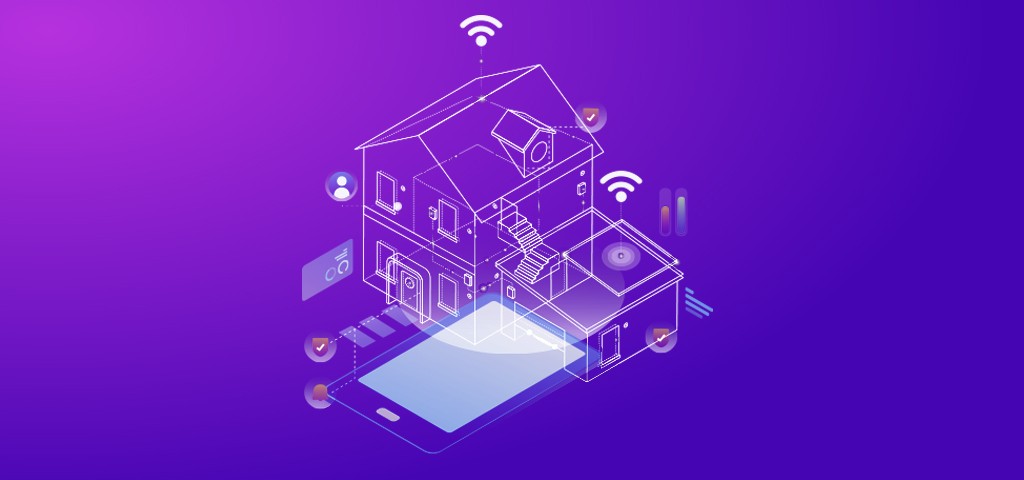
Smart homes allow you to manage your home devices from one place- your smartphone app. Monitoring and placing security measures, controlling electronics in the house- this is the foreseeable vision that IoT has for smartphones.

More and more companies are investing in IoT technology. With multinational corporations like Philips, Haier and Belkin joining the game, soon there will be even better innovative IoT home solutions.

2. Wearable devices

Apple Watch is one of the best internet of things examples in daily life. From your wrist, you can make and pick up calls, monitor your heart rate, number of steps you have walked, and be notified of alerts from your other apps on your iPhone.

But what roles does IoT play here?

Wearable devices are installed with sensors and software patches, which collect data and information about the users. This data is later pre-processed to extract essential insights about the user.

The pre-requisite from the internet of things technology for wearable applications is to be highly energy-efficient or ultra-low power and small-sized. There has been an increased investment in the retail industry for using this technology. Of all the IoT start-ups, wearable maker Jawbone is probably the one with the biggest funding to date- more than half a billion dollars!

3. Connected Cars

Connected Cars

The automotive industry is now even more focused on making vehicles more automated and providing tech features that will enhance the in-car experience.

Automobile company Tesla is creating self-driving cars that are going to completely automate driving and take you from the start to the end of the destination without manually having to take control of the car. Using advanced hardware capabilities integrated with an extensive network of multiple networks, antennas, embedded software and technologies- it will completely assist in communication and navigation on the road.

As of now, most cars are IoT integrated and take real-time decisions controlling the vehicle operations like assisting in parking using proximity sensors and cameras.

Companies like BMW, and Mercedes are even more focused on using IoT for their new line of cars. BMW already has a feature for some of its top-end models that can self-park the car using IoT.

4. Industrial Internet

Industrial Internet is relatively new term. It is known as the Industrial Internet of Things (IIoT).

Imagine managing heavy types of machinery and devices in industries for power generation, oil and gas. It can get difficult to manage and keeping track of everything.

The driving philosophy behind IIoT is that smart machines are more accurate and consistent than humans in communicating through data. And, this data can help companies pick inefficiencies and problems sooner. IoT devices can send real-time updates to the end-user and make them aware of problems quicker. Empowered with sensors, software and big data analytics, brilliant IoT systems can be created for better quality control and sustainability.

5. Smart Cities

Smart Cities

Smart cities, as its name suggests, is a big innovation and span a wide variety of use cases, from water distribution and traffic management to waste management and environmental monitoring. IoT solutions offered in the smart city sector solve various city-related problems, comprising of traffic, reducing air and noise pollution, and helping to make cities safer.

6. IoT in Agriculture & Farming

Smart farming is one of the fastest-growing fields in IoT. It is going to be $23 billion industry by 2022, as farmers worldwide are gearing up to utilize RFID, GPS, drones, sensors, and more to gather actionable data and to automate every part of the process.

With the world population rising, the demand for food supply is on a continuous rise. And to help farmers yield better crops, many governments are helping farmers use advanced techniques to increase food production.

Using IoT devices, farmers can gather meaningful insights that help monitor soil moisture and nutrients level. This helps the farmers water the section of the crops that require it.

Even the health of animals and cattle can be gathered using IoT devices that can help farmers know if there are any sick animals. This can help them separate the ill animals from the rest so that others don’t get ill as well, saving treatment costs.

7. Smart Retail

Smart Retail

Smart retail is a term used to describe a set of smart technologies that are designed to give the consumer a greater, faster, safer and smarter experience when shopping. A world in which nearly everybody now carries around a smart device – i.e. the smartphone – is what has enabled this revolution in retail. The potential of IoT in the retail sector is enormous. IoT provides an opportunity for retailers to connect with the customers to enhance the in-store experience.

Smartphones will be the way for retailers to remain connected with their consumers even out of the store. Interacting through Smartphones and using Beacon technology can help retailers serve their consumers better. Using IoT beacons, companies can keep track of their customer’s journey through the store and using these insights they can optimize the store layout and place premium products in those areas of the store, where traffic is maximum.

8. Smart Grid

Power grids of the future will not only be intelligent, but also highly reliable. IoT implementation in such large electric grids helps create an intelligent system that can analyse and collect data in an automated fashion.

Smart Grids will also be able to detect sources of power outages more quickly, even at individual households. Smart grids are paving way for a cleaner environment for the future.

9. IoT in Health Care

IoT in Health Care

The healthcare IoT market is going to increase to 534 billion by 2025. It comes as no surprise as IoT has so many benefits in this industry. With IoT tracking systems, hospital staff can get alerted immediately when critical changes in patients’ parameters occur- accelerating the processing of patients’ data. Normally it would take doctors hours to process different kinds of information. With IoT, it will only take a few minutes.

Now hospitals can even manage their instruments and medicines more efficiently. The unfolding crisis in the industry caused by the pandemic once again proved the importance of implementing technologies like IoT, big data and AI to enhance efficiency and improve safety in healthcare. Implementing IoT solutions is no longer about staying ahead of the competition, it is about making sure crises can be handled much better.

Summing up

The future of IoT is bright. It is going to change the way we live and work.

We at Communication Crafts help companies leverage IoT in their respective industry. Our teams of professional developers have the required expertise your projects would require. We understand your needs and put it into effect.

Bring your idea to life-get your IoT apps the way you want!


Web Apps VS Native Apps: Which is the better choice for businesses?

Mobile devices and desktops continue to compete in this modern world with their innovative technological solutions to get their target users’ attention.

Mobile apps have opened a new gateway for start-ups, businesses and companies to effectively gain their audiences’ attention. It is estimated that by 2023, the global mobile app revenues will grow to more than 935 billion dollars.

And this doesn’t seem surprising. Considering the time mobile users spend on their phones compared to a desktop. The thing is that with new ground-breaking mobile solutions that come every year, mobile phones are becoming even more convenient.

Not only mobile developers are benefiting from this growing mobile app market but also native app developers.

With Progressive web apps now into the picture, many companies and start-ups have found the perfect opportunity to revive their businesses by leveraging the PWA technology to their advantage.

Mobile Apps and PWA apps have been able to provide a fast and responsive app experience to their users, something that desktop browsing didn’t always enable.

That’s why PWAs vs Native apps (iOS or Android) are becoming a significant debate among developers. But the question still asked is: will PWA replace native apps in the future? Which is the better choice for startups, companies and organizations? What is the difference between progressive web app and native app?

Before we go into detail, let us see how exactly they are different from each other.

What Is the Difference Between Progressive Web App and Native App?

Progressive Web Apps (PWAs)

Progressive Web Apps, also known as PWAs, leverage the latest browsing & web development technologies to provide their end-users with a better user experience.

Built using HTML, CSS & JavaScript framework, PWAs can run on any given platform that is standard-compliant, which includes desktops and mobile phones.

What makes them unique is that the faster development associated with it compared to that of native development.

But it harnesses all the features of a native apps like- caching, push notifications, API integration, and responsive design; PWAs have bridged the gap between web browsers and mobile phones.

Think of PWAs like websites that act like native or mobile apps.

Native Mobile Apps

While Native apps are mobile software solutions developed for devices for both iOS and Android. They can be downloaded via the App Store or Google Play Store respectively.

Unlike PWAs which show only the essential functionality, native or mobile apps have the ability to provide a large range of advance functionalities. By harnessing the hardware and software capabilities of a smartphone, native apps are able to deliver impeccable performance and provide users with an intuitive journey.

Both, PWA VS Native Apps have their pros and cons. And ultimately it comes down to making the right choice that can help maximize the growth.

Whether you are a startup, a growing small or middle-sized company or an organization, which depends heavily on digital success, here’s everything you need to know between: Progressive Web Apps VS Native Apps.

We’ve laid down all the main advantages and disadvantages of both of PWA VS Native Apps.

Go over it, it will help you make the right business decisions.

  1. Pros of Progressive Web Apps (PWAs)
  2. Cons of Progressive Web Apps PWAs
  3. Pros of Native Mobile Apps
  4. Cons of Native Mobile Apps

Web App VS Native App PROS and CONS

PWA PROs and CONs

1. Pros of Progressive Web Apps (PWAs)

Better Performance

A research study by Google shows that at least 53% of the website users leave a website if it doesn’t load within 3 seconds.

With PWAs, website owners don’t have to worry about that. PWAs are faster to load compared to sites that use JavaScript (JS) rendering which takes comparatively more time to load.

You can use it in Offline Mode

PWAs save cache in the web browser. Due to this, users don’t have to worry about accessing the site in case they’ve exhausted their mobile data or are in a region where there is no network. This feature enables users to access the last information they accessed online. Making it one of the main reasons for increasing user engagement.

No Installation Require

No Installation Require

Unlike mobile apps, PWAs do not require any installation. Users don’t have to bother about going to the app store to install any progressive web apps.

Progressive web apps have a link-adding feature that allows the app to be cached so that you can access it right from your mobile phones.

Since 65% of mobile users download no apps on their phone, progressive apps make it easy for users to access their sites without having to download them and yet get an app like user-interface to use. And since there are no installations, there are no updates to be done from the user side.

The user just has to open the URL icon on the phone and access the app. Simple as that.

Cost-Effective and Faster Development

As a PWA is technically still a website, it doesn’t require that large of a budget as a mobile app does. And since they include only the essential features- making PWAs lightweight apps- quicker to develop and cost-effective scalable solutions.

2. Cons of Progressive Web Apps(PWAs)

Battery consumption

Since a progressive web app requires an internet connection, it consumes a lot of battery pretty fast. Another reason is that PWAs run on technologies that aren’t yet intended to optimally perform in a given mobile environment. And that’s why PWAs don’t optimally use battery power.

Limited functionality for iOS users

Push Notifications are one example. Push notifications have become an essential part for businesses to interact with the users by sending them regular updates regarding business offers and more. But since push notification services aren’t available for iPhone users and since most of the eCommerce consumers use an iPhone, eCommerce stores lose a majority of their target audience.

But that’s not it, where it hurts most for iOS users is that PWA has only a limited storage window for iPhones. Meaning that when a user adds a PWA, their offline data will be stored for no more than two weeks, after which the PWA cache will be cleared.

Limited hardware access

Progressive web applications have limited access to software and hardware capabilities. They don’t support features that are not powered by HTML5. But also for iOS devices yet again, PWA can’t work with Face ID, Touch ID, Siri, ARKit, In-App payments and other core features of Apple.

Getting troublesome for iOS users to use PWA optimally even if they want to. That means if the majority of your target audience uses an iPhone, PWA might not be the best option to go with. But then again, it depends on your business’s requirement and how PWA plays out to it.

Native App PROs and CONs

3. Pros of Native Mobile Apps

Enhanced Performance

Unlike PWAs, native apps are platform dependent. That means they are developed and greatly optimized per the specific mobile operating system.

Due to this, mobile apps work faster and provide unparalleled performance that PWAs are unable to match as of now.

Since the data is stored locally, the app takes less time to load and thus providing the users with a seamless experience.

Intuitive User Experience

When users face any bug issues with their app repetitively, it leads to them having a poor experience. That’s where native mobile apps come as the knight in shining armour. Native applications are built keeping in mind the mobile hardware’s technical capabilities so that the UI can impeccably integrate with the underlying computing functionalities to provide the users with a great experience.

Highly-secure environment

While PWAs use HTML5 which is a more secure version, they still can’t ensure the utmost protection against vulnerabilities.

Native apps are created with the latest cutting-edge technologies which ensure utmost security protection, data intrusions measures that enable users to use their mobile apps without feeling vulnerable to attacks.

Increases Business Productivity

With cutting-edge technologies at the helm of mobile app development, mobile apps have been contributing so much to improve and simplify the performance of everyday tasks.

4. Cons of Native Mobile Apps

High-Cost Development and Maintenance

Since a native app is platform-specific, you’ll need to hire a separate development team for each platform you choose to run your app on. And for eCommerce shop owners, having to create separate apps for different platforms can get quite expensive.

That means you’ll need a specific team of Java or Kotlin developers for an Android app and Swift or Objective-C developers for an iOS app.

While you can create a hybrid app that works on both platforms using a single codebase, it won’t be able to offer in-depth personalization of features like a native app.

Inconsistent Quality

Not all developers maintain high development and coding standards. That’s why finding the right team of expert iOS developers & Android developers that are at par and can satisfactorily overcome any technological hurdles to build a great mobile app and provide users with a seamless experience has become difficult.

Many development companies don’t have an in-house team of experts for both Android and iOS and that’s where this problem arises.

Looking for a dedicated team of Android or iOS developers from an established native mobile app development company? Get in touch!

User acquisition

Users have to download a native app from the app store as it is the only place to access it. For most online consumers, that are short on patience, it is an extra step in their shopping journey. That’s where customers will opt for PWA more since it can quickly provide users with the results they are looking for.

Progressive Web Apps vs native apps: Which is right for you?

We are not thinking of Progressive Web Apps vs Native apps as a competition and neither should you. Think of it as rather a friendly discussion on these vast mobile platforms so that it can help you make the right choice.

Summing it up, progressive web apps are websites with a dynamic framework, so if you’re a start-up or a small-sized business, as far as the PWA development costs are concerned, you don’t have to worry about not getting cost-effective solutions.

Between PWA VS Native Apps, building a PWA from scratch is must cheaper than developing a native app.

While native app development costs much more and is a heavily time-consuming process, it offers a custom-tailored experience, much better performance and an amazing user experience.

If you’re looking to create an eCommerce app for your online shop, native app development will be the right choice for you between PWA VS Native Apps. With custom-tailored iOS & Android app solutions, you can engage with your target audience on both platforms effectively and greatly empower your growth.

We hope this helps clear the fog in your head regarding which is better and which is right for you between PWA VS Native Apps.

But as always, whichever way you proceed to take your online business ventures, bringing on board a trusted & established web & mobile app development can accelerate your business growth.

Communication Crafts has been helping businesses, start-ups and organizations turn their visions into reality with our innovative mobile app development solutions and PWA solutions for the last 15 years.

With customer satisfaction at the core of everything we do, we are truly dedicated to creating lasting success for you. Our amazing team of expert Android developers (Java & Kotlin), iOS developers (Swift & Objective-C) and PWA developers are industry experts with years of hands-on experience working on creating custom mobile apps from scratch that meets all requirements successfully.

Whatever mobile solutions you need, we have you covered!

Get your custom-tailored PWA or Native app and grow your business successfully!

You’re in the right place!