In this transformative digital era, having a well-maintained website exudes a sense of authenticity and relevance from brands and businesses.
A dynamic, intuitive, and high-performing website can work wonders for your brand’s image and conversion rate. With improved ranking on Google and interactive content, a beckoning website entices potential customers to visit your website and take the desired actions.
As of 2021, NodeJS holds paramount significance in the field of web development. NodeJS frameworks are adored and used by developers to create all kinds of websites all over the world.
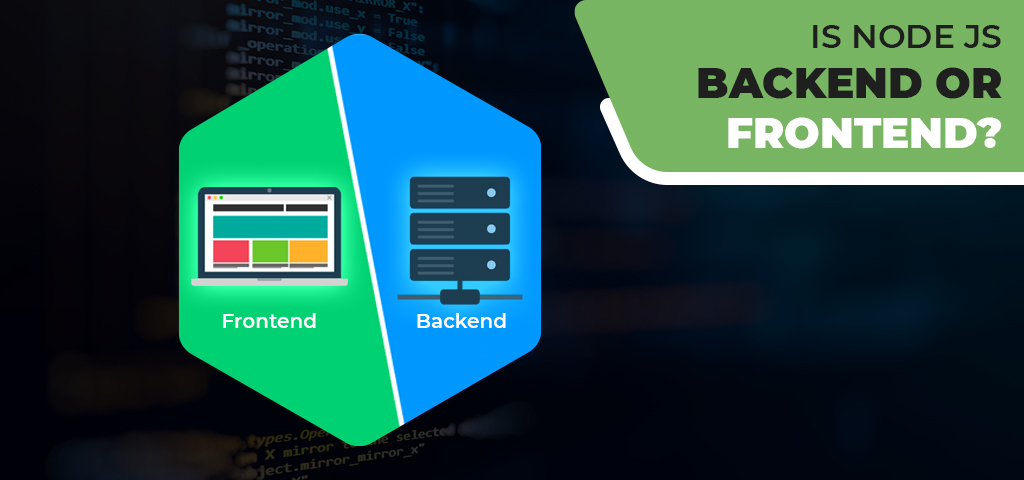
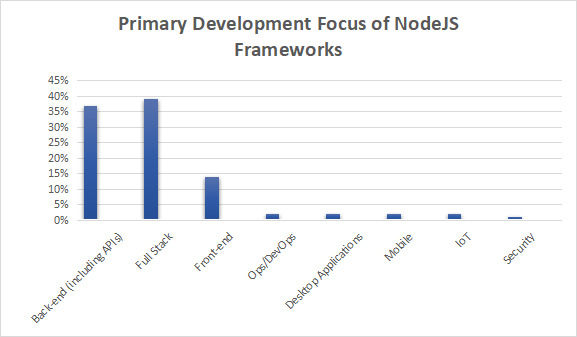
Developers use NodeJS primarily for backend and full-stack development, but its web development capabilities are endless.
NodeJS frameworks development focus:
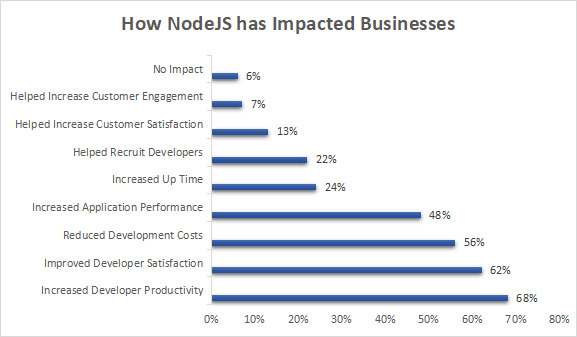
Impact of NodeJS on developers and businesses:
NodeJS frameworks are utilised by big names like IBM, Twitter, Microsoft, Amazon, eBay, and many more for various web and mobile app development purposes.
NodeJS increases the performance of an application by 50% and saves 58% development cost. Furthermore, 50% of developers choose NodeJS for its frameworks.
With so many NodeJS frameworks to choose from, it is a cumbersome task to pick one for your specific web development needs. And that’s why we will examine the 7 best NodeJS frameworks for web development in detail.
Let’s start by discussing the types of NodeJS frameworks.
Types of NodeJS Frameworks:
1.MVC frameworks:
This framework provides one of the most habitual patterns for developers. It bifurcates the application logic into three parts:
This separated pattern simplifies the development process and makes it easy to maintain and scale as per needs and requirements. ExpressJS is a key example of this type of NodeJS framework.
2.Full-stack MVC frameworks:
This type of framework has the same pattern as MVC frameworks but can be used for both frontend and backend development. It provides complete functionality and structure for your web apps.
These are mainly used for real-time apps, providing valuable libraries, templates, ORMs, and other development tools. MeteorJS is a great example of this category.
3.Representational State Transfer (REST) API frameworks:
This type of framework saves a lot of valuable time in development, as it comes with a complete programming interface.
REST API NodeJS frameworks can be effectively used to create high-performing apps quicker and more efficiently, disregarding the type of architectural pattern the applications follow.
LoopbackJS is the best NodeJS REST API framework.
NodeJS frameworks come in many shapes and sizes providing many features and advantages. We’ve sought the best NodeJS framework list to help you make well-informed decisions for your business.
Top 7 NodeJS Framework List:
ExpressJS:
ExpressJS is the first choice among NodeJS web app frameworks for many developers around the world, and it follows an MVC pattern to build scalable web apps rapidly.
Officially launched in 2010, ExpressJS takes backend development to new heights by providing streamlined communication between server and client to deliver excellent user experiences through web and mobile.
It is known for its minimalistic and asynchronous nature with a lightweight structure. Familiarity with JavaScript and NodeJS is enough for amateur programmers to start building web applications with ExpressJS.
ExpressJS has 53.6k GitHub stars and 9k GitHub forks.
With 280k+ websites and 95k+ unique domains using ExpressJS, it is the most famous NodeJS framework that can be used to create a single page, multi-page, or hybrid web app with ease. Along with web applications, ExpressJS can be used to create small-scale or large-scale mobile applications.
With ExpressJS, you can avoid complex programming to create well-organized APIs, letting you develop high-functioning web applications effortlessly.
Features of ExpressJS:
- Rapid server-side development as it comes with ready to use NodeJS features and functions, eliminating the need to add additional lines code and saving the developer’s time;
- Asynchronous programming allows multiple operations to be executed independently and concurrently, improving performance to a great extent;
- Middleware systematizes all the functions, database, client requests, and more;
- Advanced routing helps to maintain and protect the web pages aided by their URLs;
- Templating provides freedom to create interactive and dynamic content for the web apps;
- Advanced debugging tools to precisely find and eliminate bugs and glitches in the web app.
Companies that use ExplressJS:
- IBM
- Accenture
- Uber
- Myntra
- Twitter
Read more: React Architecture Best Practices and Tips from Experts
MeteorJS:
MeteorJS is emerging as one of the most discussed NodeJS frameworks among the developers’ community. This NodeJS framework uses only one specific language in the whole development process, and that is JavaScript.
Launched in 2012, it is compatible with most operating systems like Android, iOS, Windows, Mac in both web and mobile applications, with everything efficiently encapsulated in JavaScript.
With automated data modifications to the client-side, MeteorJS provides a seamless flow of data between the server and the client.
MeteorJS has 42.5k GitHub stars and 5.2k GitHub forks.
37k websites and 25k unique domains utilise the features of MeteorJS to create various types of web and mobile applications. It is on its way to becoming an ideal NodeJS framework with an “all-in-one” approach to tackle all kinds of development issues.
MeteorJS is best used to create real-time and cross-platform apps rapidly, as it is highly compatible and lets you use the same code for both mobile and web applications.
Features of MeteorJS:
- Isomorphic Development Ecosystem, which is ideal for real-time applications as it can render codes on both client-side and server-side;
- Provides all of the necessary development tools from development set-up to website deployment;
- Extensive community support to make the developers’ work easier;
- Full-stack solution with amazing front-end reactivity that allows rapid development and handles the server and client-side operations simultaneously without a hitch;
- Live reloading features the ability to make adjustments to specific DOM elements when a change is made on the front-end, eliminating the need to reload the entire web page;
- Other frameworks can be easily integrated with MeteorJS.
Companies that use MeteorJS:
- Ikea
- Mazda
- Qualcomm
- Rocket.chat
- Honeywell
Looking for intuitive and cost-effective web development solutions?
We’ve got you covered!
SocketIO:
SocketIO is not like the other NodeJS frameworks, it has extensive features for building seamless real-time computing applications.
It connects the web clients and servers effortlessly and bidirectionally. SocketIO focuses on speed and reliability and enables you to create applications on every browser, platform, or device.
SocketIO was created in 2010 to develop, deliver and maintain real-time communication in web and mobile applications.
SocketIO has 52.8k GitHub stars and 9.7k GitHub forks.
With 28k websites and 13k unique domains using SocketIO, it is one of the best NodeJS frameworks to create applications that require continuous updates and constant refreshing for messages and real-time changes.
It also hastens the development process by requiring fewer lines of code for real-time analytics.
Features of SocketIO:
- Auto-detection and correction of errors;
- Multiplexing: Also knowns as Namespace, splits the application’s logic to render and handle different components separately over a shared connection;
- Acknowledgments to offer better request-response API;
- Reliability: If the Websocket connection fails, it can rely on HTTP long-polling;
- Broadcasting events is a server-only attribute that allows sending an event to all of the clients that are connected easily;
- Packet Buffering enables events to be buffered even when the SocketIO is not connected.
Companies that use SocketIO:
- Alibaba Travels
- Bepro
- Microsoft Office
- Patreon
- Zendesk
Also read: React Native vs React : Difference Between React and React Native
SailsJS:
SailsJS was inspired by the famous web framework “Ruby on Rails” and follows an MVC (Model-View-Controller) structure, making it easy to use for developers.
It follows the principle of “convention over configuration” to deliver the fast-paced development of single-page apps, WebSocket-based real-time apps, and REST APIs.
SailsJS was initially released in 2012, it was created on top of ExpressJS and includes features of SocketIO that offer event-based, bidirectional, real-time communication to applications.
With 22k GitHub stars and 1.9k GitHub forks, SailsJS is an efficient NodeJS web framework that can provide data-oriented development of high-end customizable web applications.
This NodeJS framework can also be integrated easily with SocketIO to create social media and gaming apps. SailsJS is not preferred for small-scale apps and rather used for enterprise-scale applications.
Features of SailsJS:
- 100% JavaScript-based programming;
- Agnostic frontend enables it to be compatible with any frontend framework or strategy;
- Lightweight server-side framework providing speedy development;
- Easy integration with SocketIO to use WebSockets effectively for real-time communication;
- REST APIs are auto-generated;
- Reusable security policies to further reduce web app development time.
Companies that use SailsJS:
- Microsoft
- Philips
- Verizon
- Tesco
- Amazon
Loopback:
Loopback is the best NodeJS REST API framework. It offers high connectivity with other NodeJS frameworks and high-speed development of REST APIs.
Founded in 2013, it offers extensive integration features that can be used with other APIs. It is highly flexible and can be connected with various databases, services, browsers, and devices.
New and amateur app & web developers can start developing using Loopback because it offers high-quality documentations.
Loopback has 13.3k GitHub stars and 1.2k GitHub forks.
It is exclusively used to handle API requests and create dynamic end-to-end REST APIs, and that’s why this is the best NodeJS REST API framework.
Features of Loopback:
- Supports multiple databases such as MongoDB, SQL, Oracle;
- Full-stack development;
- Easy to use the command-line interface (CLI);
- Ability to run on the cloud;
- Enhanced documentation for new developers;
- Codes are clean, structured and modular.
Companies that use Loopback:
- GoDaddy
- IBM
- Wizerg
- Sapient
- Energy.gov
Also read: Django VS Node JS : A Complete Comparison of the Phenomenal Frameworks
KoaJS:
KoaJS is a next-generation NodeJS framework that provides a lightweight and flexible structure for the development of APIs and web applications.
It can manage different forms of content under the same URL like different fonts and images in an eCommerce website, personalized content, webpage translations, and more.
KoaJS is very similar to ExpressJS, providing the same flexibility in writing codes in a minimal and small-scale NodeJS framework.
KoaJs has 31.4k GitHub stars and 3k GitHub forks.
This particular NodeJS web app framework is preferred for big projects and large-scale applications which require high-performance capabilities. Also, it is not the ideal choice for novice developers as it is still growing as a community, and might not have the required documentation.
Features of KoaJS:
- Inbuilt error management tools let you identify and rectify bugs instantaneously;
- Cascading middleware eliminates the need to write additional lines of code;
- Based on ECMAScript 6, making it more futuristic by providing many modules and classes that can be used to keep the applications relevant over many years;
- Lightweight structure;
- Proxy support and cache cleaning;
- High customization options.
Companies that use KoaJS:
- Paralect
- Gapo
- Pier
- Bulb
- Theiconic
NestJS:
NestJS is a very progressive NodeJS web framework that offers extensive libraries and complete flexibility.
Released in 2017, it is a relatively new framework enabling massive versatility and efficiency while developing web applications. NestJS is written in TypeScript language, allowing a smooth and fast development process.
It provides a plethora of powerful typing models like Functional Reactive Programming, Object-Oriented Programming, and Functional Programming.
NestJS has 38.2k GitHub stars and 3.8k GitHub forks.
NestJS is preferred for creating enterprise-grade applications that are highly scalable, multi-layered, and dynamic in nature, and it can be used to maintain the code of complex applications. Additionally, It offers seamless integration with Fastify and Express.
Because of its high versatility and flexibility, NestJS saves a lot of valuable development time while delivering high-performing applications.
Features of NestJS:
- Code reusability;
- TypeScript language;
- An agnostic platform that supports REST, GraphQL, gRPC, Websockets, etc;
- High compatibility for frontend with Angular;
- Efficient and easy to use Nest CLI;
- Ease of code management with a modular structure.
Companies that use NestJS:
- Adidas
- Decathlon
- Roche
- Sanofi
- Autodesk
Conclusion
In a fast-evolving digital world, a company needs to recognise its needs and select an ideal framework to stay ahead of the curve in the ever-growing fierce competition.
Different NodeJS frameworks offer different features and advantages suited for various purposes. Some frameworks are preferred for enterprise-grade web applications like NestJS and SailsJS, frameworks like SocketIO and MeteorJS are amazing for applications that require real-time communication, and some frameworks like Loopback are well-equipped for building efficient and dynamic APIs.
NodeJS frameworks play a predominant role in the world of web development, offering one of the best and most efficient ways to develop web applications with the most widely used programming language JavaScript.
If you require further assistance or advice regarding the best NodeJS frameworks, contact us!
With 16+ years of proven experience, Communication Crafts is a web development company that provides intuitive and seamless web applications using state-of-the-art technology.
Our web development experts let you get involved in the project with a completely transparent development process to deliver top-notch customer-centric web applications.
We’re your next-door web development dream team.
Looking for intuitive and cost-effective web development solutions?
We’ve got you covered!