How to Outsource App Development in 2023?

The convenience of mobile apps has revolutionised businesses across the globe. With increased brand recognition and credibility, consumer interaction is heavily dependent on mobile apps.

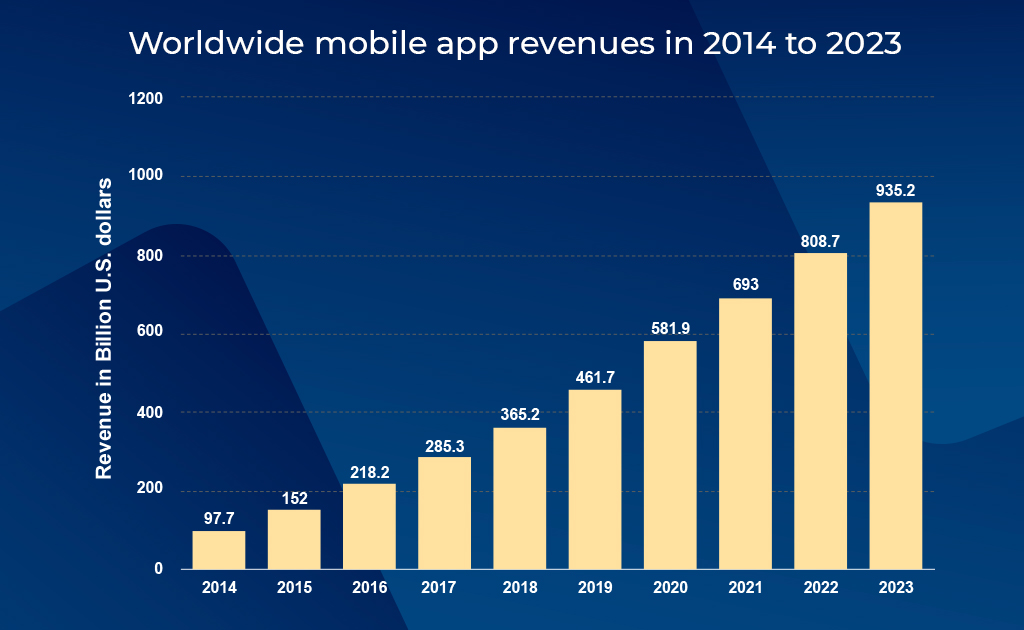
The mobile app industry continues to flourish with 218 billion new app downloads in 2020 from over 5 billion unique smartphone users worldwide.
Outsource App Development

Source: Statista

In the fast-paced digital age, businesses don’t have a second to spare. Due to modern business challenges caused by the pandemic, businesses are looking for quick and safe ways to execute mobile app development.

The solution is quite simple: Outsource App Development

The global market revenue of outsourcing mobile app development has already reached $90 billion in 2020, and for good reason.
Organizations can focus on their business operations by outsourcing app development. Outsourcing mobile application development is the all-in-one solution to all your app development challenges. An app development agency can provide you with experienced and skilled software developers, eliminating the hassle of the hiring process.

With this in-depth guide on how to outsource app development in 2021, we’ll answer frequently asked questions like:

  • How do you outsource app development?
  • Should I outsource app development?
  • How to outsource app development in 2021?
  • Where to outsource mobile app development?
  • What are the options for outsourcing mobile app development?
  • What are the benefits of outsourcing app development?

Without further ado, let’s delve deeper and answer these questions.

What is Outsource App Development?

Application development outsourcing is the process where an organization or company decides to hire an external mobile app development agency to plan and execute software development projects, instead of an in-house development team.

A third-party mobile app development agency handles entire software development projects with efficient communication to successfully meet your app development goals.

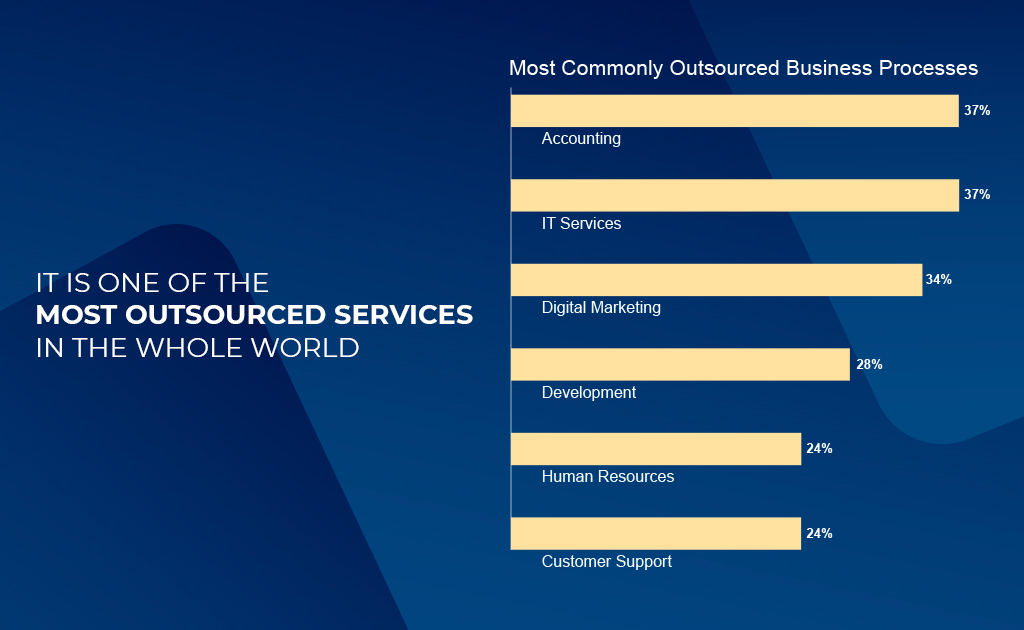
The significance of software development outsourcing has been on a steady rise in the last decade, and the onset of the pandemic has made it all the more necessary. The global revenue for IT outsourcing is expected to surpass $400 billion in 2021. Amid the risk of Covid-19 exposure, companies are finding it much more convenient and safe to outsource app development than going through an entire hiring process for an in-house development team.
 mobile app development agency 

Source: Microsourcing

With adequate knowledge and proper guidance, anyone can tap into the pool of mobile app development outsourcing companies. After all, everything is online in the prevailing digital age, so why not take full advantage of software development talent around the world?

Let’s explore further and understand the importance of outsourcing mobile application development.

What are the Available Options for Outsourcing App Development?

In-house hiring provides you with a fixed team of software developers, contrarily, outsourcing app development offers different options. Let’s have a look:

1. Full-Service App Development Agency:

It may take up to a month to search for the ideal freelancer or off-the-shelf software, but choosing a full-service mobile app development agency eliminates most of the effort needed, saving a lot of time with high-end efficiency and productivity.
A mobile app development agency can create a dedicated team of software developers with diverse specializations and experience, custom-tailored for the complexities of your app development requirements.

Most businesses tend to disregard the perks of a full-service app development agency because it costs more than other options, but they overlook the fact that these agencies deliver the results that matter and guarantees return on investment (ROI) with ease.

Pros of Mobile App Development Agency:

  • A dedicated team of developers can integrate with your existing workforce easily
  • Completely flexible with your app development needs and work timings
  • Focused and streamlined app delivery process
  • Rapid app development speed
  • Impeccable and immaculate code quality from a team of vetted software developers
  • Post-development maintenance and regular updates

Cons of Mobile App Development Agency:

  • An app development agency costs more than hiring a freelancer or purchasing ready-made software, but the increase in price is well worth it due to the high quality of coding and the saved time;
  • Partnering with a full-service mobile app development agency may not be viable for small-scale and short-term projects.

2. Off-The-Shelf Software:

Off-the-shelf software is ready-made software for mobile applications. It is ideal for budget-strapped scenarios where you need an app for your existing business without complex features. It is the cheapest option for launchingan app instantly.

Even though an off-the-shelf software comes with many predefined features, it has limited flexibility and scalability to match your app development needs. Your app may lack originality and uniqueness because off-the-shelf software comes with a basic UI design. Additionally, customizations and regular updates are impossible if you choose this option to outsource app development.

3. Freelancers:

mobile app development

If you want to outsource for small-scale app development or short projects, freelancers are the best option. However, amid the online clutter and over-abundance of freelancing app developers, searching for talented freelancers is like trying to find a needle in a haystack.

This option is much cheaper than partnering with mobile app development outsourcing companies, but freelancers have narrow specializations regarding development platforms and technologies. Additionally, time-sensitive projects are ill-suited for freelancers.

Freelancing software developers can be found on platforms like Upwork, Toptal and Fiverr.

Freelancer Pros:

  • Cost-effective for small-scale and short-term app development projects;
  • Pocket-friendly because you’ll pay only for the working hours;
  • The screening process is simplified with reviews and feedback from previous companies.

Freelancer Cons:

  • Time-consuming screening and interview process;
  • This option can lead to a lack of communication and versatility.

Communication Crafts: Full-Service Mobile App Development Agency

Communication Crafts is a leading mobile app development agency with 16+ years of hands-on experience. We utilise a potent mix of technology and innovation to provide end-to-end app development solutions under one roof. We leverage state-of-the-art technologies for high-quality app development services that span many industries like banking & finance, food & drink, eCommerce, health & fitness, entertainment, photography, logistics, eLearning and more.

Our app development services help you captivate your current audience, reach out to potential consumers, maximise organic traffic and boost conversion rates.

We actualize your app development dreams in 7 simple steps:

  1. Resource Gathering
  2. Ideation and Strategy
  3. UI/UX Design
  4. Application Development
  5. Application Testing
  6. Application Deployment
  7. Management, Maintenance and Promotion

Flexible Hiring Models by Communication Crafts:

 Full-TimePart-TimeHourly
Working Hours8 hours/day & 5 days/week8 hours/day & 5 days/week8 hours/day & 5 days/week
CommunicationEmail, Skype and PhoneEmail, Skype and PhoneEmail, Skype and Phone
BillingMonthlyMonthlyHourly (As per rate)
Hiring PeriodMinimum 1 monthMinimum 1 monthMinimum 25 hours

For further assistance or questions regarding mobile app development services, feel free to contact us.

Clutch is the most reliable platform for searching mobile app development outsourcing companies. It provides accurate and honest reviews about the app development agencies and lets you read reviews and feedback from previous clients of the listed companies.

This platform displays many significant characteristics that help you shortlist the best-suited app development agencies- Clutch rating, minimum project size, number of employees, average hourly rate, development focus, industry focus, client focus and more.

Communication Crafts has been rated as one of the most trusted and leading app development agencies by Clutch!

Our team of expert app developers are just one call away!

Outsource App Development VS Hire In-House App Development

Two biggest advantages of hiring an in-house development team:

  • The team can blend in with your work culture and become an integral part of your organization
  • You gain complete control over the app development process

However, due to the limited scope of experience and knowledge of a fixed app development team, this option is viable only if you already have a full-proof plan to achieve your app development goals. With an arduous process of shortlisting and selection, hiring an in-house app development team is more expensive as compared to when you outsource app development.

Outsourcing app development provides a cost-effective way for businesses to achieve their app development goals. An ideal mobile app development agency unlocks a wide range of perks like scalability, long-term partnership, efficient communication, quick results, and more.

Before we move ahead, we need to discuss the advantages of software development outsourcing.

What are the Benefits of Outsourcing Mobile Application Development?
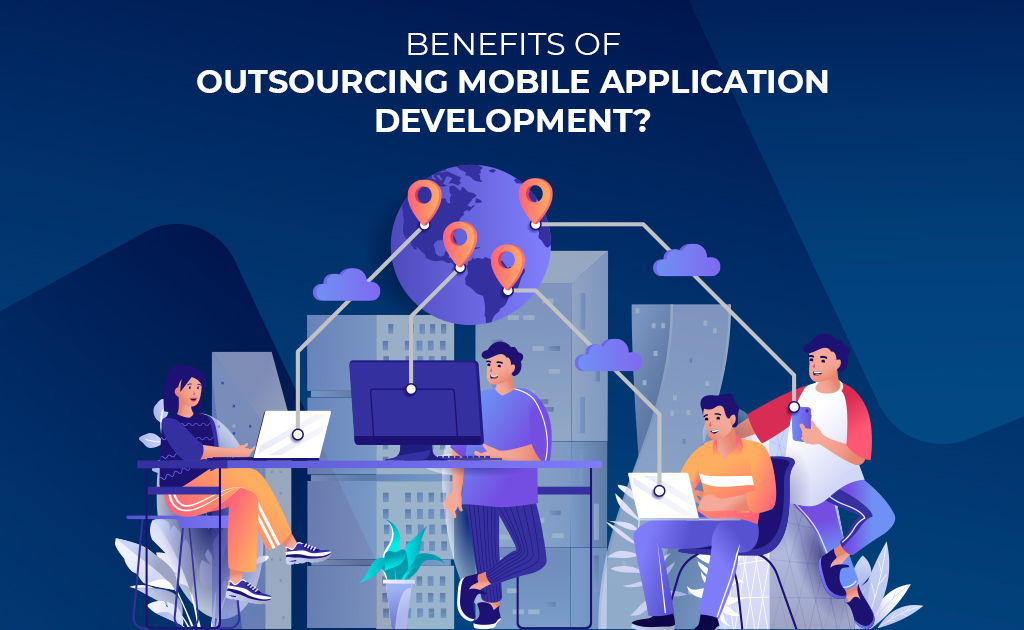
Outsourcing Mobile Application Development

Our app development experts have explained the following perks of software development outsourcing:

Rapid app development speed: Outsourcing app development can speed up software development projects by eliminating the time-consuming hiring process.

  • Up-to-date technology: Digital age is going through continuous technological advancement and you can avail the latest technology stacks by outsourcing app development.
  • Maintenance and support: Post-development maintenance isn’t an issue when you choose to outsource app development. You can re-hire from the same mobile app development agency or maintain a long-term partnership for continuous updates and bug fixes.
  • A wide scope of experience and knowledge: Outsourcing software development companies exhibit great knowledge and experience as they’ve worked for similar companies and clients.
  • Cost-efficient development process: You can select specific countries to outsource app development according to your budget, different countries have different price ranges for software development. Also, mobile app development outsourcing companies provide flexible payment options.
  • Get high-quality work: You can shortlist the best outsourcing software development companies to get optimal results. Client testimonials, reviews and company portfoliosmake it easy to identify the most suitable app development agency for you.
  •  

Now that we’ve discussed the benefits of software development outsourcing, let’s discuss how to successfully outsource app development.

How to Outsource App Development?

Here are the 5 simple steps to efficiently outsource mobile app development:

1. Define your app development needs and goals: Have a clear vision and form a concept of your app along with its main features. This will help you communicate your app development expectations and goals with your outsourcing partners. Outline the following:

  • App development goals
  • The use-case of the app for your end-users
  • App development platform
  • Main features

2.Budget estimation: Allocating finances are a significant part of mobile development outsourcing. An estimated budget helps you shortlist the best-suited mobile app development outsourcing companies.

3. Research: Conduct extensive research on app developers and app development agencies. Carefully examine hard (technical) skills, soft (behavioural) skills, company portfolio, client reviews and testimonials to shortlist the best outsourcing software development companies.

4. Contact the finalised app development agency: Get in touch with the chosen app development agency and convey your app development needs and expectations.

5. Choose a service and payment model: Select a model of service like project-based, dedicated team or individual developers and a model of payment like full project payment, hour-based, fixed price or material.

Looking for software developers to build impactful and intuitive mobile applications?

You demand, we deliver!

The Impact of EdTech StartUps On the Education Industry

There’s not a shred of doubt left that EdTech is the future of education.

Education has been going through a technological transformation for years, and EdTech startups are a by-product of this transformation.

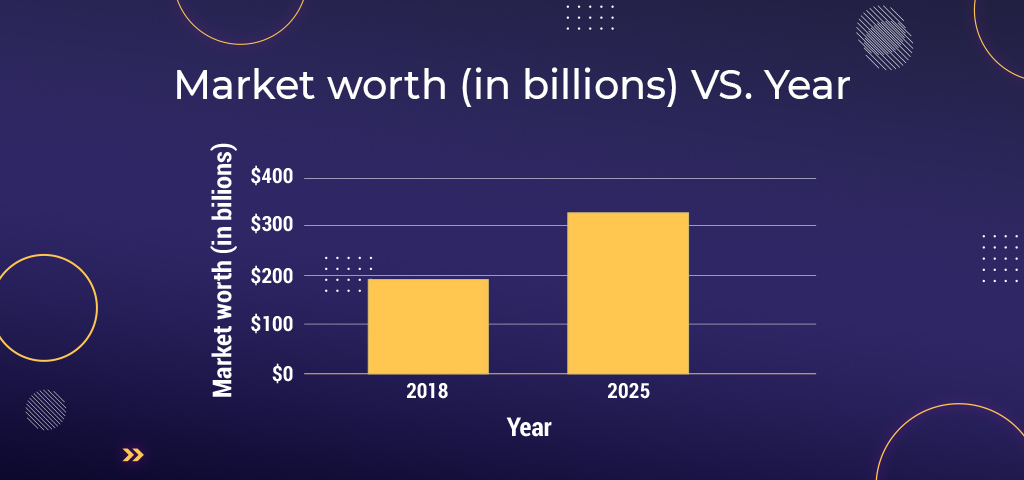
The EdTech market has been on a steep rise since its inception, revolutionizing the education industry with global projections reaching a figure of $325 billion by 2025.

EdTech StartUps

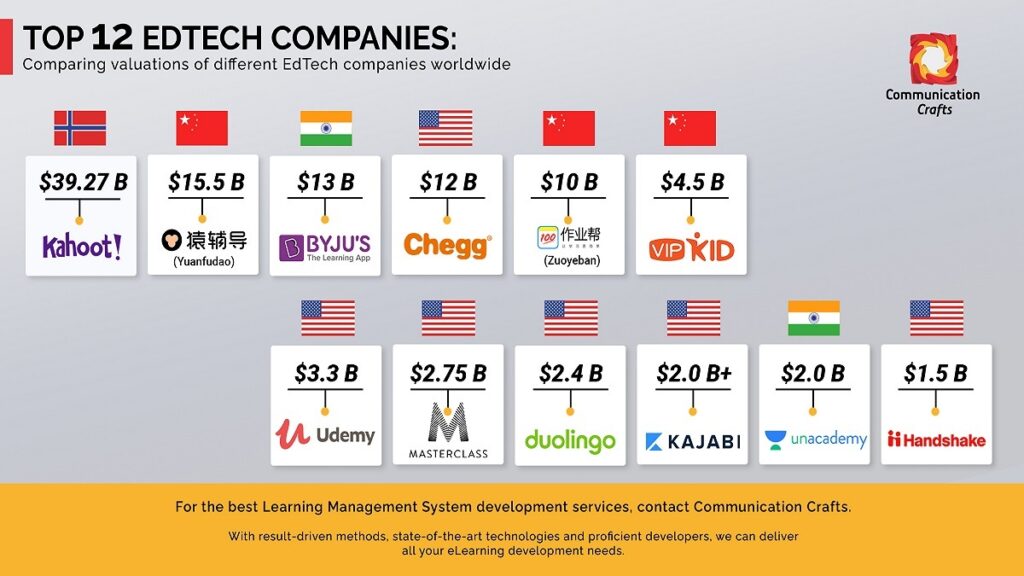
Since the early 2000s, new EdTech startups have emerged, prospered and flourished around the globe. Here are the top 12 EdTech companies that stood the test of time:

 Education Industry

The ease of use, convenience of remote learning and maximised knowledge retention are some of the benefits that are compelling universities, institutes and businesses to adopt modern learning methods with the help of EdTech startups.

Now that the importance of EdTech is well established, let’s delve deeper and understand the advantages of EdTech startups and their impact on the education industry.

The Benefits of EdTech StartUps

Education related startups can enhance the learning experience for students around the globe. With a wide range of benefits, eLearning startups are gaining popularity and transforming the way we perceive education completely.

Let’s look at some of the advantages of EdTech startups:

Unlimited Learning Access:

Technology in education has impacted the lives of students all over the world, delivering 24×7 learning accessibility and a limitless source of online learning materials.

The mobility and flexibility of EdTech startups are unparalleled. Access to the internet can facilitate online classes and a modern learning environment for students whenever and wherever they want.

Education technology startups have eliminated the need to look for and carry books, minimised the amount of required paperwork and enabled a boundless learning platform for taking courses or training programs. Additionally, students can always refer back to the course materials or videos of previous webinars and online classes whenever needed.

Personalized Learning:

Personalized Learning:

Providing the same course structure for every student is a major drawback of the traditional learning methods and online education startups can effectively solve this issue with ease.

Personalized learning experiences are vital for students to unlock their true potential. Every student has specific needs, and addressing unique needs can lead to a comfortable learning experience for students and teachers alike.

Individualised learning structure enables the students to learn at their own pace, without being rushed through important concepts and topics.

Education related startups can also provide the teachers with real-time performance evaluations of the students, making it easy for the teachers to bridge the gaps in knowledge and easily create a personalized course structure.

Online training programs or eLearning courses can be easily customized according to the students’ strengths, weaknesses, interests, skills, etc.

Streamlined Communication:

Education technology startups can bridge the communication gap between parents and teachers. Parents can freely communicate with the teachers to gain insight into the students’ learning experiences and performances, making it relatively easy for them to solve specific issues or setbacks in a student’s learning process.

Moreover, EdTech startups boost collaboration around the globe. Students can collaborate with other students from different corners of the planet to participate in team-based projects or discuss different perspectives on different concepts. The same goes for the teaching faculty, teachers can collaborate around the world to discuss different teaching methods and plan unique course structures or training programs.

Modern Technologies:

Modern Technologies:

eLearning startups can utilise educational apps to implement different technologies in the eLearning process.

Artificial intelligence or AI can be used with machine learning to automate simple tasks like grading papers and performance assessment, saving time and boosting efficiency.

Augmented Reality or AR and Virtual Reality or VR can be used to create a completely interactive and immersive learning experience. Concepts or topics that can’t be perceived normally by us like physics, chemistry, biology, astronomy, etc. can be thoroughly taught using virtual objects and animations.

Google Sky Map is an AR app that is used to study Astronomy. Students can point their phone cameras towards the sky to identify and learn the different positions of different stars, constellations, planets, etc.

Elements 4D is another AR app that utilises wooden blocks and a phone camera to display different properties of elements for learning Chemistry with ease.

The Aviation industry has been using AR/VR technology to train pilots in safe environments. The flying experience with different aspects like multiple terrains, navigation systems, weather conditions can be easily simulated with AR/VR.

The Impact of EdTech StartUps

Employee Upskilling

EdTech startups have widened the scope for corporate employees across different industries. Training programs for CEOs and managers can be easily facilitated by teaching startups.

Upskilling of the workforce is very important for organizations, especially during the pandemic. Important roles may require sudden replacements because of health-related issues and lower-ranking employees can be easily trained for those roles with EdTech related startups.

Teaching relevant skills by assessing gaps in skill is a blessing for organizations, making it easier to reach the desired goals with a well-trained workforce. After all, eLearning methods require 40%-60% less employee time compared to the traditional learning methods.

EdTech startups can also be used for orientation purposes. New employees can be taught required skills, the company policies, rules and regulations with the help of learning management systems or LMS.

Knowledge of Different Arts

Let’s set aside academic education for a while because there are various other fields of knowledge like music, dance, painting, etc.
Students who are interested in learning artistic subjects find eLearning courses for the same. These subjects require a whole new level of focus, determination and a strong foundation.

Different instructors for music, dance, painting and more can be employed by the education technology startups for delivering effective courses in the field of arts remotely. There are currently many educational apps that can be used for learning different instruments like Guitar, Violin, Casio, Drums, etc.

Game-based learning and Gamification

Game-based learning

Game-based learning is the use of game-like environments with digital or non-digital games for teaching purposes, educational games include role-playing, team-based games, full-fledged digital games, customized board games, and more.

Gamification is the use of game-like elements in the learning process of the students to keep them engaged and involved. Different elements like quizzes, winning badges, point-system, leaderboards, trophies, level-based learning, etc. are used in the learning experience to integrate a sense of competition, progression and rewarding results.

Pulse is a game-based learning technique used by the healthcare sector to simulate different stressful and unpredictable medical scenarios. It uses cutting-edge graphics for a completely immersive experience for medical professionals to practice in safe environments.

Duolingo is a language learning app that utilises gamification techniques to keep the users captivated and make the learning process more fun. Elements like point-system, different levels, losing lives, competing with friends, and rewards after completing lessons keep the users engaged in the language learning process.

ThinkWrite is an EdTech platform that helps children significantly improve their handwriting. Here at Communication Crafts, we leveraged the latest technologies to implement different gamification techniques like puzzles, memory games, matching games, adorable animal characters and so on, introducing an appealing and captivating learning experience for the kids.

For a more in-depth article on Game-Based Learning.

Multi-Media eLearning

Online education startups can facilitate the use of multi-media learning for students. eLearning experiences with different kinds of media like images and videos instead of just text-based learning provide a much deeper understanding of the concepts and boost problem-solving skills.

Traditional training methods provide a knowledge retention rate of only 8%-10%, whereas the knowledge retention rate with multimedia eLearning is 25%-60%, making it one of the most effective USPs for EdTech startups.

Moreover, students feel much more interested and engaged when taught using images and videos, students can also refer back to the videos to revise and fill the gaps in knowledge.

A Diverse Learning Experience

EdTech startups can break the barriers of knowledge by delivering efficient learning materials, training programs, educational courses and private tutoring anywhere and at any time.

Specially designed educational apps or online courses can be delivered to effectively teach differently-abled students who can’t get access to education through traditional classroom methods.

EdTech startups can easily overcome geographical barriers by delivering online courses and training programs remotely.

Language barriers are also not an issue for EdTech startups as they can hire multilingual teachers/instructors and provide course materials in the required languages.

Final Thoughts

Technology is reshaping the way we perceive training and education. EdTech startups are thriving and gaining popularity now more than ever.

Modern eLearning methods have displayed better knowledge retention than conventional learning methods and Education Tech startups are enhancing training methods and educational courses across the globe.

With many features and benefits, EdTech startups have had a considerable impact on the education industry, providing a more engaging and captivating learning experience for the students.

If you’re looking for guidance in developing educational apps or starting an EdTech start-up, we’re at your service.

With 16+ years of experience, Communication Crafts provides top-notch EdTech solutions like Learning Management Systems and Educational Apps. Our EdTech experts can deliver cost-effective eLearning solutions that engage your current audience, attract new users, exhibit all the significant features and more.

EdTech is the future of education, and we make sure it stays bright!

Looking for custom-tailored EdTech solutions to increase productivity?

You’ve reached the right place!

Future of eCommerce: 7 Most Popular eCommerce Trends

eCommerce is the heart and soul of brands in the digital era, making it absolutely necessary for brands to have online shops that deliver excellent user experiences.

The online retail experience is known as electronic commerce or eCommerce, a virtual platform facilitating online transactions in exchange for physical products or services.

The digitalization of businesses began in the early 2000s, but the onset of covid-19 has accelerated the demand for online services considerably. Consumer demands and expectations are at an all-time high, and brands have to continuously figure out new and improved ways to serve their online audience.

eCommerce sale

Staying up-to-date with the latest eCommerce trends and innovations is the most effective way for maintaining brand loyalty and driving business sales effortlessly.

The world of eCommerce is always evolving, and it’s about time brands realise the importance of eCommerce trends for making well-informed business decisions.

1. Augmented Reality (AR)

eCommerce trends are evolving by leaps and bounds and Augmented Reality or AR is the most significant example of the same.
Even though AR seems unreal and far-fetched, it has continuously made impactful strides in the field of eCommerce.

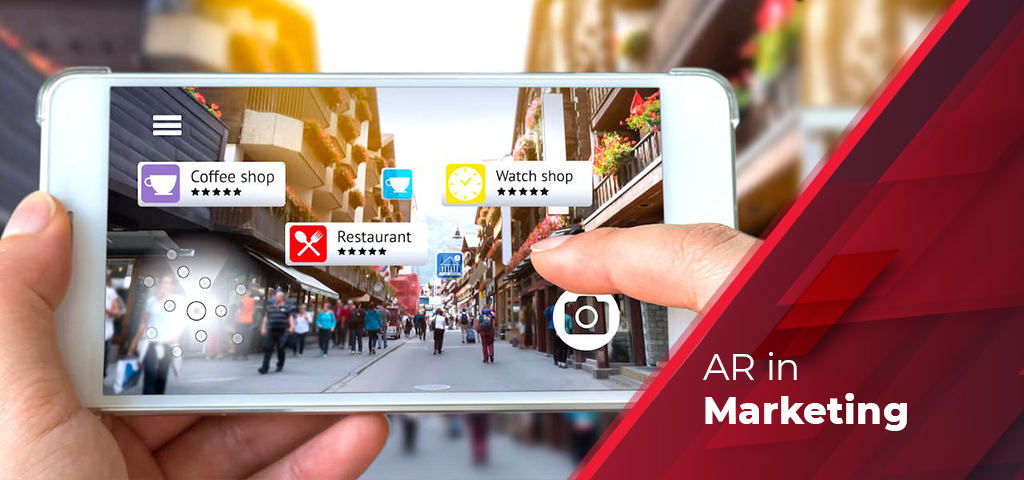
The technology or software to merge real-world surroundings with virtual objects and 3D animation is known as Augmented Reality, most commonly implemented through mobile cameras or AR screens. Augmented Reality can deliver a truly immersive online retail experience for consumers. For instance, a customer can try on different products using AR through the phone camera, providing well-informed insight about the product and well-informed purchase decisions.

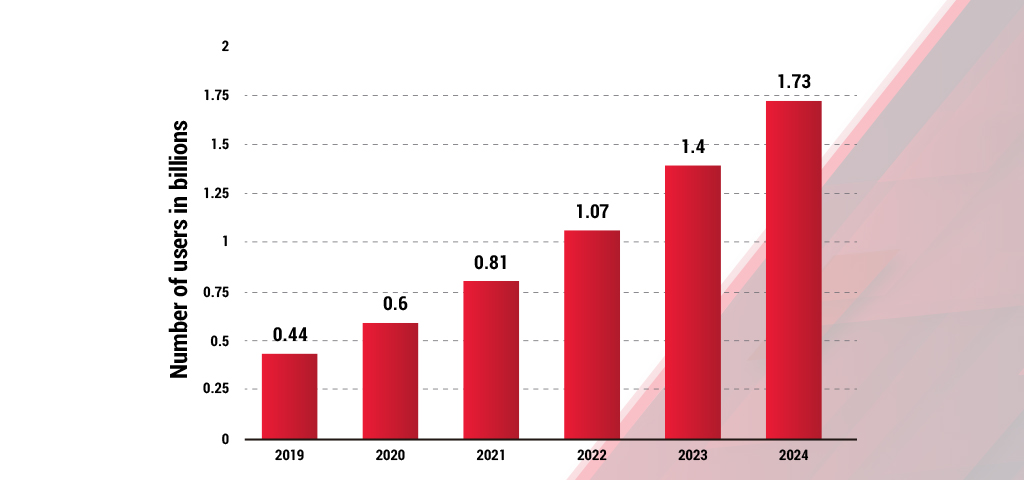
Many businesses are gradually realising the impact of AR on eCommerce. With the growing demand for unique experiences, AR has proved to be one of the fastest-growing technology trends in the eCommerce industry in recent years.

With an expected figure of $77 billion by 2025, AR can enhance the online retail experience of 63% of online consumers globally. Moreover, 100 million consumers were already shopping using AR in 2021.

Here are some of the unique use cases of AR in eCommerce:

1. IKEA Studio App: One of the most well-known furniture retail companies provides a way to test run their home furnishing products with Augmented Reality. The customers can use the phone camera with the IKEA Studio App to try the product/products in the surroundings of their homes, instantly enhancing the online retail experience.

Studio App

2. The Dulux Visualizer App: This architectural paint brand utilises AR to let their shoppers try more than 1,200 paint colours on their walls, simplifying the decision of choosing the right colour to match the décor of their homes.

 iOS mobile app

3. Gucci: One of the highly acclaimed luxury fashion brands launched a new feature in their iOS app that enables online shoppers to try on different shoes remotely using their phone cameras, attracting and retaining customers with ease.

 iOS app

2. Artificial Intelligence (AI)

Artificial Intelligence or AI holds high value in the future prospects of eCommerce, emerging as one of the most impactful technology trends in the eCommerce industry.

Online retail experience all over the internet is continuously being refined and polished in real-time according to the consumers’ preferences and online activities, keeping them engaged and enhancing their overall online retail experience.

The future of eCommerce is strongly reliant on AI, and its marketing is expected to reach $300 billion by 2026. Surprisingly, Forbes states that $57 billion is the expected AI expenditure by companies in 2021.

Artificial Intelligence is a highly complex algorithm that analyses vast amounts of data and uses machine learning to identify specific patterns in consumer behaviour, minimizing human effort and displaying extreme accuracy in suggestions, recommendations and more.
There are many by-products of AI, which makes it one of the most effective technology trends in eCommerce.

By-products of AI:

Voice Search: Speech recognition technology using AI can be very helpful for online shoppers. Consumers can avail different options for desired products with the ease of voice commands, saving their time by eliminating the need to type. 7 out of 10 consumers prefer voice search instead of typing. This explains the ever-increasing demand for smart speakers and voice assistants like Apple Siri, Amazon Alexa, Microsoft Cortana and Google Home.

Chatbots: With machine learning and artificial intelligence, chatbots can enhance customer engagement and provide 24×7 customer service. According to a survey, complaint resolution speed was significantly improved for 90% of businesses by using chatbots. eBay and Amazon, the giants of eCommerce are already using chatbots for automated customer interactions regarding complaints, refunds, queries, etc.

eCommerce trend

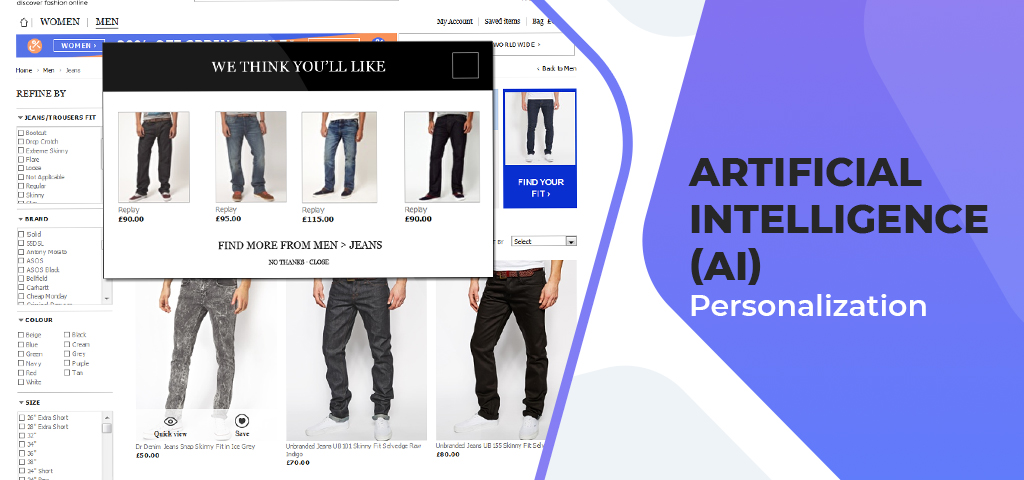
Personalization: This is not just any eCommerce trend, personalized experiences are a necessity for driving sales in the digital era. Artificial intelligence with machine learning is used for gaining deep insight into consumer behaviour, delivering enticing recommendations and suggestions. More than 90% of consumers prefer online shopping experiences that provide relevant recommendations. Consumers are looking for unique and personalized online retail experiences amid the ever-increasing online clutter. Companies like Amazon and Starbucks uses AI to create a list of personalised suggestions based on online activity, past purchases, preferences and location, eliminating the need to search and maximising customer satisfaction.

3. Mobile Shopping

Mobile eCommerce is one of the fastest-growing eCommerce trends 2021. From small-scale start-ups to large-scale enterprises, every business needs to adapt and provide mobile eCommerce experiences to stay competitive in the digital era.

Mobile applications and progressive web apps are the best way to ensure quick sales and develop customer loyalty for the long run.
With the obvious ease of mobility, mobile eCommerce exposes your brand to a vast majority of the population, letting your products be accessible to consumers at all times.

Mobile eCommerce is projected to reach a staggering figure of $3.5 trillion in 2021, which is more than 70% of total eCommerce sales. The convenience of shopping through mobile phones continues to boost the demand for mobile eCommerce in this fast-paced digital era.

Examples of Mobile eCommerce:

Domino’s: Like many other leading restaurant chains, Domino’s provides a convenient mobile app to order pizza at any time and from anywhere. With an accurate pizza tracker and many other helpful features, Domino’s is the best example for mobile eCommerce.

mobile application

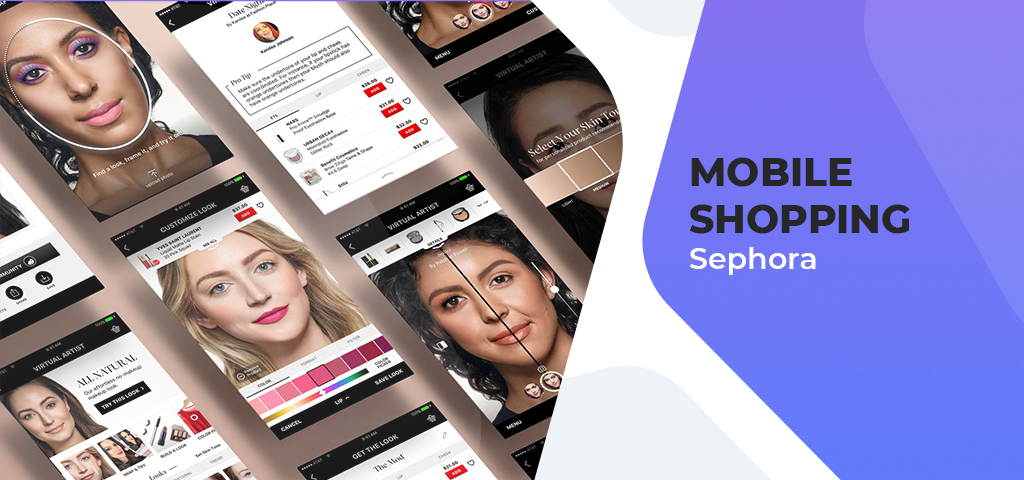
Sephora: Buying cosmetic products online is a daunting task. Sephora simplifies this process for its customers by providing AR technology in its mobile application. Consumers can try on different cosmetic products before purchasing, maximising customer satisfaction and ensuring sales simultaneously.

mobile application

4. Multiple Payment Gateways

This eCommerce trend enhances the overall online retail experience by developing customer trust and loyalty.

Consumer behaviour indicates that online shoppers are always attracted to multiple options, and that’s why multiple payment gateways are so important for the future of eCommerce.

38% of customers reported that they failed to purchase products because their form of payment wasn’t applicable. Inadequate payment methods can repel customers, affecting customer satisfaction and brand loyalty adversely.

Accepting multiple modes of payment and different currencies leads to a happy customer base, even ensuring international sales.

Different types of payment methods:

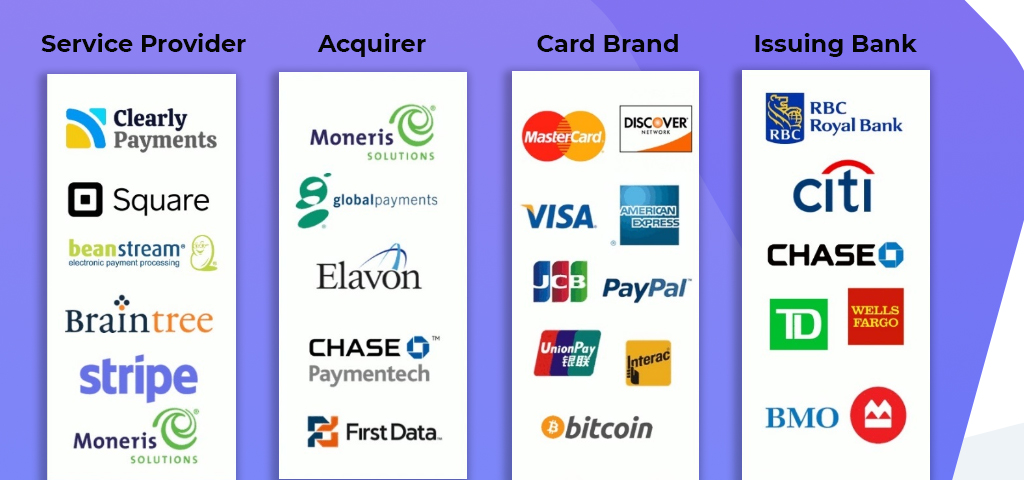
payment methods

5. Subscription Model

One of the most effective eCommerce trends 2021, the subscription-based model tends to attract more customers and develops a brand community. The personalized benefits gained through subscription is more than enough for retaining customers.

It works both ways, paying a fixed monthly price is more attractive to customers as they can plan their budget accordingly and the brand receives a steady flow of revenue every month.

The Dollar Shave Club used this eCommerce trend in a very unique way. They tripled their revenue in a couple of years by mailing shaving equipment to their members’ homes for a mere $1/month subscription.

Microsoft and Sony are always at an all-out war as the leading brands for the best gaming consoles, Xbox and PlayStation. Both gaming communities follow a subscription-based model with different benefits, for example, Xbox Live offers newly developed games for free and PlayStation Plus provides top-notch games exclusive to the members only.

Amazon subscription members can avail free two-day shipping feature and special offers, and many food delivery companies also offer priority delivery and heavy discounts for the members. Streaming services like HBO max, Netflix, Disney+, etc. function solely on a subscription-based model.

6. Content Optimization

The significance of SERP (Search Engine Results Page) rankings for brand recognition and brand awareness is unparalleled. Providing authentic content with the right keywords and different forms of media can boost your brand’s ranking on SERPs.

Video content has emerged as one of the most important eCommerce trends in 2023. Content that provides value to the users along with videos and original text is ranked at the top of search engines, maximising brand visibility. Efficient landing pages, original blogs, multi-media content and social media tags are some of the ways to boost your website’s SERP ranking.

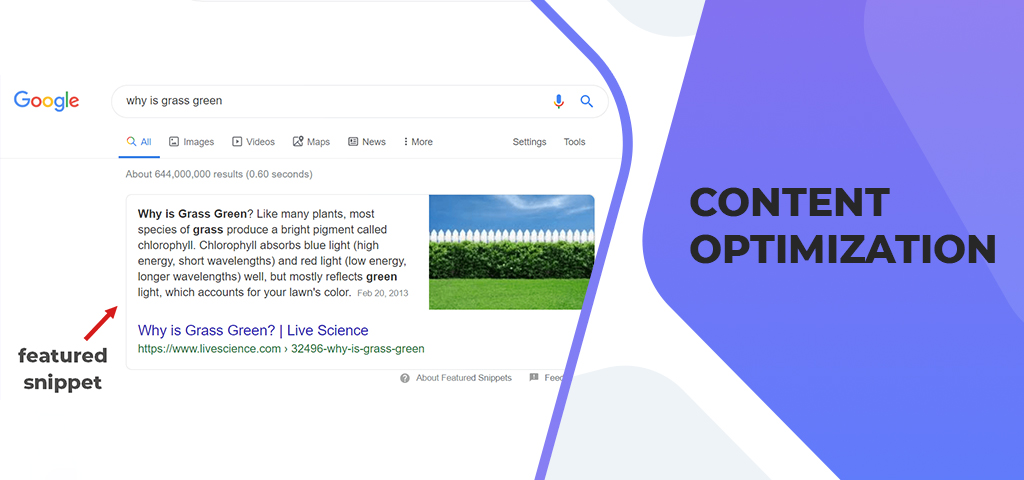
With the rapid increase in digitization, ranking on the first page of Google may deliver the desired results, but getting your website featured on SERP position zero or “Snippets” must be your top priority.

Snippets are a great way to boost conversion rate and brand recognition as most of the mobile searches on Google end up with “zero-click” results because users generally get the answer without opening any links.

Search Engine Results Page

Another way of optimising content for increased brand awareness is by prioritising People Also Ask or PAA.

The PAA section on Google provides relevant answers to related questions, delivering additional information for the users’ benefit. The PAA section is displayed after a couple of links on the first page, hence it is extremely useful to optimise your website content accordingly by answering related queries.

content Optimazation

7. Green Consumerism

As the entire planet is heading towards a dangerous “tipping point” with irreversible and inevitable climate changes, consumers are looking for brands that display high sustainability and green initiatives.

Consumers are getting environmentally conscious, with more than 50% of customers demanding sustainable fashion brands. Additionally, 75% of consumers prefer less packaging from brands and 65% of consumers gravitate towards eco-friendly brands that support sustainability.

Big names like Amazon, Dell, Google, Walmart, etc. are already looking for innovative ways to promote sustainability and implement green initiatives in business processes.

Adidas has made a significant stride towards green consumerism by recycling plastic waste from oceans to manufacture top-grade sneakers.

eCommerce development services

Summing Up

These are the top 7 emerging eCommerce trends 2021 that businesses should follow to enhance the overall online retail experience for their consumers.

From advanced technologies like AR and AI to simple methods like content optimization, following and executing the latest eCommerce trends is the key to success in an extremely volatile digital world.

Anticipating the ever-evolving eCommerce trends can improve customer relationships and engagement, brand awareness and recognition, and maximise return on investment.

For further queries or assistance regarding eCommerce development, feel free to contact us!

Communication Crafts is a result-driven and experience-led eCommerce development company that provides bespoke software development services like website developmentmobile app developmentERP system implementation and more.

Reap the benefits of our cost-effective and future-proof digital solutions!

Looking for bespoke eCommerce development services?

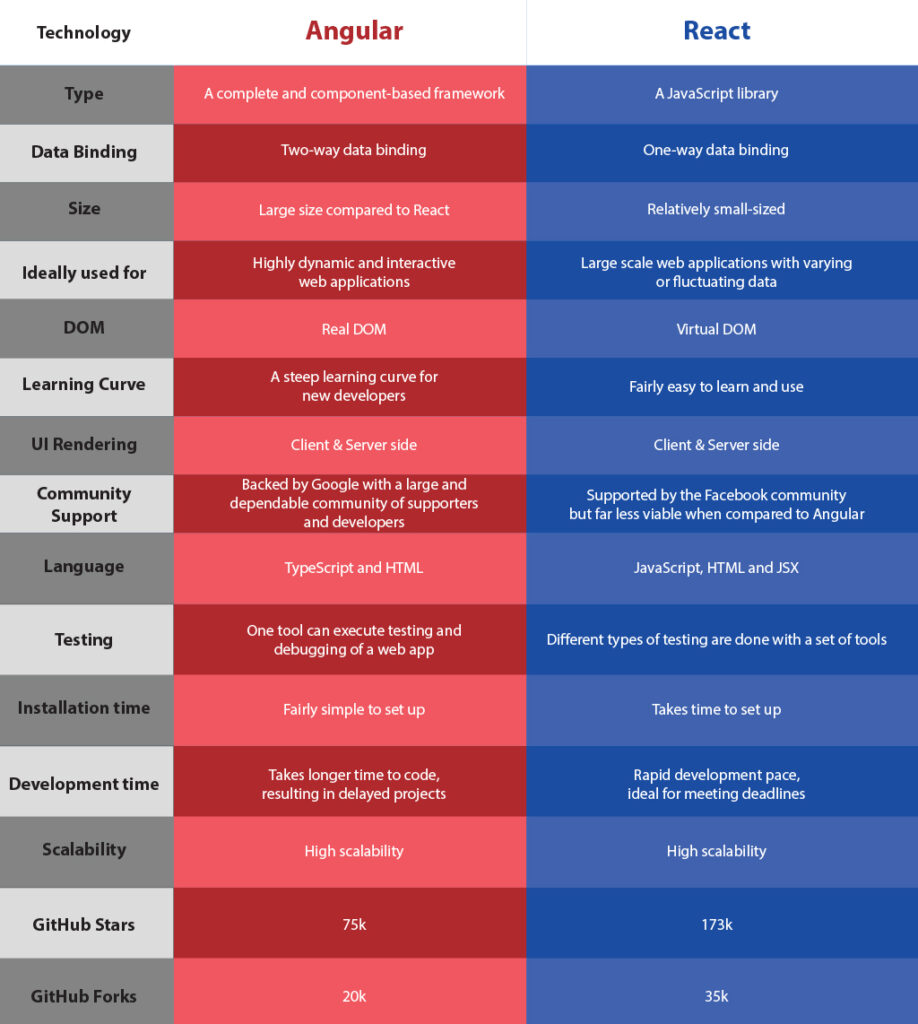
We’ve got you covered!

React VS Angular: A Comprehensive Comparison for Successful Web Development

The paradigm shift towards the digital age started in the early 2000s, and websites became a necessity before businesses could realise it.

With an ever-increasing global eCommerce revenue and ever-changing consumer demands, businesses have to come up with future-proof web development solutions to have an edge in the competition.

Consumers have gotten so used to impeccable online experiences that an opinion about a website is formed within half a second.

As of 2020, the web design industry has reached $40 billion already and continues to grow at an exponential rate.

With 4.45 billion internet users and 1.58 billion active websites globally, it is more than just fierce competition, it is an all-out war between businesses to attract and retain as many online customers as possible.

It is essential to get the nitty-gritty of web development correct to get the desired results. And two of the most-used and most-loved web development platforms are React and Angular. Understanding the differences and significance of these web development platforms can help you build a powerful and effective online presence.

Let’s start with some simple definitions.

Definition: React VS Angular

What is React?

React is an open-sourced JavaScript library, best known for frontend development. It is ideally used for developing UI components and user interfaces. With a “learn once and write anywhere” concept, React can be used to develop scalable and high-functioning apps for any platform. This JavaScript library provides is best for creating highly interactive user interfaces and provides performance-oriented and flexible solutions with server-side rendering. The codebase created using React is fairly simple and easy to understand and launch. Additionally, it is maintained by Google and developer communities.

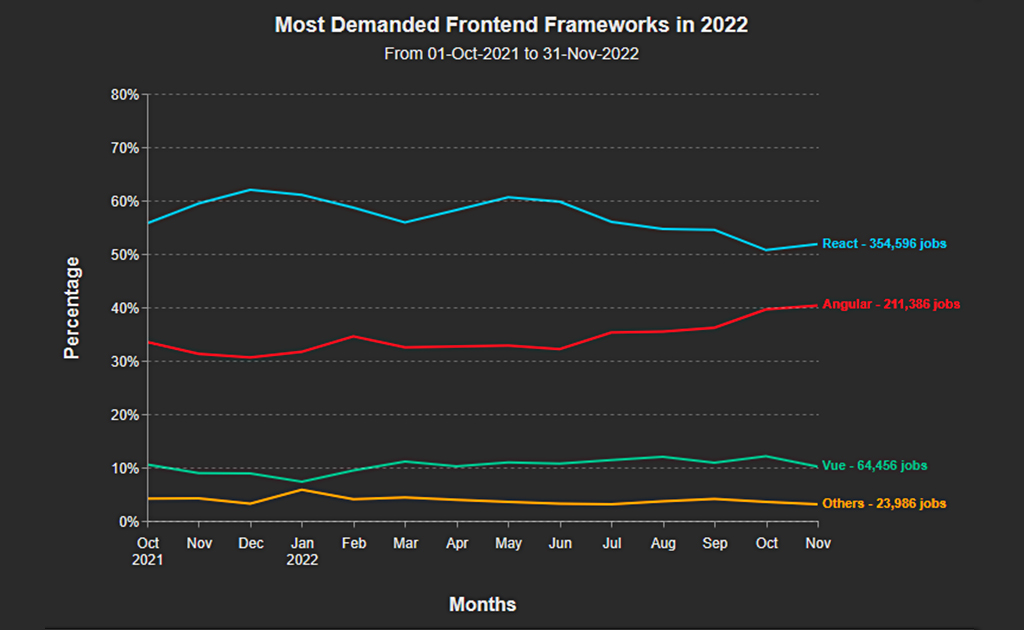
Learn more about the frontend frameworks for web development in 2021.

What is Angular?

Angular is an open-sourced and TypeScript-built (a superset of JavaScript) structural development framework, best known for developing scalable and high-functioning web apps. With a plethora of tools, features and libraries like routing, client-server communication and more, Angular can be used to develop projects from single-page web apps to enterprise-grade applications. Along with a two-way data binding, Angular is supported and updated constantly by Google.

Popularity: React VS Angular

Stack Overflow and Google Trends:

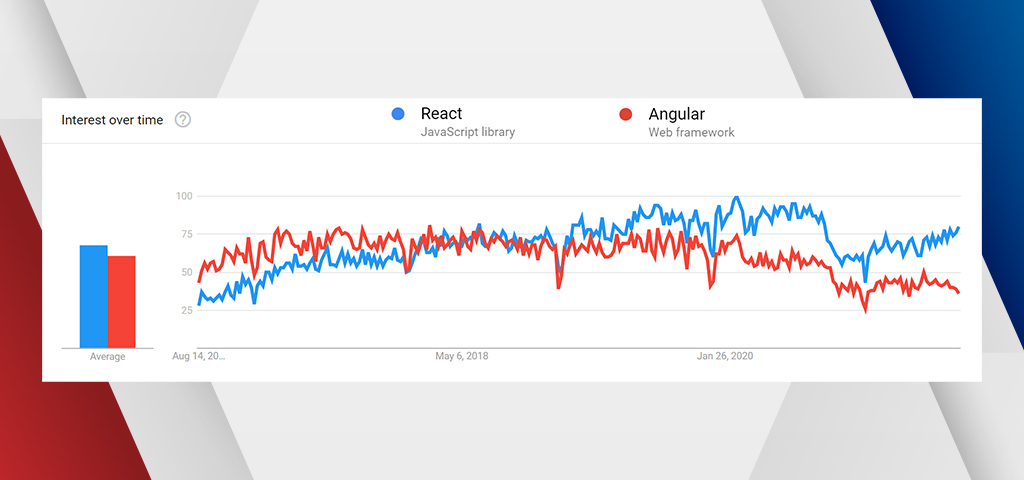
We are using the data from Stack Overflow and Google Trends to measure the sheer popularity in terms of which one was most asked about or talked about between Angular VS React. This data does not represent the usage between these two development platforms.

Let’s have a look:

Stack Overflow:

Google Trends:

Google Trends:

Angular and ReactJS have both witnessed a steep rise in popularity since their inception in 2013 and 2016 respectively. Both of these platforms are highly sought after when it comes to web development. However, Angular experienced a drop in its popularity after 2018, while React maintained its prominence over the years. React has always been consistently in demand for developers around the globe, making it a universal solution for web development.

web development

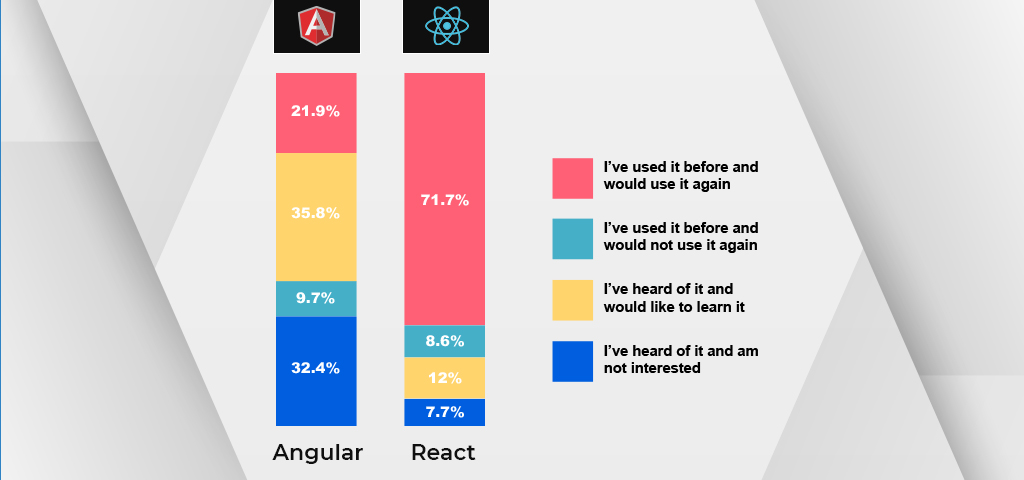
The above-mentioned survey by Stack Overflow sheds more light on the subject of popularity between Angular VS React among web developers. With more than 70% of developers choosing to stay with React accentuates the fact that it is the most sought after open-sourced JavaScript library. Nevertheless, Angular shows great potential with more than 35% of developers expressing keen interest to learn this web framework and almost 30% of developers choosing to continue working with it.

NPM Downloads and SimilarTech:

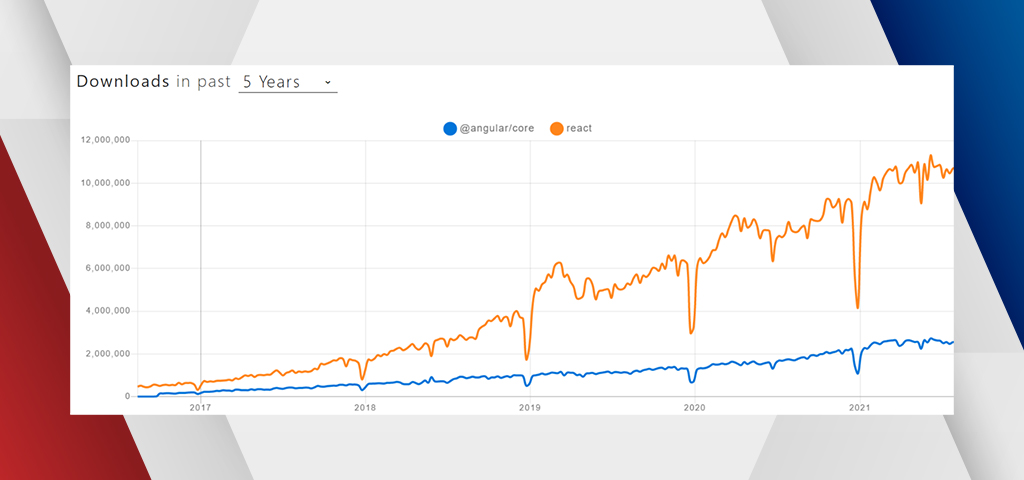
Let’s dive deeper to understand the usage comparison between Angular VS React. The data from NPM downloads and SimilarTech provides insights that will help us determine which web development platform is most used among developers around the globe.

Let’s examine:

NPM download trends:

NPM download trends

SimilarTech:

React VS Angular

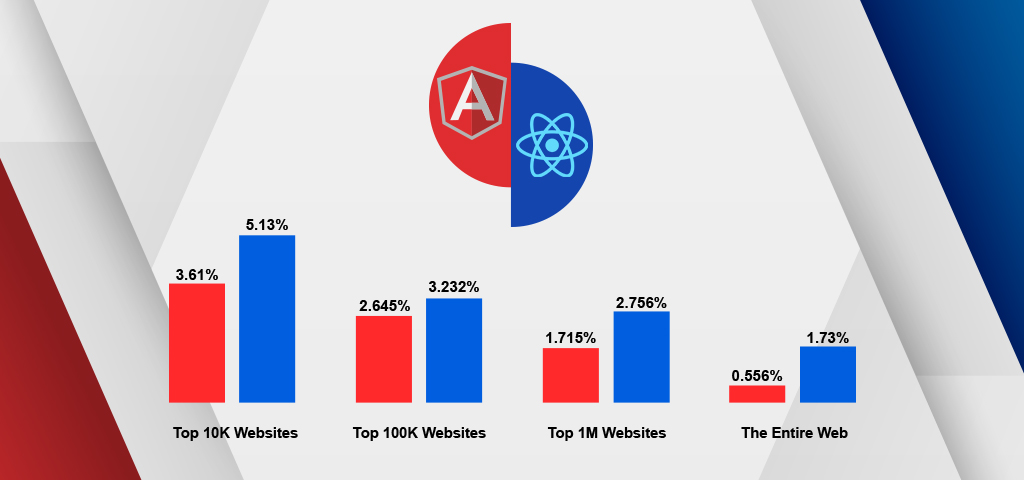
React is used by almost 1.2 million websites and 420k unique domains, while Angular is used by almost 400k websites and 200k unique domains.

Evidently, React wins in the category of usage as well. Even though Angular shows a gradual rise and consistent demand in terms of NPM downloads, React still leads by leaps and bounds in NPM downloads and every category of websites displayed by SimilarTech.

Maturity: React VS Angular

There’s a reason why developers don’t adopt newly developed platforms, an immature web development framework would not possess the required community support or tools to reach its true potential. The maturity of a web development platform determines the quality and size of its community, as well as the efficiency of its tools and updated features.

That’s why developers always choose the platform that has been time-tested and proven its efficiency and effectiveness over the years.

The maturity of a web development platform can be judged by observing data from GitHub:

PlatformGitHub StarsGitHub Forks
React173k35k
Angular75k20k

This proves that both Angular and ReactJS are well-matured web development platforms. With vast community support and adequate tools, it is quite easy to resolve issues while working with Angular and ReactJS.

Problems and bugs are quickly identified and eradicated with constant updates and newer versions, Angular is at its 12th version and React will be launching its 18th version soon enough.

Angular VS React pros and cons can reveal a lot about Angular VS React difference, let’s examine further.

Advantages: React VS Angular

Being the best options for web development, the benefits of Angular and React are endless, and we’ll discuss the most notable ones.
First, let’s understand why use React.

Benefits of React:

  • Being a completely JavaScript-based web development platform, React is fairly easy to learn and use as JavaScript is the most-used programming language around the world.
  • The tree-like structure of a codebase of HTML is known as the Direct Object Model (DOM). React uses a virtual DOM to specifically modify or manipulate sections of the real DOM when a change is made by the user on the frontend. This feature enables faster and smoother performance.
  • Reusability of codes eases the work of the web developers by reducing the lines of code required and providing easily maintainable web UIs and web applications.
  • one-way data binding structure that simplifies the workflow and provides a downward data flow that is quite straightforward and easy to track.
  • Various React developer handy tools are present to track and modify the current state and props of different components in the hierarchy of the virtual DOM.
  • Unlike other JavaScript frameworks, React can be navigated easily on different SERPs, making it SEO-friendly.
  • Very easy to test and debug web applications built with ReactJS.

Benefits of Angular:

  • Model-View-Controller (MVC) architecture to reduce development time by synchronizing the data in the View and the Model, eliminating the need for writing extra lines of code.
  • Angular based UI uses a two-way data binding structure to improve the communication between components in the web application. The database gets constantly and simultaneously updated when a change is made in the user interface.
  • Angular JavaScript developers can create efficient HTML content using Directives to assign different behaviours to different components of the Direct Object Model (DOM).
  • Angular developers have complete freedom to develop and design however they want with maximum flexibility as the elements and modules of Angular are completely customizable.
  • Backed by Google, Angular provides efficient community support with sufficient adequate extensions and third-party tools to aid Angular developers.
  • Angular architecture is developed in a unique way that helps developers to identify and build the codebase easily.
  • TypeScript language in Angular helps the developers to create clean lines of code, making it easy to identify and eradicate mistakes.

Angular VS React pros and cons are incomplete till we discuss the disadvantages.

So let’s dive in, shall we?

Disadvantages: React VS Angular

Choosing between Angular or React has always been a difficult choice, but knowing the disadvantages can simplify it. These drawbacks can lead to a well-informed decision according to your web development needs.

Let’s start with React.

Drawbacks of React:

  • With a rapid development pace, React releases new updates frequently which creates an ever-changing environment. React developers have to constantly keep up with the changes and learn new ways and skills to successfully execute React web development.
  • Constant updates and changes lead to insufficient documentation, forcing the developers to use poorly updated extension libraries by the supporting community.
  • JSX syntax enables a combination of JavaScript and HTML. Even though this comes as a blessing for some developers, it is perceived as a barrier for new developers because of its complexity.
  • Integration with MVC structured frameworks needs a complex configuration that can’t be executed without in-depth knowledge, a steep hurdle for novice developers.

Drawbacks of Angular:

  • With a steep learning curve, Angular is quite difficult to learn for new developers because of the complex coding languages, customizations and integrations.
  • Unlike React and Vue, Angular is a heavy-weight framework that increases its complications.
  • Angular has limited SEO options, making it difficult to identify by search engine crawlers.
  • The Command-line Interface (CLI) is very important to Angular developers, yet CLI documentation lacks details and developers have to put in extra time and effort to get answers to platforms like GitHub.
  •  

Use Cases: React VS Angular

No comparison is complete before discussing the use cases. The choice between Angular or React is clouded with confusion because most developers don’t understand or recognise the specific uses of these web development platforms.

Knowing “when to use” is the most significant step for successful web development.

When and Why Use React:

React can be efficiently used to handle an application’s view layer and develop reusable UI components. The most primary reason for choosing React is its ability to change, modify and load data without the need to refresh a web page.

React has Redux-like state containers for the rapid development of scalable web apps with dynamic and interactive elements.

React can be used for:

  • Single page or cross-platform web app development
  • Social networking websites
  • Data visualization websites and tools
  • Retail or eCommerce websites
  • Real-time messaging web apps
  • Personal or professional blogs
  • A web app with multiple events
  • Personalized web app solutions
  • A web app project with shareable components in the DOM

5 Big names that use React:

  • Facebook
  • Netflix
  • Instagram
  • Airbnb
  • Uber

When and Why use Angular:

Angular can provide rapid frontend development and it can be used as a one-stop solution for quickly developing data-intensive web applications. Angular is efficient for maintaining high-functioning and robust web applications with a reduced JavaScript codebase.
This frontend framework boosts overall performance and provides fast-paced server-side rendering.

Angular can be used for:

  • Higher productivity and ready-to-use solutions
  • Web apps with low to medium complexity level
  • Development teams with expertise over Java, C# and different versions of Angular
  • Interactive and dynamic single-page websites
  • Progressive Web Applications (PWA)
  • Large scale or enterprise-grade feature-rich web applications
  • Websites with customizable content
  • Maximise engagement in user experience in existing websites
  • Update designs of old websites or web applications

5 Big names that use Angular:

  • Gmail
  • Santander
  • Microsoft Office
  • PayPal
  • Forbes

Angular VS React Difference:

Angular VS React Difference

Final Thoughts

We understand it would make it much simpler if we had a clear winner, but that’s never the case in web development. You need to identify your web development needs to carefully determine the technology that can effectively support it.

React has been leading consistently when it comes to sheer popularity and usage but the potential and efficiency of Angular is well-known and sought after by developers everywhere.

Angular can be best used for building and maintaining highly dynamic and interactive web applications, while React is great for large-scale web applications with frequently fluctuating data.

Both Angular and ReactJS are best at what they do, and yet they’re so different. Understanding these subtle and major differences can lead to successful web development that yields effective results.

Are you looking for web development solutions to enhance your business’s online presence? We’re here to help!

With a never-say-die attitude and 16+ years of experience, Communication Crafts offers high skilled ReactJS and Angular developers to help your business flourish and prosper with ease.

Our web development services can provide websites and web applications that can captivate your existing audience and entice potential ones.

We welcome you to exploit our expertise.

Looking for bespoke web development solutions?

You demand, we deliver!

Successful Mobile App Development Process in 4 Steps

Mobile apps aren’t a luxury or an option for businesses anymore, they are a necessity. The need for mobile application development for business owners is increasing at a rapid rate. Mobile apps can increase brand recognition and organic traffic tremendously.

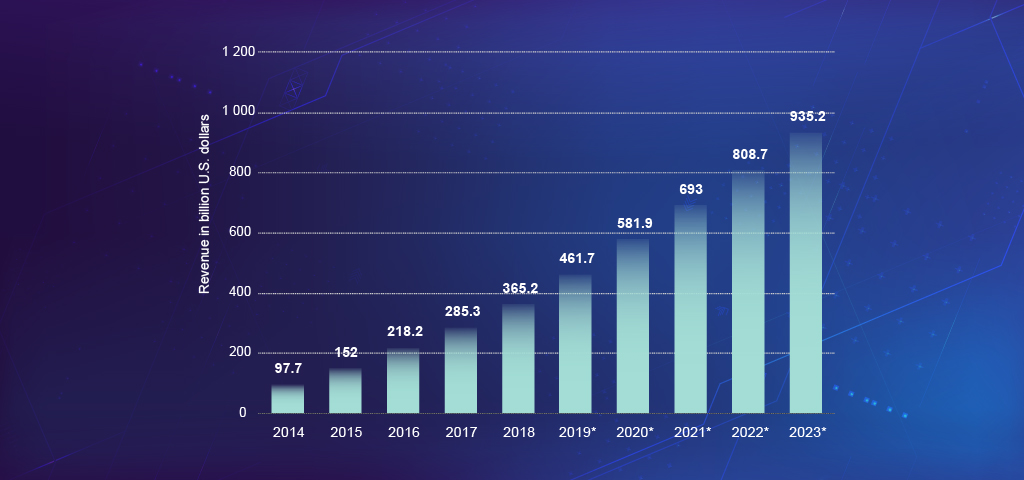
The global mobile app revenue is expected to reach a staggering figure of $935 billion by 2023.

Mobile App Development Process

The scope of mobile application development is booming and it’s about time businesses understand how to plan an app with a well-structured iOS and Android app development process.

So without further ado, let’s discuss the 4 phases of mobile application workflow and development step by step.

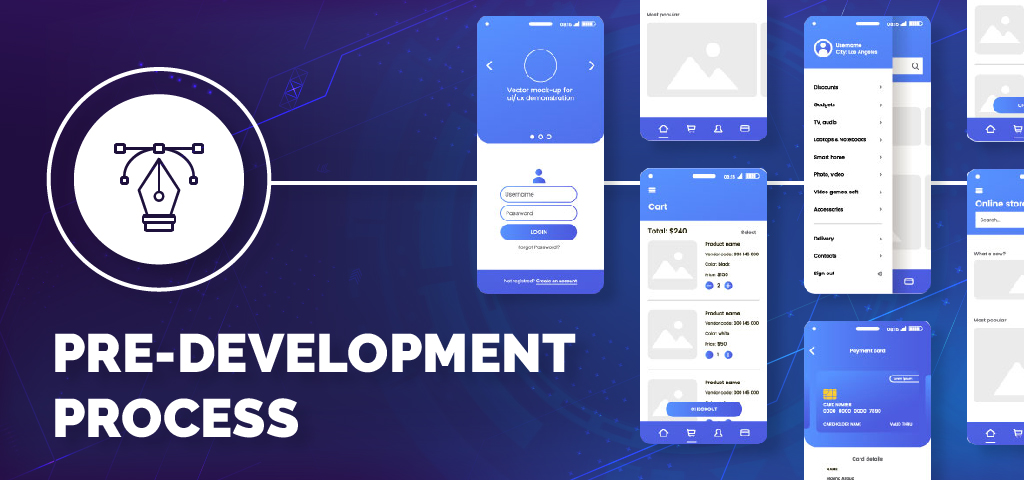
1.Pre-Development Process:

Pre-Development Process

A dysfunction, unappealing or unsatisfactory app leaves a bad impression for your end-users, making them hesitant towards using your app again. That’s why it is imperative for you to optimally utilise your time and build a successful app on your first try.

The first and foremost step towards a successful mobile app development process is a carefully structured plan with thorough analysis and a pre-defined strategy. A plan of action provides a well-guided path for your mobile app design and development, making it easier to spot mistakes, anticipate problems and deliver an unforgettable experience for your audience.

This initial stage is frequently overlooked or dealt with in a hurry-scurry manner, leading to a defective and inadequate mobile app development process. After all, haste makes waste.

Setting goals, defining concepts, gaining insights through research and defining the target audience are equally significant steps in an ideal mobile app development process. Additionally, a pre-development plan provides you with an accurate budget estimation and lets you plan marketing strategies in advance.

Strategy and Analysis:

The detailed analysis leads to an effective strategy for your mobile app project plan. Objectives for developing mobile apps differ from business to business depending on the requirements and collected data.

You need to find the answer to as many questions as possible to create a streamlined process in building an application.

The following points will help you in building productive mobile app development process steps by utilising market research optimally:

  • App Objective: Defining an objective for the mobile app is easier than you think. You need to inspect your brand or business to answer the following questions- Does your brand need a mobile application? What solutions will mobile applications provide for your business? Can your business plan incorporate a mobile app? Does your yearly budget have enough resources to start a mobile app development process? How to plan an app? how to start mobile applications development?
  • Target Audience: Without a defined target audience, you don’t even know who you’re making the app for. Carefully analyse the latest market trends, demographics and potential users to target a specific segment of the audience.
  • App Functionalities: After defining the objective and target audience, you can easily conduct further research to answer questions like- What are the key features of your mobile app? How does your app help your end-users? How will your mobile app increase customer engagement?
  • Competitor Analysis: Delve deeper into market research to find out more about your competitors and similar apps in the market. Analyse your competition to make a mobile app that is unique and provides a better overall user experience.
  • Investment Research: After forming a rough strategy using the aforementioned steps, you need to form an approximate estimation of your app budget finances. This makes it easier and more comfortable for you to move forward with your mobile phone app development process.
  • Planned Marketing: This stage is a pre-development plan for the post-development stage. Without a marketing or promotional plan for your brand’s mobile app, the number of downloads, customer traffic and engagement will remain stagnant with low numbers. Use the data gained through market research to decide the best possible formats, mediums and platforms for your app marketing.

UI/UX design:

The main purpose of the mobile app’s user interface is to provide a seamless and unforgettable user experience to the audience.

Even with the best functionalities, your app may fail to achieve the desired results if your audience finds it difficult to use. Delivering user-friendly, engaging and intuitive user experiences is what makes your app shine among the ever-increasing competition in the digital era.

Simplify the method of mobile app design and development by segregating the process-

  • Define and ideate as many features and solutions as possible for your app;
  • Shortlist the best design features and ideas;
  • Develop a design mockup or prototype with the selected design features;
  • Modify and finalise the app design for further development.

The following mobile app design stages will help you design impeccable UI/UX to achieve all your app development goals.

  • App Architecture: You need to decide the structure of the app and how it deals with collected information and data. The workflow of the app determines its efficiency to manage user information, user interactions, in-built data and more. This stage of mobile app design and development should be carefully planned as it shapes the display of your app.
  • Style Sheet: The style and design of your mobile app should mirror the style, colour and fonts of your brand. First of all, it promotes your brand and directly improves brand recognition. Secondly, it provides a smooth and consistent feel to your app’s user interface.
  • Wireframes and Mockups: Wireframes are digital sketches to conceptualise the app’s layout and visual structure. And Mockups takes it a step further by adding the style sheet, workflow and data structure to the wireframe of the mobile app. Before building a prototype, wireframes and mockups are created to finalise the display of the mobile app.
  • Prototype: Mockups are enough to understand and finalise the look and layout, but a prototype tests the functionalities of your planned mobile app. This is the last of your UI/UX mobile app design stages. Wireframes and mockups are digital sketches, hence un-clickable. Prototypes can be used to simulate the user experience and the design flow of the mobile application, providing a realistic visualization to finalise or modify the design before development.

A detailed market research/analysis with a pre-planned strategy and an impeccable design structure for your mobile app gets you ready to dive into the development process.

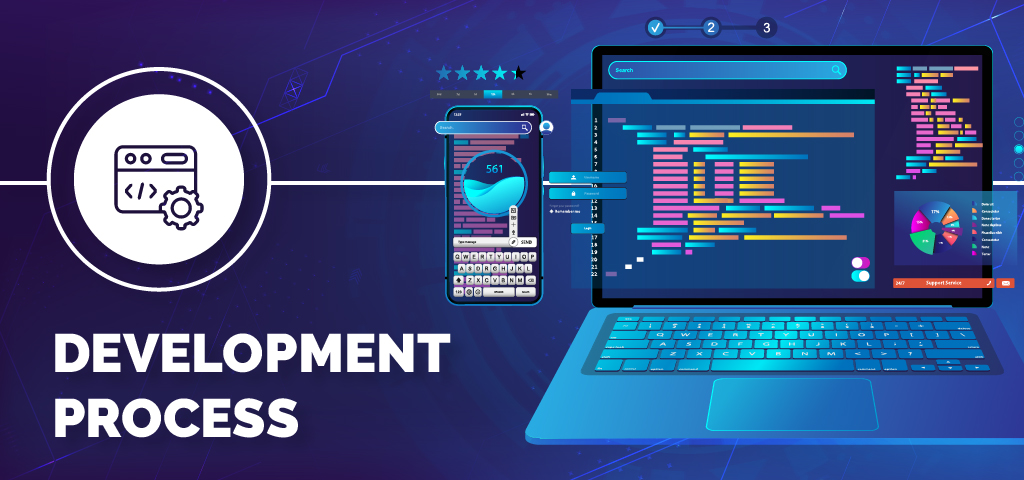
2.Development Process:

mobile application

After completing the research, plan and design of your app, you enter the second phase of the app development process. The actual programming of the mobile app begins at this stage. There are many frameworks, programming languages and technology stacks for app development, and you need to choose the right technologies to achieve maximum efficiency in the backend, API, and frontend operations.

Backend/Server-side Operations:

The Back-end or server-side of the mobile application is responsible for securing, storing and processing the data. And to keep your app running without a hitch, you need to choose the right technology for serving this purpose optimally.

Without efficient backend development, your mobile app delivers unstable and dysfunctional performance. It is the backbone of mobile app development, and hence you must select the most suitable programming language or technology stack according to your developer team’s proficiency.

Here’s a list of the most favoured mobile app development tools and libraries for the backend:

  • PHP
  • Ruby on Rails
  • NodeJS
  • AngularJS
  • ReactJS
  • .NET
  • GOLang

Application Program Interface:

Application Program Interface or API determines the interactivity of the software components in the mobile app. Along with effortless accessibility and sharing of the app’s data, API lets the app access the data of other apps as well, making it an indispensable mobile app tool.

For example, the Uber app uses an effective API that allows you to access driver information, messaging and GPS through different sources. The API significantly increases the flexibility, compatibility and efficiency of your mobile app.

Frontend/Client-side Operations:

The front end or client side of the mobile app is the interface that your end-users use and interact with. You can effortlessly captivate your audience and retain customers by delivering a seamless user experience through your mobile app front end.

There are different methods of front-end development for mobile apps:

Native Development: This is a platform-specific iOS and Android software development process. It requires different teams or a large team of developers for developing separate codebases for iOS and Android. Although this is a comparatively more expensive and time-consuming way of frontend development, it provides 100% output, quick loading speed and impeccable functionality to your mobile app for the specific platform.

iOS mobile app development tools:

  • Objective-C
  • Swift
  • Xcode

Android mobile app development tools:

  • Java
  • Kotlin
  • Android Studio

Cross-Platform Development: Various full-fledged frameworks are used to build cross-platform mobile apps with a single codebase. With a “write once, use everywhere” principle, this method of iOS and Android app development process simplifies the development process by eliminating a huge portion of the developers’ time and effort.

Cross-platform mobile app development tools:

  • Flutter
  • React Native
  • Cordova
  • Ionic
  • Xamarin
  • PhoneGap

Click here to get an in-depth understanding of Flutter VS Native technologies.

Hybrid Development: This method of frontend mobile app development integrates the elements of a web app in native app development. With enhanced performance and high scalability, this method of Android and iOS app development process provides fast-paced development and easy maintenance.

This is a web application built with a shell of a native app.

The languages used to build web applications are also used to create Hybrid apps:

  • HTML5
  • CSS
  • JavaScript

3. Testing:

Testing

App testing enhances your mobile app development process steps up and takes it up a notch. Quality assurance (QA) with thorough testing is the best way to ensure optimal stability, usability, and security of the mobile app. A quality assurance team can run different types of tests to check the outcomes and ability to produce the requirements and expectations targeted in the pre-development stage.

Without a comprehensive quality assurance test, you may end up deploying an unsatisfactory and defective mobile app. Modifications or new features are added in this stage to finalize the mobile app for deployment.

User Experience Testing

User experience testing is done to evaluate the app design for ensuring a seamless user interface. The final interface should mirror the finalized app design prototype created in the pre-development stage.

This test makes sure that your audience gets an unforgettable experience while using your mobile app with the finalized color scheme, style sheet, data architecture, navigation, icons, buttons, and more.

Functional Testing

Functional testing lets you evaluate different functions of your mobile app. The app must work efficiently while being used by multiple users at the same time.

The functionality of every app must be tested meticulously to make sure that the app works optimally after it is launched. For catching bugs and errors, the mobile app is tested under different conditions. It can be tested as a whole and individual feature-based. Functionality tests accentuate many unexpected mistakes and defects that can be solved or fixed to provide impeccable features and functions for your end users.

Performance Testing

A simulation of usage spikes with multiple concurrent end-users allows you to test the performance of a mobile app. App loading speed, app size, response to changes from client-side, optimization to consume less phone battery, and improve network bandwidth are tested to ensure top-notch performance.

Security Testing

Security is the most concerning part of developing mobile apps. Security tests eliminate the risk of viruses and hackers while safeguarding sensitive data and customer databases.

The significance of security testing doubles if you have payment portals in your mobile app. Your quality assurance team can check vulnerabilities and predict potential breaches to fix them and deliver air-tight security features in the app-building process.
From secured log-in details to preventing data leakage, everything is taken care of in this stage of testing.

Certification Testing

Every mobile app project plan needs to be in accordance with the licensing agreements, industry standards, terms of use, and other requirements of mobile app platforms like Google’s Play Store and Apple’s App Store. That’s certification testing is done to ensure hassle-free app deployment.

4. Post-Development Process:

Development Process

After completing all of the mobile app development stages effectively, it is time to launch your app. App deployment and post-launch maintenance are equally significant parts of the iOS and Android app development process.

Deployment

You need a developer account with app platforms like Google Play Store for Android apps and Apple App Store for iOS apps to release or launch a native mobile app.

The following information/data is required for submitting the mobile app:

  • App title
  • App description
  • Keywords
  • Type/category
  • Icon/thumbnail
  • App Screenshots

iOS apps require a review or screening process to check if the mobile app complies with the rules and regulations of the Apple App Store.

On the other hand, Google Play Store lets you launch your Android app without any review process, allowing your app to be available for downloading within some hours.

Maintenance and Support

After your app is ready for download, you need to track the important metrics for measuring your mobile app’s overall performance, interaction, and success.

Pay attention to suggestions, comments, ratings, and feedback to solve problems and provide continuous improvements.

Stay up-to-date with the latest technological trends and advancements to provide new patches and updates according to the market’s needs and requirements.

Marketing the mobile app is another significant part of the post-launch app-building process. Create advertisement posts or videos to highlight the key features and use cases of the mobile app to attract the targeted audience. You can use social media to increase the reach of your app for boosting traffic on your mobile app.

Wrapping up:

Mobile apps are bringing the world to our fingertips. With the ever-increasing demand for mobile apps, businesses are looking for optimal ways to satisfy their app development needs.

The pre-development process, development process, testing, and post-development process are the 4 phases of the mobile applications workflow.

Forming a strategy using market analysis, choosing the right technologies for programming and development, and testing the app for removing bugs and maintaining stability are the steps that you should follow before launching or submitting a mobile app.

If you require assistance regarding mobile app development, we are here to help!

Here at Communication Crafts, we leverage the latest and most suitable technologies to deliver cost-effective and impeccable mobile app solutions that provide a seamless and captivating user experience.

Looking for visually appealing and high-functioning mobile apps?

We’ve got you covered

Node js ecommerce: How to Build an ecommerce Web Application with NodeJS?

One of the very first recorded online sales was made in 1994, a man sold the band Sting’s CD through an American retail platform known as NetMartket. This was the first commercial transaction done through the World Wide Web.

Any commercial transaction facilitated by the internet comes under the category of eCommerce.

eCommerce or electronic commerce is another term for the online retail experience. An online transaction for products or goods or services is called eCommerce. It is a virtual platform for the trade of physical products and services.

Digitization of businesses has been on a constant and steady rise in the last decade, and the onset of the pandemic has made it all the more necessary for businesses to have an online retail platform to meet their customers’ expectations.

Node js ecommerce

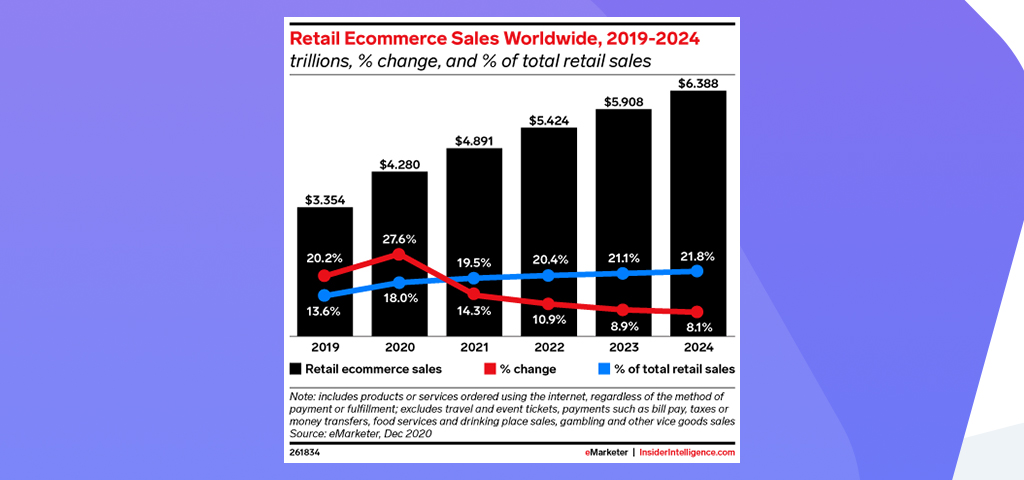
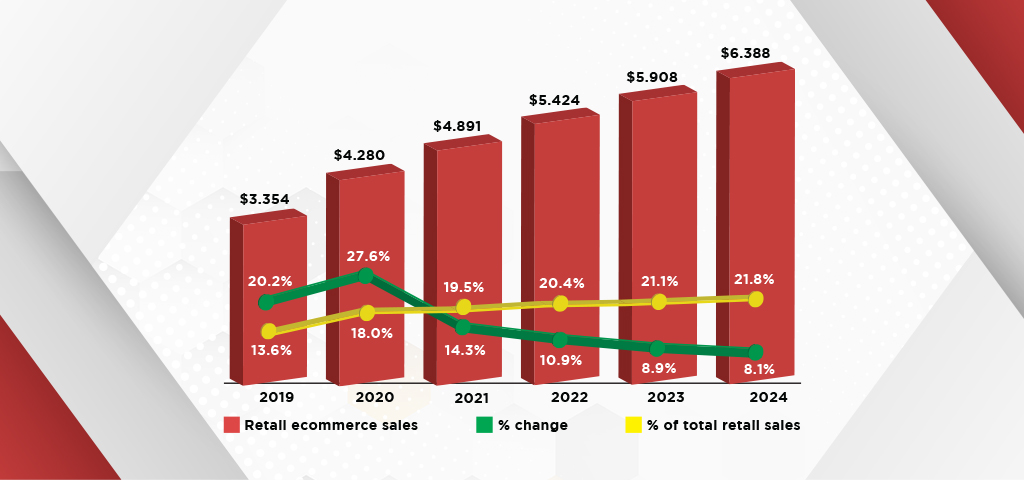
As you can see, there’s a spike in the percentage of eCommerce retail sales in 2020, and it is projected to reach an astounding figure of $6.39 trillion by 2024.

With the increase in competition, brands are trying to find new and improved ways to deliver impeccable online retail experiences for their customers.

That’s where the NodeJS eCommerce framework shines!

Affordability, simplicity and efficiency are some of the reasons why the NodeJS eCommerce framework became an instant hit for developing eCommerce web applications.

Let’s delve deeper and understand how to create a NodeJS application from scratch.

The Challenges/Problems Faced by the eCommerce Industry

eCommerce is booming now more than ever, and it has become an indispensable part of our daily lives. This resulted in a rapidly growing number of online consumers demanding seamless online retail experiences.

With the growing popularity, new challenges and problems faced by the eCommerce industry are also at an all-time high. Due to poor execution and choice of technology during eCommerce website development, many businesses end up delivering inadequate features and sluggish user experiences.

Here are some of the major challenges and problems faced by the eCommerce sector:

Problem 1: Building a complex and scalable eCommerce interface is tougher than it seems.
eCommerce web applications rely on a plethora of features and elements like product catalogues, logistics, shipping, suppliers, payment gateways, etc. And these elements need to be available and completely functional at all times, making it quite difficult to maintain a seamless user interface with high-performance 24×7.

There are thousands of requests and data exchange happening at the same time, which can cause your eCommerce website to get sluggish or inefficient from time to time.

88% of online customers claim that they’re less likely to use the same eCommerce website after a bad online retail experience. Retaining customers is the main purpose of every business, and an inadequate eCommerce website eventually ruins your brand loyalty.

Problem 2: The frontend of a web application is worthless without a steady and secure backend.
Many developers put more effort into building an appealing user interface to make your eCommerce website look more welcoming and engaging. Although is it necessary to spruce up your website for attracting potential customers, without a stable backend of an eCommerce website, the frontend is bound to fail.

The main reason for the slow load times of websites is a poorly built backend of an eCommerce website, which is ultimately the backbone of your web application.

Online consumers expect instant response and seamless navigation throughout your web application, and an unstable backend can cause your loyal customers to leave as the internet is a place of endless options.

The bounce rate of your customers increases significantly if your website doesn’t load instantaneously.
1-3 seconds of load time = 32% increase in bounce rate;
1-5 seconds of load time = 90% increase in bounce rate;
1-6 seconds of load time = 106% increase in bounce rate;
1-10 seconds of load time = 123% increase in bounce rate.

Problem 3: Inadequate or insufficient languages and frameworks for eCommerce website development
There are many eCommerce development languages and frameworks, but most of them fail to provide a completely secure and stable eCommerce website.

Most frameworks don’t have a powerful community to back them up and aid web developers when they face issues or problems in the development process.

Some of the frameworks fail to efficiently support and stream different formats of media and data on the website.

Many web development languages don’t possess enough add-ons and plug-ins to deliver the desired functionality.

Some web development frameworks aren’t even open-sourced, which closes the door for many developers to utilise the framework for building efficient web applications. This makes it extremely difficult to find proficient web developers.

Overcoming Challenges with NodeJS eCommerce Development

NodeJS eCommerce framework is the most effective solution to the challenges faced by the eCommerce sector. NodeJS online stores are a force to be reckoned with, here’s why:

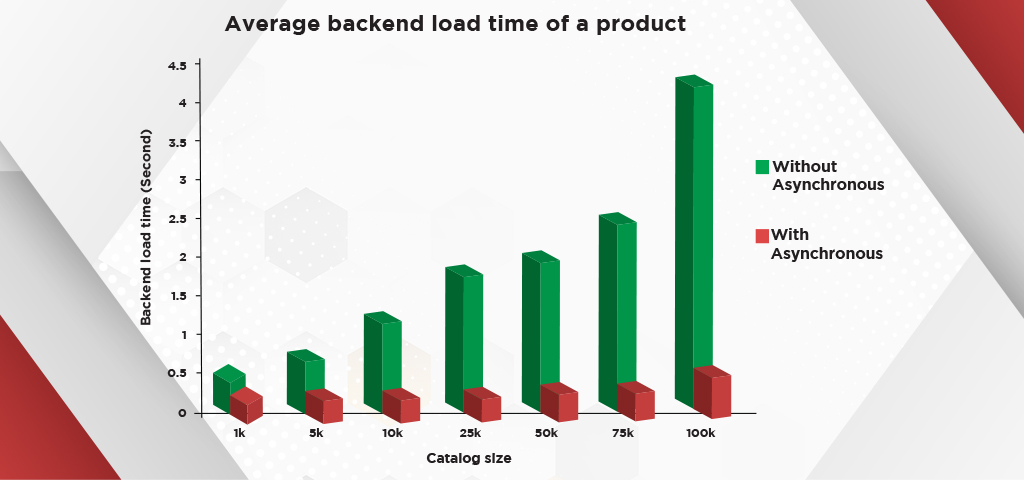
  • NodeJS efficiently bridges the gap between frontend and backend with an asynchronous nature, enhancing website load times and simplifying the development process.
NodeJS eCommerce Development

Evidently, the NodeJS eCommerce platform with asynchronous communication provides a much smoother and more efficient backend load time.

  • NodeJS eCommerce framework can easily handle concurrent users simultaneously.
  • eCommerce development needs to constantly update and grow, and the NodeJS web app’s high scalability lets you keep up with it.
  • NodeJS eCommerce platform has a large and powerful community to support and guide developers in the website development process.
  • With numerous add-ons and plug-ins, the NodeJS web app can provide endless features and functionalities.
  • All kinds of media and data can be streamed in a NodeJS online store.
  • It is an open-sourced language that enables high flexibility for web developers.

NodeJS, The Stronghold of the Backend

NodeJS was developed by Ryan Dahl in 2009, and its popularity has been skyrocketing ever since its inception.

NodeJS is a JavaScript-based runtime environment on Chrome’s V8 engine. It is open-sourced and used to develop highly scalable and fast eCommerce web applications.

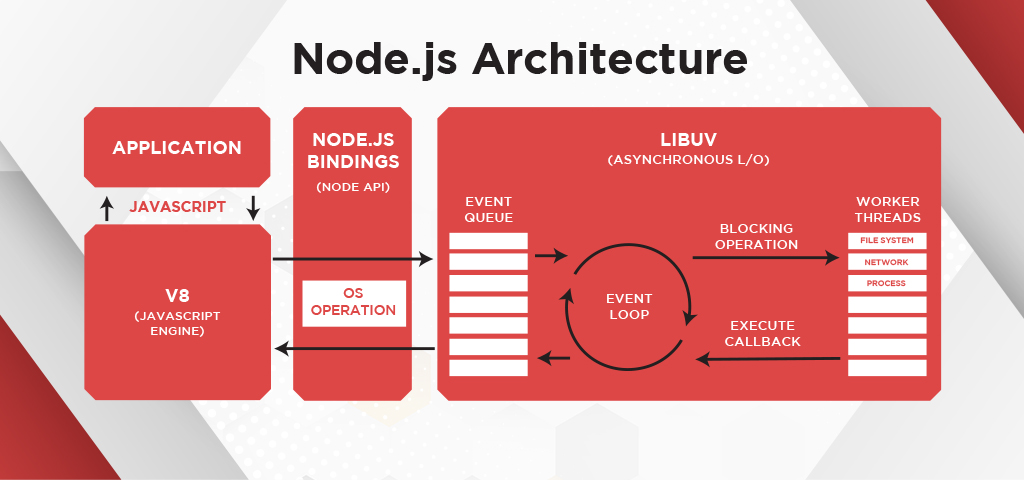
NodeJS eCommerce platform utilises a single-threaded event loop architecture, which makes it easy to process concurrent requests and provide a flawless backend for your eCommerce website.

NodeJS eCommerce platform

With 80.7k stars and 20.9k forks on GitHub, NodeJS is used by 230k websites and 115k unique domains globally.

NodeJS site examples

  1. eBay handles live connections to servers for 200 million users with the help of NodeJS web app implementation.
  2. Walmart uses the NodeJS eCommerce platform to integrate multiple services and applications to deliver various functions via one platform.
  3. Groupon uses the NodeJS eCommerce framework to reduce resources while supporting high traffic and quick load times.
  4. PayPal unifies their backend and frontend with javaScript using NodeJS web app implementation, providing efficient security features for the biggest online payment gateway.

With amazing documentation and an easy to learn Python-based language, the Django eCommerce website is also widely used among developers.

Learn more about the comparison between NodeJS online stores and Django eCommerce websites.

Different Options for NodeJS eCommerce Development

Till now, we have discussed the problems of the eCommerce industry, NodeJS solutions for eCommerce and an overview of the NodeJS eCommerce framework.

Let’s dig deeper and examine the options to create app using NodeJS.

Option 1: Developing a NodeJS online store with MEAN/MERN stack

The MEAN/MERN stack is an ideal choice for full-stack eCommerce website development. Let’s dissect it further:

M: MongoDB: A NoSQL for efficient database management

E: ExpressJS: A backend web framework providing a simplified interface

A/R: AngularJS/ReactJS: A front-end web framework providing a seamless user experience

N: NodeJS: A JavaScript backend runtime environment

MEAN/MERN stack lets you develop web applications for free with a completely JavaScript-based and open-sourced framework.

Here’s how the MEAN stack functions:

  • Client-side requests are processed with AngularJS
  • The request reaches NodeJS, which controls the backend
  • The request reaches ExpressJS, which triggers a database access
  • MongoDB retrieves the required data and passes it on to ExpressJS
  • ExpressJS transmits the response or answer to NodeJS, then it is relayed to the front through AngularJS

With high consistency, flexibility, and scalability, the MEAN stack can handle a minimum of 10k users, making it one of the best choices for starting a NodeJS online store.

Companies that use MEAN stack:

  • Accenture
  • Fiverr
  • UNIQLO
  • Sisense
  • Vungle

Option 2: Develop a NodeJS online store with microservice architecture
MEAN/MERN stack development is amazing for starting your eCommerce web application, but for anticipating millions of users, microservices are the way to go!

Using the NodeJS eCommerce platform with microservices is highly recommended because it can support various microservice frameworks like SenecaJS

Unlike the MEAN/MERN stack, web apps built with microservices don’t require costly and heavy maintenance.

NodeJS eCommerce platform can utilise microservices to delegate different processes to different components of services, which are all integrated and connected through APIs.

Microservices allow you to scale and update different components of services and functions independently, eliminating the need to update the web application completely.

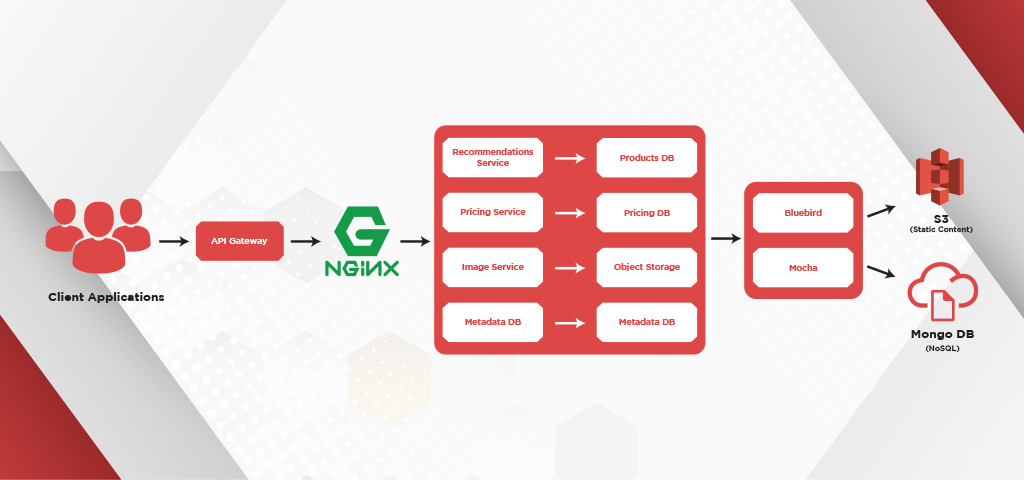
Take a look at the architecture used while developing with microservices in the NodeJS eCommerce platform:

NodeJS eCommerce platform

Microservices helps you overcome many challenges faced while developing with MEAN/MERN stacks. For enterprise-sized companies, utilising the Microservices feature is the ideal option for NodeJS eCommerce development as it can handle millions of users.

eBay adopted the microservices architecture to maintain and manage more than 1 billion users.

NASA employed this option to transfer their complete database and other components to the cloud.

Option 3: Developing a NodeJS online store with different NodeJS frameworks

50% of developers choose NodeJS for its versatile and efficient frameworks.

Various NodeJS frameworks can be used to serve different purposes while developing eCommerce web applications.

Types of NodeJS frameworks:
MVC frameworks: NodeJS frameworks with the widely known Model-View-Controller architecture.

MVC full-stack frameworks: NodeJS frameworks with the Model-View-Controller architecture that can be efficiently used for both frontend and backend development.

REST API frameworks: REST API NodeJS frameworks are used to create high-performing web apps quicker and more efficiently.

Top 7 NodeJS frameworks:

  1. ExpressJS: Rapid server-side development for single page, multi-page and hybrid web applications;
  2. MeteorJS: Isomorphic development ecosystem for real-time and cross-platform applications;
  3. SocketIO: Auto detection and correction of errors for real-time web and mobile applications;
  4. SailsJS: Lightweight server-side framework for enterprise-scale web applications;
  5. LoopbackIO: The best NodeJS REST API framework with full-stack development and easy to use command-line interface;
  6. KoaJS: In-built error management tools and a lightweight structure for high-performing large-scale web applications;
  7. NestJS: TypeScript language and an agnostic platform for enterprise-grade web applications.

For an in-depth examination of the 7 Best NodeJS Frameworks for Web Apps in 2021, click here.

Final thoughts

With the ever-increasing popularity of online shops, the eCommerce industry has been facing many challenges and problems.

NodeJS eCommerce platform is the ultimate solution to effectively overcome the challenges faced by the eCommerce industry. NodeJS is an open-sourced run-time environment that provides simple, secure, and scalable eCommerce website development.

There are many ways to utilize the NodeJS eCommerce platform via MEAN/MERN full-stack development, Microservices, and different NodeJS frameworks.

MEAN stack provides a perfect start for your eCommerce operations, handling a minimum of 10k users.

NodeJS eCommerce platform with Microservices can handle enterprise-grade web applications with millions of users.

Different NodeJS frameworks can also be employed according to your eCommerce web development needs and requirements.

If you have further queries regarding NodeJS eCommerce web development, feel free to contact us.

With a wide range of clientele and 16+ years of hands-on experience, Communication Crafts provides expert NodeJS developers, delivering performance-driven, scalable and secure custom enterprise NodeJS solutions.

Building your present, for a better future.

Looking for bespoke NodeJS web and mobile app development solutions?

You demand, we deliver!

Flutter vs React Native – The Future of Mobile App Development

Debates regarding the future of native mobile apps have flooded our feeds ever since the launch of these highly sought-after mobile application development platforms. A recent study showed that the number of mobile app downloads has skyrocketed from 140.7 billion apps in 2016 to 204 billion apps in 2020. With more than 3.80 billion people using social media at the beginning of this decade, the world is even more mobile-centric now and is going to be so in the future.

Mobile apps are expected to generate $189 billion in revenue by the end of this year. Making it clear that the future of native mobile application development is no longer a blur. When it comes to mobile app development, developers always prefer to go with cross-platform development.

Wonder why developers prefer cross-platform development platforms? 

Because it makes their life easier! Cross-platform development platforms have many benefits compared to native development. Some of them are:

  • Single technology stack: Having one technology stack provides a cost-efficient method to develop and maintain the code.
  • Code Sharing: Reusable code enables its developer to write a single code base for Android and iOS, making it easy to handle both platforms simultaneously. Through this, consistency is achieved on all platforms, resulting in a coherent brand identity.
  • Lower cost: Here’s something exciting for you! Using cross-platform instead of building on two separate platforms reduces the cost of building by 30%.
  • Faster Development: Since there is no need for building separate codes, development becomes quicker by reusing the code.

A study found that more than 65% of developers around the world use React Native or Flutter. Indeed, both platforms, i.e. Flutter VS React Native, have a lot more to offer for your app and can help provide scalable solutions.

Who wouldn’t love these perks?!

Between React Native VS Flutter 2021, which one would be the right choice for your projects? Keep reading and we’ll help you sort it out.

As a leading mobile app development company, we are frequently asked questions like:

  • Flutter VS React Native which is easy to learn?
  • What is Flutter?
  • Is Flutter the future of mobile development?
  • Is React Native the future of mobile development?
  • What are the benefits and drawbacks of React Native VS Flutter?
  • What is the future of React Native?
  • What is the future of Flutter VS React Native?

In this article, we’ll solve these queries and go into an in-depth analysis of React Native VS Flutter.


What is React Native?

React Native

Before the introduction of React Native, cross-platform development was always a complex process. React Native stepped in the game, promising the perfect user experience while cutting costs. This development platform not only gained popularity amongst the cross-development platforms but also proved to be a great competition to other mobile application development platforms. Some might even say it was revolutionary in the way it changed the mobile app development world with a secure React Native future.

Let us see what caused React Native’s popularity to soar.

Advantages of React Native

Easy to learn: With the knowledge of web development and operations with the latest React Stack, one can easily work with React Native without acquiring new libraries.

  • Strong Community: React Native has a gigantic community, resulting in countless tutorials, frames, blocks, and libraries, making it very easy to learn. This eventually results in building, developing, and designing a transparent application. React Native definitely is far-reaching compared to the future of Google Flutter.
  • Hot Reload: Hot reload enables the application to run while newer versions of the files are being added. The development process is stimulated by recording the initial code inside the working application. This helps the state to retain itself, especially when the UI is being tweaked. This way, the programmer can identify the changes easily.
  • One ecosystem: Being well-versed in JavaScript enables a programmer to develop a versatile application, utilizing its structure without digging deeper.
  • Time-Saving: The hybrid structure of React Native ensures a smooth application. Faster loading time can be accounted to the solitary codebase.

Although React Native makes up 42% of the developer’s market, it does have some drawbacks like any other framework.

Disadvantages of React Native

Fewer Components: Even though React Native is a full-fledged framework, it does lack some functional components which limit the features of an app.

  • Large App Size: Every app developed using React Native runs on JavaScript code. However, Android doesn’t have this functionality in-built. It needs to add a library that supports JavaScript. Due to this, apps tend to have higher memory storage requirements compared to native Android apps.
  • Delicate User Interface: As React Native is built on native components, sometimes new updates can cause certain Native Component’s APIss to malfunction, which can corrupt the complete mechanism of the mobile app.

What is Flutter?

Flutter

Putting it in simple terms, Flutter development services enable the creation of effortless applications through its layered framework, easy-to-use templates, visually attractive designs, and fast functions. Since its launch, the future of Flutter has shown a linear increase in future improvement. The number of Flutter applications being launched in app stores is increasing at a staggering rate.

Advantages of Flutter

One code for two applications: With inputs from Google, Flutter is a kickass operating system that comes with widget kits for tailoring UI design, making the developers independent. Differentiating designs for both iOS and Android becomes as simple as writing just one code base for two platforms.
Perfect UI: Your application can have the same fresh look even on an outdated version, all thanks to Flutter!

  • Widget Tree: Flutter uses a technique known as Composition which builds the user interface, using small UI building blocks. There are two types of Widgets: Material design, compatible with Google’s design guidelines and Cupertino, parallel with Apple’s human interface guidelines.
  • Pixel Rendering: Amazing-looking UIs can be created on both platforms by using just one codebase. Flutter manages every single pixel of the screen so that the widgets look the same (even on older versions and devices). Pixel rendering reduces issues with design support.
  • Less Testing: Due to one codebase for both platforms, the quality assurance process becomes faster. The automatic tests are also to be written once. This saves a lot of time and effort as the quality assurance specialists have to test just one app.

Disadvantages of Flutter

  • Heavy app size: Flutter apps are very large in size. People want apps to be compact, so they don’t have storage issues. This becomes the most concerning factor for developers to consider even before the coding can begin.
  • Regular support not available: Flutter doesn’t support CI platforms like Travis. Developers have to build custom scripts to build, test, and deploy applications. Not only is this a time-consuming process, but it increases the time taken for updates to be rolled out.
  • Platform Dependent: Flutter although is open-source, Google is the engine of this framework. Without Google’s help, Flutter cannot function. This makes the future of Flutter highly security risk-oriented.

Let’s make life easier, shall we?

Despite the similarities between React Native VS Flutter, each stands out on its own. Whether it is getting an MVP to show your investors or building an outstanding application for your brand, understanding these platforms will provide you with clarity for the future of Flutter VS React Native.

As a leading React Native app development company, Communication Crafts understand your needs for building a native application, and as a pioneering Flutter development company, we understand your needs for creating a new age application. Our team of experts React Native developersiOS developersAndroid developersUX/UI designers, and QA engineers cater to your app development needs specifically. With the latest Mobile App monitoring systems, our app developers not only gather in-depth analytics of your mobile app’s performance after it is launched but also help roll out timely updates to make your app’s performance even better. With the best mobile app developers working in our development team, every line of code we write for your mobile app is quality assured. Developing the best mobile app features that provide great customer experience is our forte!

React Native VS Flutter, you demand, we deliver!

We build apps people want to use.

Hire us and get your mobile app to flourish!

Best Frontend Frameworks for Web Development in 2023

“Customer comes first”, are the three golden words for any business. In the old days, customer satisfaction depended mostly on your sales representatives and stores. But that’s not the case anymore, the onset of the digital era has revolutionized the retail experience.

The paradigm shift towards the digital age has made it essential for businesses to deliver an excellent user experience on their websites supported by the best UI framework. Consumers gravitate towards a beckoning user interface.

Online shopping has reached an all-time high. The global e-commerce market has reached a staggering figure of $4.28 trillion. The number of online shoppers in the United States is projected to reach almost 285 billion in 2025.

From start-up companies to Fortune 500 brands, working with the best UI frameworks to create remarkable business websites, web apps & mobile apps has become key to success.

Of course, the performance and functionalities of the backend must be integrated well with the front end of the application- which the end-user uses. In this piece, let us specifically go over the best front-end frameworks in 2023.

Everything a user sees and operates when they click a link or put in a web address is termed as frontend.

So what are Frontend Frameworks?

Frontend Frameworks are used by web developers to create elegant, easy-to-use, and intuitive frontends. They are predefined structures of codes that provide the base for the creation of user interfaces.

Frontend web development is the process of converting data into a graphical interface using CSS, HTML, and JavaScript so that users can view and interact with the data.

Components that constitute a frontend framework:

  • The best UI Frameworks are mostly composed of HTML, CSS, and JavaScript;
  • A grid for designing and assembling the interface;
  • Font styles and sizes;
  • Website components like navigation bars,
  • Templates,
  • Buttons and side panels.

Benefits of Frontend Development:

  • Features & web applications are considerably more responsive
  • Real-time programming
  • Easy to scale, learn and implement
  • Rapid development speed
  • Enhance user experience substantially
  • Web applications are relatively more secure

For developers, it’s all about going with the best front-end framework that suits your business requirements perfectly.

Here are some of the most popular used frontend frameworks in the world.

Most Popular Frontend Frameworks

  • React
  • Angular
  • Vue.js
  • Svelte
  • Preact
  • Ember
  • LitElement
  • Alpine.js
  • Stimulus

React, Angular, and Vue.js have enjoyed dominance in the field of UI development for years. But the popularity of other web UI frameworks is gradually rising as well.

Let’s have a look at the most demanded front-end frameworks in 2022

These stats clearly show that React, Angular and Vue.js are the most popular frontend frameworks among developers.

React is still the most favored as a web UI framework, but if we talk about Svelte, it is quickly rising to be one of the best front-end frameworks as well.

Each web UI framework is unique in its own way and has its advantages. These statistics may assist you to a certain extent, but sheer numbers aren’t enough for you to make the right decision while choosing the best front-end framework.

As a leading and trusted e-commerce solutions company, we at Communication Crafts have more than 17 years of proven experience in the field of web development, especially front-end development.

We work with cutting-edge technologies to create state-of-the-art web solutions that help our clients move their businesses forward.
Our expert developers have created this guide for everything important you need to know about the best frontend frameworks for web development.

Here’s a video by Coding Tech that compares the top three JavaScript-based frontend frameworks:

https://www.youtube.com/watch?v=N3AkSS5hXMA

So let’s delve deeper into each of these frontend frameworks, shall we?

Top 10 Frontend Frameworks in the Year 2023:

1. React

Mark Zuckerberg’s Favourite Framework

React

React is an open-source web UI framework created by Facebook in 2013. It quickly became one of the most popular front-end frameworks for UI development. It is adored by web developers because it requires minimal effort in coding and its ability to provide an outstanding user experience, making it one of the best UI frameworks of all time.

Programming languages used: JavaScript/JSX (HTML+JavaScript syntax)

With 203k stars and 42.3k forks on GitHub, React is used by 1.2 million websites and 422k unique domains.

Here’s an informative video from “Programming with Mosh” explaining what is React and why is it so popular. Check it out

https://www.youtube.com/watch?v=N3AkSS5hXMA&feature=youtu.be

When should you use React:

  • Single-page or cross-platform application development
  • Data Visualization Tools
  • Social networks
  • Retail websites
  • Web apps
  • Messaging apps
  • Blogs (Personal or professional)

PROS of React

  • Easy to learn and use: Developers familiar with JavaScript can learn to use React in a matter of days. 69.7% of developers prefer JavaScript-based frameworks over other programming languages.
  • Virtual Direct Object Model (DOM): The tree-like structure of an HTML program is known as DOM. The user’s actions on a website trigger an update that rewrites the entire DOM- requiring more resources. A virtual DOM works more efficiently because it changes only the elements that need manipulation.
  • Requires less coding– Easy to create highly functional web UIs
  • Reusability: React has reusable HTML codes that make a developer’s life quite easy. It is easier to make and maintain web UIs because of this feature.
  • Downward data flow: React framework’s data flow is relatively simple. It has a straightforward downward data flow that is easy to track and work with.

CONS of React :

  • Continuous updates: Developers have to constantly re-learn new ways of coding because web UI framework changes at a very rapid pace.
  • Poor documentation: The extension libraries are not efficiently updated by the supporting community.
  • JSX complications: React uses syntax that is a combination of HTML and JavaScript. It has a steep learning curve and is difficult for amateur developers to work with.

Companies that use React web frontend framework:

  • Uber
  • Airbnb
  • Facebook
  • Netflix
  • Instagram
  •  

2. Angular

Google’s Special Project

Angular is a Single Page Application (SPA) web UI framework made by Google in 2010. It is backed up by a large community and based on the TypeScript language. Its basic purpose is to simplify the development of web and mobile applications.

Click here if you’re looking for impeccable front-end development using AngularJS.

Programming languages used: TypeScript

With 74.7k stars and 19.6k forks on GitHub, Angular is used by 388k websites and 198k unique domains.

When should you use Angular:

It is primarily used for making dynamic and interactive single-page websites or applications, although it can be used for much more.

  • Progressive Web Application (PWA)
  • Large-scale projects or websites
  • Websites with interactive content
  • Upgrade designs of old web pages or applications
  • Boost user experience of an existing website

PROS of Angular:

  • Two-way data binding: Angular has a Model-View-Controller build. This feature synchronizes the data in the model and the view- reducing the extra code needed. Thus reducing development time.
  • Community: Angular is backed by Google. And that is why its community is trusted to provide sufficient materials and third-party tools.
  • Directives: This allows the developers to assign specific behaviors to the Direct Object Model (DOM) to create effective HTML content.
  • Customizable elements: Modules and elements of Angular are fully customizable, allowing the developers enough freedom to design and develop as per their wishes.

CONS of Angular:

  • Difficult to learn: The learning curve of Angular is quite steep. It takes a while for new developers to learn complex coding languages, integrations, and customizations.
  • Angular is a heavy-weight framework when compared to React and Vue, increasing its complications.

Companies that use Angular web frontend framework:

  • Microsoft Office
  • PayPal
  • Forbes
  • Gmail
  • Santander

3. Vue.js

The Progressive JavaScript Framework

Vue.js

Vue.js was officially released in 2014 by Evan You. It was created in an attempt to make a lightweight custom tool that features the best parts of Angular, making it one of the most efficient and best UI frameworks for fast-paced web development.

It is generally used to create one-page applications and web UIs, using an open-source progressive JavaScript framework.

Programming languages used: JavaScript

With 186k stars and 29.6k forks on GitHub, VueJS is used by 280k websites and 174k unique domains.

PROS of Vue.js:

  • Small size: Vue.js has a relatively small size. It is just 20KB in size, making it easier for developers to instantly download its files. Also, it still outperforms most hefty web UI frameworks;
  • Simplicity: New or inexperienced developers can learn to use Vue.js fairly quickly. If they are already familiar with JavaScript, it’ll take no time for them to get familiar with Vue.js;
  • Integration: Vue.js can be used or integrated into most existing apps easily.
  • Customization: Each segment of Vue.js can be assigned different functions.

CONS of Vue.js:

  • Community: Vue.js is a relatively new frontend framework and it is not backed up by a large community. Therefore, it is not efficiently updated if need be.
  • Language Barrier: It is supported by Chinese developers, hence the framework is in Chinese, making it difficult for non-China developers.
  • Limited plugins: Developers don’t get access to properly supported plug-ins, because Vue.js is still a bit under-developed.

Companies that use Vue.js web frontend framework:

  • Google
  • Nintendo
  • Trivago
  • Zoom
  • BMW

4. Svelte

A framework without the framework

It is a relatively new front-end framework. And given that, its popularity seems to be on a tremendous rise in the past couple of years.

Being a compile-time web UI framework, it requires less coding and has no virtual DOM. Direct and specific changes are made to the real DOM with a unique way of compiling data.

Svelte is typically suited to create small-sized web apps with fast performance levels and interactive experiences. And it can also be used to make separate components for already existing apps.

Programming languages used: JavaScript/TypeScript

With 156k weekly downloads, Svelte has 48.6k stars and 2.3k forks on GitHub.

PROS of Svelte:

  • Developers love to use Svelte because its syntax template is easy to read and understand
  • Offers high reactivity
  • Relatively small size
  • Minimal learning curve
  • Svelte compiles the work to vanilla JavaScript, deleting the need to work in the browser.

CONS of Svelte:

  • Unlike, React and Angular, Svelte is not backed by any MNC
  • Limited tools and packages
  • Although it is popular among developers, it does not have large community support.

Companies that use the Svelte web frontend framework:

  • Spotify
  • The New York Times
  • Semrush
  • OLX
  • IBM
  • GoDaddy

5. Preact

A 3KB Alternative to ReactJS- The Lightest Framework

Preact is an experimental alternative to React created by Jason Miller. With a size of 3KB, it is a lightweight version of React with similar features and a JavaScript framework.

Many developers are switching over to Preact because of the compact size and accessibility across all browsers, making it one of the most feasible and best UI frameworks.

It is ideal for building single-page applications.

Programming languages used: JavaScript

With 693k weekly downloads, Preact has 29.5k stars and 1.6k forks on GitHub

PROS of Preact:

  • Small size: It is one of the most lightweight web UI frameworks with a size of just 3KB.
  • Command Line Interface: Preact CLI allows developers to create challenging projects at a faster pace.
  • Compatibility: Developers have the freedom to use Preact in already existing web pages and applications.
  • Efficiency: Takes minimal memory, decreasing the work of the garbage collector.

CONS of Preact:

  • Small community: Preact has approximately 200 contributors on Github, which is fairly low.
  • PropTypes and createClass have not been implemented in Preact, which are key features in React.

Companies that use Preact web frontend framework:

  • Groupon
  • Uber
  • Pepsi
  • Lyft
  • Dominos

6. Ember

A Framework for Ambitious Web Developers

Ember was created to meet the increasing demands of day-to-day modern technologies. It is an open-source, Model-View-ViewModel (MVVM) framework developed by Sproutlt in 2011.

It combines the best features of other most popular frontend frameworks like Angular and React, and that makes it an efficient tool for making elaborate multi-page applications. It can be used for making small and large-scale applications quickly.

Programming languages used: JavaScript

With 21.9k stars and 4.2k forks on GitHub, Ember is used by 12.8k websites and 5.2k unique domains.

PROS of Ember:

  • Easy to use with high readability of documents
  • Two-way data binding, automatically updating the UI when the data is updated or altered
  • Well-organized framework structure
  • Satisfactory performance for high-end applications
  • Ember CLI: Command Line Interface boosts versatility and efficiency
  • A personal debugging tool to identify and eradicate bugs automatically

CONS of Ember:

  • It is a heavy web UI framework, which is too complex for lightweight applications.
  • It has a small community of developers, which makes it difficult at times to get help and the desired resources.
  • It has a steep learning curve.
  • Too heavy for small-scale work.

Companies that use Ember web frontend framework:

  • Twitch
  • LinkedIn
  • Accenture
  • OYO rooms
  • TED
  • Netflix
  • Microsoft

7. Lit Element

Simple & Fast Framework for Web Components

Lit Element is a simple and effective base class for building lightweight and fast web components that can be compatible with any web page. It works in all web browsers: Chrome, Firefox, Edge, and Safari.

Lit Element provides scoped styles, reactive states, and a tiny declarative template system that’s expressive and fast.

Programming languages used: JavaScript/TypeScript/HTML

With 268k weekly downloads, Lit Element has 8.4k stars and 483 forks on GitHub.

Pros of Lit Element:

  • Lightweight structure
  • One-way data binding
  • Ease of building web components with pre-built web UI components
  • HTML templates are defined and rendered using Lit-HTML
  • Lightning-fast DOM updates because only the dynamic parts of the UI are re-rendered with Lit-HTML

Cons of Lit Element:

  • Requires a bundler or a server-side transform
  • Small community

Companies that use Lit Element web frontend framework:

  • YouTube
  • Coca-Cola
  • McDonald’s
  • USA Today
  • Bloomberg

8. Alpine.JS

New & Lightweight JavaScript Framework

Alpine.JS is a rugged and minimal frontend framework for adding JavaScript behavior to HTML markups. It provides the declarative and reactive qualities of the most popular frontend frameworks like Vue, React, and Angular at a much lesser cost.

It is ideally chosen for projects that need minimal JavaScript, when you need a few components for your webpage like sidebars, tabs, dropdowns, image selection, etc.

Programming languages used: JavaScript/HTML

With 46k weekly downloads, Alpine.JS has 17.5k stars and 729 forks on GitHub.

Pros of Alpine.JS:

  • Lightweight with a library size of 4KB
  • Bridges the gap between vanilla JS (jQuery) and extensive virtual DOM frameworks like React
  • Effective API for interacting with third-party libraries
  • Easy to use
  • Responsive community

Cons of Alpine.JS:

  • DOM is not updated when a change is made in any non-interactive event
  • Not efficient while working with nested components
  • Not intended for large or single-page web pages

9. Stimulus

A Modest JavaScript Framework

Stimulus is a minimalistic and modest framework designed for sprinkling JavaScript and adding behavior to HTML to augment and enhance it. It can be easily paired with Turbo to create a complete solution for efficient web applications without expending much effort.

Programming languages used: JavaScript/HTML/TypScript

With 142k weekly downloads, Stimulus has 10.6k stars and 283 forks on GitHub

Pros of Stimulus:

  • Lightweight structure
  • Reusable components
  • Easy to use with high readability
  • Simplicity
  • Shallow learning curve

Cons of Stimulus:

  • Can’t be used for full-fledged web pages
  • Small community
  • Limited tools and documentation

Companies that use Stimulus web frontend framework:

  • Veue
  • Muna
  • Festalab
  • Transcripto
  • Stamped Technologies

10. jQuery

One of the oldest and most popular frameworks among developers. It is lightweight, quick, feature-rich, and small. It is a cross-platform library created with the goal of simplifying client-side HTML scripting. jQuery has a motto that goes, “Write less, Do more”.

Pros of jQuery:

  • Easy to learn
  • Open Source
  • Large Community Support

Cons of jQuery:

  • Unsuitable For Complex Projects
  • Debugging Issues
  • Limited Functionality

These were the top 10 front-end frameworks in 2023. Now let’s discuss the ongoing trends in frontend development…

What are the Ongoing Frontend Development Trends in 2023?

Every frontend framework is unique, and different web development requirements align with specific frameworks. But the best way to deliver satisfying and appealing user experiences is by understanding the emerging trends.
There are 3 top trends in 2023 that web developers follow across the globe:

  • Micro Frontend Architecture
  • Component Driven Development
  • JAMStack Development

Let’s discuss each of them in detail…

Micro Frontend Architecture:

Micro Frontend Architecture:

Micro Frontend Architecture bifurcates a full-fledged web project into systematic “micro apps”. To understand its benefit in simpler terms, developers with different technical skill sets can collaborate on a single project using the micro frontend architecture.

Micro front end facilitates the use of multiple technologies simultaneously without affecting the original web product plan. Furthermore, this architecture allows smooth deployment, a rapid development process, and freedom of choice while using different frontend frameworks.

When it comes to web development, no technology or trend is flawless. Complex testing, accessibility integration, and config management are some of the drawbacks that web developers have to overcome for successful micro frontend development. Despite the hurdles, this architecture is popular among many front-end developers all over the world.

Component Driven Development (CDD)

CDD is not an emerging trend, it has been around for years. But it would be foolish not to discuss such a prevalent and effective front-end development trend.

In a nutshell, component-driven development enables you to separate the web development structure into different components or modules. Each module is responsible for a different function in the web development structure. This is a major perk as it lets you alter or remove different components without affecting the whole architecture.

For example, ReactJS uses this component-based development process. This frontend architecture is embraced by many other popular frontend frameworks as it simplifies the development process by a large margin.

JAMStack Structure:


JAMStack Structure

JAMStack is a one-of-a-kind structure mainly used for developing static web pages. API is used instead of the back-end for generating content. This architecture allows your static web page to function faster and also makes it easier to handle for the developer.

What does JAMStack stand for?
J – JavaScript – Responsible for front-end operations
A – API– Generating content and data from third-party services
M – Markup – Organizing content on the web page

The term “Stack” is used to define the blend of technologies used in the development process. JAMStack is one of the most efficient ways to develop single-page websites, and that’s why developers love it. It can be used with many other combinations of frameworks and services, provided that it implements the JAM architecture.

Summing Up

There have been more than 500 million digital buyers globally from 2016 to 2023. Making it an absolute necessity to have an intuitive, interactive, seamless, and simple webpage or application for your audience.

Your business is unique, for which your requirements will be different and we totally understand that.

These are the top 9 frontend frameworks you can use to develop your web UIs for your websites and applications.

We hope this article has helped you to select the most suited front-end framework for your next web development project.

We know there are too many options to choose from, so if you’re still confused, don’t worry, reach out to our expert web developers and get the right advice regarding frontend development that’ll help move your business forward.

Communication Crafts offers a wide range of web development services that include bespoke eCommerce development, web application development, CMS development, theme development, UI/UX design, website maintenance/support, and much more.

We won’t build the online presence your company needs, we’ll build the online presence your company deserves!

Frequently Asked Questions

Which frontend framework should I use in 2023?

According to the data from the state of JavaScript, the following frontend frameworks have been in the top 3 in terms of usage since 2017:

  • ReactJS
  • AngularJS
  • VueJS

But this doesn’t mean that you can’t explore other frameworks in 2023. Other frontend frameworks like Svelte, Ember, Lit, Preact, etc. may end up being more suited for your project specifically. Understand the benefits and drawbacks of the top front-end frameworks, then decide which one suits your specific web development needs.

What are frontend frameworks?

The frontend framework is an all-inclusive software package that simplifies and expedites the front-end development process. This type of framework includes reusable code modules, in-built interface blocks, and standardized technologies that make the overall process much easier.

Which frontend framework is most used?

React. js, developed by Facebook and actively supported by a large community of developers, is the most used frontend framework globally. It is a free and open-sourced JavaScript library that is used for developing high-functioning user interfaces.

What is the best frontend framework for 2023?

Every frontend framework is unique with distinct benefits and drawbacks, that’s why it is difficult to determine which one is the best. Different frameworks are ideal for different purposes. Conduct in-depth research on the top 5 frameworks in 2023 to make informed decisions:

  • ReactJS
  • AngularJS
  • VueJS
  • Svelte
  • Preact

Which frontend framework can be used for large-scale applications?

The development of large-scale web apps requires full-featured frameworks along with strong support communities. Such frameworks are AngularJS, ReactJS, VueJS, and EmberJS.

Which frontend framework can be used for small web applications?

Small-scale web pages can be developed with any of the front-end frameworks mentioned in this blog. But Svelte and Preact are the most preferred frameworks for small web applications.

Looking for a team of the best remote developers?

You’re in the right place!

8 Best Transport and Logistics App Features

What if I told you that there is a way to simplify one of the most complex and unpredictable industries? Yes! Mobile apps for transportation and logistics can deliver that with ease.

Transport and logistics business manages inventory, storage, employees, customers, shippers, a fleet of vehicles, documentation and more. It is the industry that facilitates the flow of goods from production to consumption.

In 2017, the global logistics market value was $7.6k billion and estimated to reach a staggering valuation of almost $13k billion by 2027.

Logistics App

Big names in the logistics market:

logistics market

The logistics industry is heavily dependent on the efficiency and time management as it is an error-prone business. Simple errors and miscommunication can lead to much bigger problems for the customers or the shippers, ultimately making it difficult for the logistics business to sustain.

However, mobile apps for transportation and logistics create a unified and systematic approach to run your logistics business. It can help you monitor and manage your daily logistics operations and provide seamless deliveries without a hitch.

Let’s discuss the key benefits and features of logistics transportation apps.

What are Logistics Apps?

A transport and logistics company handles a large number of goods, vehicles, and employees, making it an arduous task for the admin to look after the day-to-day operations manually.

A full-fledged logistics application gives you real-time information about your fleet, route of delivery, shipment details, inventory, driver details, and more. It is a unified platform to gather all the logistics information in one place and maintain day-to-day logistics operations with ease.

Logistics is a very unpredictable and error-prone industry, and mobile apps for transportation enable you to stay prepared for dealing with unforeseen and unfortunate situations.

Let’s discuss some of the countless advantages of a transport and logistics app.

Benefits of Logistics Apps:

Mobile apps are a boon for the logistics business, where the complexity of daily operations is almost unmanageable manually.

Here are some of the key benefits of mobile apps for transportation:

  • Accurate tracking of drivers and vehicles;
  • Provides a systematic approach;
  • Optimized pre-planned routes for deliveries to increase efficiency;
  • Easy and simplified fleet, inventory, and warehouse management;
  • Complete transparency between admins and drivers;
  • Reduces human error;
  • Reduced paperwork and more automation;
  • Real-time and accurate information accessible from one app;
  • Emergency preparedness features;
  • Increased customer satisfaction.

8 Must-Have Logistics App Features:

-Tracker for Vehicle and Driver:

Tracker for Vehicle and Driver

No transport and logistics application is ever complete without driver and vehicle tracking features. Your driver’s BYOD device or the device provided by you must have a transportation app with vehicle tracking features, allowing you to receive real-time updates about your delivery vehicles and drivers.

The demand for vehicle tracking software is rising dramatically. The global market share of vehicle tracking systems surpassed $17 billion in 2020, and the transport and logistics app segment held a dominant share of 26% which continues to grow rapidly. This should suffice the importance of driver and vehicle tracking features for your logistics app development.

Vehicle tracking among your transport app features can save valuable time by eliminating the need to call the drivers repeatedly and lets you assign new work or deliveries to the drivers ahead of schedule.

Also read: Hire Top App Developers in 7 Simple Steps

-Optimized Routes for Drivers:

A feature that showcases the shortest and most efficient routes for delivery is one of the best logistics business ideas. Late deliveries can severely hurt your logistics business’s integrity, resulting in disgruntled customers.

To gain full control of the outcome and ensure on-time deliveries, you must have online maps with clear pre-planned routes integrated into your transport and logistics app.

A simple optimized route feature added to vehicle tracking lets you monitor the whole operation easily and provide seamless deliveries.

Cab service applications like Uber takes full advantage of this transport app feature to ensure maximum customer satisfaction.

-Find the Nearest Repair Shop or Fuel Station:

Find Nearest Repair Shop or Fuel Stations

A transport and logistics business is bound to face some setbacks and hiccups from time to time. To avoid unpleasant and unforeseen scenarios like on-duty trucks facing fuel shortages or engine breakdowns in the middle of a delivery, you must add a feature that keeps your driver prepared beforehand.

Searching for fuel or repair shops around the city can cause massive delays in deliveries. Having a feature that pinpoints the locations of the nearest fuelling stations and repair shops can tackle such problems with ease.

This feature can also include a fuel log in your delivery logistics app that monitors the distance traveled and notifies/reminds the driver to refuel before the next delivery. This feature allows you and your drivers to stay one step ahead of unavoidable problems and continue providing timely deliveries despite the setbacks.

Spritmonitor is an example of a car maintenance app that delivers the features mentioned above with a fuel log and car maintenance notifications.

-Offline Support:

There are rarely any internet connectivity issues when you’re working from home or at an office, but that’s not the case with a transport and logistics business. Most of the business operations occur on the road, and your drivers will probably lose internet connection while delivering goods and services.

And if your vehicles/drivers end up in places with no internet coverage, your mobile apps for transportation business would be rendered useless without offline support features.

Offline features in a delivery logistics app can enable your drivers to enter the necessary data like time of delivery completion, drop-off location, petty cash transactions without requiring internet.

Additionally, you can implement an offline feature that lets your drivers download the pre-planned delivery route to help them get directions without internet connectivity.

Also read: How to Outsource App Development?

-Multilingual Support:

A transport and logistics app with multilingual support breaks the language barrier and makes it feel welcoming to all.

With various elements and features, logistics applications are already quite complex, and an unfamiliar language can make it much more difficult to operate.

People with different native languages or ethnic backgrounds can use a multilingual logistics application conveniently and comfortably.

Read more: Successful Mobile App Development Process in 4 Steps

-Automated Bill of Lading:

The bill of Lading is an important contract made between the shipper and the carrier in a transport and logistics business. It is a receipt or an agreement for the transport of goods by the carrier for the shipper.

Your logistics application can have this feature to automatically produce the Bill of Lading when required, eliminating the need to prepare the paperwork and providing seamless communication between carrier and shipper.

Also, the Bill of Lading in your logistics application can be accessed at any time in the future, lest any error or miscommunication takes place.

Read more: Reactjs vs React Native: Difference Between React and React Native

-Warehouse Management:

Warehouse Management

Along with seamless fleet management, the logistics business needs efficient warehouse and inventory management. Providing and maintaining safe storage for a large number of goods can be a cumbersome task.

A warehouse management system in your logistics application provides a unified platform for receiving, storing, restocking, packaging, and tracking inventory. It takes care of your day-to-day warehouse operations, reducing chances of human error and giving you the freedom and time to focus on the growth of your business.

-Daily Log of Drivers:

This feature provides complete transparency between you and your drivers. An automated daily log of your drivers gives you detailed information that includes:

  • Driver’s personal information;
  • Deliveries completed;
  • Hours of work;
  • Reviews from clients;
  • Inspection details of vehicles;
  • Exact timings of pickup and drop-offs.

Wrapping up:
Mobile apps for transportation are the most efficient and effective ways to manage transport and logistics business operations. With a plethora of useful features, your transport and logistics app can provide a unified and seamless platform to oversee day-to-day operations and boost productivity.

From accurate vehicle and driver tracking to warehouse management, a logistics application can easily handle and manage end-to-end operations on a daily basis.

If you’re interested in building an app for your logistics and transport business or require maintenance/updates in your existing logistics app, contact us right away!

Communication Crafts is an experience-led app development company with an enviable list of clientele that spans many countries and industries. Our mobile app development company can build a cutting-edge transport and logistics app custom-tailored to suit your needs and exceed your expectations.

We welcome you to exploit our expertise!

Looking for top-notch bespoke app development services?

We’ve got you covered!

A Guide to Augmented Reality Applications

Augmented Reality is the up and coming technology in the digital world. From new entrepreneurs to fortune 500 brands, the significance of AR is spreading across industries like wildfire.

As of 2021, the global market of augmented reality has already surpassed $25 billion and is projected to reach $340 billion by 2028.

augmented reality

With 73% of mobile AR users claiming high satisfaction levels, business owners and companies are gravitating towards augmented reality applications.

And that’s why we created this guide to help you keep up with modern technological trends like augmented reality mobile applications. Keep reading to gain in-depth insight about AR apps for making well-informed decisions for your AR app development plans.

What is an Augmented Reality Application?

The term “augmented reality” was coined in 1990 by Thomas Caudell to describe the display that was mounted on electricians’ heads to guide them through complicated wiring assembly.

An augmented reality mobile application software integrates virtual or digital objects or content in a real-world environment. Augmented reality software is used to meet consumer demands or training purposes in a wide range of industries which includes healthcare, education, eCommerce, tourism, entertainment, news media, military, marketing, and more.

Augmented Reality Application

Let’s discuss the use cases and examples of AR in different industries.

Use Cases and Examples of Augmented Reality Software in Various Industries:

-Education:

The rapid growth of eLearning has introduced us to many new and improved modern learning methods and augmented reality applications are one of them. Instead of showing pictures or explaining theories, an AR app lets you simulate real objects to provide a unique learning experience.

Augmented reality apps are one of the most impactful and immersive ways of learning, students can feel engaged with the ongoing topic and understand concepts with ease. AR apps can be used to understand and experience concepts that can’t be physically perceived otherwise, like quantum physics, chemistry, biology, astronomy, and more, making it the most imaginative way of learning.

Google Sky Map is an AR app used for studying astronomy. Students can face their cameras towards the sky and the app automatically identifies and displays stars and constellations, making it an interesting and easy way to learn astronomy.

Catchy Words AR is a fun game for kids to learn words. Using their device, kids have to find and catch letters around them to form words, a unique and immersive way to learn word-formation.

Elements 4D is an augmented reality app used in the field of chemistry. Students can conduct experiments and learn the behaviour of different elements through this AR app.

3D Bear App is an imaginative AR app used for making scenes with 3D objects to stimulate creativity among students. Also, teachers can create immersive remote learning lesson plans with 3D models.

-eCommerce:

Augmented reality apps provide yet another way for the eCommerce industry to showcase its products and services, and enhance customer satisfaction at the same time.

Pictures and videos in online stores may help the customers understand the product, it still lacks the feel of a physical store where you can touch and try the products. An AR app can recreate that hands-on experience to make your customers feel at ease while buying your products or services.

63% of online shoppers claim that augmented reality features improve their retail experience, providing the qualities of a physical store in the comfort of their homes.

AR apps like Houzz and IKEA allow users to see and fit the chosen furniture inside their homes. This augmented reality feature is very effective for planning and matching the interior layout and décor aesthetics of the customers’ homes.

Companies like Loreal and Sephora have integrated AR features in their respective applications to let their users experiment and try different make-up styles and products. This improves user experience by eliminating the risk of purchasing unsuitable cosmetic products.

Wanna Kicks is a dream come true for sneaker lovers as it allows the user to try on various sneakers and make well-informed product decisions using augmented reality.

Augment takes eCommerce to a whole new level. It provides an easy way to visualise 3D products using a camera with augmented reality technology. With a 3D model, you can create an immersive sales pitch to boost conversion rates.

Walmart integrated augmented reality devices to increase inventory management efficiency. Instead of scanning each item, the employees can use the device to identify the ready-to-go boxes, reducing the time taken for products to reach the shelves.

-Medical/Healthcare:

Medical/Healthcare

Augmented reality technology can be used in many ways to build apps for healthcare and medical purposes. It is a powerful tool for simulating severe physical traumas or surgical visualisations to plan out the optimal treatment for the patient.

AR apps can also be used to provide immersive training for medical students in a risk-free environment.

AccuVein is an augmented reality software used for mapping out a patient’s veins on their skin to precisely and quickly locate the vein for injection or IV therapy. Augmedics is another example of an effective augmented reality software used to improve healthcare by providing a see-through map while performing spinal surgeries.

Using just a camera, the Anatomy 4D AR app allows medical students to learn and understand the human body and heart structure in a much interactive way.

-Tourism:

With the internet and mobile phones, the need for physical maps to navigate around a place is obsolete. And augmented reality technology takes it a step further by visualizing precise directions and suggestions for tourists.

Along with navigation, augmented reality mobile applications can also provide extensive information about places and famous objects.Users can point their phone cameras at places and objects to learn interesting titbits or historical trivia about them.

Travelling to new cities and countries can be easier and much more convenient with augmented reality applications.

AR apps like AR city and World Around Me can provide routes and guides to navigate around the city and browse for places like restaurants, ATMs, hotels, tourist attractions, museums, and more.

ViewRanger is an AR supported app that guides people while hiking or trekking through mountains and unknown wilderness. It can help the users to identify pathways and mountains around them.

Read more: Top React UI Component Framework Libraries

-Entertainment:

Entertainment

Augmented reality mobile applications can also be widely used for entertainment. This technology can be utilised for creating highly immersive arcade games or augmented simulation games through phone cameras.

Pokemon GO is the most successful example of an augmented reality game, allowing the users to hunt and capture pokemon around the city.

Zombie GO is another augmented reality game where the players have to survive an augmented apocalypse by killing through their phone cameras.

InkHunter is an AR app that lets you superimpose different tattoo designs on the users’ skin. Choosing a permanent tattoo can be a challenging task, and this augmented reality app makes it easier.

Snapchat uses augmented reality to engage and captivate its users in a very effective way. Users can experiment with a wide range of lenses to add various effects while clicking pictures or taking videos.

-Aviation:

Augmented reality software provides many opportunities for the aviation industry. It simplifies pilot training with an immersive learning experience. Pilot trainees can gain practical experience in safe environments with simulated air-traffic control, weather conditions, different terrains and navigations systems.

-Marketing:

Marketing

Many companies and brands have utilised augmented reality software in unique and creative ways. This technology provides a platform to engage and amaze the consumers with interactive advertising campaigns.

Pepsi launched an AR campaign known as “Pepsi MAX: Unbelievable Bus Shelter” where they planted HD screens at bus stops with AR 3D animations to entertain their audience while they waited for their bus. The video achieved 24,000 shares and 2 million views within 7 days, proving the effectiveness of augmented reality software in the field of marketing.

Burger King also utilised augmented reality in their mobile application in a fun way. The users could use the phone camera with the Burger King app for burning advertisements of the competitors to win free burgers.

Also Read: Best Nodejs Frameworks for Web Apps

-News media:

The industry of news and media can benefit from augmented reality software as well. Along with utilising green screens to deliver weather forecasts, AR can be used to create visualizations of storm, wind or rain for simulating vivid and realistic weather conditions for the viewers.

-Army/Military:

Even the army or defence industry can apply augmented reality software in numerous ways. The US Army has been experimenting with Tactical Augmented Reality (TAR) to improve the efficiency of their units. TAR Goggles provide a heads-up display that distinguishes friendly troops from enemies and effectively improves GPS and night-vision for the soldiers.

Now that you know that augmented reality applications can be utilised in unique ways for almost every industry, let’s discuss the augmented reality software development kits.

Looking for impeccable augmented reality software solutions?

We’ve got you covered

What is Augmented Reality Software Development Kit (SDK)?

An augmented reality software development kit (SDK) is a set of tools needed for creating augmented reality applications by improving development efficiency and eliminating errors or bugs. It is a boon for AR app developers.

AR app developers can utilise AR SDK to blend digital objects into the real world. The AR app developers can create augmented reality applications for multiple platforms with many AR SDK features like multi-tracking, image recognition, visual simultaneous localization and mapping (SLAM), 3D object tracking, and more.

Top Augmented Reality SDKs for App Development

App Development

How to Create Augmented Reality Applications

1.Market Research

The first and foremost step on how to build AR app is to scour the market of AR app development. Check Google Play Store and Apple App Store to research augmented reality apps by your competitors and related fields.

Learn the average loading speeds of different AR apps and examine their UI/UX design to eliminate the flaws and create an impeccable user experience for your target audience.

Check reviews, ratings and feedback of other AR apps and compile the data to create a perfect AR app development plan.

2.Define Requirements

After conducting thorough market research, you must define your requirements to move into your AR app development plan. Also, this makes it easy for your potential AR app developers as they’ll know exactly what you want from your augmented reality application.

Requirements can be determined in the following ways:

  • Specific features for your AR app
  • Augmented reality mobile application type: Native / Hybrid
  • Supported platforms: iOS, Android, Windows, macOS, Smart goggles, etc.
  • Choice of AR app SDK: Vuforia, ARkit, ARcore, Amazon Sumerian, Wikitude, etc.
  • Payment limits
  • Type of AR app: Educational, marketing, entertainment, etc.

Read more: Reactjs vs React Native: Difference Between React and React Native

3.Hire AR experts or AR development team

The third step is to hire AR app developers to start your AR app development process. It is recommended to choose a professional software development company with the experience to deliver all your requirements without a hitch.

Consider the following for choosing an AR development company:

  • Experience and portfolio;
  • Seamless communication;
  • Transparent development process;
  • Mutual understanding of priorities;
  • App development cost;
  • Customer reviews and feedback;
  • Global benchmarks like ISO certification;
  • NDA agreements;
  • Support and maintenance.

4.Publish

This is the final stage of your AR app development. After the requirements are met, bugs are fixed and app testing is successful, it is time for you to publish your AR application. Prepare the title, category, keywords, thumbnail, description, guidelines, etc. and launch your augmented reality app. Apple App Store takes a few days to examine the app according to the iOS development guidelines, on the other hand, Google Play Store requires no review process and your AR app is ready to download within a few hours.

Also read: Transport and Logistics App Features

How Much Does it Cost to Create an AR App?

AR App

Conclusion

Augmented Reality mobile applications and software has a wide scope among numerous industries. It is beneficial for education, healthcare, eCommerce, marketing, aviation, and more. Every industry is welcoming augmented reality to improve efficiency and deliver unique user experiences.

There are many SDKs that AR app developers can use to build impeccable augmented reality mobile applications. With thorough market research, defined requirements and an effective AR app development company, you can easily create your own AR app.

Different types of AR apps require different costs ranging from $2000 to $12000 with 80 to 500 hours of development time respectively.

We hope this guide has helped you in making well-informed decisions for your augmented reality application development plans.
And if you require any further assistance or a team of AR app developers, contact us!

With 16+ years of hands-on experience and ISO certification, Communication Crafts is a trusted software development company. Our team of expert AR app developers combine a transparent development process with the latest technologies to create the best cost-effective augmented reality mobile applications.

Let us augment your brand to the top!

Looking for impeccable augmented reality software solutions?

We’ve got you covered