React Developers: How to find the best React Native developers

Mobile apps accounted for $65 Billion in consumer spending in the first half of 2021, continuing to revolutionise businesses in all sectors. Along with improved customer satisfaction, mobile apps can streamline complex business operations. For example, mobile apps can be used to simplify and efficiently manage day-to-day transport and logistics business operations, which is known to be a highly error-prone industry.

Click here to know more about the best features for a transport and logistics mobile app.

When it comes to mobile app development, React Native is the first choice for React developers around the globe.

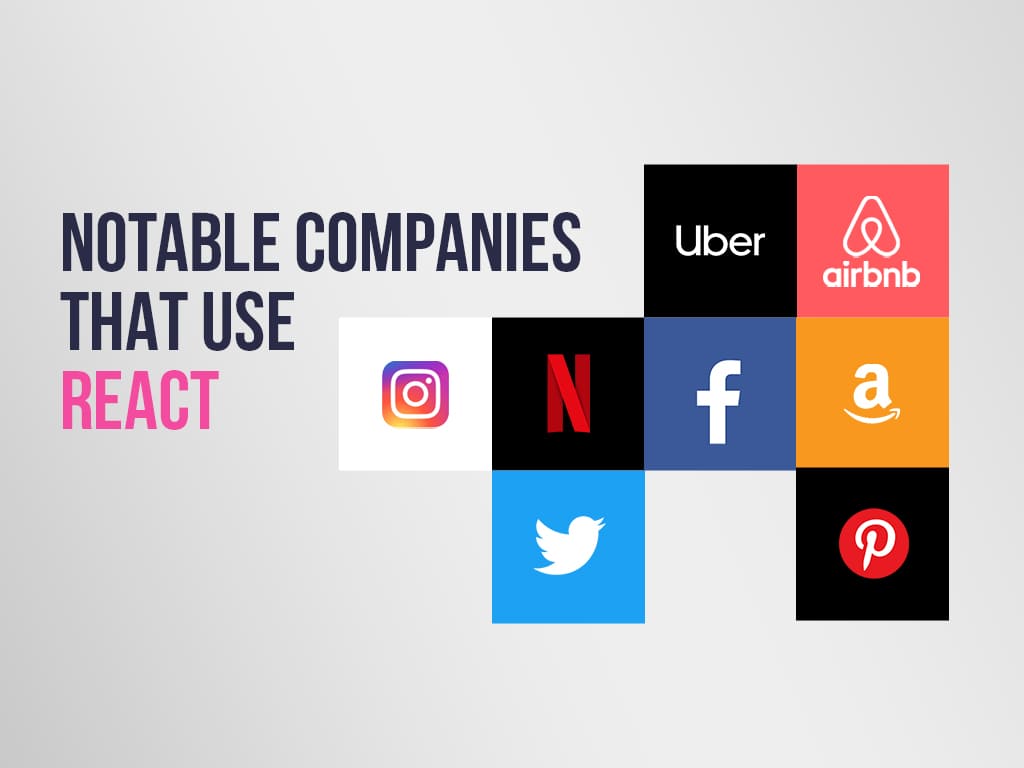
The high demand for React Native developers is no surprise! With a staggering rise in its popularity due to big names like Facebook, Bloomberg, Uber Eats, Airbnb, Discord, Instagram and Skype, React Native has proven to be a compelling react framework for mobile app development. Anyone would prefer React Native developers, after all, this React framework provides an enhanced user experience along with its feature-rich and interactive elements.

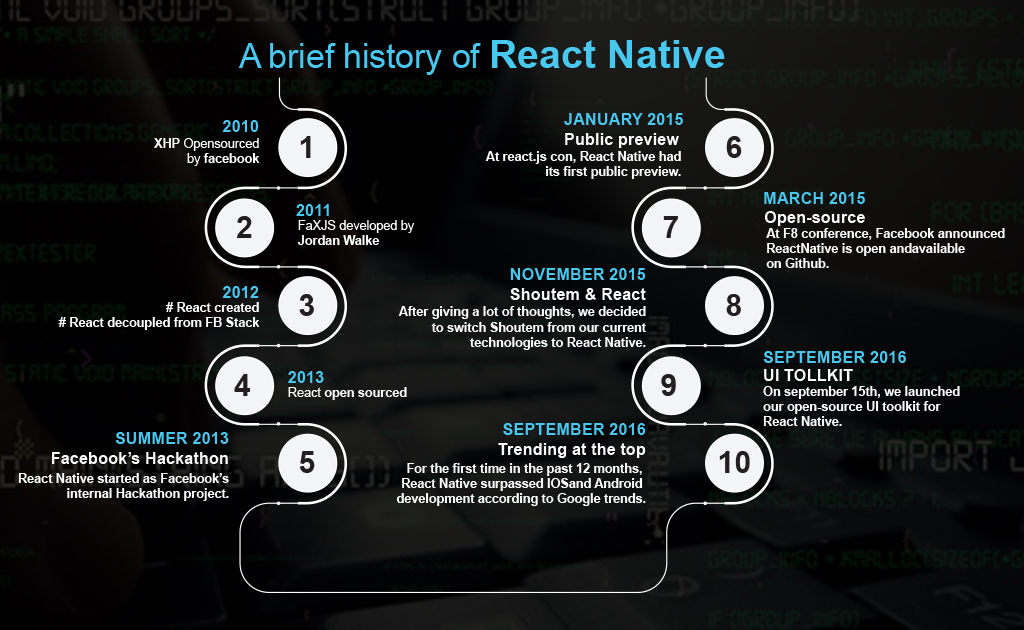
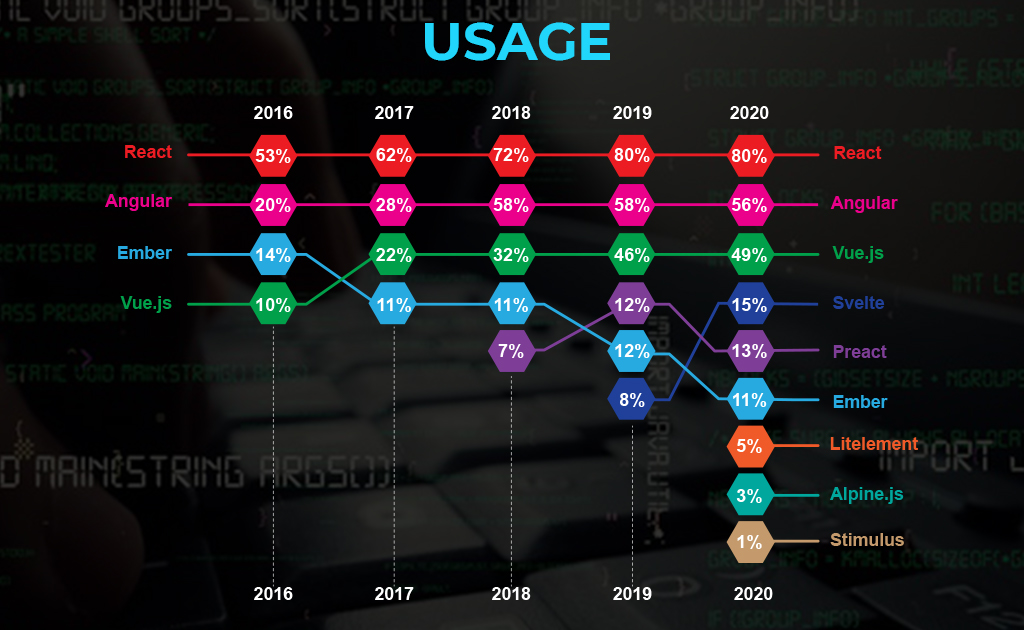
There has been a tremendous rise in its popularity since its inception in 2015:

tremendous rise

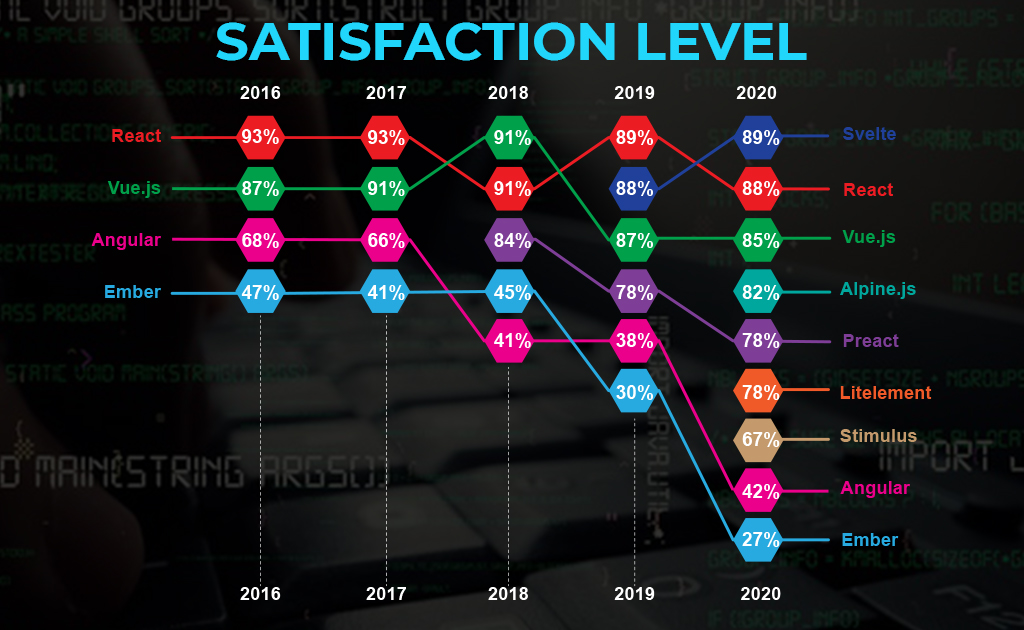
It’s one of the most popular cross-platform mobile app development frameworks, here’s a graph for better understanding:

mobile app development frameworks

Now that the significance of React Native in the mobile app development world is established, let us go over a brief introduction of the same.

What is React Native?

Developed by Facebook, React Native JS can be described as the newer version of React. While React is a JavaScript library used for building the frontend of websites, React Native is used for all-around mobile app development purposes.

Click here for an in-depth comparison between React VS React Native.

React Native is a JavaScript-based mobile app development framework. It is an all-in-one cross-platform react framework that can be used to build natively rendered robust and appealing mobile apps from scratch. Creating React Native app saves a lot of time as only one codebase is required for different platforms such as iOS and Android.
React Native has 97k Stars and 21.1k Forks on GitHub.

Major benefits of using React Native

1.Code Reusability and Cost-Effective

Code Reusability and Cost-Effective

Being a cross-platform mobile app development framework, React developers can use React Native JS to write one codebase for both developing apps on multiple platforms like iOS and Android. A few practical modifications may be needed, but 90% of the codebase can be reused between iOS and Android, saving a lot of time, effort and money in the process of creating react native apps.

2.Large Community Support

There is a large community supporting React developers at all times. React Native JS framework was developed by Facebook in 2013, and it has continuously grown as a community of JavaScript, React, and Native developers. A community-driven environment that is very beneficial for React developers as they have access to the expertise and knowledge of a large group of developers along with free catalogues, components, add-ons, and plug-ins while creative react native apps.

3.Live Reloading
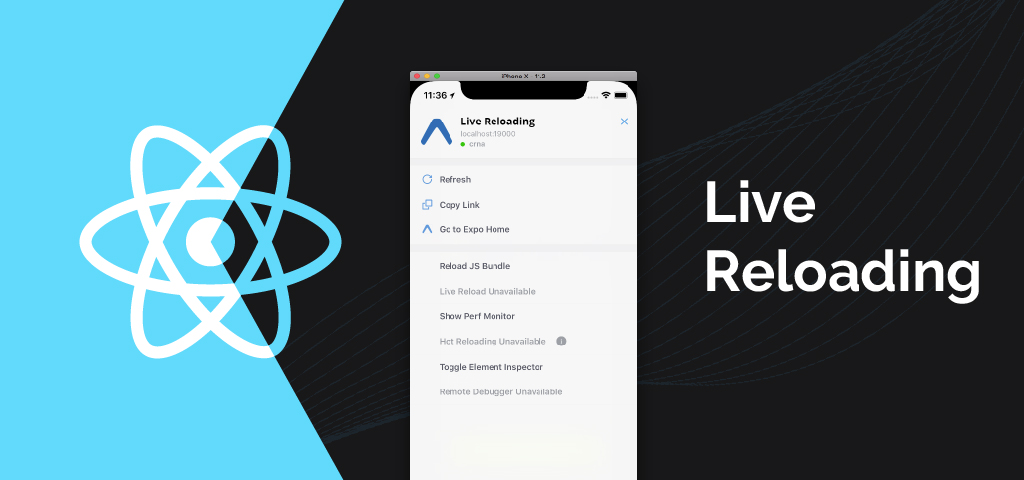
Live Reloading

Live reloading is a highly efficient feature that lets the React developer see the result of the modifications made to the code, eliminating the need to restart the app entirely. React Native can show the code on one screen and display the results of the changes on another, saving a lot of valuable development time.

4.Modular Architecture

The modular architecture of React Native bifurcates the functions into interchangeable and independent blocks, which are called modules. This provides a flexible structure with improved efficiency that allows React developers to upgrade or modify the apps at a rapid pace.

5.Optimal Performance for Mobile

Optimal Performance for Mobile

Creating React Native apps can provide amazing performance on mobile devices as it utilises the GPU (Graphics Processing Unit), unlike Native platforms where CPU (Central Processing Unit) is used.

As a cross-platform development framework compared to hybrid technologies, Apps built with React Native run at a rapid pace with efficient functionality.

React Native Developer Job Description

Looking for React developers for creating React Native apps is like searching for a needle in a haystack. Even though there is an abundance of React Native developers, looking for the right one can be arduous work. Striking a balance between experience, knowledge and attitude seems impossible at times.

But don’t worry, our software development experts have compiled this article to guide you through this daunting task.

Must have hard skills for React Native developers

Here’s a list of the React developer skills needed for technical efficiency:

  • Adept at using JavaScript as it is the core programming language for React Native app development;
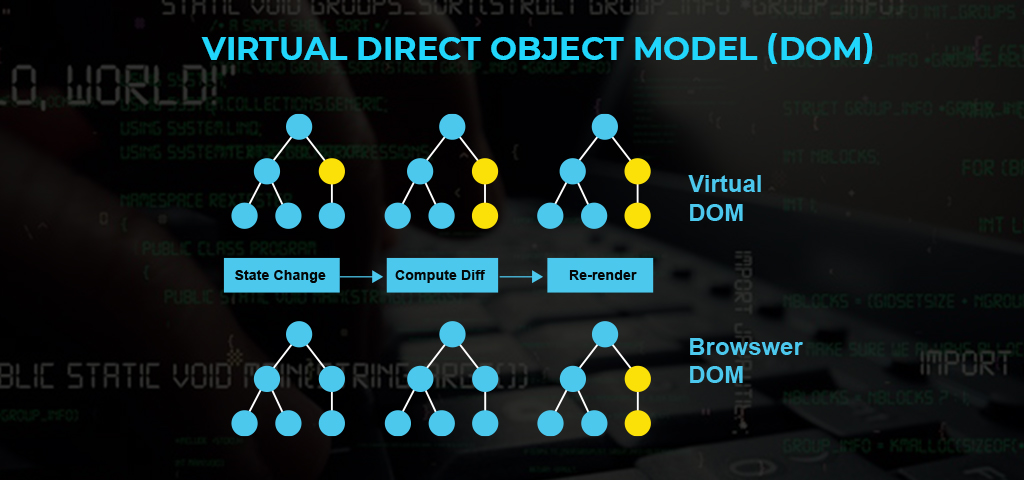
  • Knowledge of React assumptions like Virtual DOM, component lifecycle and JSX;
  • Experience with React Native app development and familiar with React, related components, frameworks, libraries, APIs and more;
  • Knowledge of iOS and Android app development rules and guidelines;
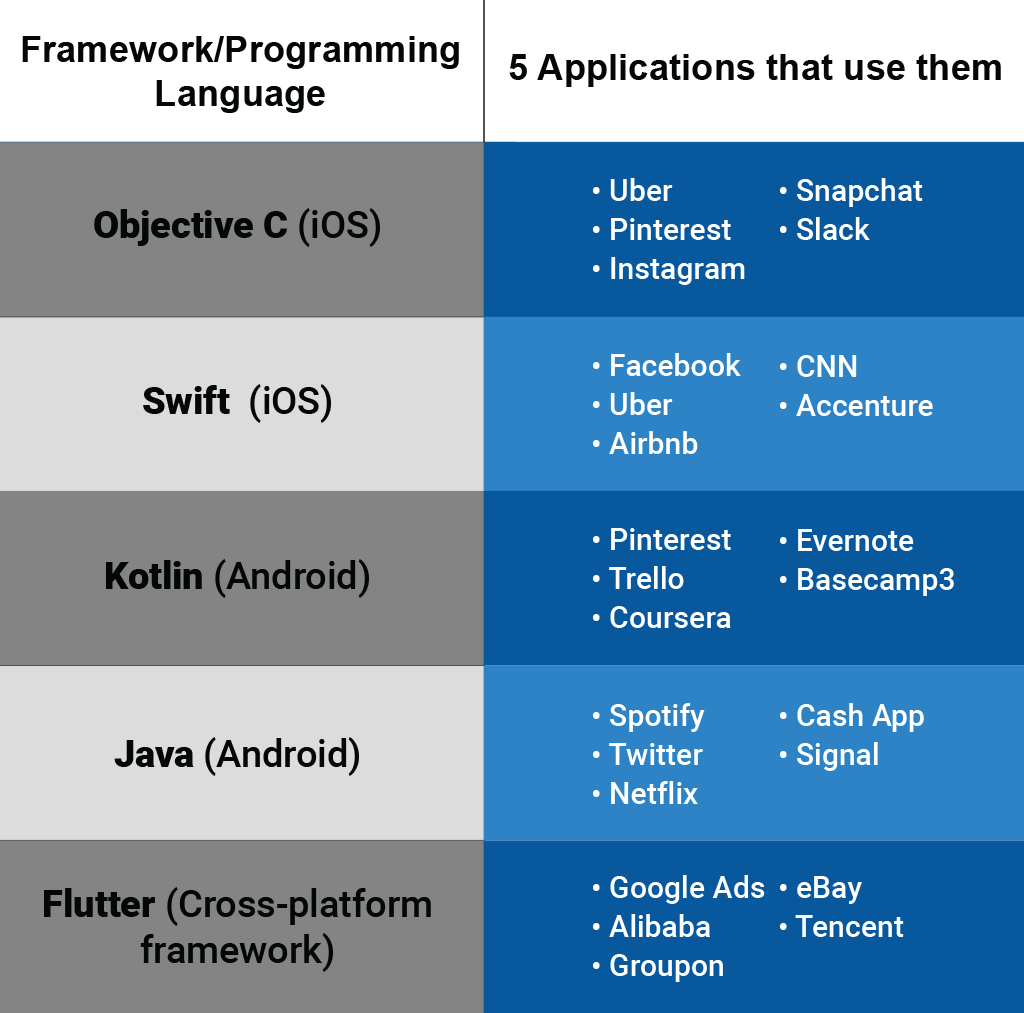
  • Basic familiarity with Native technologies like Java, Kotlin, Objective-C and Swift;
  • Familiarity with important tools like Enzyme, HockeyApp and Redux.

Must have soft skills for React Native developers

Here’s a list of the React developer skills needed for behavioural efficiency:

  • Time Management skills to meet the expected deadlines;
  • Communication skills to understand clients’ needs and work with a team of developers;
  • Adaptability to expand their horizons and learn new skills on demand;
  • Problem-solving skills to overcome unforeseen hurdles during app development;
  • A modest and team player attitude.
Looking for React Native developers to build impactful and intuitive mobile applications?

You demand, we deliver!

Now that you know what to look for in a React developer, let’s discuss how to find the best React Native developers to fulfil your app development needs.

Ways to Hire React Native Developers.

Let’s streamline the process further by discussing the best options to hire React developers:

1.Hire React Developers “In-house”

Hire React Developers “In-house”

The first option to hire React Native developer is recruiting a new employee. You have to prepare a budget plan and a hiring process with job offer advertisements across various employment-oriented platforms like Glassdoor, LinkedIn, Indeed, Stackoverflow, etc.

You can hire React developer when you already have another team of specialists and want to include a fresher approach to your existing project.

  • LinkedIn: This platform provides a wide range of professional interactions! It provides a solid network for career development. You can review CVs, search for candidates and publish posts!
  • Glassdoor: This platform is also another platform that connects business professionals throughout the globe and even across many employees. You can find your ideal candidate with numerous filters and search features.
  • Indeed: One of the most comprehensive search engines for job hunting with access to millions of job opportunities from thousands of companies across all industries.

Pros:

  • You get full control of the whole process;
  • Easy and streamlined communication while creating React native apps;
  • The newly hired developer will be a part of your work culture and available for projects in the future.

Cons:

  • It is time-consuming to hire React developer permanently with a lengthy screening and interview process;
  • Difficult to find React Native developers for hire as they’re high in demand due to heavy competition;
  • High-risk situation if the new React Native developer ends up being unfit for your organization.

2.Hire React Developers “Freelancer”

This is a viable option if you’re not looking for a permanent employee and need someone for just a couple of React Native development projects. The searching process is quite quick as there’s an abundance of freelance developers online. You can find React Native freelancing developers for hire on platforms like Upwork, Toptal, and Fiverr, and check their profiles for short-listing the best candidates who suit your app development needs.

You can choose this option when you’re looking to hire React developers for short-term app development projects with heavy budget restrictions.

The average cost of freelancers on Upwork is $15-$55/hour.

Pros:

  • Cost-effective for short term React Native development projects;
  • Pocket-friendly as you only pay for the hours worked on;
  • Reviews and feedback from previous hiring companies simplify the screening process.

Cons:

  • This option to hire React developer is also time-consuming as it still requires a screening and interview process;
  • The freelancing React Native developer won’t be a part of your development team, leading to a lack of teamwork and engagement.

3.Hire React Developers “Full-Service Agency”

Hire React Developers “Full-Service Agency”

The traditional options mentioned above may take up to a month to find and hire a decent React Native developer, but you don’t have to go through such an arduous process if you decide to go with a full-service agency. A software development agency can easily provide you with an expert React Native developer or developers according to the complexities of your app development needs.

You can partner with a full-service agency to hire React Native developers when you want to make the most for your ROI and have a team of specialists working on your project.

But most businesses disregard the advantages of this option due to the misconceptions about it being an expensive option.

Pros:

  • React Native developers in a full-service software development agency can easily integrate with your existing in-house development team, improving productivity;
  • Flexibility according to your app development requirements and timings;
  • Streamlined, accurate and focused delivery process;
  • Eliminates the screening and interviewing process and saves valuable time as React Native developers can get started with the project remotely;
  • An ideal software development agency would provide you with the best React Native developers who can deliver impeccable code quality;
  • Continuous post-development support for updates and maintenance.

Cons:

  • Choosing a software development partner is generally more expensive than hiring a freelancer or an in-house developer. But the price increase is worth it because of the quality of work you’ll receive and the time you’ll save by eliminating the lengthy hiring process;
  • This option is sometimes not viable for short-term projects.

Clutch

The most trustworthy platform that provides honest and accurate reviews of React Native development companies. It allows you to check portfolios and feedback given by clients about the concerned companies.

It aids your search for software development partners by displaying other important characteristics like- Minimum project size, Average hourly rate, Number of employees, Development focus, Client focus, Industry focus and more.

Top 5 React Native development agencies by Clutch:

  1. Communication Crafts
  2. ChopDawg
  3. Foxbox Digital
  4. Brocoders
  5. Spire Digital

Communication Crafts has been reviewed and rated as one of the leading firms by Clutch!

Communication Crafts: Full-Service React Native Development Partner

Communication Crafts is a leading React Native development agency. With 16+ years of experience and 1000’s of international projects throughout all industries, we leverage one-of-a-kind and high-quality app development services. From React Native app support and maintenance to cross-platform and hybrid mobile app development, our team of React Native developers are well versed in creating feature-rich, interactive, and high-end applications. Enhance your business by hiring our React Native developers.

We provide end-to-end mobile app development solutions that captivate your existing audience, increase organic traffic and maximise ROI with ease.

Why Hire React Native Developers from Communication Crafts?

Benefits:

  • You will be in our constant loop throughout the React Native development team screening and selection process;
  • Work with experienced and skilled React Native developers;
  • Our developers are available for 5 days a week & 8 hours a day;
  • The team of dedicated React Native developers will only work on your project, enabling high-end productivity;
  • Get daily reporting on your custom React Native project;
  • Assign one or multiple projects and scale your React Native development team as you like;
  • Hire React developers anytime in the future or keep them on-board for app updates and maintenance;
  • Get a flexible and dedicated team of React Native developers for high-quality and user-centric mobile app solutions.
  • Get mobile app developers who are highly skilled with other mobile development technologies as well:
    • iOS: Swift and Objective-C
    • Android: Core Java and XML
    • Cross-platform: React Native, Flutter, Ionic and Xamarin

Simple and Effective 7 Step Process for React Native Mobile App Development:

  1. Resource Gathering
  2. Ideation and Strategy
  3. UI/UX Design
  4. Application Development
  5. Application Testing
  6. Application Deployment
  7. Management, Maintenance and Promotion

Flexible Hiring Models by Communication Crafts:

 Full-TimePart-TimeHourly
Working Hours8 hours/day & 5 days/week8 hours/day & 5 days/week8 hours/day & 5 days/week
CommunicationEmail, Skype and PhoneEmail, Skype and PhoneEmail, Skype and Phone
BillingMonthlyMonthlyHourly (As per rate)
Hiring PeriodMinimum 1 monthMinimum 1 monthMinimum 25 hours

Flexible Hiring Approaches by Communication Crafts:

  1. Project-Based: If you have innovative mobile app ideas that you need to start from scratch, then this business model is for you. From ideation, implementation to a user-centric and performance-driven mobile app that resonates well with your audience and empowers your business growth.
  2. Hire an Expert Team: If you need to hire resources or a dedicated team to work on specific technologies to scale your mobile app, then this business approach is for you. Our team of experts will create advanced mobile app development solutions for your custom requirements, helping you enhance your app’s overall performance and deliver the desired results.

For further assistance or queries regarding React Native mobile app development, feel free to contact us. Our expert React Native developers are always at your service.

Building mobile apps that make a difference.

Looking for React Native developers to build impactful and intuitive mobile applications?

You demand, we deliver!

10 Effective Features for a Successful eLearning App

As of 2021, surveys indicate that 73% of students would prefer to take courses entirely online post-pandemic. Moreover, eLearning improves knowledge retention by 25%-60%, while traditional learning methods provide only 8%-10% retention.

Technology has been taking over the education industry for many years and after the pandemic, EdTech solutions and eLearning models are being welcomed as the future of education.

market worth

With a 900% growth since 2000, the eLearning industry is expected to reach an astounding figure of $325 billion by 2025, making it increasingly prosperous for EdTech start-ups.

The convenience of remote learning, ease of use, and effective knowledge retention of eLearning are compelling institutes, universities, and businesses to find new and improved ways to deliver courses and training programs. That’s where educational apps come to play.

Top 10 educational apps in 2021:

  • Ted
  • Duolingo
  • Coursera
  • Remind
  • Photomath
  • Khan Academy
  • Evernote
  • Google Classroom
  • EdX

The global eLearning app market is projected to grow by $46 billion between 2020-2024.

eLearning mobile apps can provide personalised and captivating content cost-effectively while keeping the traditional methods alive through online classrooms and live webinars. And with the right features, your educational app can deliver impeccable learning experiences.

Types of eLearning Apps:

From full-fledged Learning Management Systems to educational apps for specific purposes, there are countless ideas for types of eLearning Apps. To name a few:

  • Private Tutor App
  • Student Performance Tracking App
  • Educational App for Differently Abled Students
  • Augmented Reality Based Educational App
  • Comic/Animation Based Educational App
  • eBook or Audiobook App
  • Competitive Exam Preparation App
  • Educational App for Career Guidance
  • Educational App for Sports and PE
  • Educational Games and Quizzes App
  • Language eLearning App
  • Vocabulary and Writing App
  • Preschool eLearning App
  • Student/Teacher Community App

Here at Communication Crafts, as a leading and trusted company for app development and EdTech solutions, we’re frequently asked questions like:

What features should an educational app have?
What are the features of eLearning?
What are the best features of online classes?
What are the top things to consider in eLearning mobile app development?
What is the best way to create an educational app?

In this article, we’ll delve deeper and answer these queries by discussing the must-have features for a successful eLearning app.

Must-Have Features for a Successful eLearning App:

1.Effective Content Management System (CMS)

The main feature of an eLearning mobile app is a wide variety of quality content. Without interesting and engaging content, your eLearning app will fail to deliver the desired results.

Digital learning offers endless possibilities and the following content features can improve your users’ learning experience remarkably.

-Multiple content formats: Offering education or training in the conventional ways with only text format makes the learning process tedious and monotonous for the users.

Utilising other formats like audio and video can help learners retain information with ease. Other formats of learning content include podcasts, video guides, recordings of previous webinars, and more.

Incorporating other content formats makes the learning experience much more captivating for the users and unlocks the true potential of an eLearning app.

multiple content

-Offline support: Offline support content makes your eLearning app more accessible and portable. This feature enables your users to download the required content and access it whenever they like without worrying about internet connectivity, laggy loading speed, or low batteries.

Never let your users miss out on learning by integrating offline support in your eLearning app.

-Micro-learning: Gen Z has an average attention span of 8 seconds, which is lesser than a Goldfish. Considering this, lengthy sessions may prove to be detrimental to the outcome.

You should incorporate micro-learning features in your eLearning app development. Information given out in smaller packets results in better knowledge retention and works effectively in keeping the learners attentive and interested.

-Real-time learning support: The live experience felt in conventional classrooms can be integrated as a real-time feature in your eLearning app. With active question/answer sessions, online classes can easily provide better guidance and a lively learning experience.

Learners can use personal teaching sessions, live webinars, chats and Q/A portals to acquire an overall better quality of education with instructors or teachers solving their doubts and queries in real-time.

Real-time learning support

-Limitless learning: One of the most significant features of eLearning is the unlimited sources of knowledge and information via the internet. You must incorporate this feature to enhance your content and avail the full benefits of eLearning.

2.Assessment Features:

Assessment Features

Assessment and evaluation through exams, tests and quizzes are an integral part of education.

This feature enables the instructors and learners to be aware of their progression and gaps in knowledge, and recognize the parts of the subject where the learner needs extra guidance or help.

Tests and quizzes are a must-have feature to create an educational app. They can be of various formats like multiple choice questions, fill-in-the-blanks, essays, time-sensitive tests, and more.

Students are always looking for sample question papers, tests and quizzes to practise for exams, and your eLearning app can offer that as well. Self-assessment techniques provide the learners with the confidence required for acing real-world competitive examinations.

3.Individualised learning:

Individualised learning

One of the major drawbacks of traditional learning methods is having the same lesson plan for the whole class of students, which is very ill-suited and unproductive. By tending to the individual needs and preferences of the learners, your eLearning mobile app can enhance user experience and ultimately provide optimum results.

By adding features like feedback and surveys in your eLearning app development, you can monitor your users’ needs and learning patterns to construct custom content that resonates well with your audience.

4.Games:

Games

The future of eLearning lies in Gamification. This is one of the most effective and captivating eLearning features and advantages. This feature introduces fun and immersive approach to the learning process.

Gamification is the technique of incorporating game-like features in the learning process. Students are already fascinated by games, and embedding the same feeling into their education can make them feel more engaged and interested, minimizing distractions and maximizing focus.

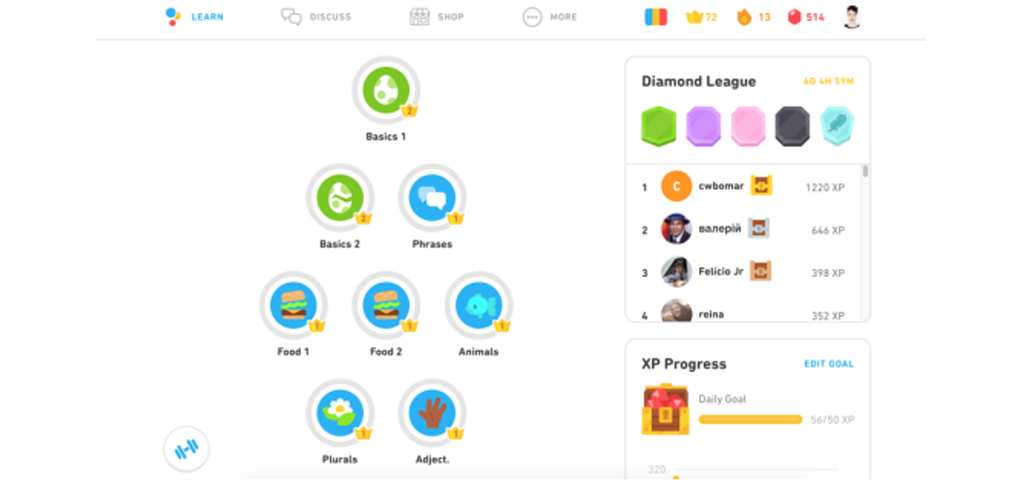
Features like leaderboards, winning badges, point systems, difficulty levels, milestones and more creates a positive competitive environment where students feel more rewarded after completing lessons with gratifying results. For example, Duolingo is a successful language-learning app that lets you compete with your friends and get points and rewards after completion.

Game-based learning techniques like puzzles, matching games, and custom educational board games can also be implemented in the learning process to make it more diverse and fun.


5. Push notifications:

Push notifications

With push notifications, you can connect and interact with your audience and effectively keep them updated about their relevant courses or training programs.

Push notifications are a much more appealing option when compared to constant messages or emails. It provides your users with a gentle nudge to take the desired actions.

Updates, alerts, invitations, offers, and suggestions, there are endless types of information that you can conveniently convey through push notifications. Personalized messages in your users’ notification bars can make them feel valued by your services.

Examples of push notifications:

  • Send a suggestion for a relevant or related course after course completion;
  • Recommend a test or quiz after a chapter or topic is completed;
  • Comment them with congratulations when they pass a test or a quiz;
  • Send them reminders for upcoming tests or exams;
  • Send intriguing messages to invite them back when users don’t use the eLearning app for several days;
  • Send offers and discounts for paid courses whenever available;
  • Recommend specific instructors or reference books for selected courses.

6. Secure and adequate payment portals:

Secure and adequate payment portals

eLearning apps may be more cost effective than traditional education methods, but it still needs convenient payment methods to satisfy your audience. Payment options should be favorable to the location of your targeted audience to easily facilitate paid courses and instructors.

Diverse payment options like PayPal, different types of debit and credit cards, bank transfers, and net banking, enhance the user experience by providing more flexibility.

Finances are always sensitive and prone to malicious activities, that’s why the features of online learning websites or apps must include reliable and secure payment gateways. Avoiding problematic or dubious transactions can boost brand loyalty and keep your brand’s reputation intact.

7.Customer Relationship Management (CRM):

Customer Relationship Management

Integrating CRM features in your education mobile app development is one of the most indispensable eLearning features and advantages to maximize customer satisfaction.

It monitors customer behavior and content interaction along with their personal information like addresses, emails, names, social media, and phone numbers. This feature helps you address and solve your audience’s issues and cater to their specific needs and preferences with ease.
With effective CRM features, you can anticipate your customers’ needs in advance and provide better communication, which ultimately leads to maximum customer satisfaction and retention.

8.Reliable content and database:

Building a helpful database for your users is a significant feature of your eLearning app development. It boosts your educational app’s credibility and eliminates the need to search for sources and study materials from outside the app.

Storing the added courses’ reference e-books, assignments, and other study materials in the educational app’s database can lead to a rich and diverse platform for all kinds of resources, helping your students gain quality knowledge with ease.

It can provide various essays, projects, data, surveys, statistics, and more to avail unlimited information for your users unified in one platform. Continuous updates are also possible digitally to offer the latest information regarding selected sources and subjects.

9. Seamless user interface and log-in:

To create an educational app that is both customer-centric and productive, a seamless user interface and login are imperative.

Ease of navigation and login pleases the customers and compels them to stay. Adding an attractive color scheme, distinct buttons, and simple and clear navigation in your eLearning app development makes the learning process more appealing and easier.

Along with a clear and smooth user interface, the account creation and login process should also be uncomplicated, requiring only the mandatory details. Simplicity and ease of use go a long way when it comes to educational app development.

10. Social media integration:

Social media integration

Social media networking plays an indispensable role in the popularity and success of any eLearning app. Social media platforms like Instagram, Twitter, Facebook, etc. provide a way to engage and connect with your existing users and simultaneously reach potential targeted customers.

You can use social media content to promote the courses, training programs, subjects, and topics available in your eLearning app. Platforms like YouTube can be used to post tutorial or explainer videos for your users.

It maximizes the reach of your eLearning app and allows your users/learners to communicate and collaborate around the globe.

Final thoughts

With many benefits like personalized learning, remote learning, and gamification, eLearning apps are being preferred by teachers and students alike. eLearning apps can improve the learning experience by making it more captivating, simpler, and accessible to everyone.

Creating a platform for education is a great responsibility, and delivering the best and most effective methods and features should be your utmost priority. By implementing these top 10 features mentioned above, you can create a perfect learning environment for your users.

High quality and diverse eLearning content provide the students with adequate resources and assessment features to prepare them for upcoming tests and exams; Individualised learning tends to every student’s personal needs and preferences; Gamification features can captivate their minds and enhance the learning experience; Seamless user interface, reliable database, effective CRM features, and secure payment gateways can uplift user experience; Push notifications and social media can help you connect better with your audience.

All in all, these features can help you create a high-functioning eLearning app that resonates well with your audience and delivers excellent learning experiences.

If you wish to create an educational app or require maintenance in an existing one, contact us!

Communication Crafts is an experience-led app development company that offers bespoke EdTech solutions to satisfy your customers and reach your desired goals efficiently.

Our EdTech expert can build a robust and cost-effective eLearning app that attracts new customers, engages your users, exhibits all the important features, and more.

eLearning is the future of education, and we make sure it stays bright!

Flutter VS Native: Choosing the Right Mobile App Development Technology

we will discuss ways to determine the right mobile app development technology by comparing the development process, features, code maintenance, app performance, app sizes and uses cases in Flutter VS Native Android and iOS. We’ll answer questions like: Is Flutter better than Native? Will Flutter replace Native? What is the difference between Flutter and Native technologies? Is Flutter actually Native?

Since the basic arcade game “Snake” by Nokia 6110, the mobile app development industry has grown exponentially.

With the paradigm shift towards digitalization, businesses are searching for new and improved ways to satisfy their customers. Having a robust, dynamic and seamless mobile application improves your brand’s image and conversion rate remarkably.

The mobile app market revenue has crossed a jaw-dropping figure of $500 billion in 2020 and reached $65 billion in consumer spending in the first half of 2021.

There are countless frameworks and programming languages for building mobile applications, Native technologies are the natural choice in most cases, but Flutter is emerging as one of the most cost-effective and convenient cross-platform options.

And that’s why we have encapsulated the features, benefits, drawbacks, and use cases of Flutter and Native technologies in this article.

What is Flutter Technology?

Flutter is a UI toolkit/framework for building dynamic and visually appealing natively compiled cross-platform mobile applications using a single codebase written with a single programming language.

Flutter technology was released in May 2017 by Google, and it is an open-source and free-to-use UI framework used for the fast-paced development of performance-driven apps with a reusable codebase that provides visual consistency across platforms like iOS and Android.

It is supported by a team of Google developers and the Flutter community.

Flutter technology is made up of two equally significant parts:

  • A Software Development Kit (SDK): A plethora of tools to build and compile your code for iOS and Android apps;
  • A Framework (UI library made with widgets): UI elements like text inputs, sliders, buttons, and more that are reusable and customizable.

Flutter utilises a typed object programming language called Dart, created by Google in 2011. It is not a widely used language but it has a syntax that is similar to JavaScript.

What is Native Technology?

Native application development is done to create and optimize apps for one specific platform like iOS, Android, or Windows to deliver extremely high performance.

With fewer bugs during development and more security features, Native technology can be used to take full advantage of a collection of features from a device like GPS, camera, microphone, accelerometer, and more without suffering from any major drawbacks.

Native Apps can be downloaded and installed through application stores like Google Play Store and App Store for Android and iOS respectively.

Native technology utilises programming languages that are supported by the specific platform of choice:

  • Android: Java, Kotlin, and Android Studio
  • iOS: Objective-C, Swift, and Xcode

POPULARITY: Flutter VS Native

Flutter VS Native

In Flutter VS Android Native and iOS Native programming languages like Kotlin, Swift and Java, the Flutter technology shows a gradual increase in its popularity since its inception in 2017.

Java has been the most popular programming language for mobile app development for many years but it has shown a steady decline since 2015, and yet there’s a big gap between the popularity of Java and Flutter.

GitHub ratings:

difference

Flutter VS Native- 2

When compared to other cross-platform mobile app development frameworksFlutter ranks at a close second position after React Native.

In Flutter VS React Native popularity of 2020, React Native is used by 42% and Flutter is used by 39% of software developers worldwide.

And in React Native VS Flutter which is easier to learn: React Native is the most common answer because it is based on the most widely used programming language JavaScript, as opposed to Flutter which is based on Dart.

DEVELOPMENT PROCESS: Flutter VS Native

Flutter:

Flutter utilises reusable lines of code in a “write once, run anywhere” pattern, allowing developers to write one code and use it on multiple platforms. Thus significantly reducing the time and cost of mobile app development.

The high readability of the framework enables amateur or novice developers to quickly learn and understand it. This saves training costs and eliminates the need to appoint a team of expert developers.

A typical Flutter development team: 1 Quality Assurance engineer, 4 Flutter developers, and 1 designer.

Native:

The time taken to develop a mobile app with native technologies depends on your app development needs and abilities. From small-scale to enterprise-grade apps, Native technologies can be used to develop them for Android and iOS separately, as per your timeline and budget to satisfy the expectations of your end-users.

You have an option of employing a large team of developers for the whole project or two different teams for Android and iOS app development. This makes it necessary to hire more experienced developers for writing two separate codes on two different platforms, increasing app development time and cost.

A typical Native development team: 1-2 Quality Assurance engineers, 4 iOS developers, 4 Android developers, and 1 designer.

Code Maintenance: Flutter VS Native

Flutter:

A Flutter app is easy to manage with only one codebase to look after for two applications. The flexibility of the framework provides stability and a simple layout lets the developers easily identify and eradicate issues or bugs.

App development with Flutter technology reduces the time taken to debug, update or make changes to app specifications or components due to its Hot Reloading feature and ability to source external tools and third-party libraries easily.

Native:

Developers need to put extra effort to maintain two codebases for respective platforms in Native applications. Identifying and fixing bugs and errors in two codebases for different platforms doubles the time taken to give out updates and make changes regularly.

Additionally, the maintenance costs grow as the app grows more complex or elaborate.

Looking for top-tier mobile app developers to engage your customers and maximize your ROI?

You’re at the right place!

Integration: Flutter VS Native

Flutter:

It is fairly easy to integrate plug-ins and third-party libraries and tools with Flutter, but developers who aren’t adept at using Dart may find it challenging.

To add specific features for Android or iOS, Flutter requires add-on plug-ins like Android Archive (AAR), CocoaPods, etc. Flutter technology faces some limitations when it comes to integrating native modules through Android studio or Xcode, however, its extensive documentation enables the developers to manually bypass these limitations and integrate native modules for Android and iOS with ease.

Flutter supports the latest versions of iOS, including iOS 14, but one may face a few drawbacks in performance as the combination of Flutter with iOS14 has not completely stabilized yet.

Native:

Apps built with Native frameworks or programming languages allow seamless integration for their respective platforms.

External libraries, add-ons, or plug-ins aren’t mandatorily required for integration possibilities.

Swift for iOS provides fast integration with improved expressive and safety features. Java and Kotlin for Android allow consistent and smooth integration with their Intellij environment and default runtime classes.

Application Performance: Flutter VS Native

The different types of factors to measure Flutter VS Native performance for an app:

  1. Accessing phone API (GPS, camera, microphone, photos, accelerometer, etc.)
  2. Speed of rendering (Frames per second taken to display the UI changes and effects)
  3. Business logic (Complex mathematical calculations)

Let’s examine some CPU and memory intensive tests to find out the performance of apps in Flutter VS Native Android and iOS technologies:

iOS:

Memory-intensive test with Gauss-Legendre Algorithm:

Memory-intensive test with Gauss-Legendre Algorithm

CPU-intensive test with Borwein Algorithm:

In the Gauss-Legendre Algorithm, Flutter seems to be a bit faster than Swift.

Being faster than Swift and Flutter in both tests, Objective C (Native) is the ideal option for iOS app development, requiring fewer milliseconds to render and providing results quicker.

However, the difference in performance is marginal between the three and the choice depends on many other factors and your specific iOS app development needs.

Android:

Memory-intensive test with Gauss-Legendre Algorithm:

CPU-intensive test with Borwein Algorithm:

In Flutter VS Android Native performance, Java and Kotlin show similar results. Flutter is slower than Native technologies in both memory and CPU intensive tests, indicating that Native is the best option for Android app development in the context of performance.

However, the difference in Flutter VS Android Native performance is marginal as well. The final choice for app development still differs from person to person and business to business depending on many other factors.

Application Size: Flutter VS Native

Flutter:

The simplest and most minimal app built with Flutter takes up 7.5MB of memory. The C/C++ engine and virtual machine of Dart are responsible for the size of the app.

Nevertheless, all codes and assets can be contained in Flutter to overcome size concerns.

Some of the ways to manually reduce the size of an app while using Flutter:

  • A unique tag like -split-debug-info to reduce the code size;
  • Remove resources that are unimportant or unused;
  • Minimize the resources imported from external libraries;
  • PNG and JPEG files can be compressed.

Native:

The simplest and most minimal apps can be considered to measure the minimum size of applications built with Native technologies.

In Android, Java takes up 539KB and Kotlin uses 550KB to deliver such a simple app.

In iOS, the same app uses 1MB-3MB memory.

The maximum size for applications in Native technologies can reach up to 15MB for Android and 35MB for iOS, and the size can be further reduced by using external addons or third-party tools.

Use Cases: Flutter VS Native

The use cases and choice between Flutter and Native technologies are ultimately led by business needs and app development goals.

The most common uses for Flutter and Native are as follows:

When to choose & avoid Flutter technology:

Choose Flutter to:

  • Build MVP apps with reactive widgets to solve specific problems and provide on-demand apps to early adopters on mobile;
  • Create one codebase for frontend and backend, as well as different platforms;
  • Build native apps with the latest cloud services and real-time features;
  • Build creative designs for seamless user experience;
  • Provide a seamless app development process;
  • Reduce time-to-market and reach a wider audience.

Avoid Flutter when:

  • Developing native apps with endless UI functionalities;
  • Developing mobile apps entirely focused on native performance and functionality;
  • Developing Mobile apps with universally accepted and rigid MVC, MVP, or MVVM code structure;
  • Developing feature-specific apps made for standalone brands or businesses.

When to choose & avoid Native technology:

Choose Native to:

  • Build advanced native applications with limitless features, performance, and speed;
  • Build niche and unique MVP apps;
  • Provide high-end app features with resolute reliability and security;
  • Provide regular app changes and updates with the release of new OS versions;
  • Build apps to take advantage of features from the device like GPS, camera, mic, etc;
  • Create high-performing apps with a strong embedded connection of OS between the applications and the device.

Avoid Native to:

  • Avoid the fast-growing costs of maintenance and updates;
  • Need to launch the app into the market quickly;
  • Avoid high investment plans and training costs;
  • Provide your end-users with minimal in-app payment options;
  • Avoid global device compatibility development issues.

Conclusion:
After carefully examining Flutter VS iOS Native and Flutter VS Android Native, we’ve concluded the following:

With many big companies using the features of Flutter, it is one of the most widely used cross-platform web development frameworks. Java (Android) is the most popular programming language for developing mobile applications, however, its popularity has been on a decline in the past few years.

Compared to Native programming languages, Flutter is much more cost-effective when it comes to app development and code maintenance.

Kotlin, Java, and Swift have immense integration abilities as opposed to Flutter technology.

Native technologies provide marginally better app performance and reduced app size in contrast with Flutter.

And the answer to the question “Will Flutter replace Native?” is: No, with numerous features and drawbacks, Flutter and Native technologies can be used for a wide range of purposes and applications. Although Flutter is proliferating rapidly, Native technologies will persist as one of the most effective ways to build mobile applications.

All in all, the most important thing to consider is your audience’s needs and preferences. Choosing the best framework or programming language for mobile app development is determined by your specific business goals and app development needs.

If you need further assistance or advice regarding mobile app development, contact us!

With an enviable list of clientele and 16+ years of hands-on experience in app development, Communication Crafts can provide you with robust, dynamic and seamless mobile applications that resonate well with your audience.

Django vs. Node.js: A Comprehensive Comparison of Two Powerful Web Development Frameworks

In the vast and ever-evolving landscape of web development, choosing the right framework is crucial for building robust and efficient applications.

Django and Node.js (commonly referred to as simply “Node”) are two popular web frameworks that have garnered a significant following. While Django is a Python-based framework known for its scalability and rapid development capabilities, Node.js, powered by JavaScript, has gained fame for its high performance and real-time application capabilities.

With the rapid advancement of the digital era, companies are constantly searching for new and improved ways to stay ahead of the curve and satisfy the ever-growing demands of their customers.

The modern demographic or audience always gravitates toward an intuitive, attractive, and seamless website. And for a high functioning and efficient web application, you need a suitable backend framework that supports it.

In this blog post, we will delve into a comprehensive comparison of Django and Node.js, exploring their features, strengths, and use cases to help you make an informed decision when choosing a web framework.

As of 2023, 89% of companies have already adopted a digital business strategy, and yet 45% of executives have stated that their company does not have the right technology for a complete digital transformation.

NodeJS and Django are emerging as two of the most popular frameworks in recent years. Both of these platforms are used to create and support complex web applications and deliver a top-notch user experience.

Let’s discuss the difference between NodeJS and Django in detail.

Definition: Django VS NodeJS

What is Django?

Django was created and released between 2003-2005 in the Lawrence Journal-World newspaper and has been gaining popularity ever since.

With a python web framework, Django provides fast-paced development for high-functioning and secure websites. It handles web development while you get the freedom to focus on writing and designing your app.

Django is free to use and open-source, built primarily to eliminate repetition and simplify the creation of complex and database-driven websites.

What is NodeJS?

NodeJS is adored by developers all around the world since its inception in 2009 by Ryan Dahl.

With a cross-platform JavaScript framework, NodeJS is perfect for building data-intensive applications and efficient server-side web applications. Built on Chrome’s V8 engine with the main purpose of increasing multitasking functionalities, it provides one of the fastest code executions.

NodeJS is free to use and open-source, and in addition to its high flexibility and lightweight structure, it has many modules that simplify the development process.

Django and NodeJS have been preferred by many developers and used by many companies all over the world.

Popularity & Usage: Django VS NodeJS

Popularity:

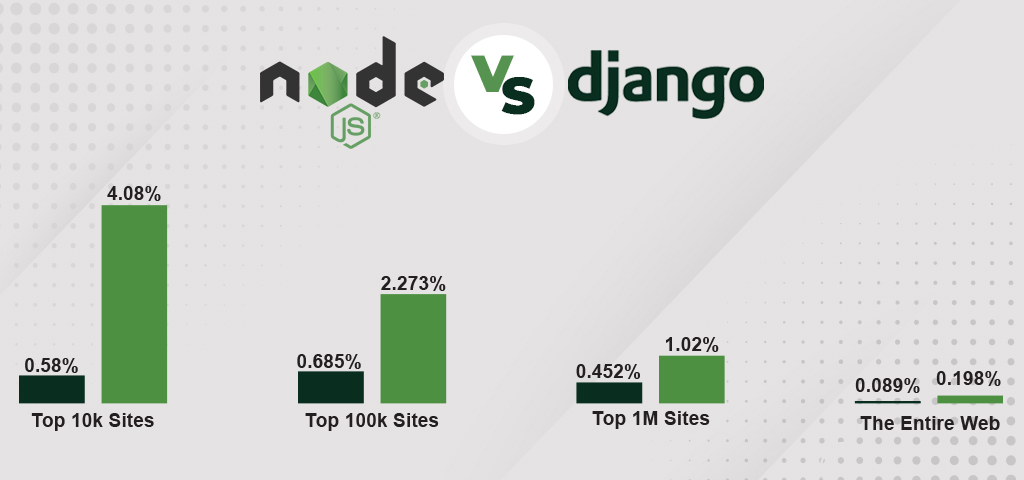
In the battle of Node vs Django: NodeJS takes the crown when it comes to popularity, with Django coming up close behind.

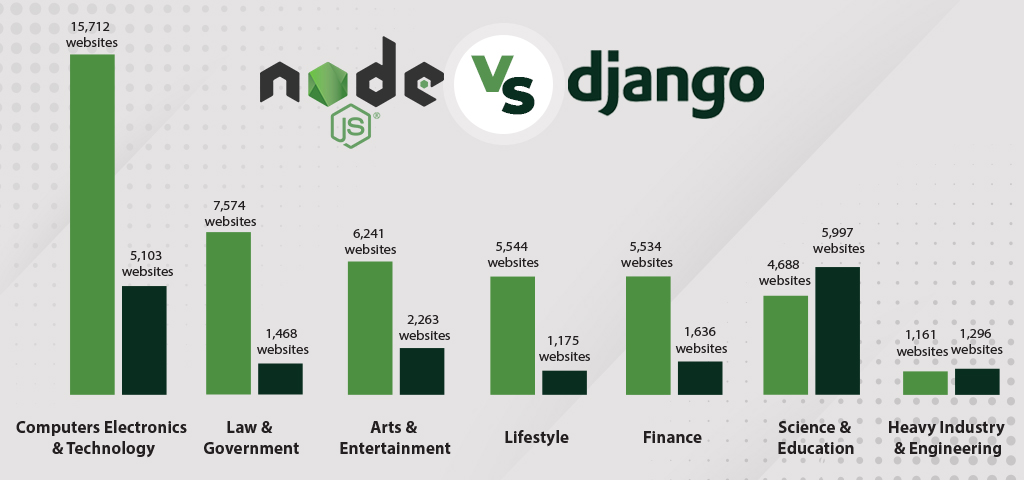
Node JS is used by over 30 million websites. and 85k unique domains, while Django has helped develop 107k websites and 46k unique domains.

Django VS Node JS
Django VS Node JS

Despite the rapid growth of Django in recent years, NodeJS is currently beating it in the website market share and every website category except “science & education” and “heavy industry & engineering”

Some of the companies that use Django and why:

1. The Washington Post: 

Django was initially created for an online newspaper, so it comes as no surprise that The Washington Post uses it to manage its heavy traffic;

The Washington Post

2.Instagram: 

One of the most widespread social networks with 1 billion active users every month, uses Django to instantly resolve issues, add updates, manage the users, and run the application without a hitch;

Instagram

3.Mozilla: 

This popular web browser substituted PHP for Python, to use Django for its functionalities and ability to manage huge traffic with ease;

4.Reddit: 

Another platform for social networking to have discussions, share opinions, and more, uses Django for its efficiency to manage huge traffic and deliver a seamless experience;

5.Spotify: 

One of the biggest libraries for music that utilises Django machine learning on its technical side to avail the convenience of Python.

Spotify

Some of the companies that use NodeJS and why:

1.Netflix: 

NodeJS was used to build the user interface of Netflix, one of the most popular streaming platforms. NodeJS was preferred because of its many modules providing flexibility and scalability;

Netflix

2.Uber: 

One of the first companies that used NodeJS to its full capacity was Uber. The go-to taxi service used NodeJS to build its platform because of its open-source community, rapid processing, and ease of bug-fixing;

Uber

3.LinkedIn: 

The number one platform for job searching and professional networking adopted NodeJS to re-write their entire LinkedIn app. The app now runs 20x faster as a result of the transition to NodeJS;

4.NASA: 

The biggest organization for research and exploration of space used a feature of NodeJS known as Microservices to transfer their whole enterprise to the cloud;

NASA

5.PayPal: 

The most trusted online payment gateway PayPal, uses NodeJS to build the user interface for both client and server-side operations with JavaScript. NodeJS provides a streamlined development process.

The reason behind the popularity of NodeJS and Django among large-scale enterprises and multi-national corporations is the unique functionalities of their architecture.

Also read: 7 Best Nodejs Frameworks for Web Apps

Looking for intuitive and innovative web development solutions?

You’re at the right place!

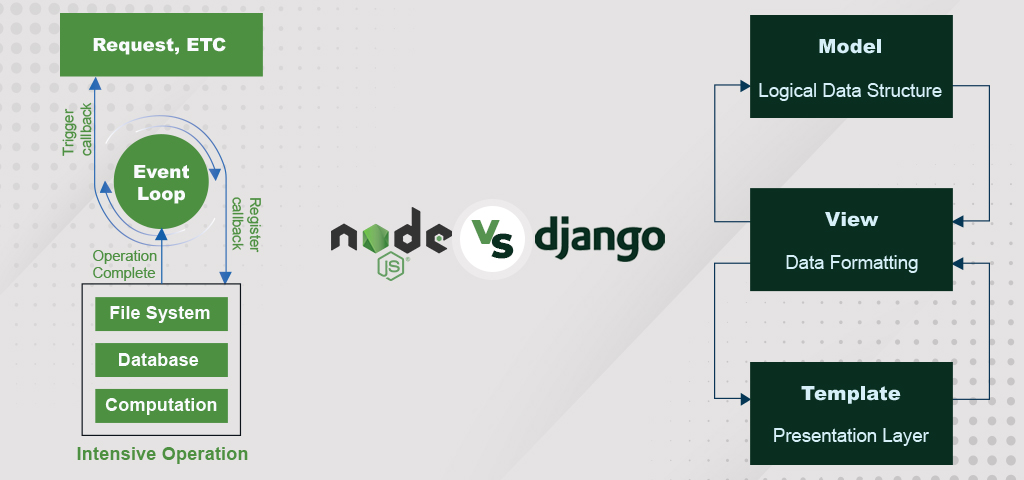
Architecture: Django VS NodeJS

Architecture: Django VS NodeJS

Django architecture:

The Django architecture is based on Model-View-Template (MVT) structure.

  • Model is the interface for your data, and it maintains the whole logical data structure of the web application. It is the mediator between the user interface and the database;
  • The view is the user interface, your end-users experience this part when a website is rendered;
  • A template controls the elements that get displayed in the user interface.

It offers rapid development speed for scalable and secure web applications. Also, it allows easy modifications because of its component-based pattern.

NodeJS architecture:

The NodeJS architecture follows a Single Threaded Event Loop model.

The heart of its architecture is the “event loop

The event loop takes care of the requests and callbacks to ensure seamless operations for high-end applications.

With a runtime environment, NodeJS architecture can handle multiple concurrent requests with ease. And additionally, it eliminates the need for multiple threads, as it can process requests one-by-one in a single thread pattern.

Also read: Reactjs vs React Native: Difference Between React and React Native

Advantages: Django VS NodeJS

Top 5 features and advantages of Django:

1. Python: 

Django leverages the power and simplicity of Python to create readable, clean, and flexible code for web applications.

Python is one of the easiest to learn and use programming languages, and it is adored by developers all around the world;

2. Batteries included: 

Django is considered to be a batteries-included framework. It comes with many additional resources offering various functionalities and features.

Here are some of the resources that come with Django:

  • URL routing;
  • HTTP libraries;
  • Templating libraries;
  • Object-Relational Mapping (ORM);
  • Default admin interface;
  • Multi-site support;
  • Multi-language support;
  • AJAX support;
  • Easy database migrations;

3. Community: 

Developers can fast-track the development process by leveraging the continuous updates provided by Django’s large and active community.

Code snippets, plug-ins, and various other updates are continually added by the members. Also, this makes it easy to spot and resolve errors and glitches quickly;

4. Scalability: 

By modifying decoupled components, developers can scale and customize the web framework according to their needs.

You can run different servers for the application, media, and database and also use load-balancing or clustering to use the application across multiple servers;

5. Compatibility: 

Django is compatible with major operating systems like macOS, Linux, and Windows. It provides an Object-Relational Mapping (ORM) system that helps developers to use the framework with many widely used databases.

Top 5 features and advantages of NodeJS:

1. Scalability: 

NodeJS follows an event-based structure, providing unlimited nodes that can be added to the core programming. You can scale your framework vertically and horizontally, giving your application room to grow by updating the existing programming according to your needs;

2. High speed and performance: 

NodeJS runs on Google’s V8 JavaScript engine, making it one of the fastest options available. It offers a smooth and seamless environment with direct input-output operations, making the code run relatively quick;

3. Caching: 

When changes are requested to the app, they are cached in the app’s memory. NodeJS provides robust caching abilities, simplifying the re-execution of requests without diving into the data history;

4. Community: 

NodeJS has a helpful active community supporting developers at all times. They provide open-source solutions for various kinds of applications constantly, letting your programmers work and solve issues without a hitch;

5. Flexibility: 

To make changes in a NodeJS framework, you don’t have to make changes to the core programming. You need to make changes to the specific nodes to get the desired results. Developers can utilise APIs to incorporate HTTP, DNS, TCP, etc. into the framework.

Now that we have discussed the good side of NodeJS vs Django, let’s explore their disadvantages.

Limitations: Django VS NodeJS

Drawbacks of Django:

  • Django is monolithic in nature with certain predefined files and variables, reducing its flexibility;
  • Django is too bloated for smaller projects as it is a code-intensive framework with a lot of processing time;
  • Django cannot handle multiple requests concurrently;
  • Developers need to learn and know Django from top to bottom to make it work effectively;
  • Django’s ORM system lacks certain features, limiting the use of SQLAlchemy, which is an important Python toolkit.

Drawbacks of NodeJS:

  • Unstable API: Developers have to modify accessible code bases to keep up with the latest versions of the Application Programming Interface (API);
  • NodeJS lacks strong library support when compared to other frameworks;
  • NodeJS is relatively not viable for heavy computation as the single thread event loop delays the processing of queued requests;
  • An asynchronous programming model can be beneficial for building scalable applications, but multiple callbacks in a queue can trigger a “callback hell,” which adversely affects the quality of the codes;
  • Lack of experienced NodeJS developers, because developers have to be adept at using back-end JavaScript to comfortably use this framework.

Also read: 5 Top Reasons Why You Should Use Nodejs with React for Web Development

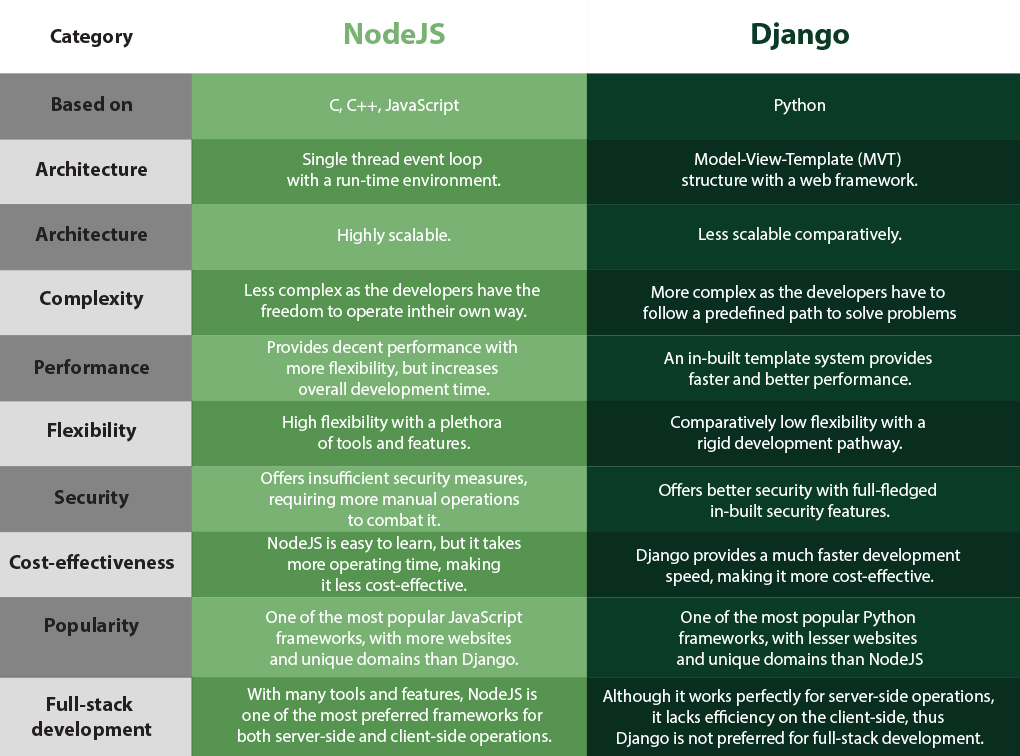
Difference between NodeJS and Django:

Difference between NodeJS and Django

Integrating NodeJS with Django is possible and exceedingly useful in certain situations. They can form a high-functioning backend by complementing each other’s benefits. If your application or website requires a lot of multiplayer or real-time aspects, integrating NodeJS with Django is an ideal choice.

Companies like Instagram and Pinterest utilize the combination of NodeJS and Django for their backend operations.

Takeaway:

In Django VS NodeJS, both frameworks are effective platforms for creating web-based applications.

It all comes down to specific requirements, preferences, and experience when choosing between Nodejs and Django. NodeJS is a JavaScript-based platform to build data-intensive web applications like game apps, social networking websites, live-streaming, etc. While Django is a Python-based framework that provides fast-paced development for highly scalable web applications.

With numerous benefits and features, NodeJS and Django are preferred all around the world by many large corporations for the creation and maintenance of their web applications.

If you are looking for exceptional web development services or further advice regarding web development, contact us!

With 18+ years of proven experience, Communication Crafts is the one-stop shop for all your web development needs.

From regular maintenance of websites to custom website development, our top-tier NodeJS and Django developers provide intuitive and cost-effective digital solutions that can take your business to new heights.

Looking for intuitive and innovative web development solutions?

You’re at the right place!

The 7 Best Nodejs Frameworks for Web Apps

In this transformative digital era, having a well-maintained website exudes a sense of authenticity and relevance from brands and businesses.

A dynamic, intuitive, and high-performing website can work wonders for your brand’s image and conversion rate. With improved ranking on Google and interactive content, a beckoning website entices potential customers to visit your website and take the desired actions.

As of 2021, NodeJS holds paramount significance in the field of web development. NodeJS frameworks are adored and used by developers to create all kinds of websites all over the world.

Developers use NodeJS primarily for backend and full-stack development, but its web development capabilities are endless.

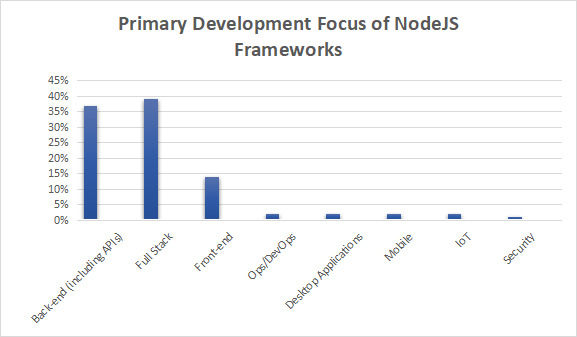
NodeJS frameworks development focus:

NodeJS frameworks development focus

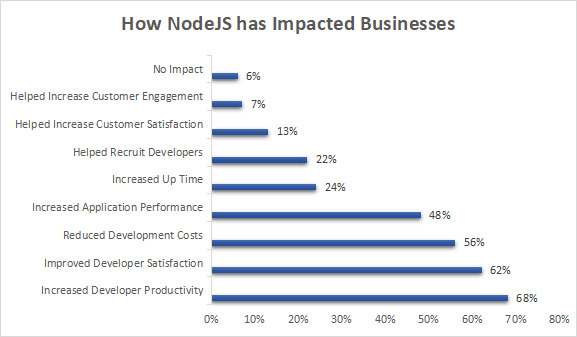
Impact of NodeJS on developers and businesses:

Impact of NodeJS on developers and businesses

NodeJS frameworks are utilised by big names like IBM, Twitter, Microsoft, Amazon, eBay, and many more for various web and mobile app development purposes.

NodeJS increases the performance of an application by 50% and saves 58% development cost. Furthermore, 50% of developers choose NodeJS for its frameworks.

With so many NodeJS frameworks to choose from, it is a cumbersome task to pick one for your specific web development needs. And that’s why we will examine the 7 best NodeJS frameworks for web development in detail.

Let’s start by discussing the types of NodeJS frameworks.

Types of NodeJS Frameworks:

1.MVC frameworks:

This framework provides one of the most habitual patterns for developers. It bifurcates the application logic into three parts:

  • Model
  • View
  • Controller

This separated pattern simplifies the development process and makes it easy to maintain and scale as per needs and requirements. ExpressJS is a key example of this type of NodeJS framework.

2.Full-stack MVC frameworks:

This type of framework has the same pattern as MVC frameworks but can be used for both frontend and backend development. It provides complete functionality and structure for your web apps.

These are mainly used for real-time apps, providing valuable libraries, templates, ORMs, and other development tools. MeteorJS is a great example of this category.

3.Representational State Transfer (REST) API frameworks:

This type of framework saves a lot of valuable time in development, as it comes with a complete programming interface.

REST API NodeJS frameworks can be effectively used to create high-performing apps quicker and more efficiently, disregarding the type of architectural pattern the applications follow.

LoopbackJS is the best NodeJS REST API framework.

NodeJS frameworks come in many shapes and sizes providing many features and advantages. We’ve sought the best NodeJS framework list to help you make well-informed decisions for your business.

Top 7 NodeJS Framework List:

ExpressJS:

ExpressJS

ExpressJS is the first choice among NodeJS web app frameworks for many developers around the world, and it follows an MVC pattern to build scalable web apps rapidly.

Officially launched in 2010, ExpressJS takes backend development to new heights by providing streamlined communication between server and client to deliver excellent user experiences through web and mobile.

It is known for its minimalistic and asynchronous nature with a lightweight structure. Familiarity with JavaScript and NodeJS is enough for amateur programmers to start building web applications with ExpressJS.

ExpressJS has 53.6k GitHub stars and 9k GitHub forks.

With 280k+ websites and 95k+ unique domains using ExpressJS, it is the most famous NodeJS framework that can be used to create a single page, multi-page, or hybrid web app with ease. Along with web applications, ExpressJS can be used to create small-scale or large-scale mobile applications.

With ExpressJS, you can avoid complex programming to create well-organized APIs, letting you develop high-functioning web applications effortlessly.

Features of ExpressJS:

  • Rapid server-side development as it comes with ready to use NodeJS features and functions, eliminating the need to add additional lines code and saving the developer’s time;
  • Asynchronous programming allows multiple operations to be executed independently and concurrently, improving performance to a great extent;
  • Middleware systematizes all the functions, database, client requests, and more;
  • Advanced routing helps to maintain and protect the web pages aided by their URLs;
  • Templating provides freedom to create interactive and dynamic content for the web apps;
  • Advanced debugging tools to precisely find and eliminate bugs and glitches in the web app.

Companies that use ExplressJS:

  • IBM
  • Accenture
  • Uber
  • Myntra
  • Twitter

Read more: React Architecture Best Practices and Tips from Experts

MeteorJS:

MeteorJS

MeteorJS is emerging as one of the most discussed NodeJS frameworks among the developers’ community. This NodeJS framework uses only one specific language in the whole development process, and that is JavaScript.

Launched in 2012, it is compatible with most operating systems like Android, iOS, Windows, Mac in both web and mobile applications, with everything efficiently encapsulated in JavaScript.

With automated data modifications to the client-side, MeteorJS provides a seamless flow of data between the server and the client.

MeteorJS has 42.5k GitHub stars and 5.2k GitHub forks.

37k websites and 25k unique domains utilise the features of MeteorJS to create various types of web and mobile applications. It is on its way to becoming an ideal NodeJS framework with an “all-in-one” approach to tackle all kinds of development issues.

MeteorJS is best used to create real-time and cross-platform apps rapidly, as it is highly compatible and lets you use the same code for both mobile and web applications.

Features of MeteorJS:

  • Isomorphic Development Ecosystem, which is ideal for real-time applications as it can render codes on both client-side and server-side;
  • Provides all of the necessary development tools from development set-up to website deployment;
  • Extensive community support to make the developers’ work easier;
  • Full-stack solution with amazing front-end reactivity that allows rapid development and handles the server and client-side operations simultaneously without a hitch;
  • Live reloading features the ability to make adjustments to specific DOM elements when a change is made on the front-end, eliminating the need to reload the entire web page;
  • Other frameworks can be easily integrated with MeteorJS.

Companies that use MeteorJS:

  • Ikea
  • Mazda
  • Qualcomm
  • Rocket.chat
  • Honeywell
Looking for intuitive and cost-effective web development solutions?

We’ve got you covered!

SocketIO:

SocketIO

SocketIO is not like the other NodeJS frameworks, it has extensive features for building seamless real-time computing applications.

It connects the web clients and servers effortlessly and bidirectionally. SocketIO focuses on speed and reliability and enables you to create applications on every browser, platform, or device.

SocketIO was created in 2010 to develop, deliver and maintain real-time communication in web and mobile applications.

SocketIO has 52.8k GitHub stars and 9.7k GitHub forks.

With 28k websites and 13k unique domains using SocketIO, it is one of the best NodeJS frameworks to create applications that require continuous updates and constant refreshing for messages and real-time changes.

It also hastens the development process by requiring fewer lines of code for real-time analytics.

Features of SocketIO:

  • Auto-detection and correction of errors;
  • Multiplexing: Also knowns as Namespace, splits the application’s logic to render and handle different components separately over a shared connection;
  • Acknowledgments to offer better request-response API;
  • Reliability: If the Websocket connection fails, it can rely on HTTP long-polling;
  • Broadcasting events is a server-only attribute that allows sending an event to all of the clients that are connected easily;
  • Packet Buffering enables events to be buffered even when the SocketIO is not connected.

Companies that use SocketIO:

  • Alibaba Travels
  • Bepro
  • Microsoft Office
  • Patreon
  • Zendesk

Also read: React Native vs React : Difference Between React and React Native

SailsJS:

SailsJS

SailsJS was inspired by the famous web framework “Ruby on Rails” and follows an MVC (Model-View-Controller) structure, making it easy to use for developers.

It follows the principle of “convention over configuration” to deliver the fast-paced development of single-page apps, WebSocket-based real-time apps, and REST APIs.

SailsJS was initially released in 2012, it was created on top of ExpressJS and includes features of SocketIO that offer event-based, bidirectional, real-time communication to applications.

With 22k GitHub stars and 1.9k GitHub forks, SailsJS is an efficient NodeJS web framework that can provide data-oriented development of high-end customizable web applications.

This NodeJS framework can also be integrated easily with SocketIO to create social media and gaming apps. SailsJS is not preferred for small-scale apps and rather used for enterprise-scale applications.

Features of SailsJS:

  • 100% JavaScript-based programming;
  • Agnostic frontend enables it to be compatible with any frontend framework or strategy;
  • Lightweight server-side framework providing speedy development;
  • Easy integration with SocketIO to use WebSockets effectively for real-time communication;
  • REST APIs are auto-generated;
  • Reusable security policies to further reduce web app development time.

Companies that use SailsJS:

  • Microsoft
  • Philips
  • Verizon
  • Tesco
  • Amazon

Loopback:

Loopback

Loopback is the best NodeJS REST API framework. It offers high connectivity with other NodeJS frameworks and high-speed development of REST APIs.

Founded in 2013, it offers extensive integration features that can be used with other APIs. It is highly flexible and can be connected with various databases, services, browsers, and devices.

New and amateur app & web developers can start developing using Loopback because it offers high-quality documentations.

Loopback has 13.3k GitHub stars and 1.2k GitHub forks.

It is exclusively used to handle API requests and create dynamic end-to-end REST APIs, and that’s why this is the best NodeJS REST API framework.

Features of Loopback:

  • Supports multiple databases such as MongoDB, SQL, Oracle;
  • Full-stack development;
  • Easy to use the command-line interface (CLI);
  • Ability to run on the cloud;
  • Enhanced documentation for new developers;
  • Codes are clean, structured and modular.

Companies that use Loopback:

  • GoDaddy
  • IBM
  • Wizerg
  • Sapient
  • Energy.gov

Also read: Django VS Node JS : A Complete Comparison of the Phenomenal Frameworks

KoaJS:

KoaJS

KoaJS is a next-generation NodeJS framework that provides a lightweight and flexible structure for the development of APIs and web applications.

It can manage different forms of content under the same URL like different fonts and images in an eCommerce website, personalized content, webpage translations, and more.

KoaJS is very similar to ExpressJS, providing the same flexibility in writing codes in a minimal and small-scale NodeJS framework.

KoaJs has 31.4k GitHub stars and 3k GitHub forks.

This particular NodeJS web app framework is preferred for big projects and large-scale applications which require high-performance capabilities. Also, it is not the ideal choice for novice developers as it is still growing as a community, and might not have the required documentation.

Features of KoaJS:

  • Inbuilt error management tools let you identify and rectify bugs instantaneously;
  • Cascading middleware eliminates the need to write additional lines of code;
  • Based on ECMAScript 6, making it more futuristic by providing many modules and classes that can be used to keep the applications relevant over many years;
  • Lightweight structure;
  • Proxy support and cache cleaning;
  • High customization options.

Companies that use KoaJS:

  • Paralect
  • Gapo
  • Pier
  • Bulb
  • Theiconic

NestJS:

NestJS

NestJS is a very progressive NodeJS web framework that offers extensive libraries and complete flexibility.

Released in 2017, it is a relatively new framework enabling massive versatility and efficiency while developing web applications. NestJS is written in TypeScript language, allowing a smooth and fast development process.

It provides a plethora of powerful typing models like Functional Reactive Programming, Object-Oriented Programming, and Functional Programming.

NestJS has 38.2k GitHub stars and 3.8k GitHub forks.

NestJS is preferred for creating enterprise-grade applications that are highly scalable, multi-layered, and dynamic in nature, and it can be used to maintain the code of complex applications. Additionally, It offers seamless integration with Fastify and Express.

Because of its high versatility and flexibility, NestJS saves a lot of valuable development time while delivering high-performing applications.

Features of NestJS:

  • Code reusability;
  • TypeScript language;
  • An agnostic platform that supports REST, GraphQL, gRPC, Websockets, etc;
  • High compatibility for frontend with Angular;
  • Efficient and easy to use Nest CLI;
  • Ease of code management with a modular structure.

Companies that use NestJS:

  • Adidas
  • Decathlon
  • Roche
  • Sanofi
  • Autodesk

Conclusion

In a fast-evolving digital world, a company needs to recognise its needs and select an ideal framework to stay ahead of the curve in the ever-growing fierce competition.

Different NodeJS frameworks offer different features and advantages suited for various purposes. Some frameworks are preferred for enterprise-grade web applications like NestJS and SailsJS, frameworks like SocketIO and MeteorJS are amazing for applications that require real-time communication, and some frameworks like Loopback are well-equipped for building efficient and dynamic APIs.

NodeJS frameworks play a predominant role in the world of web development, offering one of the best and most efficient ways to develop web applications with the most widely used programming language JavaScript.

If you require further assistance or advice regarding the best NodeJS frameworks, contact us!

With 16+ years of proven experience, Communication Crafts is a web development company that provides intuitive and seamless web applications using state-of-the-art technology.

Our web development experts let you get involved in the project with a completely transparent development process to deliver top-notch customer-centric web applications.

We’re your next-door web development dream team.

Looking for intuitive and cost-effective web development solutions?

We’ve got you covered!

Game Based Learning: The Future of EdTech in eLearning

“Tell me and I forget, teach me and I may remember, involve me and I learn”- Xun Kuang

Education is not just about classrooms, lectures, chalkboards, notebooks, and pens. Education is about shaping the students’ minds to prepare them for the future.

The evolution of teaching methods has led to the understanding that certain ways of teaching yield better results and more knowledge retention.

Game-based learning is the latest invention in the education industry, and it has been welcomed by students and teachers alike.

Some may say that game-based learning is just an extra step toward education, but it couldn’t be further from the truth. Game-based learning provides innovative and interactive ways to change the entire approach toward education, letting the students enjoy the learning process in a way that’s relevant to them.

As of 2020, the global game-based learning market has surpassed $5.8 billion, making it the fastest-growing trend in the education industry.

But before we delve deeper into this topic, let’s discuss what is game-based learning theory.

What is Game-Based Learning Theory?

Game-based learning is the practice of imparting knowledge in a game-like environment through digital or non-digital games. It can include a wide range of educational activities like role-playing, team games, customized board games, full-fledged digital games, and more.

EdTech in eLearning

Gamification is the use of game-based learning in the classroom, this is where characteristics and elements of a game are embedded in the learning experience. It can include elements like engaging quizzes, point systems, badges, leaderboards, trophies, etc.

There are many benefits of gamification in the classroom, it motivates the students with competitiveness, a sense of progression, and rewarding results.

Teaching through failure, repetition and completion of goals is the true essence of game-based learning. Redefining the learning outcomes and procedures effectively transforms passive learning into active learning.

Learners can apply the mindset of a game to skilfully navigate through progressing levels to achieve goals, forming a challenging, engaging, and highly rewarding experience for them.

Virtual learning models can boost confidence and enhance theory-based learning by putting the students in a risk-free simulated situation to gain hands-on experience.

Various industries are slowly realizing the versatile applications and advantages of games in education. Let’s look at some effective and fruitful game-based learning examples.

Game-Based Learning Examples:

1. Pulse:

Pulse is a game used by the healthcare sector for simulating unpredictable and stressful medical situations. It is an immersive digital game with cutting-edge graphics to apply theoretical knowledge and prepare future military and civilian healthcare professionals in a risk-free scenario.

Pulse

2. Duolingo:

This is a language learning platform that utilizes the benefits of gamification in the classroom and in an application. Different levels, points, losing lives, competing with other friends, and rewards after lessons are some of the game-like characteristics Duolingo uses to make language learning more captivating.

Duolingo

3. Flight simulator:

Game-based learning is most widely used by the aviation industry. Amateur pilots can train on flight simulators to achieve goals and earn rewards while practicing flying in a safe environment. The flight simulator can yield faster and better results than traditional theory-based learning.

Game-based learning can be utilized in many ways, let’s discuss some of its types.

Flight simulator

Types of Game-Based Learning:

Different types of games can be utilized to incorporate game-like environments into the learning experience.

1. Board games:

Board games can stimulate the learners’ minds to actively learn about a chosen subject. Monopoly or Game of Life can also be considered educational games with characters, points, decision-making, money management, etc.
The learners can also be included in the planning or creation of an educational board game to enable project-based learning.
It can also include puzzles and card games.

2. Real-life games:

Different types of games in real life can be used for motivating students to move and act, use their body and mind as a whole to achieve goals, and earn rewards. It creates a more immersive environment for team-based learning and role-playing games.

3. Digital game-based learning:

This type of game-based learning is used to simulate real-life situations for preparing or training learners in a risk-free environment. It provides virtual hands-on experience to boost confidence and improve situational decision-making.
Different types of games can be created to teach various subject matter and prove to be more effective than conventional teaching methods.

4. AR/VR:

The education industry is adopting modern technologies to provide the best learning environments for its students. AR/VR can take simulations a step further and create the most immersive learning experiences.

Game-based learning can transform the learning experience forever, providing many advantages to games in education.

Looking for custom-tailored EdTech solutions to increase productivity?

You’re at the right place!

Benefits of Game-Based Learning:

Various applications and benefits of game-based learning improve the overall learning experience for the students.

1. Motivation:

“Necessity may be the mother of invention, but play is certainly the father.” – Roger von Oech.

Game-based learning eliminates one of the core issues in the education process.

With the interactive and engaging elements of a game, students feel more motivated, letting them focus on a subject for longer periods without getting distracted.

Competitive scenarios with rewarding results motivate the students to create, learn and practice at the same time.

2. Inclusive and personalized learning:

“It puts the learning in the hands of students in a way that’s relevant to them” – Steve Isaacs, Video Game Design Teacher.

Games are more relevant to students than classrooms, and it gives them a sense of control over the teaching process.

Play-based learning experience invites students to come out of their comfort zone and learn and practice at their own pace. Some countless roles and characters can be defined for the students to pick so that they never feel like they’re being pushed or forced toward a fixed role. The students are masters of their own experience.

They can be included as the creator of a game, a referee who checks the rules and regulations of a game, the main character in a game, or anything that the students are comfortable with.

3. Situational decision-making and critical thinking:

“Play is the highest form of research.” – Albert Einstein.

Using games is the best way to learn through trial and error.

Different types of games are used to simulate real-life experiences, where the students have to decide on the spot to achieve goals and rewards.

From role-playing games in classrooms to digital simulations of real-life crisis situations, learners use them to adapt to changing situations and improve critical thinking in a risk-free environment.

4. Creativity:

“Play is the shortest route between children and their creative calling.” – Vince Gowmon

Stimulating the minds of the learners is one of the biggest advantages of games in education.

Students can form creative solutions for challenging tasks while having fun, tapping into their limitless imagination.

Students can be included in the creation process of a game to foster creativity or specific games can be designed to demand creative solutions from the students for achieving their goals or gaining points.

5. Teamwork:

“Play sharpens our talent for empathy & collaboration…it’s the antidote to social isolation” – S. Eberle

Students can be included in various group-based games to cultivate teamwork and partnership. Teams win or lose together depending on their group’s performance, motivating the students to work together as a whole.

6. Tracking progress:

“You can discover more about a person in an hour of play than in a year of conversation.” – Plato

The progress of the students can be monitored in real-time using progress bars, task lists, or level progressions of each student,
The teachers or instructors can track their performance more closely and intricately by noting every lapse of judgment or gap in knowledge during an educational game.

Rank systems and leaderboards can also be implemented for easy tracking of progress throughout a course or training program.

Future of Game-Based Learning:

Technology is completely reshaping the way we perceive education. With new and improved ways of data retention and creative learning, game-based learning is being accepted by almost every industry.

Game Based Learning

Game-based learning platforms that simulate and provide real-life experiences are already applicable to most industries for training via game-based learning for adults.

Modern technologies like AR/VR, robotics, and artificial intelligence are most likely to shape the immediate future of game-based learning, providing the most immersive simulations for first-hand experiences.

Microsoft is receiving an investment of $22 billion over the next 10 years from the Pentagon for AR headsets to use for military training purposes.
Also, 82% of companies believe that the implementation of AR/VR exceeds their expectations.

Game-based learning experiences will continue to transform and reshape the education industry in new and innovative ways.

Takeaway

Game-based learning is revolutionizing traditional learning methods.

From embedding elements of games in the classroom and playing team-based activities to the simulation of real experiences through digital game-based learning, provides an engaging and innovative way to approach the learning process.

With different types of game-based learning, the advantages of games in education are unparalleled in modern times.

Play-based learning methods are being adopted for preschool children to gain cognitive abilities and improve teamwork. And large scale simulations are being adopted by various industries to train new employees in a safe environment.

The applications of game-based learning are truly endless.

Game-based learning implementations can work wonders for your company, and we’re here to help you with that.

Communication Crafts is a performance-driven and experience-led EdTech development company that provides cost-effective solutions to match and exceed your expectations.

Our high-skilled developers can create custom-tailored, cutting-edge game-based learning solutions according to your requirements.

Let’s make learning fun!

Looking for custom-tailored EdTech solutions to increase productivity?

You’re at the right place!

Learning Management System (LMS): Complete Guide

We will provide you with an LMS overview that will explain what is LMS, what is a learning management system, LMS definition, the benefits of learning management system an LMS, different purposes of an LMS, different types of LMS, Learning Management System examples, guide to corporate LMS systems vs LMS education, main features of Learning Management System, and how to choose an LMS company.

The term “eLearning” was first coined in 1998, and since its inception, the eLearning industry has grown exponentially. For the past 2 decades, the education industry has been undergoing a technological metamorphosis.

As of 2020, the eLearning industry has surpassed $250 billion worldwide and projected to reach a staggering figure of $370 billion by 2026.

And the global market revenue of Learning Management Systems is expected to reach $45 million by 2028

72% of organizations use an LMS to stay ahead of the curve, and 40% of fortune 500 companies use it to stay competitive.

According to further studies, 68% of employeesprefer learning at work and 58% of employees prefer learning at their own pace. Both of which can be easily facilitated via Learning Management Systems.

And when it comes to academics, 90% of students choose eLearning over traditional classroom learning.

The eLearning and EdTech industries are turning heads all over the world, and yet many companies haven’t adopted an LMS. Ignorance isn’t bliss when it comes to eLearning, you need to know the workings of a learning management system to reap its benefits.

Well-trained employees are the future of a company, and well-educated youth is the future of a country, an ideal LMS can deliver both.

Before we start, here’s an insightful video by “TovutiLMS”

https://www.youtube.com/watch?v=q-3VyQQ_wFM

What is a Learning Management System (LMS)?

This is the introduction of learning management systems.

lms-1

A learning management system is a software application that allows you to create, manage, track, and deliver eLearning courses.

Although this is an apt answer to what is LMS, it is still just the tip of the iceberg.

LMS platforms help you in the tracking of learners’ progress, providing a learning path, personalizing learning experience, reporting performances, integrating advanced technologies, collaborating around the world and more.

Let’s break it down to clearly understand what is LMS means:

  • L “Learning”: Enables you to create and deliver eLearning services;
  • M “Management”: Let’s you organize and track the eLearning courses;
  • S “System”: A complete online software to oversee all the actions, changes, and functionalities.

What is a learning management system : Two parts

  • Admin Interface: This is where all the back-end operations are held. It is responsible for managing the users, courses, materials, and events. Enables you to provide a seamless experience for the end-users.
  • User Interface: This is the front-end part of the LMS that the learners see and use. From registration to online classes and tests, everything is executed in this part. An impeccable user interface is one of the most important features of an LMS.

Now that you’re familiar with the concept of what is a learning management system, you must be asking yourself “why adopt an LMS system?”
With 16+ years of experience here at Communication Crafts, our LMS experts will provide you with the best answers.

What are the benefits of a Learning Management System?

LMS is a one-stop shop for all your eLearning needs. The perks of having a learning management system:

1.Systematization of content:

LMS platforms enable you to systematize and unify all your eLearning content in one place. There is no risk of losing your data, as everything is stored together in a cloud-based host or at your end. Moreover, an ideal LMS encrypts your data to keep it safe from notorious hackers.

2.Blended learning:

Students and employees can reap the benefits of technology and digital media by integrating them into their traditional learning methods, providing more flexibility in their learning process.

3.Limitless course materials:

Having an LMS system gives you the ability to access courses and materials from all over the world. The students or employees can register for courses and face no restrictions when it comes to studying materials. Also, people can refer back to their course content whenever they wish.

4.Saving time and cost:

It is a massive advantage for remote learning because it means that you can drop the need to pay exorbitant building or classroom rentals, instructor fees, travel, and printed course material costs. Digitization of courses, online classes, and webinars is much more cost-effective.

Students or employees can eliminate courses that are not relevant to their requirements, saving a lot of valuable time. The time needed for travelling to a class or seminar is replaced by a mere click of a button to start a laptop or a computer.

Also, technologies like gamification, video-based learning, AR/VR, are more efficient than traditional teaching methods.

5.Effortless tracking of progress:

Most LMS platforms provide monitoring and analytical tools to measure the progress and performance of the learners. It also allows them to pick up where they left off after each session, making it a seamless learning experience.

6.Easy course modifications and updates:

Unlike traditional learning methods, where the instructor changes or creates new course materials, LMS automates most of the updates and makes it easy to modify segments of any course.

7.Up-to-date with standards and regulations:

LMS platforms provide updates according to the changing regulations and standards to ensure that the learners receive up-to-date course materials in compliance with the regulations.

8.Worldwide collaborations and social network:

Using an LMS, Students or employees can take full advantage of social network platforms to connect with instructors and other students on a global scale. Lesson plans and content, and webinars and forums, can be made available to learners worldwide. Moreover, an LMS can deliver multi-lingual courses for people that speak different languages.

9.Knowledge retention:

Conventional teaching models are not as impactful as modern eLearning methods.

A student or employee can retain much more information from video-based contents than from one-time presentations by an instructor.

Modern technologies like AR/VR, game-based learning, smart videos are cultivating new and better ways of learning.

10.Individualised learning:

People are now realising the biggest flaw of traditional education models, every person cannot follow the same course plan that is provided for everyone. With eLearning and EdTech, students and employees can modify their learning process and study or train at their own pace.

A learning management system has its benefits across many industries for many reasons.

Who uses an LMS system and why?

Along with knowing what is a learning management system, it is crucial that you understand the multi-faceted purposes of a learning management system.

Any institution, industry, or individual who wants to educate or train in any way, can use a learning management system to simplify and systematize the whole process.

Here are the types of organizations and companies that can benefit from a learning management system:

  • Schools and universities– To enable the convenience of remote learning;
  • HR departments– To train employees and managers;
  • Professional groups– To get a member’s license or specialised training;
  • Entrepreneurs– To take crash courses in marketing, writing, accounting, and more;
  • Self-learners and hobbyists;
  • Businesses of all sizes and types, including non-profit organizations;
  • Government organizations like United Nations or state government offices;
  • EdTech industries and institutions;
  • Consulting firms.

A learning management system is a very versatile and multi-faceted tool.

It can be used for a wide range of educational activities like training employees, selling online courses, providing guidance for standardised tests, and more.

What are the Different Uses of a Learning Management System?:

What is LMS used for?
A Learning Management System can be used for all types of learning processes (That’s what the “L” signifies). That’s why LMS systems are being welcomed and embraced by many organizations and enterprises.
Let’s discuss what is LMS best used for in detail:

Train employees:

Employee training is a must-have feature for every industry. From a consulting firm to a government agency, everyone needs a way to train their new employees and upskill existing employees efficiently.

A corporate LMS can eliminate the cost and time required for hiring expert instructors and conducting special seminars. Online classes with webinars and other techniques provide an easy way to train new and existing employees.

Also, you can use analytical tools to test the employees and monitor their progress.

Inducting new hires:

Except for the meet and greet, and the physical tour of an office, an LMS system can handle everything.

LMS platforms are a great way to introduce new employees and make important information accessible at all times.

Your learning management system is the ideal platform for educating new hires about your company’s history, policies, privacy guidelines, conduct codes, work culture, new skills, and roles and responsibilities of specific designations.

Employee knowledge retention:

Along with upskilling and training your employees, preserving the knowledge of existing employees is important as well.

After a person leaves or retires, their skills, knowledge, and techniques go to waste in most cases.

But with an LMS system, companies can save that information and use it to train new employees.

Train customers and partners:

Learning management systems can be used for much more than just internal training.

You can use an LMS system to provide an overview of your products and services to new customers.

It can also be used to explain the ins and outs of your company to potential partners and investors.

Training customer support and sales:

Departments like sales, business development, and customer support need to be updated with new information and techniques constantly.

A learning management system is the most efficient way to provide them with the necessary information about new industry trends, selling techniques, products and services, etc.

Train remotely:

eLearning breaks the Geographical barriers previously faced by the conventional training models. It is a cumbersome process to gather employees for training from different branches of a company.

With a learning management system, you can hold webinars or online training sessions for your whole organization with ease.

Educational purposes:

A learning management system can work wonders for the traditional education industry.

97% of students stated that eLearning increases knowledge retention, and 81% of students believe that digital learning improves their grades.

Technology is transforming education rapidly all over the world.

It can be used to integrate modern technology into their lesson plans to get better results or transform the whole model into an online course to save costs and workforce.

eCommerce purposes:

An LMS system can also be used for creating and selling online courses and training services to other businesses on a subscription or pay-per-course model.

If you think your company or institution needs a learning management system, then you must know the different types of LMS to make an informed decision.

What are the different types of LMS system?

The most basic purpose of a learning management system is to train or educate, but let’s explore further and examine the different types of LMS system.

What are the different types of LMS system?

There are different types of LMS systems suited for different purposes.

Even the deployment methods differ according to your needs.

Researching for an ideal LMS system tends to confuse people. That’s why our LMS experts have encapsulated the relevant information for you.

Let’s have a look:

Different types of LMS system based on use:

Corporate LMS means

This type of LMS system required for an organization or a company to train new employees or enhance the skills of existing employees.
Companies tend to modify the corporate LMS system according to their needs with extensive features and elements to cover overall training needs.

It is a collection of systematically stored training materials, ready to be used at all times.
Corporate LMS systems can be used for:

  • Induction of new hires;
  • Employee training or upskilling;
  • Customer training;
  • Introducing your company to potential partners or investors;
  • Remote webinars;
  • Sales, business development or customer support training;
  • eCommerce and B2B purposes.

Academic LMS means

LMS education system is most commonly used by schools, colleges, universities, individual instructors, coaching services, or other educational institutions.

Entire courses and degrees can be completed using an academic LMS system.

It is designed based on semesters, quarterly, or yearly, and rarely requires updates or modifications, as all the studying materials are scheduled in advance.

A major focus is also given to certifications as the students need proof of completion for the courses they finish.

Additionally, monitoring of progress is vital in this type of LMS system to recognise and amend the gaps in knowledge of the students.

LMS education system can be used for:

  • Personalised learning;
  • Social learning;
  • Centralization of course materials;
  • Unlimited eLearning resources;
  • Global collaboration;
  • Assessment and grading tools;
  • Administrative tools.

Different types of LMS system based on deployment:

Cloud-based LMS means

This type of LMS system is hosted online on a cloud by a third party. The LMS company provides a username and password to your organization or institute for using the LMS platform.

It eliminates the need to download the software, as it can be accessed online.

The LMS company maintains and updates the system for you, making it impossible to personalise or modify the LMS system from your end.

Self-hosted LMS means

The LMS company lets you download, install, and maintain the LMS software on your own, giving you more control over the system.
You can modify or personalise it according to your company’s needs, providing more flexibility to integrate it with your existing infrastructure.

On the flip side, you’ll have to purchase new versions of the software from the LMS company and contact them for licensing issues.

Private-cloud LMS means

Combining the features of self-hosted and cloud-based deployment, it is the best of both worlds.

It provides you with a private and secure LMS storage system that doesn’t share the space with other businesses, giving you control over it and at the same time, eliminating the hassle of downloading the system.

Different types of LMS system based on Licensing and implementation:

Software As A Service (SaaS) LMS model:

In this model, your LMS is cloud-based and provided by an LMS company.

You can choose from different pricing packages depending on the required features and elements. No download or installation is required as it is hosted by the LMS company that provides you with the software.

Reap the benefits of the LMS software while your LMS company takes care of the entire system by maintaining it, providing updates, encrypting data, fixing glitches, and more.

SaaS learning management system examples:

  • Communication Crafts;
  • EdApp;
  • Dokeos;
  • Nimble;
  • Cortex.

Open-source LMS model:

In this model, it is your responsibility to create, install, maintain, and personalise the system.

A dedicated IT team is highly recommended for this model, as you need to integrate it with your existing system and update it routinely.

It can be hosted on your company’s server, providing flexibility but at the same time, increasing the responsibilities of your IT team.

Open-source learning management system examples:

  • Moodle;
  • Forma LMS;
  • Open edX;
  • ELMS Learning Network;
  • Canvas LMS.

These are the types of LMS systems based on use, deployment and implementation, now let’s move on to the key features of a learning management system.

What are the main features of a Learning Management System?

There are innumerable features that can be added to an LMS, you must know the key features that match your eLearning needs.

Learning management system features and benefits:

  • In-built or cloud-based content creation tools for instructors to create and design new courses without using any third-party tools;
  • Interactive, responsive, and intuitive user interface to facilitate a cohesive learning experience for your end-users;
  • Gamification features to engage and motivate the learners by setting goals, and offering rewards;
  • Effective analytical and reporting tools to track the progress and performance of your learners;
  • An ideal LMS system should have efficient collaborative features to connect with other learners and instructors worldwide;
  • Webinars and virtual classrooms or training sessions, allowing many learners to participate at the same time through audio or video;
  • Integration with other tools such as CRM system or HR software;
  • Mobile-friendly design to let your learners use the LMS system anywhere;
  • Adaptive learning and Modern technologies like AR/VR, artificial intelligence, or robotics can be useful as well;
  • eCommerce features to let you sell online courses or training programs.

By now, you must have an idea of different types of LMS system that you need.

But before you proceed to checkout, let’s discuss how to select a learning management system provider.

How to choose an LMS company?

The top 9 things to look for in an LMS company:

How to choose an LMS company?
  1. Experience and expertise of the agency;
  2. Flexibility and scalability for long term partnership;
  3. Samples of similar projects to understand the company’s capabilities;
  4. Customer reviews/testimonials;
  5. Quality and cost-effectiveness of eLearning features and content;
  6. Seamless communication with the agency;
  7. Transparent development process;
  8. Transparent pricing;
  9. Global benchmarks like ISO certification.

The takeaway:
Technology is reshaping the way we think about education and training. EdTech companies are thriving and the eLearning market is flourishing now more than ever.

What is LMS good for? An LMS system provides Modern online learning models which have proven better retention than traditional learning methods and learning management systems are simplifying training processes and academic courses all over the world.

With many benefits and features, a learning management system is a software application that is used to create, manage and deliver eLearning courses.

An LMS can be created for academic or corporate purposes, enabling seamless training models and engaging courses.

The demand for learning management systems is ever-growing, and if you’re inclined towards adopting an LMS, contact us for more information.

Communication Crafts is an ISO-certified LMS development company, delivers innovative and cost-effective custom eLearning solutions.

From full-fledged Learning Management Systems to feature-rich educational apps, we create ROI-driven LMS solutions to captivate the learner’s attention instantly and deliver results that matter.

Enhancing learning experiences all over the world.

React Vs React Native, Not So Potayto, Potahto Moment!

Find out the key difference and choose the best.

Despite having similar names, React and React Native have some significant differences.

React Native is a framework for cross-platform mobile development, whereas React is a toolkit for creating web user interfaces and components.

Reactjs vs React Native is responsible for the creation and powering of many popular websites and mobile applications around the world.

So, if you are planning to develop a website or application for your company, you must deeply understand both React, and React Native and their differences to make the right choice.

Why is it important?
As we move forward in the ever-growing digital age, web technology continues to evolve and bring forth new innovations.
Keeping up with the latest tools and technologies for building websites and web apps is essential to continue being at the top of your game.

So, React Vs React Native,
Which is the best choice? What is the main difference between React and React native? What are the disadvantages and advantages of ReactJS? Which is better: React or React Native? What happens when we compare React to React Native? What are the cons and pros of React Native?
Woah. Woah. Woah.

There’s a list of questions jumping out of curiosity.
Well, calm down. Let us feed our puzzling soul with an in-depth examination of both technologies in this blog.

Well, conversion rates of businesses heavily depend on the experience they can provide to their customers across all digital platforms. That’s why being able to provide your end-users with an intuitive and seamless user experience is the best way to not only continue retaining customers, but increasing your brand credibility and increasing your reach.

When it comes to the world of web and app development, two of the most adored frameworks by web and app developers are Reactjs and React Native. The former is used for web development, while the latter is used to create mobile applications.

Reactjs vs React Native are responsible for the creation and powering of many popular websites and mobile applications around the world.

If you’re planning to develop a website or mobile application for your company, you need to know every nook and cranny of React VS React Native to make an informed decision.

In this article, we’ll go over the history, features, pros, cons, differences and prerequisites of React Native VS ReactJS. In short, everything important you need to know.

Okay but before putting an end to the Reactjs vs React Native debate once and for all.

Let’s have a look at this video by “Edureka!”

https://youtu.be/EVSMegdj6tY

A Sneak Peak Into The History

The matter of React VS React Native has been a matter of much significance since their inception. But before we delve into React vs React Native, let’s have a peek at their shared history:

Sneak Peak

Back in 2011, Facebook started facing some problems. New features and updates were being added continuously, and their legacy system for the interface couldn’t just cope up with the increased workloads.

Simultaneously, a software engineer of Facebook, Jordan Walke came up with Faxjs, which was the earliest prototype of React.js. A simple HTML framework for PHP known as XHP was used to create the prototype.

Reactjs was first used to improve the user interface of Facebook. And the same was applied to Instagram after it was acquired by Facebook in 2012.

In 2013, Reactjs became open-source.

Facebook was also attempting to switch its priorities towards their mobile application.

In a TechCrunch event in 2013, Mark Zuckerberg admitted that continuing with HTML was detrimental to their progress.

Facebook explored many options but the problems with the mobile web application persisted.

Christopher Chedeau, a developer of Facebook, formed a team with Jordan WalkeLin He and Ashwin Bharambe to make a prototype to render mobile web applications smoothly.

The group completed the prototype for the Internal Hackathon hosted by Facebook in 2013. This prototype came to be known as React Native.

React Native was introduced at the React.js conference in January 2015, and it was open-sourced later that year.

This is where the debate of Reactjs vs React Native began, which is an intriguing comparison. But let’s discuss their purpose, features, and advantages before we compare them.

What is Reactjs?

Reactjs is a JavaScript library used for web development to create interactive interfaces and reusable UI components. It is mostly used as the “View” component of the Model View Controller (MVC) structure, which determines how the website or app looks and feels to your end-users.

Remember: React.js is commonly referred to as React or ReactJS. React.js is a JavaScript library to build a high-functioning UI. It follows all of React’s syntax and principles, which is why it is easy to learn.

So when people compare React vs Reactjs, Reactjs is actually a JS library that React uses. It is the heart of React Native.

By dividing the user interface into multiple components, and assigning separate functions to them, React makes it easy to debug the code used for building the website or app. Thus reducing the length of the code and increasing functionality to a great extent. That’s why React makes a great platform to be used for start-ups and MNCs alike.

In the field of web development, React is the most recommended front-end JavaScript library. A study in 2020 showed that the usage of React was 80% and had a satisfaction level of 88%. Ranking highest among other front-end frameworks like Vue, Angular and Svelte.

usage of React
usage of React

Additionally, Reactjs ranks at the top according to Google trends when compared to Vue and Angular.

With 169k GitHub stars, React is used by more than 9000 companies globally.

Notable companies that use React:

Notable companies that use React

Now that you know what is Reactjs used for, let’s discuss some of its features and benefits.

Top Features and Advantages of Reactjs:

  • JavaScript Syntax Extension (JSX): JSX is an extension to JavaScript. Instead of using complex JavaScript DOM structures, developers can use JSX to write HTML codes in the files that contain JavaScript codes to determine the structure of the user interface. This feature makes it easier for developers to learn or get used to Reactjs.
  • Virtual Direct Object Model (DOM): Typically, when a change is made by a user, the real DOM is updated entirely, which is a very slow process. Reactjs has an in-built feature, which is the virtual DOM to combat this problem. Virtual DOM updates at a much faster speed. Then it compares the changes to the real DOM and makes changes to the specific parts that need manipulation, saving time and resources. This feature boosts performance substantially.
Virtual Direct Object Model
  • One-Way Data Binding: Reactjs features a unidirectional flow of data. This way, the developers get more control over the components and makes it easy to spot errors.
One-Way Data Binding:
  • Components: Reactjs uses a component-based structure to run the front-end. It divides the user interface into different independent and reusable components. This structure includes States and Props. The data of a component is stored in States and the flow of data from one component to the other is managed by the Props, resulting in a user interface that works seamlessly.
  • Large Community: Reactjs is supported by a large community of developers. This makes it easy to find and remove bugs and errors in the library. New features, extensions, tools and updates are also continually added for the same reason.
  • SEO friendly: Google and other search engines can crawl through and detect websites created by Reactjs, making it easy for your website to be found by potential customers.

What is React Native?

Mobile app market revenue is estimated to increase and reach $613 by 2025. With an increasing number of businesses investing in mobile apps, React Native has been one of the favorite go-to choices for mobile app developers to work with.

React Native lets you build intuitive and interactive natively rendered mobile applications for iOS and Android. Using It is based on JavaScript and Reactjs serves as its foundation. It is amazing for apps, as it provides a seamless user interface and relatively low development time.

THE BEST PART!

The biggest perk about React Native is that its code needs to be written just once to be used or run on both iOS and Android platforms since it is across-platform. This helps save a lot of valuable time and resources.

The same fundamental building blocks used by iOS or Android to build apps are utilized by React Native, but instead of using Java or Kotlin, it uses Reactjs and JavaScript.

In 2020, React Native ranked the highest with 42% of software developers preferring it over other cross-platform mobile frameworks like Flutter, Cordova, Ionic and Xamarin.

 software developers preferring

With more than 90k GitHub stars, React Native is used by almost 1600 companies globally.

React Native

Notable companies that use React Native:

Let’s get into the cons and pros  of React Native:

Top Features and Advantages of React Native:

  • Multi-Platform Coding: Days of writing different codes for different platforms are behind you. React Native lets you build apps that can work on Android, iOS, Windows, Linux, etc. It detects and loads the code needed for a given platform.
Multi-Platform Coding
  • JavaScript Language: React Native is based on the widely accepted and cherished programming language, JavaScript. Most web developers have the experience of using JavaScript, making it very easy to use and learn the framework.
  • Strong Mobile Support: Unlike other Native platforms that are CPU (Central Processing Unit) oriented, React Native uses GPU (Graphics Processing Unit). That’s why the apps developed by it are incredibly fast and well-suited for mobile phones.
  • Live Reload: React Native has a unique and effective feature that allows you to make changes to the code of an application and check the results of the changes made in real time.
  • Node Package Manager (NPM) Installation: Installation of an application is sometimes a cumbersome process for inexperienced developers. React Native lets you use NPM for app installations. This feature can be used by start-ups as NPM commands are easy to learn and implement.

Cons Of React Native

  • Less Secure
  • Memory Management
  • Longer Initialization time
  • Difficult to learn

Reactjs vs React Native:

Even though they are similar in many ways, let’s look at the notable difference between React and React Native:

ReactReact Native
PurposeMainly used for Web Applications. Dynamic and interactive UI for web interfaces.Mainly used for Mobile Applications. Full-fledged hybrid mobile applications.
Set-upComparatively slower and more difficult to set up as you need to select bundles and modules before getting started.Comparatively faster and easier to set up as it already comes with everything you need.
StructureJavaScript library for interactive user interfaces.A complete framework for cross-platform applications.
StylingCSSIn-built stylesheet
AnimationCSSAnimated API libraries
NavigationExternal libraries like React-routerNavigator Library
RenderVirtual DOM is used for the rendering code.Native APIs are used to render the components.

Reactjs vs React Native: Drawbacks and limitations

Building a web or mobile application is a complex process, there are many hurdles that even a top-notch framework can’t overcome.

To make an informed decision or choice, you need to be aware of the bad side of these frameworks as well. That’s why debates about popular technology options are evergreen. And in this case: React Native vs React js

In this article on React vs React Native, we have already discussed the features, advantages and differences between React vs React Native. Let’s go over their limitations.

Drawbacks of Reactjs:

  • The environment of Reactjs is constantly evolving. The developers have to constantly adapt to these new changes.
  • Due to the fast-paced technological development in Reactjs, the documentation of these changes generally lags behind.
  • JSX is a gift and a curse. The combination of HTML and JavaScript may be a blessing for some, it is still considered to be very complex with a steep learning curve for new developers.
  • Reactjs is mostly used to build the “View” part of the Model View Controller (MVC) structure. Therefore other tools are required to build the other components.

Drawbacks of React Native:

  • React Native is not meant for heavy calculations. It lacks native libraries, therefore heavily dependent on third-party libraries. For an app that may require heavy functionalities or complex calculations, developers have to rely on Java, Swift or Objective-C. Some examples of third-party libraries:
  • InDesign
  • Entypo
  • Feather
  • FontAwesome
  • JavaScript code, HTML-like tags and CSS-like stylesheets are used by React Native for building a layout. A developer gets a lot of freedom because of this feature, but it brings some problems along with it. Unlike Java and Swift, JavaScript imposes no parameters on any variable whatsoever, a variable can mean anything at a given point. Which may cause the logic of the code to break down.
  • Developers who are familiar with Reactjs can easily work with React Native. But for new developers, it is quite complex and difficult to learn.
  • Poor documentation is a major limitation for React Native. Even the most basic information like configuration and set-up are poorly explained.
  • Facebook has enforced certain rules regarding the licensing of the use of React Native. These rules allow them to terminate any project that clashes with the Facebook patents.

Reactjs vs React Native: Prerequisites

Reactjs:

  • Good command over HTML and CSS;
  • JSX proficiency;
  • Fundamentals of JavaScript and ECMAScript6;
  • Familiarity with Node.js and Node Package Manager (NPM);
  • Familiarity with Command Line-Interface (CLI).

React Native:

  • Basic knowledge of JavaScript;
  • Familiarity with concepts like objects, arrays, functions and classes;
  • Basic understanding of HTML and CSS;
  • If you’ve worked with Reactjs before, You’re good to go

Summing Up:

React vs React Native has always been a popular point of discussion, and now you know the major differences between them.

Despite the striking similarities, they are vastly different. While they are used for different purposes by developers, they are significant in their respective fields of app development.

Between React VS React Native: Reactjs is a JavaScript library used for building web applications with intuitive and dynamic UI. Whereas, React Native is a complete framework for creating mobile applications.

Despite numerous drawbacks and limitations, in the case of React Native vs ReactJS- both are the best and most recommended among other libraries and frameworks in their respective categories. If you wish to build a mobile application, React Native is one of the best options out there. And if you wish to build a web application, Reactjs is undoubtedly the natural choice. They are simply the best at what they do! So instead of wondering which one is better, you should be deciding which framework would fit your company’s goals.

Still confused?
We are here to help!

Trusted with ISO 27001:2013 certification and 17+ years of experience, Communication Crafts is a leading web development agency that offers rigorously vetted web developers for hire who are passionate about coding.

Get in touch and hire remote dedicated developers from an exclusive network of top-tier talent.

We welcome you to exploit our expertise.

React or React Native, you be the dreamer, and we’ll be creative!

HIRE REACT DEVELOPERS THAT MATCH YOUR REQUIREMENTS
Know How

Hot Tips and Best Practices for React Architecture from Subject-Matter Experts

Our team of expert web developers has been building complex React for enterprises across the globe since 2005. Our team of 250+ creative and technical professionals includes world-class React developers, who have a great passion for acquiring and sharing knowledgeable insights.

In this blog, our subject matter experts will discuss the best practices and hot tips for using React Architecture in the best way possible. This will help you write better lines of code and develop secure, scalable, and high-functioning React apps.

Let’s begin!

We all know that ReactJS is one of the best web development frameworks to work with. Whether you want to build a small application or a complex one, a scalable architecture like that of React can help serve that purpose easily. Especially when you want your web app to serve a large number of users.

That’s why understanding the technical aspect of any architecture, in this case, React architecture to build large-scale websites can enable you to make better, smarter business decisions.
Let’s dive deeper and learn everything there is to know about React Architecture.
Table of Contents

1. What exactly is React architecture?

Unlike other frameworks and libraries, ReactJS has a flexible architecture pattern.

It is just a view that allocates to the needs of the user interface.

Beneath the UI, there are many React components; a small structural unit- like a label, button, input text label, or something as complex as a registration form, etc.

And that’s not even its best feature: you can assign a state to every React component; this feature is optional and depends on the developer. The state can be defined as the data mandatorily required for the React app to function.

So whatever action the user takes, will correspond to the necessary change in the state from time to time.

That means whatever the current state of the data will determine the elements displayed on the UI of the app. This is simply how the React architecture functions.

2. Benefits of React Architecture for Building Enterprise-Grade Apps

React js architecture is one of the best out of the lot to build large-scale web applications. Here’s why:


React js architecture


A coherent global state- All of the data in the app can be stored in the global state. Modifications made to this state will automatically make changes to the rest of the views.

High scalability- ReactJS architecture can be used to handle heavy traffic and meet the needs of an enterprise-grade business when used with a scalable backend framework like NodeJS.

Easy testing: It is much easier for developers to test individual parts of the React application due to its independent features and component.

Decoupled components –Redux-& Rsaga are used by React to tie decoupled components together. This lets you conduct better testing through asynchronous flow support.

3. Diagram of React Architecture for Building Enterprise-Grade Web Applications

Here’s what a React architecture diagram looks like:

Web Applications

React architecture’s many efficient libraries: Immutable.js, Redux-saga &Redux are the secret ingredients to building highly scalable, performance-driven React apps.

4. React Architecture Best Practices- As Per Industry Experts

We can’t stress this fact enough; it is integral to follow the best practices of React architecture to build a large application that stands the test of time.

From using high-quality coding standards to organizing the folder structure for different teams, if you ask us, best practices can never see the end of the light.

Some developers would like to give names they can remember to their files, while for others, it could be using the best React JS libraries to enhance and increase the efficiency of the app.

Here are the best practices to follow using React architecture:

1. Avoid using a lot of nested files & folders

Some developers may believe that assigning purposeful tags to the files is the most effective practice when it comes to React web apps, while others may believe that workflow optimization works best by using the ideal libraries.
We have conducted in-depth research and discussions with industry experts to learn the React Architecture best practices for building and scaling enterprise-grade web applications. Here’s what we found out!

2. Reuse your components

The best way to use React is by developing one component for every function, this lets you use it repeatedly. This means that if you need to build a new component for a function that is the same as before, use that instead of creating the new one.

If the size of the component becomes large, it’s better to break them up into smaller components.
Reusing React components in your project or across multiple projects you develop will help you achieve better reliability.

3. Put CSS in JavaScript

When you start with your React project, industry experts say that it’s best to keep all the CSS styles you are going to implement in one SCSS file.

Some libraries like EmotionsJS & Glamorous will allow you to write CSS in JavaScript.

If you’re thinking that some CSS names might collide, using global prefixes can help avoid that. But if your project size increases, this might not be a practical approach.

4. Comment only where necessary

When necessary, a developer must add comments to the lines of code. Comments are one of the most effective practices when using React Architecture.
It will help:

– Keep the codes easier to read.
– If you are going to edit the code, later on, it can help avoid a conflict between the comment and code.

5. Use capitals for Component Names

The majority of React developers use JSX (a JavaScript extension). If you are also planning to use that then you should make sure that the names of the components you create need, to begin with, uppercase letters.

For instance, you’ll name components as “SelectButton”, and not “Select the button”.By carrying this out, the JSX will automatically identify them uniquely from the default HTML tags.

The early React versions used to have a list of all built-in names to differentiate them from custom names. Since the list needed to be updated regularly, capital letters became the new standard.

However, this is specifically if you go with JSX. If you use any other language you can use lowercase letters. But keep in mind that it might help reduce the reusability of components beyond the scope of your project.

6. Use React’s Bit tool

The Bit tool is one of the best React tools that will help you better organize React components in your project easily.

This tool also helps to increase the reusability of code, along with promoting teams to collaborate to build components.

7. Use snippet libraries

React architecture best practices also involve using code snippets.

When you use code snippets, it will make it easy for you as a developer to keep up with the latest syntax. You’ll also be able to keep the code relatively bug free, which is why as a developer, this is one of the React best practices to follow.

Some snippet React libraries you can use are:

– ES7 React
– Redux
– JS Snippets

The Takeaway

Technological innovations have become fast-paced in this era.

The expectations of your customers will always be more. So when it comes to creating a new website or an app for your business or even releasing a new enhanced feature for your app, being at par with the demands of your users becomes crucial to success.

That’s why it’s necessary to build your digital product with a scalable architecture pattern.

And React architecture is one of those scalable frameworks for web development. In this piece, we went over React JS architecture’s best practices to build remarkable and highly-performing React web apps.

We hope it helped you gain valuable insights and understand React architecture better.

Are you looking for a top-tier offshore React developer to develop a rapid, scalable, and secure enterprise-grade website or web application?

Communication Crafts offers an exclusive network for rigorously vetted ReactJS developers. Businesses across the globe trust our developers and services due to 17+ years of on-hand experience and ISO 27001:2013 certification.

Looking for a team of the best remote developers?

You’re in the right place!


Top Programming Languages for E-Commerce Website Development

As the world evolves, businesses have to evolve with it. The scale is shifting towards digitalization with 22% of all retail sales set to be digitalized by 2024.

The retail e-commerce sector is booming. With e-commerce sales reaching $4 trillion in 2020 alone! Yes, you heard it right!

This is just the gist of what the future has in store for the e-commerce industry. The Future of E-commerce development has picked up its pace for all the right reasons.

But why has online shopping been gaining more traction over the years? What’s happened to traditional shopping? Going to the malls and making a purchase once in a while.

Well, in this digital age online shopping has become more convenient than ever. With the constant innovations in technology, e-commerce stores have the capability to bring a whole new experience to the users.

In fact, here are some of the top reasons why consumers are preferring online shopping over conventional ways:

  • Shopping in the comfort of their own homes
  • Saves valuable time
  • Wide variety of products
  • Easy to compare products
  • Easy to search specific products
  • Refund or replacement was never easier
  • Customer reviews

Having in-depth knowledge of e-commerce web development is crucial for succeeding in the global commerce race. And that’s why, in this article, we are going to speculate the best programming languages for e-commerce web development.

E-commerce websites are the new-age stores:

Your e-commerce website is the face of your company. The first impression matters. That’s why it’s essential to play your cards right from the start and provide your customers with a remarkable user experience that makes them stay and take the desired actions.
Some qualities that can make consumers gravitate toward your website are:

  • Stable and fast loading times
  • Seamless navigation
  • Attractive aesthetics
  • Responsive web design
  • Responsive customer support
  • Consistent and secure payment methods
  • Simple & crisp descriptions and high-quality images
  • SEO optimized
  • Compatible with multiple devices (mobiles, computers, tablets)

Small steps for a business, a giant leap in profits:

An e-commerce website should be carefully planned out to achieve its true potential. So before diving into the topic of programming languages, let’s discuss the steps to increase consumer traffic.

  • Identify your product: This is the first and the most obvious step towards building an e-commerce company. You must decide the product or products you want your company to be associated with and understand its market accordingly.
  • Understand your audience: A business is nothing without its consumers. Identifying your potential customers is vital for your e-commerce development. Your web design, interface, colour scheme, images, information, and every aspect of your web page should cater to your targeted audience.
  • Originality is key: The name of your company can make or break your e-commerce operation. It is the first thing your consumers notice when they visit your website. Take your time, and be original, and witty while you decide on a name for your company. Brand names like Google, Yahoo, Lego, and Asus have proven to be quite lucrative in the past.
  • Domain name: After you have decided on the domain name of your website, purchase or register the domain as soon as possible. It’s wise to stay a step ahead, as the internet is a very unpredictable place.
  • Branding: Strategize your marketing techniques. Building an e-commerce website gives you the power to control the story and the image of your brand. Branding is what makes your company stand out among countless distractions on the internet. It is the only way to truly connect with your consumers and create a consistent retail experience.

Programming languages and platforms:

You’re new to the world of e-commerce, and you’re looking to start a small-scale online store without the hassle of coding. You can use numerous content management systems (CMS) that can help you in creating a terrific online presence for your company. While there are many, WordPressShopifyMagneto, and WooCommerce power the majority of the eCommerce market.

With a few tutorials and guides, you can create your own website using these content management systems.

However, if you need to meet all your business needs successfully, hiring an e-commerce developer becomes necessary.

Because let’s face it, a spectacular, people-pleasing & revenue-generating online shop is what you would ultimately want. And hiring e-commerce developers with years of proven experience using the latest technology for e-commerce development is the answer to that problem.

But you need to choose the best programming languages that can adhere to your business needs. Every programming language is unique and has its advantages and disadvantages. And selecting the right one for your online shop can be pivotal to your business success.

Top 7 programming languages for E-commerce Development:

Java:

Java is one of the most popular and relatively simpler programming languages for building e-commerce websites. It is quite similar to C and C++ and it has some unique features.

E-Commerce Website Development

Java is object-oriented, as well as most reliable among other programming languages. Its versatility makes it compatible with multiple platforms and browsers.

The main drawback to Java is that the programmer gets no right over garbage collection, and that’s why it needs a lot of memory to run. This results in expensive hardware requirements and a relatively slower runtime.

JavaScript:

JavaScript is used almost everywhere on the internet. It runs rapidly on the client-side unless outside resources are required. It has numerous applications as developers can insert small JavaScript programs into existing web pages, because it works well with other languages. One of the biggest reasons for its popularity is the ability to work on most modern web browsers.

The only downside to JavaScript is due to some of its security implementations. The code is executed on the user side, and therefore people can exploit bugs and overlook mistakes. JavaScript can’t be used to code across different browsers, as there are minimal differences in interpretations by different browsers.

PHP:

PHP is one of the developers’ favorite programming languages for creating e-commerce websites. It is responsible for the creation of Magento, one of the most popular content management systems. It has the ability to incorporate both functional and object-oriented formats. PHP is backed up by a large community of developers who maintain and regulate the extension libraries, and also detect and eradicate bugs promptly. It is fairly easy to create website scripts with this language.

 e-commerce websites

Since PHP is open-source, everyone can have access to the source code of the website, source code, which makes it vulnerable to cyber-attacks.

Another thing to keep in mind is that if you’re looking to create an e-commerce website with complex functionalities and scalable features, PHP will not be the ideal language to go with.

Python:

Python yields the best results when using for e-commerce development. It is widely used around the globe and is one of the most efficient programming languages for e-commerce purposes. It has an extensive library that makes a developer’s life quite easy. Moreover, it helps the developers to create elaborate websites in minimal time.

Python codes can be integrated with other languages, and it is portable across multiple platforms. It is not at all arduous to read a Python code, unlike other languages, as its language is quite simple and straightforward.

However, if you’re looking to create an e-commerce mobile app, keep in mind that Python can only be used to create web development. Also, it needs a lot of test runs because the errors don’t show themselves till the application is run.

Ruby on Rails (RoR):

RoR may not be the first choice for developers, but if you’re looking to quickly launch your e-commerce site, then RoR can be the ideal choice. Ruby on Rails can work three times faster with its Mode-View-Controller (MVC). This divides the process into three subparts, which makes the process all the more seamless. Business owners tend to incline towards this language because it saves time while increasing profits. RoR also has an extensive library maintained by a large community, and in this library, there are many “gems” (codes) that are used as solutions to various problems by developers to further simplify the process.

Additionally, RoR has many features that focus on security, and many “gems” can be used to eradicate security breaches.

Ruby on Rails is not supported on all browsers, and its performance is quite slow compared to the other object-oriented programming languages.

HTML:

HTML is a globally used language that is supported by every browser. This language is used to easily alter the appearance of images, texts, layouts, and much more. It is free to use and does not require any additional software.

HTML

HTML is not viable for creating complex web pages. It is mostly used for static and straightforward work. Security features of this language are not reliable

C++:

C++ is adopted by a large number of developers because of its flexibility and scalability. It is an object-oriented language. The programmer can have complete control over memory management. A C++ program can be run across different operating systems and interfaces.

Although, Python is preferred in most cases since it is more developer-friendly than C++. C++ is not only a very complex language to get grasp of, but requires a lot of time to efficiently learn it.

Features to look for in a programming language:

Now that you’ve seen the different programming languages, you must be wondering which language is best for e-commerce development for your business?

You can use these factors to rate the functionality of the aforementioned languages.

  • Simplicity: The framework of a programming language should be easy to understand and developer-friendly.
  • Security: Utmost security implementations must be taken to ensure that the information and data of the users are secure. A secure site will help improve the company’s credibility and trust factor among buyers.
  • Brevity: A high-level programming language requires fewer codes to finish a program. Such a language decreases code length, enables developers to find bugs easily, and boosts productivity.
  • Efficiency: It should have proper garbage and memory management to run at a smooth and rapid pace.
  • Versatility: A high-level programming language can be run across different browsers and operating systems.
  • Portability: It should be possible to easily transfer the program after being developed to different computers.
  • Orthogonality: Change in one aspect of the program shouldn’t affect other aspects of the program. This provides the developer freedom to make changes with ease. And thus enable to roll out updates quickly.

In recent years, online presence has become an absolute necessity. After reading this article, we’re sure you feel the same way. A well-maintained website can work wonders for a company’s conversion rates. It is not just an opportunity to sell, but also an opportunity to increase your brand’s presence and reach potential customers.

Long story short, a beautiful and responsive web design that provides customers with a seamless experience across all devices and enables them to find what they are looking for quickly are the cornerstones to success. Consumers always gravitate more toward such websites.

So don’t sit back and wait, get in touch and let us guide your company through the digital world. We are the one-stop destination for all your e-commerce solutions.

Here at Communication Crafts, as the leading and trusted eCommerce development company, we flaunt more than 17+ years of experience and an ever-growing group of web, mobile, design, branding, marketing, and eCommerce development experts.

We welcome you to exploit our expertise!

Looking for a team of best remote developers?

You’re in the right place!